



3 Goat Milk Benefits Backed by Research for Dry, Sensitive Skin
Goat milk is a genuinely useful ingredient for dry and sensitive skin, provided it’s present in meaningful concentration and formulated with care. Its benefits come down to three things: naturally occurring lactic acid for gentle surface renewal, medium-chain fatty acids that reinforce the skin barrier, and a near-skin pH that avoids the disruption caused by harsher soaps. None of this makes goat milk a cure. Results depend heavily on how a product is made, and a small number of people react to milk proteins regardless of formulation.
TL;DR:
- Goat milk’s benefits depend on formulation quality, with significant fatty acids and low pH providing barrier support and reducing water loss.
- Low concentrations of lactic acid in goat milk encourage gentle exfoliation and ceramide synthesis over time, not immediate skin smoothing.
- The scientific evidence links genes and fatty acids in goat milk to anti-inflammatory and barrier-enhancing effects, but clinical trials on finished products are limited.
- People with dry, mildly reactive skin can benefit, but those with milk-protein allergies or eczema should patch test first and seek medical advice if needed.
- Product effectiveness hinges on high milk concentration and proper manufacturing, while marketing claims and ingredient list placement are key to identifying real benefits.
Table of Contents
- What are the real goat milk skincare benefits?
- How does goat milk work on skin, according to the research?
- Who is likely to benefit and who should be cautious?
- How to use goat milk products in a skincare routine
- Choosing a goat milk product: what the label actually tells you
- What the science can and cannot say yet
- potential side effects or allergic reactions beyond milk-protein allergy
- Storage and shelf life for goat milk skincare products
- An honest read on where goat milk skincare actually delivers
- Where to find well-formulated goat milk products
- Sources
What are the real goat milk skincare benefits?
Most of what goat milk does for skin comes down to three overlapping mechanisms, not one miracle compound. Understanding them helps you judge whether a product is likely to work or just borrowing the name for marketing.
- Hydration and reduced water loss. Goat milk contains medium-chain fatty acids, including capric, caprylic and caproic acid, which resemble lipids already found in healthy skin. When present in enough quantity, they help fill gaps in the outer barrier and reduce transepidermal water loss, which is the technical term for how much moisture escapes through the skin’s surface during the day.
- Gentle exfoliation, not a chemical peel. Whole goat milk naturally contains lactic acid, typically at low concentrations well below those used in clinical exfoliation products. That’s enough to encourage mild surface renewal and support ceramide production, but it sits far below the 5 to 12% strength used in dedicated AHA exfoliants. Expect smoother texture over weeks, not the visible flaking of a proper peel.
- A friendlier pH than bar soap. Traditional soap tends to run alkaline, which strips the acid mantle, the skin’s naturally protective, slightly acidic surface film. Goat milk sits closer to the skin’s own pH, so cleansers built around it are less likely to leave skin feeling tight or reactive after washing.
- Supporting vitamins and proteins. Vitamin A, vitamin E and proteins such as lactoferrin appear in goat milk’s composition and are associated with comfort and microbiome balance, though their contribution in a finished cosmetic product is smaller than the fatty acid and pH effects.
Pro Tip: Judge a product by texture change over two to three weeks, not overnight softness. Genuine barrier repair is gradual; anything promising instant resurfacing is likely leaning on added AHAs rather than the milk itself.
The honest summary: expect less tightness after washing, a softer overall feel, and gentle smoothing rather than a dramatic transformation. That’s a realistic bar, and it’s one well-formulated goat milk products tend to clear.
How does goat milk work on skin, according to the research?
The case for goat milk isn’t just tradition. A peer-reviewed narrative review examining goat milk’s genomic profile found that genes such as LALBA (which codes for alpha-lactalbumin) and LTF (lactoferrin) are tied to barrier-supportive and anti-inflammatory activity. That’s a meaningfully different kind of evidence to the folk-remedy reputation goat milk usually carries. It points to specific molecular reasons why the ingredient might calm irritation-prone skin rather than simply asserting that it does.
The fatty acid story is the clearest mechanism. Capric, caprylic and caproic acids are medium-chain fats that structurally resemble the lipids already holding your skin barrier together. When a formulation delivers enough of them, they can help patch small gaps in that barrier, which is the main reason dry skin loses moisture faster than it should. This isn’t unique to goat milk. Plenty of oils and butters supply similar fats. What goat milk brings is this fatty acid profile alongside lactic acid and milk proteins in one naturally occurring package.
Lactic acid does double duty at the low concentrations found in whole milk. It gently encourages the shedding of surface cells, and some formulation research suggests low-dose lactic acid can support ceramide synthesis, ceramides being the fats that hold barrier cells together. That’s a milder, slower version of what a dedicated glycolic or lactic acid peel does at higher strength.
The protein side is where things get more speculative but still interesting. Lactoferrin and lysozyme, both present in milk, have documented antimicrobial and anti-inflammatory properties in broader nutrition and immunology research. Their genomic markers showing up in goat milk specifically gives formulators a reason to expect similar behaviour when applied topically, though skin absorption and finished-product concentration change the picture considerably from drinking milk or studying it in a lab.
Compositional research shows goat milk carries a workable profile of medium-chain fatty acids, bioactive peptides and vitamins, but the review is explicit that processing method determines how much of that potential survives into the jar on your shelf.
That caveat matters more than most shoppers realise. A review of processing approaches notes that manufacturing choices directly affect how many bioactive compounds make it into the final product. Lactic acid and certain milk proteins are heat sensitive. A product made through high-heat saponification, the chemical process that turns fats into soap, can end up with degraded milk actives even if the ingredient list technically lists goat milk high up.
Here’s how the different mechanisms stack up against the strength of evidence behind each:
| Mechanism | What it does | Evidence strength |
|---|---|---|
| Medium-chain fatty acids | Reinforce barrier lipids, reduce water loss | Mechanistic and compositional evidence strong |
| Lactic acid (low dose) | Gentle exfoliation, supports ceramide production | Plausible mechanism, limited finished-product trials |
| Near-skin pH | Reduces acid mantle disruption versus alkaline soap | Well-established general skin science |
| Lactoferrin and lysozyme | Anti-inflammatory, antimicrobial potential | Genomic and immunology evidence, limited topical trials |
The pattern across all of this is consistent: the compositional and genomic case for goat milk is genuinely strong. What’s thinner is direct clinical testing of finished topical products, the creams and soaps you’d actually buy, on conditions like eczema or acne. That gap doesn’t undermine the mechanism. It just means claims about “curing” anything go further than the evidence supports.
Who is likely to benefit and who should be cautious?
Goat milk products suit a fairly specific profile of skin, and knowing where you sit on that spectrum saves you money and irritation.
- Good candidates: people with generally dry skin, mild reactivity to standard soaps, or anyone looking for a gentler daily cleanser that won’t leave skin feeling stripped.
- Proceed with a patch test: anyone with a history of contact allergies, even to unrelated ingredients, should test a small area of skin before committing to daily use.
- Avoid or seek medical advice first: confirmed milk-protein allergy is a real contraindication, not just a skin-sensitivity issue, since it involves an immune response rather than simple irritation. Active eczema flares also warrant caution, since a flare-up is the worst time to introduce a new ingredient, regardless of how gentle it’s marketed as.
- Infants and children: eczema-prone babies need extra caution, and a paediatrician or dermatologist should weigh in before goat milk products become part of a baby’s routine.
Clinical guidance from Acibadem Hospitals Group is blunt on this point: goat milk soap is a cleanser, not a treatment, and formulation matters more than the presence of milk on the label.
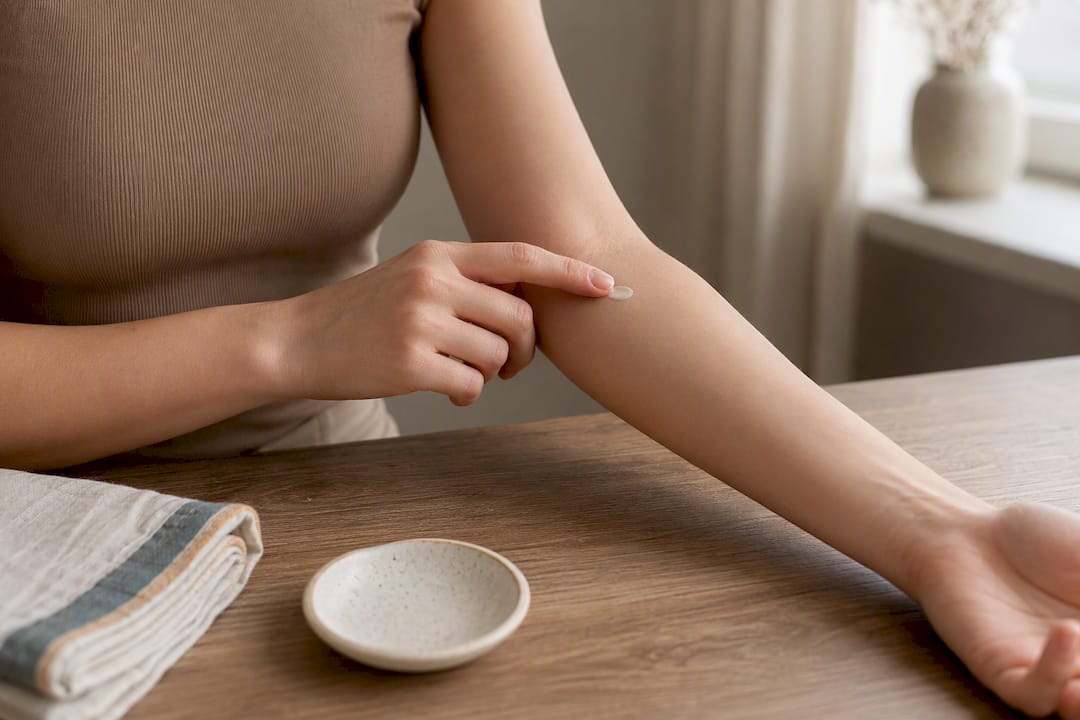
Pro Tip: Patch test on the inner forearm, not the face. Apply a small amount, wait 48 hours, and check for redness, itching or bumps before using anywhere near the eyes or on broken skin.
How to use goat milk products in a skincare routine
Getting the benefit from goat milk depends more on how you use the product than which product you buy.
- Start with a cleanser if you’re new to the ingredient. A liquid goat-milk wash or a syndet bar (a soap-free cleansing bar built to be less drying) is a lower-commitment way to test tolerance than a leave-on cream.
- Understand that rinse-off soap has limits. Because it’s washed away within seconds, a bar soap delivers far less sustained lactic acid contact than a leave-on product. If exfoliation and hydration are your goal, a cleansing milk or lotion left briefly on skin, or a proper moisturiser, does more work.
- Layer carefully with other actives. If you already use prescription retinoids or stronger AHA or BHA exfoliants, introduce goat milk products on alternate days at first. Combining several exfoliating ingredients at once, even mild ones, raises the risk of irritation.
- Moisturise promptly after washing. Lock in hydration with a goat-milk lotion or balm soon after cleansing, while skin is still slightly damp.
- Use lukewarm water, not hot. Hot water strips the very lipids goat milk is trying to restore, undoing much of the benefit before the product even gets a chance to work.
- Cut back on scrubbing. Goat milk cleansers work through their chemistry, not friction. Aggressive rubbing defeats the purpose and can aggravate already sensitive skin.
A practical routine for dry, sensitive skin might look like a gentle goat-milk cleanser in the morning, a fragrance-free moisturiser through the day, and a richer goat-milk balm or cream at night when skin has more time to absorb it undisturbed.
Choosing a goat milk product: what the label actually tells you
Ingredient lists are ranked by concentration, from highest to lowest, and that single rule tells you almost everything you need to know before buying.
- Check where “caprae lac” or “goat milk” sits on the list. Near the top, among the first five or six ingredients, it’s likely present in a functional amount. Buried near the end, after preservatives and fragrance, it’s probably there for the marketing story rather than the skin benefit.
- Favour short, fragrance-free formulations. A shorter ingredient list with supporting humectants and emollients, glycerin and ceramides being the most useful, tends to deliver more consistent results than a long list padded with fragrance and filler.
- Look for milder pH claims or cold-process language. Because lactic acid and some proteins are heat sensitive, a cold-process soap or gently manufactured cream stands a better chance of preserving the milk’s actives than a bar made through high-heat saponification.
- Be sceptical of “hypoallergenic” or “natural” claims with no ingredient list attached. Those words carry no regulated meaning on their own. A trustworthy brand shows you exactly what’s inside.
One industry ingredient summary from DermApproved makes a fair point: the mechanism is plausible, but clinical validation on finished products remains scarce, so treat goat milk as promising rather than proven when you’re reading marketing copy.
Products like Ziaja’s Goat’s Milk cleansing milk and toner illustrate what a well-positioned formulation looks like: a short routine step designed to cleanse without stripping, rather than a multi-tasking miracle product. If you’re comparing cleanser textures more broadly, a gel-based option such as the HIDEHERE Green Tea Collagen Gel Cleanser shows how a different gentle-surfactant approach handles the same job.
What the science can and cannot say yet
The mechanistic case for goat milk holds up well under scrutiny. Genomic reviews linking genes like LALBA and LTF to barrier and anti-inflammatory function give the ingredient a credible biological story, and compositional research on fatty acids and bioactive peptides backs that up from a different angle. That’s a stronger evidence base than most trending skincare ingredients ever get.
What’s missing is the next step: randomised controlled trials testing actual finished creams, soaps or serums against eczema, acne or psoriasis. That gap isn’t unique to goat milk, plenty of cosmetic ingredients face the same shortage of rigorous topical trials, but it means the leap from “plausible mechanism” to “proven treatment” hasn’t been made yet.
The practical implication is straightforward: the evidence justifies trying a well-formulated goat milk product for everyday dryness or mild sensitivity. It does not justify treating goat milk as a substitute for a dermatologist’s recommended treatment for a diagnosed skin condition.
Future trials that would move the needle need a few specific things: a standardised concentration of goat milk in the tested formulation, a control group using a comparable non-goat-milk moisturiser, and outcome measures like transepidermal water loss and validated eczema severity scales rather than self-reported comfort alone. Until that kind of study exists, the honest position is that goat milk sits in the “promising, not proven” category, useful enough to try, not strong enough to prescribe.
potential side effects or allergic reactions beyond milk-protein allergy
Milk-protein allergy gets most of the attention, but it isn’t the only reaction worth knowing about. Irritant contact dermatitis, a straightforward reaction to a formulation rather than an immune response, can happen with any cosmetic product, goat milk included, particularly if the item also contains fragrance, essential oils, or preservatives that some skin types react to independently of the milk itself.
Photosensitivity is a smaller concern but worth naming. Some botanical extracts occasionally paired with goat milk in blended formulations, citrus oils being a common example, can increase sun sensitivity. That’s a property of the added extract, not the goat milk itself, but it’s easy to miss when a product markets itself simply as a “goat milk” item without flagging the rest of the formula.
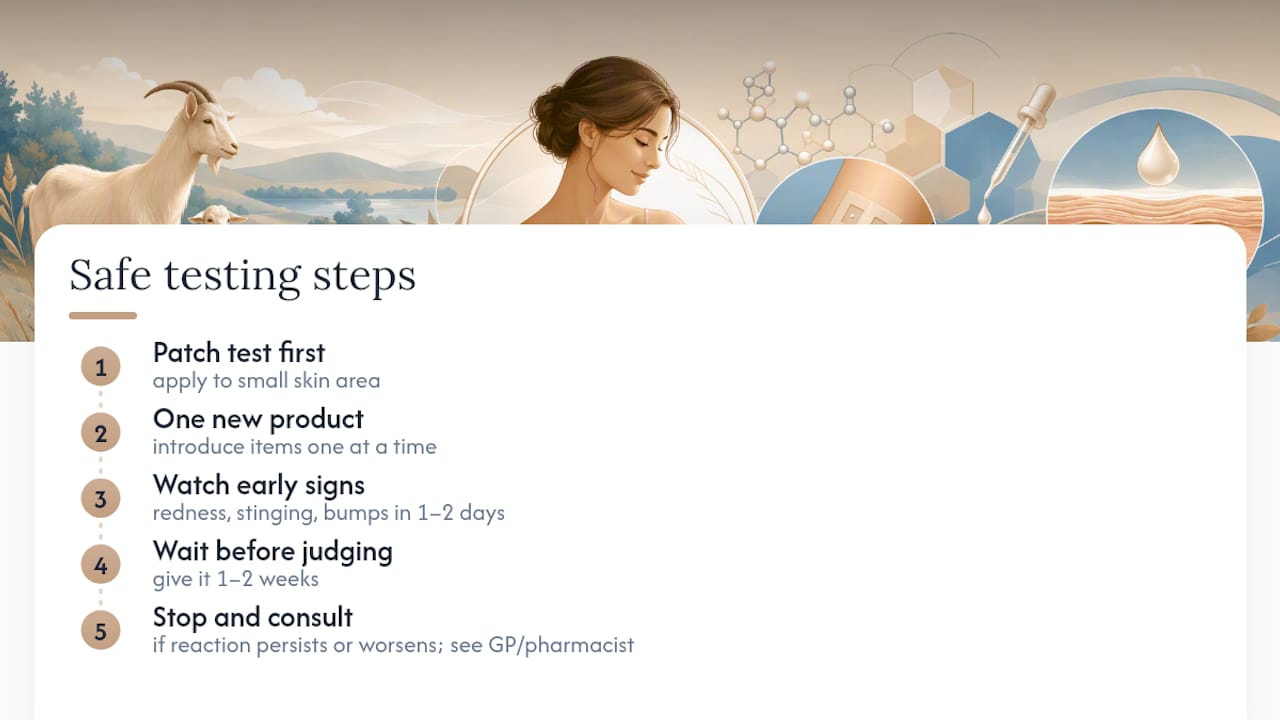
Redness, stinging on application, or small bumps that appear within a day or two point to irritation or a mild allergic reaction rather than the skin “detoxing” or adjusting, a phrase sometimes used to explain away a bad reaction. If a reaction persists past a few days or worsens, stop using the product and consult a pharmacist or GP rather than persisting through it.
The safest approach remains the same one used for any new skincare product: patch test first, introduce one new item at a time, and give it a week or two before judging the result properly.
Storage and shelf life for goat milk skincare products
Goat milk products generally have a shorter practical shelf life once opened than purely synthetic formulations, because the organic compounds involved, fats and proteins, are more prone to breaking down once exposed to air and light. Most goat milk cleansers, creams and soaps carry a “period after opening” symbol on the packaging, usually shown as an open jar icon with a number of months, typically somewhere between six and twelve months depending on the formulation and preservative system used.
Keep goat milk products away from direct sunlight and out of hot, humid bathrooms where possible, since heat accelerates the breakdown of the same heat-sensitive lactic acid and proteins that make the ingredient useful in the first place. A cool, dry cabinet works better than a windowsill or a shower shelf.
Bar soaps fare a little differently. A goat milk soap left sitting in water between uses breaks down faster and can turn soft or mushy well before its stated shelf life, so a draining soap dish extends usable life considerably. Watch for changes in smell, colour or texture as your first sign a product has passed its best condition. A separated cream, an off smell, or a soap that feels unusually greasy are all reasonable reasons to stop using it, regardless of the date printed on the packaging.
An honest read on where goat milk skincare actually delivers
The evidence supports a specific, modest claim: goat milk is a genuinely useful gentle-skincare ingredient for dry and sensitive skin, not a breakthrough treatment. Where conventional advice falls short is in treating “contains goat milk” as a single quality signal. It isn’t. A product with goat milk buried at the bottom of a long, fragrance-heavy ingredient list offers almost nothing beyond marketing appeal, while one with milk positioned high on the list and a short, considered formulation can genuinely support barrier repair.
What should readers prioritise first? Formulation over marketing, every time. Check where goat milk sits on the ingredient list before anything else. The genomic and compositional research, particularly around medium-chain fatty acids and lactoferrin, gives real reason to expect barrier and comfort benefits. But that research describes goat milk’s potential, not a guarantee about the specific jar on a shelf. Treat goat milk as one solid tool for dry, reactive skin among several, not as a replacement for clinician-guided care when a real skin condition is involved.
— Krzysztof
Where to find well-formulated goat milk products
Specialist sellers of Polish cosmetics in the UK select products where goat milk sits meaningfully in the formula rather than as a token mention, and prices sometimes include occasional discounts, so trying a new gentle-skincare routine doesn’t mean paying premium rates.

For daily cleansing, the Ziaja Goat’s Milk 25+ cleansing milk and toner offers a straightforward way to test tolerance without committing to a full routine overhaul. For those wanting a hydrating anti-ageing step, the Ziaja Goat’s Milk 25+ day cream pairs the barrier-supporting fatty acid profile discussed above with anti-wrinkle actives. If a gentler bar-free wash suits your routine better, the Biały Jeleń hypoallergenic goat’s milk liquid soap is worth a look, and anyone dealing with acne-prone patches alongside general sensitivity might also compare the Pharmaceris Sebostatic day cream for targeted areas. Browse the current range and check today’s prices before your next skincare shop.
Sources
- Genomic tools for medicinal properties of goat milk for cosmetic and health benefits: a narrative review
- Recent insights into processing approaches and potential health benefits of goat milk and its products: a review
This article is general information, not a substitute for advice from a qualified doctor. Consult a qualified healthcare professional about your own circumstances before acting on anything here.