



Your complete list of products for makeup: UK & Polish expat guide
If you want a functional makeup kit without buying half the beauty aisle, start here. The core list of products for makeup comes down to six essentials: foundation, concealer, mascara, blush, a lip product, and at least one brush or sponge. M-shop stocks a range of Polish-made options across these categories, many featuring collagen and algae formulations you won’t find on the average UK high street.
Your quick shopping checklist:
- Foundation (liquid, cream, or powder to suit your skin type)
- Concealer (for blemishes, dark circles, and spot coverage)
- Mascara (lengthening or volumising)
- Blush (powder or cream)
- Lip product (balm, tinted balm, or lipstick)
- Setting powder or spray (to lock everything in place)
- One brush set or blending sponge
When buying Polish cosmetics online in the UK, always check for batch numbers, a clear INCI ingredient list, and a stated returns policy before you order.
Table of Contents
- What do the main makeup categories actually cover?
- How do you build a kit that fits your actual routine?
- How do you choose the right foundation for your skin type?
- Which tools do you actually need, and how do you keep them clean?
- What ingredients should you look for in Polish cosmetics?
- What should you expect to pay, and how do you buy safely online?
- Key takeaways
- Why a smaller kit almost always wins
- Polish makeup and skincare, delivered to your door across the UK
What do the main makeup categories actually cover?
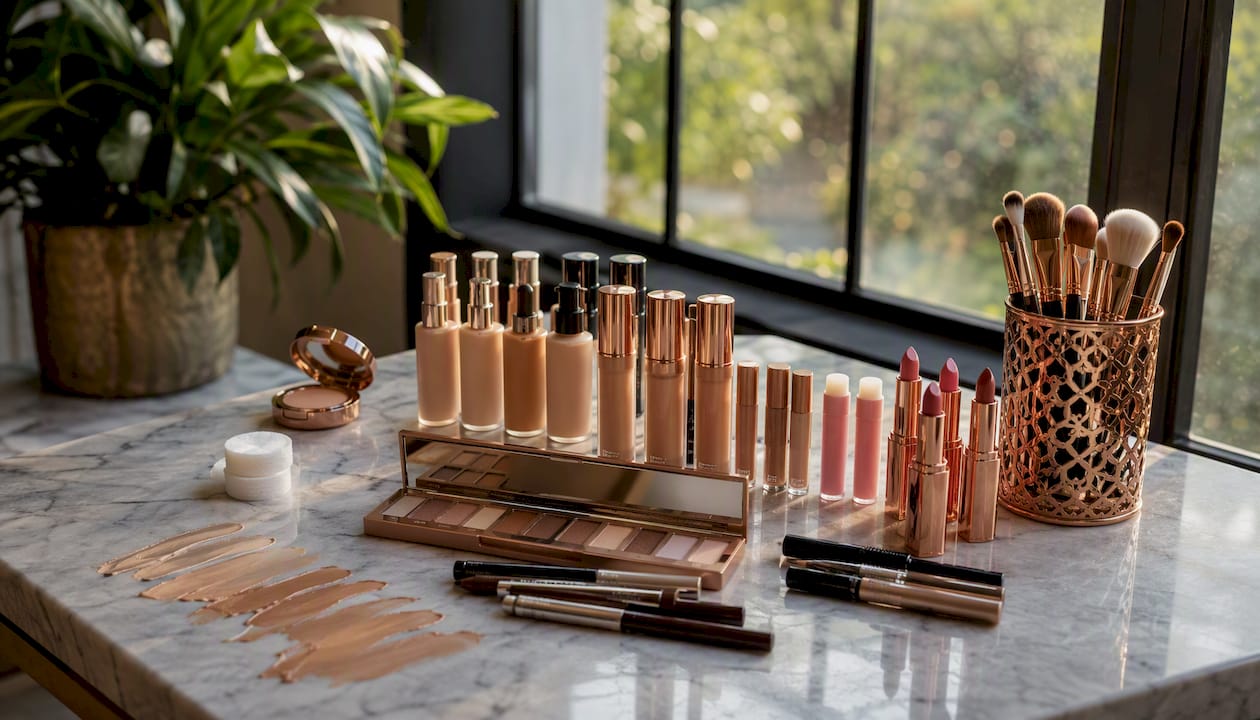
Makeup products fall into four broad groups: face, eye, lip, and accessories. Each serves a distinct purpose, and knowing the difference stops you buying things you’ll never use.
| Category | Purpose | Essentials | Nice-to-haves | Frequency |
|---|---|---|---|---|
| Face | Create an even base and complexion | Foundation, concealer, setting powder | Primer, contour, highlighter | Daily |
| Eye | Define and frame the eyes | Mascara, eyeliner, brow pencil | Eyeshadow palette, eyeshadow primer | Daily–occasional |
| Lip | Add colour and moisture | Lip balm, tinted lip product | Lip liner, lipstick, gloss | Daily |
| Accessories | Aid application and blending | Blending sponge, foundation brush | Eyelash curler, tweezers, fan brush | Every use |
Face products build the canvas. Foundation evens skin tone; concealer targets specific spots or dark circles; setting powder or spray keeps everything in place through the day.
Eye products frame your face. Mascara is the single product most people reach for first. Eyeliner and a brow pencil add definition without requiring any blending skill.
Lip products range from a tinted balm (barely-there coverage) to a full matte lipstick. Polish cosmetic lines often include lip products enriched with glycerin or vitamin E, which suits the drier UK climate.
Accessories are the tools that make everything else work. A good blending sponge applied damp gives a skin-like finish that brushes alone rarely match.
How do you build a kit that fits your actual routine?
The right kit depends on how much time you have and what you want from your makeup. Starting with too many products is one of the most common mistakes; experts recommend beginning with four or five essentials and adding gradually.
1. Starter kit (5 minutes, minimal fuss) Foundation or tinted moisturiser, concealer, mascara, tinted lip balm, blending sponge. That’s it. You can be out the door looking polished without touching an eyeshadow palette.
2. Everyday kit (10–15 minutes) Add blush, an eyeliner pencil, a brow pencil, setting powder, and a small brush set. This covers most occasions from work to a casual evening out.
3. Travel or gift kit (compact, dual-purpose) Prioritise products that do two jobs: a BB or CC cream instead of separate primer and foundation, a cream blush that doubles on lips, a tinted brow gel. Polish expats buying for family back home will find Polish cosmetics gift sets a practical option — packaging is often in Polish, so recipients know exactly what they’re getting.
Pro Tip: Multi-use products save both luggage space and money. A hybrid tinted moisturiser gives you hydration, light coverage, and sometimes SPF in one step — ideal for a starter kit or travel bag.
How do you choose the right foundation for your skin type?
Foundation is where most buyers get stuck, especially when ordering online. The format matters as much as the shade.
- Liquid foundation suits most skin types and gives the most flexibility with coverage and finish.
- Cream foundation works well for dry or mature skin; it blends easily and feels comfortable through the day.
- Powder foundation is best for oily skin; it controls shine and skips the need for a separate setting powder.
Matching your shade online — step by step:
- Identify your undertone first (warm, cool, or neutral) by looking at the veins on your inner wrist: blue-green veins suggest cool, greenish veins suggest warm.
- Test any shade against your jawline in natural daylight, not bathroom lighting.
- Compare the swatch to both your neck and forehead — the right shade disappears into both.
- Order a small or sample size first when trying a new brand.
- Check the coverage description: sheer for a natural look, medium for everyday wear, full for events or photography.
Polish formulations often lean towards a dewy or satin finish, reflecting the local preference for a healthy, skin-like look. If you prefer matte, check the product description carefully or look for powder-based options.
Pro Tip: If you’re unsure between two shades, choose the lighter one for Polish formulations — many have a slightly warm undertone that oxidises (deepens) slightly on the skin within the first hour.
Which tools do you actually need, and how do you keep them clean?
Good tools make a real difference to how makeup looks and how long it lasts. You don’t need a professional kit — just a few reliable pieces.
Essential tools:
- Flat or kabuki foundation brush (or a damp blending sponge — both work)
- Fluffy blending brush for eyeshadow
- Angled brow brush
- Small concealer brush
- Eyelash curler (optional but genuinely useful before mascara)
- Tweezers
Cleaning routine:
- Rinse sponges with gentle soap after every use; bacteria build up fast on damp foam.
- Wash brushes with a mild brush cleanser or baby shampoo once a week for face brushes, once a fortnight for eye brushes.
- Deep-clean the full set monthly: soak, rinse, reshape, and dry flat.
For a full makeup removal routine that protects your skin overnight, the process matters as much as the tools themselves.
On brush fibres: synthetic bristles work better with liquid and cream products and are easier to clean. Natural fibres pick up powder products beautifully but need more careful washing. Most affordable Polish brush sets use synthetic fibres, which is perfectly adequate for everyday use.
What ingredients should you look for in Polish cosmetics?
Polish cosmetic brands have built a strong reputation around ingredient-led formulations. Common active ingredients include:
- Collagen — supports skin elasticity; widely used in Polish creams and masks, including the Celia Collagen + Algae range
- Algae extracts — hydrating and mineral-rich; appear in both skincare and some tinted products
- Glycerin — a reliable humectant that draws moisture into the skin
- Mild preservatives (phenoxyethanol, sodium benzoate) — generally well-tolerated
Watch for these if you have sensitivities:
- Synthetic fragrance (listed as “parfum” on INCI lists)
- Certain alcohols (denatured alcohol, listed as “alcohol denat.”)
- Essential oils (lavender, citrus, rose — common sensitisers)
Reading the INCI list is straightforward once you know what to look for. Ingredients appear in descending order of concentration, so the first five or six entries are what the product is mostly made of. M-shop stocks several fragrance-free lines, including the Biały Jeleń hypoallergenic soap and the AA Oceanic sensitive-skin gel-cream, both suited to reactive skin. If you want to go deeper on ingredient simplicity, the guide on why fewer ingredients benefit your skin is worth a read.
What should you expect to pay, and how do you buy safely online?
Polish cosmetics generally sit at the affordable-to-mid end of the UK market, which is part of their appeal.
| Price band | Typical products | What to expect |
|---|---|---|
| Budget (under £5) | Lip balms, single eyeshadows, setting sprays | Functional, no-frills formulations |
| Mid-range (£5–£15) | Foundations, mascaras, blush, skincare creams | Good ingredient quality, often collagen or algae-enriched |
| Premium (£15–£) | Specialist serums, anti-ageing creams, gift sets | Higher active concentrations, dermatologically tested |
Safe buying checklist for UK shoppers:
- Confirm the retailer holds UK stock (avoids customs delays and unexpected import charges)
- Check for a clear returns policy before ordering
- Look for batch numbers on product pages or packaging
- Verify the INCI list is accessible — either on the page or via a downloadable label
- Read recent customer reviews for delivery speed and packaging condition
M-shop ships from UK stock, so there are no customs complications for buyers in England, Scotland, Wales, or Northern Ireland. For value cosmetics sets and budget makeup options, the M-shop blog covers current picks across price bands.
Key takeaways
Polish-made makeup products offer genuine ingredient quality at accessible prices, and buying from a UK-based specialist removes the customs and returns headaches that come with ordering direct from Poland.
| Start with five essentials | Foundation, concealer, mascara, blush, and lip product cover most looks. Add a brush or sponge if needed. | Match foundation to skin type | Liquid for versatility, cream for dry skin, powder for oily — check finish and coverage before ordering. | | Read the INCI list | Fragrance and alcohol denat. are the most common irritants; collagen and algae are the Polish market’s signature actives. | | Buy from UK-held stock | No customs delays or import charges when the retailer ships from within the UK. | | M-shop for Polish cosmetics | M-shop stocks collagen and algae-enriched Polish lines with up to 15% off during sales, shipped from UK stock. |
Why a smaller kit almost always wins
There’s a tendency to treat a makeup collection as something to complete — every product, every finish, every shade. It’s the wrong frame entirely. The most functional kits I’ve seen belong to people who own eight or ten products they genuinely reach for, not forty they rotate out of obligation.
The Polish cosmetics market does something interesting here. Because the brands are ingredient-led rather than trend-led, the product ranges tend to be tighter and more purposeful. A collagen cream is a collagen cream — it’s not repackaged six times in different colours for seasonal launches. That restraint makes it easier to build a kit that actually works rather than one that looks impressive on a shelf.
My honest advice: buy the budget cosmetics checklist approach before you buy the premium version of anything. Start with mid-range Polish staples, use them until they’re finished, and only then decide what to upgrade. You’ll waste far less money and learn what your skin actually responds to.
Polish makeup and skincare, delivered to your door across the UK
M-shop is a family-run specialist importing Polish cosmetics directly to UK buyers — not a general marketplace with a Polish section, but a curated store where every product is chosen for ingredient quality and value.
The range covers face, eye, lip, and skincare, with collagen and algae-enriched lines from brands like Celia and Pharmaceris sitting alongside hypoallergenic options for sensitive skin. Sales regularly bring prices down by up to 15%, and all orders ship from UK stock — no customs forms, no import delays.
Browse the Celia Collagen + Algae moisturising cream or the Pharmaceris anti-acne day cream as starting points, or head to m-shop.uk to see the full catalogue and current offers.