



Micellar water vs cleanser: which one does your skin need?
Micellar water can replace a traditional cleanser on ordinary days with light or no makeup, but it usually cannot on its own when you have worn waterproof mascara, sunscreen, or full coverage foundation. On those days, it works best as step one of a double cleanse, not the whole routine.
- Micellar water alone works for: bare skin, minimal makeup, midday refreshes, and sensitive skin that reacts to foaming products.
- Double cleanse instead when: you have worn SPF, waterproof eye makeup, heavy foundation, or you exercised and sweated through the day.
If you want specific product picks rather than the general rules, M-shop’s guide to Polish micellar waters covers the formulas worth stocking.
Key Takeaways
Matching cleansing method to what’s actually on your skin, rather than picking one product for everything, determines results more than any single ingredient choice.
| Point | Details |
|---|---|
| Micellar water suits light days | Use it alone for bare skin, minimal makeup, or a midday refresh. |
| Waterproof makeup needs a double cleanse | Follow micellar water with a rinsing cleanser after SPF or long-wear products. |
| Shake biphasic formulas | Unmixed phases dispense only the water layer, reducing effectiveness on stubborn makeup. |
| Technique beats product strength | Gentle sweeping and repeated passes clean better than scrubbing or rushing. |
| M-shop stocks skin-type-specific formulas | Options range from hypoallergenic soap to clarifying Pharmaceris products for different needs. |
Table of Contents
- Micellar water vs cleanser: what makes micelles different
- What traditional cleansers actually do to your skin
- Micellar water or face wash: the real trade-offs
- When to use micellar water alone and when to double-cleanse
- Choosing the right option for your skin type
- How to use micellar water without wasting the bottle
- What to look for when buying micellar water
- Why the “just pick one” advice misses the point
- Where to find the right formula for your skin
- Frequently asked questions
- Sources
Micellar water vs cleanser: what makes micelles different
Micelles are tiny clusters of cleansing molecules, one end drawn to water and the other to oil, that surround dirt, sebum, and makeup pigment and lift them off the skin without scrubbing. That’s the whole mechanism, and it’s why micellar water works gently enough for dry and sensitive skin in most cases, according to Cleveland Clinic.
Most formulas are built around purified water, mild surfactants, and humectants like glycerin. Fragrance-free and ophthalmologist-tested versions matter more than marketing suggests, particularly around the eyes, where reactive skin flares up fastest.
- Single-phase micellar water: one clear liquid, good for daily light cleansing and everyday makeup.
- Biphasic micellar water: two visible layers, water and a dissolved oil phase, designed to break down waterproof and long-wear cosmetics.
Biphasic bottles need a proper shake before use. Skip that step and you’re applying a weaker product, since the oil phase that does the heavy lifting on waterproof mascara stays separated at the bottom rather than mixing through the pad.
Pro Tip: Check the ingredients list before buying a “gentle” micellar water. Alcohol denat. high on the list can undo the gentleness the marketing promises, especially for reactive or eczema-prone skin.

What traditional cleansers actually do to your skin
Cleansers rely on surfactants and emulsifiers strong enough to break down oil, sunscreen, and pollution residue, then rinse the whole lot away with water. That rinse step is the fundamental difference from micellar water, which lifts and dissolves without necessarily removing everything from the skin’s surface unless wiped thoroughly.
Different formats suit different skin behaviours:
- Gel cleansers: lightweight, often foaming slightly, suited to oily and combination skin.
- Cream cleansers: richer, low-foam, better for dry or mature skin that can’t tolerate stripping surfactants.
- Foam cleansers: deep-cleaning feel, popular for oily and acne-prone skin, but can over-dry if used twice daily.
- Oil and balm cleansers: dissolve makeup and SPF efficiently, usually used first in a double cleanse before a water-based formula.
Dermatology guidance from the AAD is consistent on one point: gentle technique matters more than product strength, and over-scrubbing damages the skin barrier regardless of which cleanser type you choose.
Micellar water or face wash: the real trade-offs
The honest answer depends on what you’re removing and how your skin behaves, not on which product sounds more premium.
Micellar water wins on convenience. No sink, no rinsing, no towel, which is why it dominates travel bags and bedside tables for the nights you’re too tired to do a full routine. It also tends to suit sensitive and dry skin better than foaming cleansers, since there’s no surfactant-heavy lather stripping natural oils.
Traditional cleansers win on thoroughness. For oily or acne-prone skin carrying a full day of sebum, sunscreen, and pollution, a gel or foam cleanser clears the skin more completely than a swiped cotton pad ever will.
- Best for waterproof makeup and SPF: reviewer testing shows single-phase micellar water often falls short here, while biphasic and oil-based removers perform noticeably better.
- Best for daily light grime: micellar water, used morning or after a low-makeup day.
- Best for sensitive/dry skin: micellar water or a cream cleanser, both low-friction.
- Best for oily/acne-prone skin: a clarifying cleanser, sometimes preceded by micellar water as a first pass.
Sustainability is worth a mention too. Disposable cotton pads generate ongoing waste, and switching to a reusable microfibre pad is one of the simpler swaps the EPA’s waste-reduction guidance would count as a genuine improvement, not just a gesture.
Gentleness should win when your skin is compromised, reactive, or already over-cleansed. Deep cleansing becomes non-negotiable when sunscreen, oil, or long-wear makeup has genuinely built up on the surface.
When to use micellar water alone and when to double-cleanse
The clearest rule of thumb: match the cleaning method to what’s actually on your face, not to habit.
- Bare skin or minimal makeup, morning routine: micellar water alone is enough. Sweep, check the pad, done.
- Light daytime makeup, no SPF reapplication: micellar water alone usually clears it, though check the pad for residue before stopping.
- Sunscreen, foundation, or waterproof mascara worn all day: double-cleanse. Independent’s product guidance backs this as the practical standard, using micellar water first to break down the bulk of makeup, then following with a gentle cleanser to rinse away what’s left.
- After sweating or exercise: double-cleanse, since sebum and sweat residue sit deeper than a wipe-off product reaches alone.
A short evening double cleanse looks like this: micellar water on a pad to dissolve makeup and SPF, then a cream or gel cleanser massaged in and rinsed off. Morning routines rarely need more than a splash of water or a quick micellar pass if the previous night’s cleanse was thorough.
Pro Tip: If your skin feels tight or squeaky after micellar water, that’s not a sign it worked better. It usually means the formula is stripping more than it should for your skin type.
Choosing the right option for your skin type
Dry and sensitive skin generally does better with hydrating, fragrance-free micellar water or a cream cleanser. Look for humectants such as glycerin or hyaluronic acid rather than alcohol-heavy formulas, which dermatology sources flag as a common irritant for reactive skin types.
Oily and acne-prone skin benefits from a clarifying gel cleanser as the main event. Micellar water still has a place here as a first pass to loosen makeup and excess oil, but following with a proper cleanser gets pores genuinely clean rather than superficially wiped.
- Combination skin: alternate based on the day. Micellar water on light days, gel cleanser when T-zone oil builds up.
- Mature or ageing skin: prioritise formulas that cleanse without stripping. Over-cleansing accelerates dryness and emphasises fine lines.
- Reactive or eczema-prone skin: patch-test any new micellar water, fragrance-free or not, before adding it to a full routine.
How to use micellar water without wasting the bottle
Technique determines most of the disappointment people report with micellar water, and it’s almost always fixable.
- Saturate a cotton or reusable pad generously. A dry-ish pad drags rather than dissolves.
- Hold the pad against closed eyes for a few seconds before wiping, particularly with mascara, to let the micelles start breaking down the product.
- Sweep gently, don’t scrub, and use a fresh section of the pad each pass.
- Repeat with a new pad until it comes away clean. Cleveland Clinic’s guidance is explicit that stopping too early is the most common shortfall.
- For biphasic formulas, shake thoroughly first. Without it, you’re using the water phase only.
Common mistakes worth avoiding: over-rubbing (it irritates rather than cleans faster), skipping the follow-up cleanser after heavy makeup days, and using fragranced formulas on skin that’s already inflamed or barrier-compromised.
Pro Tip: Micellar water is not a substitute for toner and doesn’t need one layered afterwards. It already does that job in most modern routines.
What to look for when buying micellar water
M-shop stocks Polish skincare built around natural ingredients like collagen and algae, and that same ingredient scrutiny applies to how we select micellar waters and cleansers for the shop. We look for fragrance-free, alcohol-light formulas for sensitive skin, and clarifying options such as Pharmaceris SEBO-MICELLAR for oilier or breakout-prone skin.
- Prefer: glycerin, hyaluronic acid, panthenol, or thermal water in the ingredient list.
- Avoid on reactive skin: high alcohol content, added fragrance, or long lists of essential oils.
- Check the format: single-phase for daily use, biphasic if waterproof makeup is a regular feature of your week.
Our full Polish micellar waters guide breaks down which formulas suit which skin concerns.
Why the “just pick one” advice misses the point
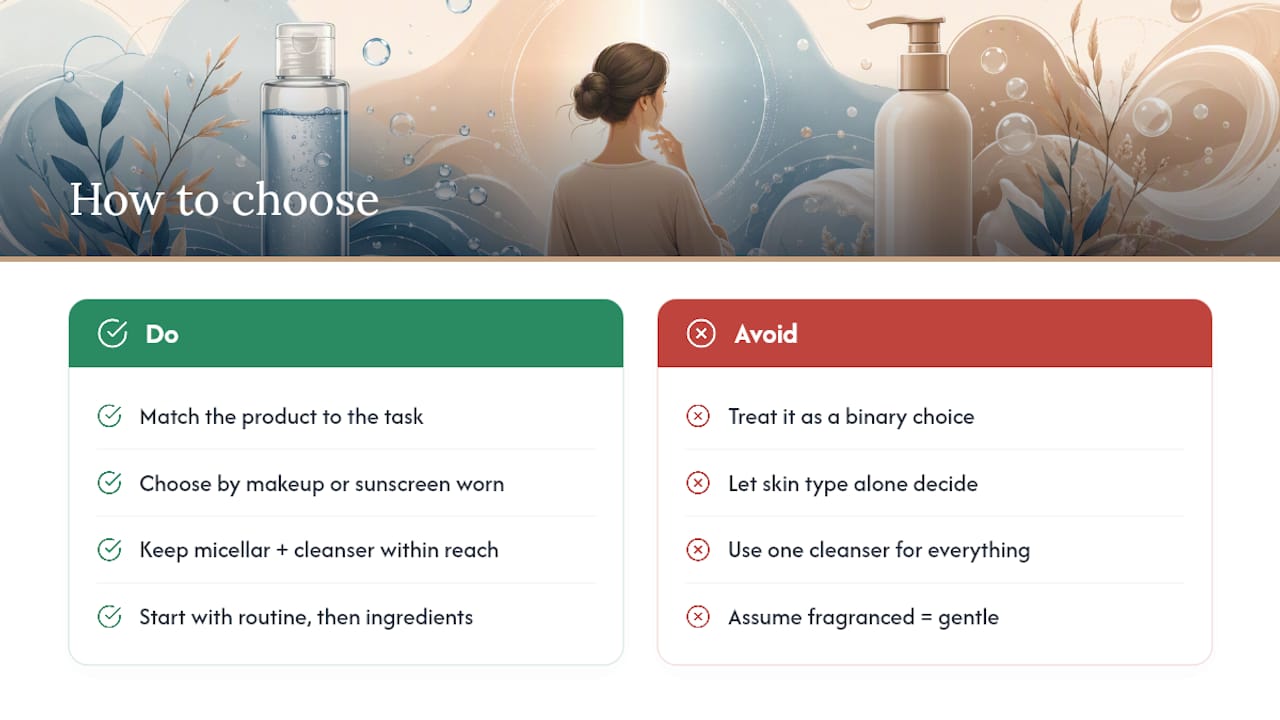
Most articles treat this as a binary choice, and that’s the wrong frame entirely. The research doesn’t support a winner. It supports matching the tool to the task, which is a duller answer but a more useful one.
What’s underrated here is how much the makeup and sunscreen you’re wearing, not your skin type, should decide the method. People with dry skin often assume micellar water is always their safest bet, then wonder why their SPF is still visible under morning light. Reactive skin doesn’t automatically mean “gentle wins”, either. A fragranced micellar water can irritate just as easily as a harsh foaming cleanser.
The single-cleanser habit is the biggest thing worth dropping. Most people default to one product for everything because switching feels like effort, but keeping both a micellar water and a proper cleanser within reach, and choosing based on the day’s makeup, does more for skin health than any specific product choice. Start there before worrying about specific ingredients or brands.
Where to find the right formula for your skin
M-shop sources its skincare directly from Poland, a country with a strong pharmacy-skincare tradition, and that shows in the range: fragrance-conscious formulas for sensitive skin sit alongside clarifying options for oilier, breakout-prone complexions. As a family-run shop, product selection is hands-on rather than automated, which matters when the difference between a soothing micellar water and an irritating one comes down to a handful of ingredients most shoppers never check.

If daily grime and light makeup are your main concern, a gentle option like the Biały Jeleń hypoallergenic soap suits sensitive skin that reacts to standard foaming cleansers. If breakouts and oiliness are the bigger issue, the Pharmaceris Sebostatic Day cream pairs well with a clarifying cleansing step. Browse the current range and check which formula matches your skin type before your next order.
Frequently asked questions
Should I use cleanser or micellar water every day? Either works daily depending on your makeup and skin type. Light-makeup days suit micellar water alone; heavier makeup or SPF days call for a rinsing cleanser afterwards.
What’s the real difference between cleansers and micellar water? Cleansers use surfactants and require rinsing; micellar water uses micelles to lift away dirt and makeup without a rinse step, though wiping thoroughly still matters.
Is micellar double cleansing necessary? Not always. It’s most useful when removing waterproof makeup, sunscreen, or a full day’s build-up, where a single wipe-off step often leaves residue behind.
Can micellar water replace a toner? Yes, largely. It already removes residue and refreshes skin, so a separate toner step is usually unnecessary in a modern routine.
Sources
- Micellar water: what it is and how to use it — Cleveland Clinic
- Face-washing 101 — American Academy of Dermatology (AAD)
- Best micellar water: Independent product guidance
- The 9 best micellar waters of 2026, tested — Byrdie