



Do budget charcoal masks actually work?
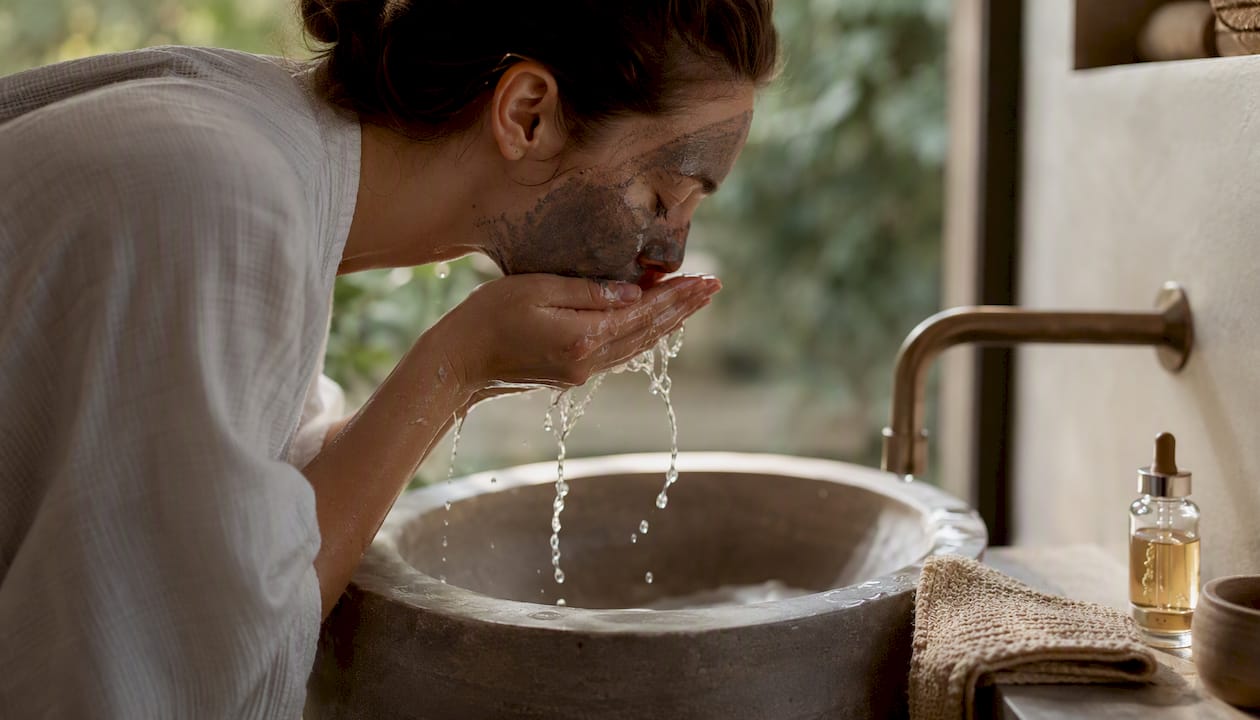
A budget charcoal mask gives you a genuine, if temporary cosmetic effect: it binds surface oil and grime through adsorption, leaving skin looking matte and feeling smoother within minutes. What it does not do is detoxify anything, reach deep into a clogged pore, or replace a clinical acne treatment. The evidence for anything beyond a surface-level effect is thin, and Healthline’s review of the research is blunt about that gap between marketing and what charcoal has actually been shown to do.
- What it realistically does: lifts surface oil, dulls shine, and removes some loose debris and dead skin, similar in principle to a standard clay mask.
- What it does not do: pull toxins from your bloodstream, shrink pores permanently, or clear deep sebaceous plugs without help from actives like salicylic acid.
Key Takeaways
Budget charcoal masks work by surface adsorption, giving temporary oil control and smoother texture, but they cannot detoxify skin or clear deep blockages.
| Point | Details |
|---|---|
| Adsorption, not extraction | Charcoal binds surface oil and debris; it has no mechanism to reach pores or blood vessels beneath the skin. |
| Rinse-off beats peel-off | Rinse-off clay-charcoal formulas give similar benefits with far lower risk of barrier damage or scarring. |
| Check ingredients, not claims | Prioritise kaolin, humectants, and low charcoal percentages over “detox” or “deep-clean” marketing language. |
| Match frequency to skin type | Oily skin can manage one to two uses weekly; dry or sensitive skin should use sparingly or avoid entirely. |
| M-shop’s Bielenda range | Offers a Polish-made, rinse-off charcoal and kaolin formula suited to oily and combination skin at an accessible price. |
Table of Contents
- What is a charcoal mask, and how does it work?
- What to look for and avoid in a budget charcoal mask
- Peel-off versus rinse-off: which is safer?
- How to use a charcoal mask without wrecking your skin barrier
- Who should use a charcoal mask, and who should skip it
- Budget picks and buying tips
- Do charcoal masks actually help?
- Do charcoal masks actually pull out blackheads?
- Charcoal masks versus clay and mud masks: what’s the real difference?
- Budget charcoal masks versus premium brands: what changes at a higher price?
- Where M-shop can help you choose the right mask
- Frequently asked questions
- Sources
What is a charcoal mask, and how does it work?
Charcoal in skincare is almost always activated carbon: ordinary carbon treated to riddle it with microscopic pores, which massively increases its surface area. That structure is why it works at all. The mechanism is adsorption, not absorption. Oil molecules and fine particles stick to the surface of the charcoal rather than being soaked up into it, and DIYCosmetica’s breakdown of activated charcoal explains why this only ever happens at the skin’s surface, never below it.
That distinction matters because it sets the ceiling on what a mask can do. Charcoal cannot travel through the stratum corneum into a pore and drag anything out from underneath. Clay works on a related but different principle, using ionic and mineral properties to bind oil and swell as it dries, which is why many budget formulas combine the two. Chemical actives like salicylic acid or retinoids work completely differently again, altering how skin sheds cells and regulates oil at a biological level rather than binding what is already sitting on top.
What charcoal can lift:
- Surface sebum and shine
- Loose grime and some environmental particulates
- A light layer of dead skin cells, especially when combined with a mildly exfoliating clay
What it cannot touch:
- Deep sebaceous plugs or blackheads lodged below the surface
- Anything resembling systemic toxins
- Bacteria causing active, inflamed breakouts
What to look for and avoid in a budget charcoal mask
Prioritise a rinse-off clay-and-charcoal formula with a humectant included, and be wary of anything leaning heavily on strong film-formers or high-percentage bentonite unless your skin is genuinely oily. The ingredient list tells you far more than the packaging copy.
Look for kaolin, which is gentle enough for regular use, alongside charcoal at a modest concentration, plus humectants like glycerin or hyaluronic acid, and calming agents such as allantoin or aloe. Bio Valley’s guide to choosing a charcoal mask notes that kaolin is the better daily-use clay, while bentonite’s stronger absorbency suits occasional treatments on very oily skin rather than weekly use.
Treat these as warning signs on a budget product:
- No visible ingredient list, or vague terms like “natural extracts” with nothing specific behind them
- Heavy alcohol denaturants high up the list
- Strong film-forming polymers (common in aggressive peel-offs) combined with added fragrance
- Marketing language like “detox” or “deep pore extraction” with no formulation detail to back it
Pro Tip: Ingredient lists are written in descending order by concentration. If charcoal or a drying clay sits in the first three ingredients with no humectant anywhere near the top, expect a tighter, drier finish than the packaging suggests.
Formulation, not branding, decides whether a cheap mask leaves your skin balanced or stripped.
Peel-off versus rinse-off: which is safer?
Rinse-off clay-and-charcoal masks deliver most of the same surface benefits as peel-offs with far less risk to your skin barrier. Peel-offs rely on a film that has to bond to the skin strongly enough to lift away when dry, and that bonding is exactly what makes them riskier.
Rinse-off masks:
- Lower risk of physical trauma to skin
- Easier to control timing and remove early if it stings
- Suitable for more frequent use across skin types
Peel-off masks:
- Satisfying “extraction” visual, but that residue is often just dried mask, not extracted sebum
- Higher risk of pulling at fine hairs, fragile skin, and the delicate skin around eyes and nose
- Not suited to daily or even weekly use for most people
Dermatology-focused guidance is consistent on this point: UPMC HealthBeat’s review of charcoal face masks links aggressive peel-off formats to cases of excessive peeling, scarring, and hypopigmentation in darker skin tones. Case reports and reviews cited in Medical News Today’s charcoal analysis point the same way.
If you buy a peel-off on a budget, patch-test once, use it infrequently (monthly or less), and never on eyebrows, hairline, or broken skin.
How to use a charcoal mask without wrecking your skin barrier
Follow the timing on the packaging, cleanse first, never scrub the mask off, and hydrate immediately after rinsing. That’s the whole routine, and skipping the last step is the most common mistake.
- Cleanse with a gentle wash to remove makeup and surface oil before applying anything.
- Apply an even layer, avoiding the eye area, eyebrows, and hairline.
- Leave it on for the time stated on the packaging, not longer just because it feels like it’s “working.”
- Rinse with lukewarm water using your fingertips, never a cloth or scrubbing motion.
- Follow immediately with a humectant, then seal in with a light emollient or moisturiser.
Frequency by skin type:
-
Oily skin: regular weekly use
-
Combination skin: weekly use, spot-applied to the T-zone
-
Dry or sensitive skin: limited use, or skip entirely
-
Apply a humectant serum before your moisturiser to counter any tightness.
-
Hold off on retinoids or acids the same evening a mask leaves skin feeling reactive.
-
Patch-test on your inner arm for 24 hours before trying any new product on your face.
If you’re mixing food-grade charcoal into a homemade paste, be aware that DIY batches are hard to control for particle size and pH, and a poorly mixed version can over-exfoliate skin far more easily than a commercial formula.
Who should use a charcoal mask, and who should skip it
Charcoal masks suit oily and some combination skin best, particularly used as a targeted T-zone treatment rather than an all-over weekly ritual. If you have rosacea, eczema, or a compromised barrier, this is a category to avoid rather than adapt.
- Oily skin: good candidate for one to two uses a week; watch for over-drying if you also use strong actives.
- Combination skin: best applied only to the oily zones, leaving cheeks alone.
- Normal skin: occasional use is fine but rarely necessary.
- Dry skin: likely to feel tight and uncomfortable afterwards; use sparingly if at all.
- Sensitive or reactive skin: high risk of irritation, especially with peel-off formats.
- Active, inflamed breakouts: avoid masking directly over inflamed lesions, as manipulation can worsen them.
Always patch-test a new product, stop at the first sign of persistent redness or stinging, and never layer a charcoal mask with a fresh chemical exfoliation on the same day. For readers managing genuinely reactive skin, guidance on facials for sensitive skin is a useful companion read before trying any at-home treatment at all.
Budget picks and buying tips
Among affordable, widely available charcoal and clay-charcoal formulas, Bielenda stands out for balancing charcoal with kaolin and humectants rather than leaning on a drying, high-concentration clay alone. It’s a Polish brand with a long track record in mass-market skincare, and its charcoal-based masks sit firmly in rinse-off territory, which fits the safety guidance above.
Two other names come up constantly in this category. 7th Heaven’s peel-off charcoal masks are cheap and widely stocked across UK pharmacies, but they follow the peel-off format, so the same caution about occasional use and patch-testing applies directly. Avon’s Clearskin range takes a rinse-off, clay-forward approach aimed at oily and blemish-prone skin, closer in spirit to the gentler end of the category.
When comparing any of these, check three things before buying: a full ingredient list rather than vague “natural” claims, genuine review patterns rather than a handful of five-star ratings with no detail, and clear usage instructions on frequency. Trustpilot’s review data is a reasonable sanity check when a brand or retailer is unfamiliar to you.
| Consideration | Budget rinse-off (e.g. Bielenda) | Budget peel-off (e.g. 7th Heaven) |
|---|---|---|
| Barrier risk | Low | Moderate to high |
| Suggested frequency | 1–2x weekly | Monthly at most |
| Best suited to | Oily, combination | Occasional oily-skin treatment |
Pro Tip: Always patch-test on your inner forearm for 24 hours before applying any new mask to your face, especially peel-off formats.
Do charcoal masks actually help?
Yes, but only within a narrow, cosmetic window. A charcoal mask gives you an immediate improvement in shine and surface texture because it lifts oil and loose debris that’s already sitting on top of your skin. That’s a real, visible result. It’s also the entire result.
What it cannot do is change how much oil your skin produces going forward, treat the bacteria involved in acne, or clear a pore that’s impacted below the surface. SkinOptimizer’s guide to charcoal masks makes this point plainly: charcoal gives a temporary mattifying effect, not a structural change to your skin, and treating persistent oiliness or acne properly still requires ingredients that work on pore biology, like salicylic acid or retinoids.
This is why the “before and after” photos on mask packaging can be misleading without context. The improvement shown is usually real, but it lasts hours, not days. Oil production resumes at its normal rate soon after rinsing, which is exactly why frequency guidance matters more than any single application. Used once a week as part of a routine that also includes proper cleansing and, where needed, a targeted active ingredient, a charcoal mask is a reasonable low-cost addition. Used as a stand-in for that routine, it will disappoint.
The honest framing: think of it as a temporary reset button for shine and texture, not a treatment plan on its own.
Do charcoal masks actually pull out blackheads?
Not in the way the marketing implies. A blackhead forms when a pore becomes clogged with oxidised sebum and dead skin cells, sitting below the skin’s surface. Charcoal’s adsorption only happens at the point of contact, which is the top layer of skin, so it has no physical mechanism to reach into that plug and extract it.
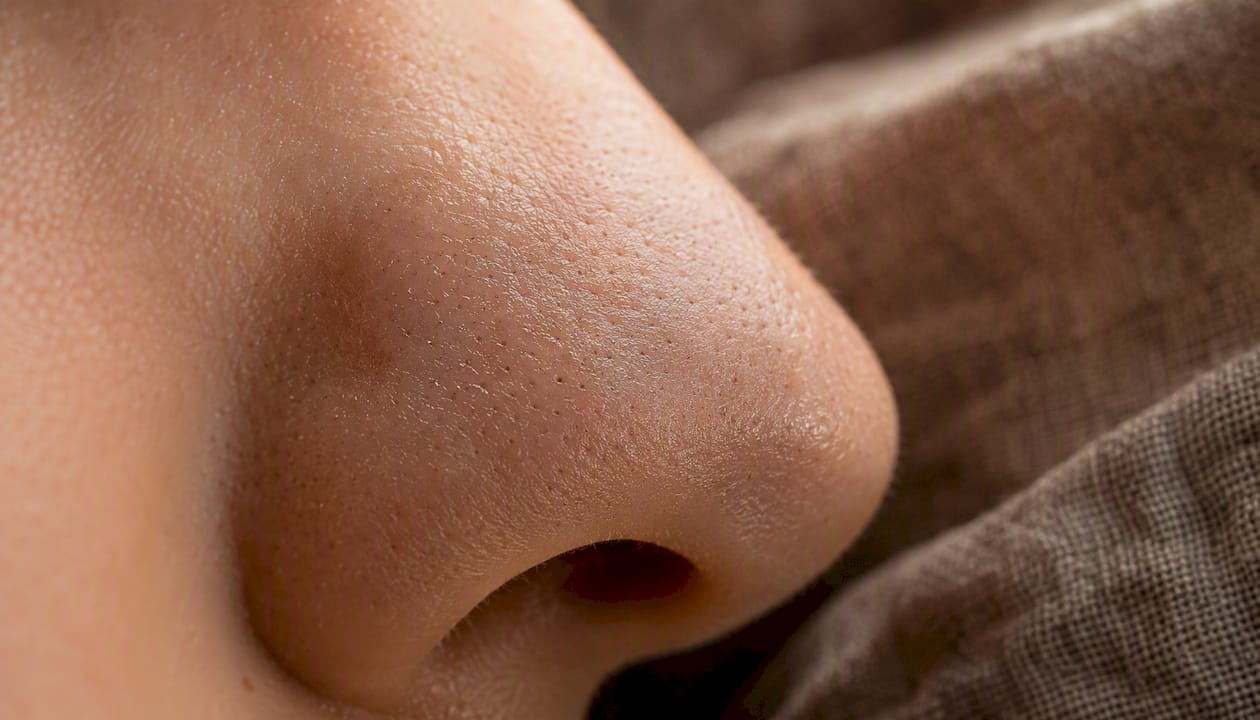
What people often mistake for extraction is the visible residue left on a peel-off mask after removal, which is largely dried product, fine hairs, and surface debris rather than pulled-out sebum. It looks dramatic. It is not evidence that anything was removed from inside a pore.
Sebaceous filaments, the small, greyish plugs visible on the nose and around it, behave similarly. They are a normal skin structure, not a blockage, and no topical mask, budget or premium, permanently removes them. They refill within days regardless of what’s used on them.
If actual blackhead reduction is your goal, ingredients that regulate oil production and cell turnover, such as salicylic acid or a retinoid, are the ones with a real mechanism for doing that. A charcoal mask can sit alongside that kind of routine as a weekly refresh, but it shouldn’t be mistaken for the tool doing the heavy lifting.
Charcoal masks versus clay and mud masks: what’s the real difference?
Charcoal, clay, and mud masks overlap heavily in what they’re used for, but the mechanisms differ enough to matter when you’re choosing between them. Charcoal works through physical adsorption, its porous structure grabbing oil and particulates on contact. Clays like kaolin and bentonite work partly through similar binding but also through their mineral and ionic properties, and through simple physical drying and tightening as the mask sets.
Mud masks are usually clay-based too, often bentonite or a similar mineral clay, sometimes blended with minerals or algae extracts, marketed on origin (Dead Sea, volcanic) rather than mechanism. In practical terms, a “mud mask” and a “clay mask” frequently do the same job with different branding.
The meaningful distinction for a budget shopper is intensity, not category. Bentonite-heavy mud and clay masks tend to be the most drying and are best reserved for oily skin used occasionally. Kaolin-based clay masks are gentler and suit more frequent use, including on combination or normal skin. Charcoal is typically added to either base at a low concentration to boost the oil-binding effect rather than used alone, which is why most “charcoal masks” on shelves are really clay-charcoal hybrids.
Picking between them comes down to your skin type and how often you plan to use the product, not which ingredient sounds more high-tech on the label.
Budget charcoal masks versus premium brands: what changes at a higher price?
The core mechanism doesn’t change. A £4 charcoal mask and a £40 one both rely on the same adsorption principle, and neither reaches deeper than the skin’s surface. What often changes at a higher price point is the supporting formulation: better-calibrated humectant levels, added actives like niacinamide, more consistent texture, and sometimes gentler preservative systems.
Premium products can also offer more transparent, higher-quality sourcing and testing, which matters if you’re sensitive to fragrance or preservatives. But paying more doesn’t buy a fundamentally different result from the charcoal itself; it buys formulation refinement around it. A well-designed budget mask that pairs a modest charcoal concentration with kaolin and glycerin can outperform an expensive one that leans too hard on drying clay with no humectant support.
The realistic expectation either way: temporary shine control and smoother texture, not a transformation. If a premium mask is dramatically outperforming a budget one, it’s almost always because of the surrounding ingredients, not because the charcoal itself is doing more.
Why we point readers towards rinse-off, balanced formulas
We favour rinse-off masks with humectants over aggressive peel-offs because the evidence on safety is clearer, and the cosmetic benefit is comparable. That’s not a dramatic claim, just a practical one, and it shapes every recommendation we make in this category.
Where M-shop can help you choose the right mask
Getting the formulation right matters more than the brand name on the front, and that’s exactly what M-shop’s product pages are built to show you: full ingredient lists, not just marketing copy, so you can check for humectants, clay type, and charcoal concentration before you buy.

If you have oily or combination skin, start with M-shop’s Bielenda charcoal mask range, a Polish-made, rinse-off formula that fits the safer profile described above. Pair it with a lightweight, oil-friendly moisturiser such as Pharmaceris T’s Sebostatic Day cream to support your skin after masking, or a gentle cleansing bar like Biały Jeleń’s hypoallergenic soap if your skin tends towards sensitivity. As a family-run business sourcing directly from Poland, M-shop keeps prices accessible without cutting corners on ingredient transparency, and regular sales bring further savings on the ranges above.
Always patch-test a new mask for 24 hours before applying it to your face. Browse the Bielenda range to compare formulations and find the option that suits your skin type.
Frequently asked questions
Is a budget charcoal mask as effective as an expensive one? For the core oil-binding effect, yes, since both rely on the same adsorption mechanism. Differences show up in supporting ingredients like humectants and actives, not in the charcoal itself.
How often should I use a charcoal mask if I have oily skin? One to two times a week is a reasonable range for oily skin, dropping to once weekly on the T-zone only for combination skin.
Can a charcoal mask remove blackheads? No. Blackheads form below the skin’s surface, and charcoal only binds material at the surface, so it cannot pull an existing blockage out.
Are peel-off charcoal masks safe to use every week? Weekly use isn’t advisable. Peel-offs carry a higher risk of irritation and barrier disruption, so monthly use with a prior patch test is the safer pattern.
What ingredients should I avoid in a cheap charcoal mask? Watch for high alcohol content, strong film-forming polymers with no humectant support, and vague labelling like “natural extracts” with no specifics.
This article is general information, not a substitute for advice from a qualified doctor. Consult a qualified healthcare professional about your own circumstances before acting on anything here.
Sources
- Charcoal face masks: Science‑backed benefits, safety & best picks
- Activated charcoal benefits for your skin (Medical News Today)
- Do Charcoal Facemasks Work? Surprising Facts | UPMC HealthBeat
- Activated Charcoal in Skincare — What It Actually Does (and What It Doesn’t)
- Charcoal face masks: science‑backed benefits, safety & best picks
Recommended
- Budget face oils explained: what actually works for less – M-Shop.UK
- Bielenda Professional Soothing Face Mask with White Clay 150g – M-Shop.UK
- Dermika - Beauty Masks/Maseczki Piękności - ENERGIA - Energizing and m – M-Shop.UK
- Bielenda Professional Easy Lift Diamond Lifting Face Mask 175 ml – M-Shop.UK