



Build an affordable skincare routine in the UK
Healthy skin does not require a shelf full of expensive products. If you want to build affordable skincare routine UK habits that genuinely work, the good news is that dermatologists and budget-conscious beauty editors agree on the same core principle: a simple, consistent approach beats an elaborate, costly one every time. The formal term for this is a basic skincare regimen, and it covers three non-negotiable steps. This guide walks you through exactly what those steps are, how to add targeted treatments without wasting money, and which products available in the UK give you the most for your budget.
Table of Contents
Key takeaways
| Point | Details |
|---|---|
| Know your skin type first | Identifying whether your skin is dry, oily, combination, or sensitive prevents wasted spending on unsuitable products. |
| Three steps cover the essentials | A cleanser, moisturiser, and SPF 30+ sunscreen form the complete foundation of any effective daily regimen. |
| Introduce actives one at a time | Adding a single treatment such as a retinoid or peptide serum reduces irritation risk and product waste. |
| Sunscreen is your best anti-ageing spend | Daily sunscreen use reduces UV damage and is one of the most proven, affordable skin health steps available. |
| Consistency beats complexity | Keeping routines simple and consistent delivers better long-term results than chasing expensive trends. |
How to build an affordable skincare routine in the UK
Before you spend a single pound, spend five minutes identifying your skin type. It sounds obvious, but most overspending in skincare comes from buying products designed for a different skin type entirely. A rich, occlusive cream that works brilliantly for someone with dry skin will block pores and cause breakouts for someone with oily or combination skin.
Here is how to recognise the four main types, particularly relevant to the UK climate where central heating in winter and humidity in summer create fluctuating conditions:
-
Dry skin feels tight after cleansing, may show flaking, and looks dull. It is common in older adults and worsens in cold, windy weather.
-
Oily skin appears shiny, particularly across the forehead, nose, and chin (the T-zone), and is prone to enlarged pores and spots.
-
Combination skin is oily in the T-zone but dry or normal on the cheeks. It is the most common skin type in the UK.
-
Sensitive skin reacts easily to new products, fragrances, or temperature changes with redness, itching, or tightness.
Once you know your type, you can prioritise products that address your actual concerns rather than following trends. Someone with oily skin does not need a heavy emollient. Someone with dry, eczema-prone skin does not need a foaming, stripping cleanser.
Pro Tip: If you have a diagnosed skin condition such as eczema, psoriasis, or persistent acne, a GP referral to a dermatologist is worth pursuing before investing in any over-the-counter routine. The NHS can provide prescription emollients and topical treatments that outperform most budget products for these conditions.
The three core steps: cleanser, moisturiser, and SPF
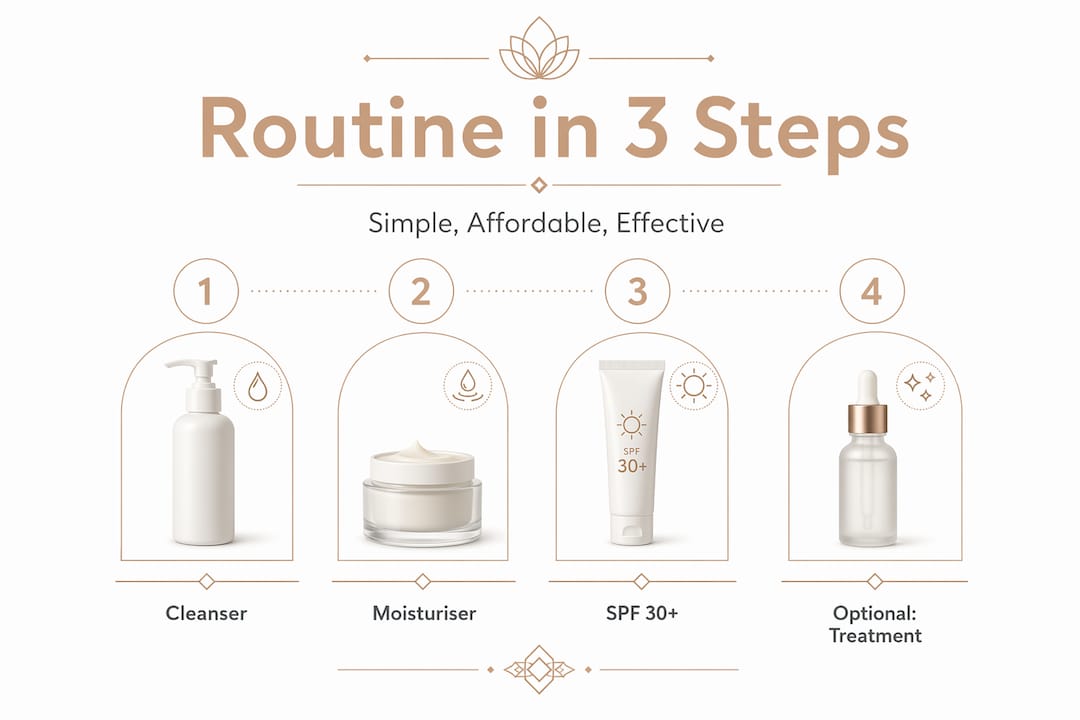
A simple six-step foundation for skincare includes skin understanding, cleanser, serum, moisturiser, and daily SPF, but if you are starting on a tight budget, you can reduce that to three and still cover everything that matters. Here is how to approach each one:
-
Cleanser. Choose a gentle, non-stripping formula suited to your skin type. For dry or sensitive skin, a cream or micellar cleanser works well. For oily skin, a gel or foaming cleanser is more effective. Own-brand options from Boots, Superdrug, or supermarket pharmacy ranges typically cost between £2 and £5 and perform comparably to premium alternatives.
-
Moisturiser or emollient. Emollients trap moisture and reduce dry, itchy skin. Applying one directly after cleansing while skin is still slightly damp improves absorption. If you use any topical steroid cream for a skin condition, wait 20 to 30 minutes before applying it over your moisturiser. For general use, a fragrance-free lotion or cream in a larger pump bottle gives you the best value per application.
-
Sunscreen. This is non-negotiable, even in the UK. Daily sunscreen reduces UV damage linked to several skin problems and is one of the simplest proven skin health measures available. Choose at least SPF 30 with 4-star UVA protection and apply it as the final step of your morning routine.
“Dermatology experts place sunscreen at the hub of skincare, calling it the best anti-ageing product and the foundation of effective routines.” — The Mirror, 2026
One practical note on sunscreen quantity: the recommended amount is roughly 35ml per adult per full-body application. For the face alone, most guides suggest about a teaspoon. Factor this into your budget when choosing a product. A 50ml tube used correctly will last you roughly six weeks for face use only, so a £6 sunscreen is genuinely affordable.
Pro Tip: Look for a moisturiser with SPF 30+ if you want to combine two steps into one product. This works well for mornings when time is short, though a dedicated sunscreen applied over moisturiser gives slightly better protection.
Adding targeted treatments without wasting money
Once your three-step regimen is consistent and your skin has settled, you can consider adding one targeted treatment. The key word is one. Buying repeatable core items for daily use and adding one active concern at a time avoids irritation and product churn, which is one of the most common ways people overspend on skincare.
The two most evidence-backed affordable actives available in the UK are retinoids and peptides. Retinoids (including retinol, the over-the-counter form) stimulate collagen production and accelerate cell turnover. Peptides support the skin barrier and have a gentler profile, making them a better starting point for sensitive skin types.
Here is what to keep in mind before you buy:
-
Start with the lowest concentration available. A 0.1% to 0.3% retinol is a sensible entry point for most people.
-
Start retinoids gradually, building frequency slowly and supporting skin with a good moisturiser to improve tolerability and reduce waste.
-
Use retinoids in the evening only. They degrade in sunlight and can increase photosensitivity, making your morning SPF even more important.
-
If you experience persistent redness, peeling, or stinging beyond the first two weeks, reduce frequency rather than abandoning the product entirely.
-
For acne-prone skin, NICE clinical guidance supports cost-effective topical treatments paired with moisturisers and SPF for barrier protection, which aligns well with a budget-focused approach.
Pro Tip: Niacinamide is one of the most affordable and well-tolerated actives you can add. It addresses pore size, uneven tone, and oiliness. Many own-brand UK products include it at effective concentrations (around 5 to 10%) for under £5.
A practical daily routine with budget pricing
Here is a realistic morning and evening routine you can build for under £25 in total, using products widely available in UK pharmacies and supermarkets.
Morning routine
-
Gentle cleanser (£2 to £5)
-
Lightweight moisturiser or moisturising SPF 30+ (£5 to £10)
-
Dedicated sunscreen if using a separate moisturiser (£4 to £8)
Evening routine
-
Gentle cleanser (same product as morning)
-
Treatment serum or retinol, two to three nights per week to start (£5 to £12)
-
Richer moisturiser or emollient (£3 to £8)
| Step | Product type | Approx. cost | Frequency |
|---|---|---|---|
| Cleanser | Gel or cream formula | £2 to £5 | Twice daily |
| Moisturiser | Fragrance-free lotion or cream | £3 to £8 | Twice daily |
| Sunscreen | SPF 30+, 4-star UVA | £4 to £8 | Every morning |
| Treatment serum | Retinol or peptide | £5 to £12 | 2 to 3 evenings per week |
A 5-step routine using own-brand products between £5 and £17 including SPF has been shown to be both effective and affordable in the UK. You do not need to spend more than this to see results. Superdrug’s own-brand B. range, for example, offers niacinamide serums and SPF moisturisers at prices that sit well within this budget.
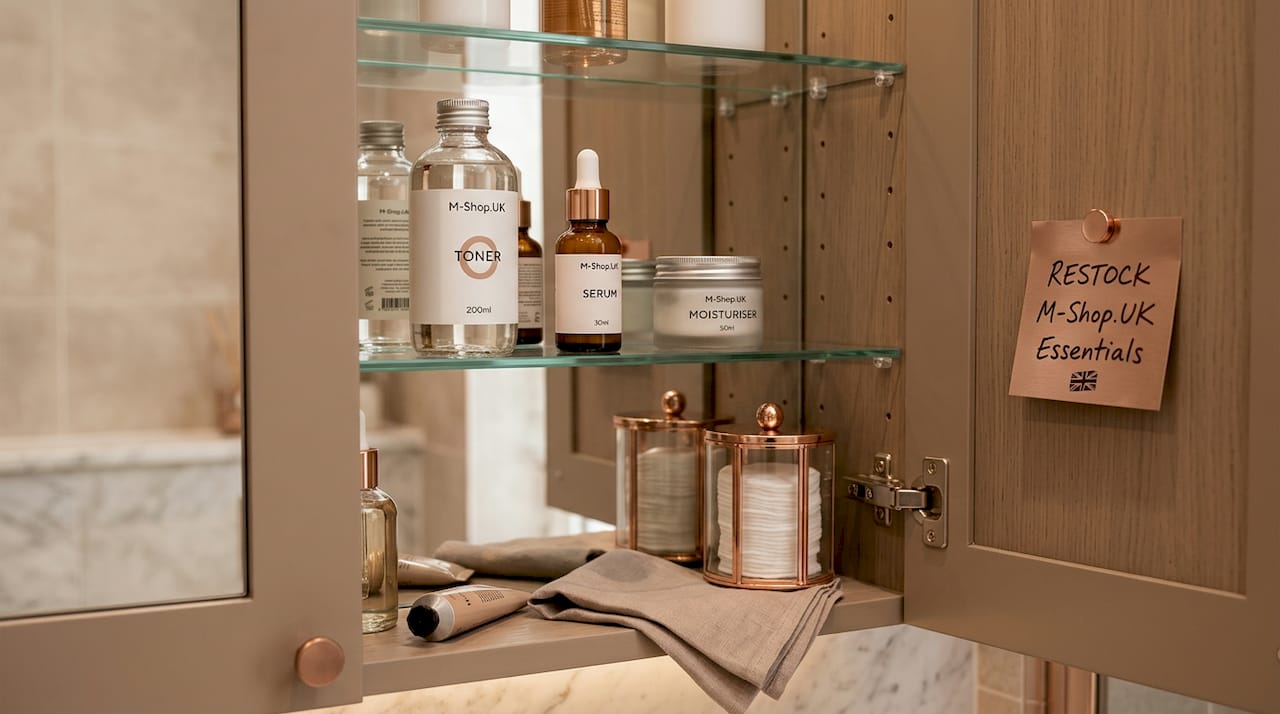
To extend product lifespan, store products away from direct sunlight and heat. A bathroom cabinet is fine as long as it is not directly above a radiator. Pump dispensers also reduce contamination and waste compared to open pots.
Common mistakes that cost you money
Most budget skincare routines fail not because the products are cheap, but because of how they are used. Recognising these patterns early saves both money and skin health.
-
Overbuying without a plan. Purchasing six new products at once makes it impossible to know what is working or causing a reaction. Introduce one product at a time and give it at least four weeks before judging results.
-
Under-applying sunscreen. This is the single most common mistake. Most people apply roughly a quarter of the recommended amount, which means the SPF protection they receive is significantly lower than the label states. Use more than you think you need.
-
Overloading on actives. Combining retinol, vitamin C, AHAs, and BHAs in the same routine without building tolerance leads to a compromised skin barrier. The result is redness, sensitivity, and abandoned products. Pick one.
-
Skipping SPF on cloudy days. UV rays penetrate cloud cover. In the UK, where overcast skies are the norm for much of the year, this is a particularly costly habit to develop.
-
Switching products too quickly. Most active ingredients take six to twelve weeks to show visible results. Abandoning a product after two weeks and buying a replacement is one of the fastest ways to overspend on skincare.
Knowing when to pivot is also important. If a product causes persistent irritation, stinging, or breakouts after four weeks, it is not the right product for your skin. That is useful information, not a failure.
My honest take on keeping it simple
I have spent years watching people spend more and more on skincare while getting worse results. What I have found, consistently, is that the people with the healthiest skin are not the ones with the most products. They are the ones who have found three or four things that work and use them every single day without fail.
The single biggest shift I have seen in people’s skin comes not from adding a new serum, but from finally applying sunscreen correctly and consistently. It sounds underwhelming. It is not. The cumulative effect of daily UV protection over months and years is genuinely visible, and it is the one step that costs almost nothing relative to the benefit it delivers.
My other strong opinion: patience is a skincare skill. Most people give up on a routine or a product before it has had time to work. The skin renews itself roughly every 28 days. Expecting visible change in under a month is unrealistic. Expecting it in under a week is wishful thinking.
If you are building a budget Polish skincare routine or adapting a routine for the UK’s cold, dry winters, the same rules apply. Start simple, stay consistent, and add complexity only when the basics are working.
— Krzysztof
Start your routine with M-shop’s Polish skincare range

At M-shop, we are a family-run business bringing trusted Polish cosmetics to customers across the UK. Polish skincare brands have a long reputation for combining effective ingredients with genuinely affordable pricing, and our range reflects exactly that. Whether you are starting from scratch or looking to upgrade one step of your current regimen, we stock products that fit a realistic UK budget without cutting corners on quality.
For daily moisturising, the Celia Collagen + Algae cream is a lightweight option well-suited to a morning routine, while the Celia Rich Anti-Wrinkle Cream works as a richer evening moisturiser for dry or mature skin. If you are looking for a gentle toning step, the Celia Marigold toner pairs well with any basic cleansing routine. For dry skin body care, the Ziaja Goat’s Milk lotion is a customer favourite at a price that makes daily use genuinely practical. Browse the full range at M-shop.uk and find everything you need to get started today.
FAQ
What are the most important steps in an affordable UK skincare routine?
The three core steps are a gentle cleanser, a fragrance-free moisturiser, and a daily sunscreen with at least SPF 30 and 4-star UVA protection. These cover the foundations of any effective basic skincare regimen.
How much should I spend on a budget skincare routine in the UK?
A complete daily routine covering cleanser, moisturiser, and sunscreen can be built for between £15 and £25 using own-brand products from UK pharmacies or supermarkets. Polish cosmetic brands available through retailers like M-shop offer comparable quality at similar price points.
When should I add a serum or active treatment to my routine?
Add a treatment only after your three-step core routine is consistent and your skin has settled, typically after four to six weeks. Introduce one active at a time, starting at a low concentration, and give it at least six weeks before assessing results.
How much sunscreen should I actually apply to my face?
Roughly a teaspoon (about 1.5 to 2ml) for the face and neck alone. Most people apply far less than this, which reduces the effective SPF they receive. Budget for a 50ml tube lasting approximately six weeks with correct daily use.
Are Polish skincare brands available in the UK good quality?
Yes. Polish cosmetic brands such as Ziaja and Celia are well-established in Europe and are known for using effective ingredients at accessible price points. They are a strong option for anyone building an affordable anti-ageing routine or a budget daily regimen in the UK.
Recommended
-
Celia - Collagen + skylight - MILK for cleansing the face and eye make – M-Shop.UK
-
Celia - Collagen + Algae 40+ Lightweight Moisturising Collagen Cream w – M-Shop.UK
-
Celia - Collagen + Vitamines 40+ - RICH anti-wrinkle CREAM for dry and – M-Shop.UK
-
Bielenda Professional Capillary Repair Face Cream with Rutin and Vitam – M-Shop.UK