



Retinol vs collagen: which one actually softens wrinkles?
For reducing wrinkles, topical retinoids currently have the strongest clinical evidence. Collagen, whether applied as a cream or swallowed as a supplement, plays a supporting role rather than a replacement one. A controlled study on photoaged forearm skin found that topical retinol increased type I collagen production within four weeks, which is the kind of biopsy-confirmed result collagen products simply cannot show.
That does not make collagen pointless. It makes it a different tool for a different job.
- Retinoids (retinol, tretinoin) remodel the dermis and are the best-evidenced topical option for wrinkles and rough texture.
- Topical collagen hydrates the surface and smooths skin temporarily but does not rebuild collagen underneath.
- Oral collagen peptides may modestly support elasticity and hydration over time, working from the inside as a complement, not a substitute.
- Start here: wear broad-spectrum sunscreen every day, introduce retinol slowly if your skin tolerates it, and treat collagen supplements or creams as a secondary support rather than the main event.
TL;DR:
- Retinoids have the strongest clinical evidence for wrinkles reduction, confirmed by biopsy within four weeks, and typically show visible results in 8 to 12 weeks.
- Topical collagen hydrates the skin’s surface temporarily without rebuilding collagen underneath, while oral collagen peptides may support elasticity and hydration over time with less proven efficacy.
- Collagen molecules are too large to penetrate the skin barrier, making topical products mainly surface moisturizers, whereas oral peptides can reach bloodstream but with smaller, less consistent effects.
- Daily sunscreen and slow retinol introduction are critical, with retinoids used at night and collagen supplements taken any time, but topical collagen is best for immediate skin comfort.
- A balanced routine combines retinoids for structural benefits and collagen products for hydration and comfort, tailored to skin type, tolerance, and life stage.
Table of Contents
- Collagen vs retinol: how each one actually works on skin
- What the clinical evidence actually shows
- Topical collagen cream vs oral collagen peptides: know the difference
- Matching your choice to your skin and your tolerance
- Building a routine that uses both, safely
- Introducing retinol without wrecking your skin barrier
- Where M-shop’s collagen range fits into this picture
- Key Takeaways
- What mature skin actually needs, and what’s overrated
- Get started with M-shop’s collagen range for mature skin
- Sources
Collagen vs retinol: how each one actually works on skin
The two ingredients don’t compete on the same battlefield. Retinol works from inside the skin cell. Collagen, in most forms you can buy, works from the outside in, or doesn’t reach the skin at all.
-
Retinol converts to retinoic acid, the active form, once it’s inside skin cells. Retinoic acid binds to nuclear receptors that switch on genes for procollagen production while dialling down matrix metalloproteinases (MMPs), the enzymes that break collagen down. That dual action, more building blocks, less demolition, is why retinoids show up so consistently in dermal collagen studies.
-
Topical collagen molecules are too large to get through the stratum corneum, the skin’s outer barrier. Collagen applied in a cream behaves more like a well-designed humectant, sitting on the surface, reducing water loss, and giving skin a smoother, plumper feel almost immediately. That feel is real. It’s just not the same as new collagen being laid down in the dermis.
-
Hydrolysed oral collagen peptides take a third route entirely. Broken down into small fragments, some peptides under roughly 5kDa, including a dipeptide called Pro-Hyp, can be detected in the bloodstream after ingestion. That’s a plausible mechanism for reaching skin tissue and influencing fibroblast activity, the cells that produce collagen. Whether that translates into measurable dermal collagen gains, the way biopsy studies show for retinoids, is far less settled.
Three ingredients, three delivery routes, three very different levels of proof.
What the clinical evidence actually shows
Retinoids have decades of biopsy and trial data behind them. Collagen supplements have a growing but noticeably patchier evidence base, and that gap matters more than most product marketing lets on.
The numbers that matter: In a controlled study, topical retinol restored type I collagen production in photoaged forearm skin within four weeks, confirmed through biopsy, not just visual scoring. Harvard Health notes that retinoids reliably reduce fine lines and wrinkles by increasing collagen production, though visible results typically take months of consistent use, not weeks.
Oral collagen peptides tell a messier story. Randomised trials report improvements in hydration and elasticity in some studies, but pooled analyses of that same research show real heterogeneity: different peptide sources, different doses, different trial lengths, and, in some cases, funding from the same companies selling the supplements. That doesn’t mean the effect is fake. It means the size of the effect is harder to pin down than a single confident headline suggests.
Here’s how the two compare when you strip away the marketing language:
- Retinoids: biopsy-confirmed collagen increase, reduced wrinkle depth, timeline of 8 to 12 weeks for visible change, decades of independent replication.
- Oral collagen peptides: plasma-detectable absorption, some RCTs showing hydration and elasticity gains, effect sizes smaller and less consistent, more industry-funded research in the mix.
- Topical collagen: no meaningful penetration, immediate but temporary surface smoothing, essentially zero long-term structural claim to make.
If you’re chasing genuine wrinkle reduction, retinoids do more of the heavy lifting. If you’re managing dryness and want your skin to feel comfortable while that happens, collagen earns its place alongside it.
Topical collagen cream vs oral collagen peptides: know the difference
A jar labelled “collagen cream” and a tub of collagen powder are not doing the same job, and treating them as interchangeable is where most people waste money.
Topical collagen improves how skin feels right now. It boosts surface hydration, softens the look of fine lines temporarily, and gives that plumped, dewy texture people associate with “working” skincare. None of that means it’s rebuilding the collagen scaffold in your dermis. It’s a moisturiser with a fashionable ingredient name.
Oral hydrolysed peptides work differently, and with more biological plausibility behind them.
- They supply small peptide fragments that can reach the bloodstream after digestion.
- Several RCTs report modest gains in skin hydration and elasticity over 8 to 12 week courses.
- The effects tend to be smaller and less consistent than what biopsy studies show for topical retinoids.
Pro Tip: If your skin feels tight, flaky, or crepey rather than deeply wrinkled, a rich topical collagen cream will likely give you faster, more noticeable comfort than any oral supplement. Save the supplement conversation for elasticity and hydration support over the medium term, not instant results.
Use topical collagen when you want immediate comfort and a smoother finish today. Consider oral peptides as an optional, longer-run strategy layered on top of, never instead of, a retinoid routine.
Matching your choice to your skin and your tolerance
Not every mature complexion needs the same starting point, and the right first move depends on what’s actually bothering you.
- Wrinkles and texture are your main concern: go retinoid-first, provided there’s no medical reason to avoid it. Nothing else in this comparison has the same weight of biopsy-confirmed evidence behind it.
- You’re pregnant, breastfeeding, or your skin reacts badly to actives: retinoids are off the table for now. Lean on oral collagen peptides, hyaluronic acid, and rich moisturisers instead, and check with a pharmacist or dermatologist about safer alternatives before adding anything new.
- Budget or tolerance is genuinely limited: build your baseline around daily sunscreen and a solid moisturiser first. A collagen supplement is a reasonable, low-risk add-on once that foundation is in place, even if you never get to retinol.
There’s no universal winner here. There’s a winner for wrinkle reduction specifically, and a supporting cast for everyone whose skin, budget, or life stage rules that winner out.
Building a routine that uses both, safely
Retinol and collagen aren’t rivals fighting for the same slot in your bathroom cabinet. Used correctly, they sit in completely different parts of your day.
Retinol belongs at night. UV light degrades it and increases photosensitivity, so it goes on after dark, followed the next morning by a broad-spectrum SPF and, ideally, an antioxidant serum such as vitamin C to help defend against the sun exposure retinol makes skin more vulnerable to.
- Evening: cleanse, apply retinol, follow with a rich moisturiser (a Celia collagen cream works well here) if skin feels tight.
- Morning: cleanse, antioxidant serum, moisturiser, then broad-spectrum SPF, non-negotiable, applied daily regardless of weather.
- Collagen supplements: taken consistently, once daily, at whatever time fits your habits, since absorption doesn’t depend on time of day.
Pro Tip: Buffer irritation by applying a plain moisturiser first, letting it sink in for a few minutes, then layering retinol on top. It slightly slows absorption but takes the edge off the stinging that puts most beginners off retinol within the first fortnight.
If you’re unsure how to slot new products into an existing regime, a step-by-step routine order guide is worth ten minutes of reading before you buy anything new.
Introducing retinol without wrecking your skin barrier
Nearly everyone who quits retinol too early does so because they went in too hard, too fast. The irritation is temporary and manageable if you respect the process.
- Start every other night for two to four weeks with a low-strength formulation, then assess how your skin has coped before increasing frequency.
- Move to nightly use gradually, only once flaking and redness have settled, not before.
- Watch for dryness, peeling, and mild redness during this “retinization” phase. It’s expected, not a sign you’ve picked the wrong product, and it typically settles within two to four weeks according to research on retinol adaptation protocols.
- Soothe irritation with a fragrance-free moisturiser and skip other actives, exfoliating acids, additional vitamin A products, while you adjust.
- Stop and speak to a clinician if you develop severe swelling, blistering, or a reaction that doesn’t calm down within a few days. Retinoids are also unsuitable during pregnancy and can interact with certain acne medications, so flag any prescriptions to a pharmacist before starting.
Some clinical protocols use intermittent, every-other-night, or short-contact application specifically to cut irritation while preserving the collagen-boosting effect, so slower doesn’t mean weaker. It just means kinder to your skin barrier while it adjusts.
Where M-shop’s collagen range fits into this picture
Retinol does the structural work. A well-formulated collagen cream makes the process comfortable enough that you actually stick with it, and that’s the gap M-shop’s Celia range is built to fill.
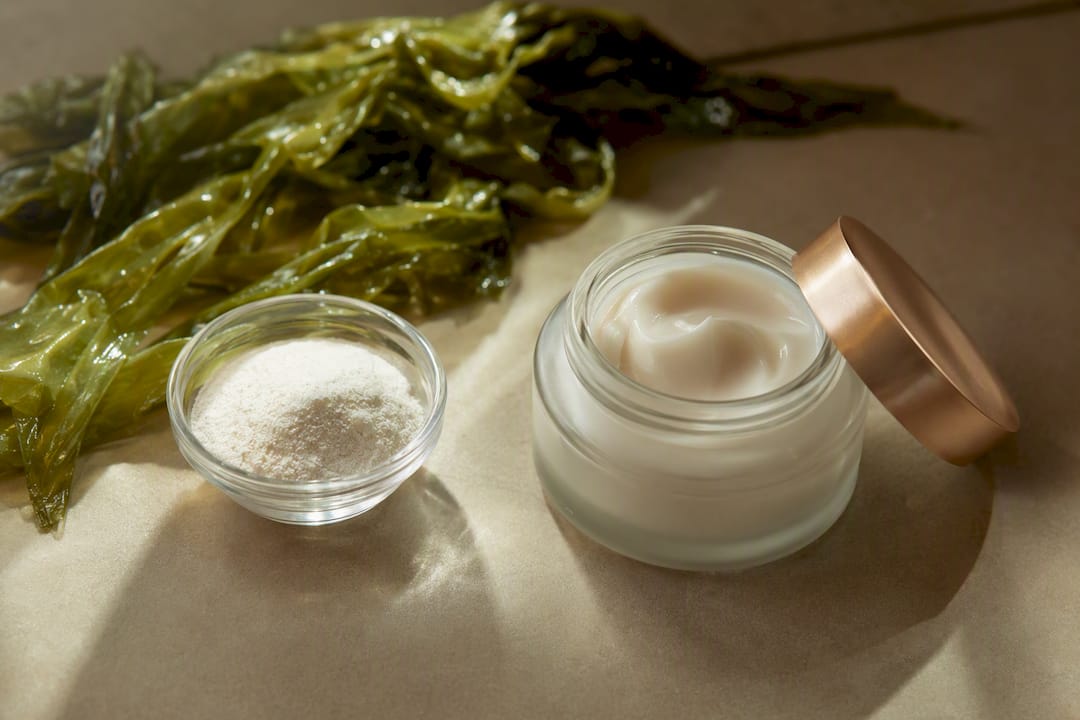
The Celia Collagen + Vitamines 40+ cream is a rich formulation designed for the dryness that often shows up during retinol use or simply with age, making it a natural evening partner once your retinol has absorbed. For lighter coverage or warmer months, the Celia Collagen + Algae 40+ offers the same hydration principle with a less heavy texture.
- Sensitive or reactive skin often does better with the fragrance-free Celia Collagen + Goat Milk 40+ formulation.
- Combination or drier mature skin types may prefer the Celia Collagen + Olive 40+ semi-rich cream.
- A weekly boost from the Celia Collagen + Eyebright mask can support a retinol routine without adding another daily step.
M-shop sources these formulations directly from Poland as a family-run operation, prioritising natural ingredients like collagen and algae rather than synthetic filler. Readers wanting a deeper dive into ingredient choices specifically for men’s skin can find more detail on the collagen skincare for men blog. None of this replaces what a retinoid does structurally, but it makes the months of consistent use retinol demands far more bearable.
Key Takeaways
Topical retinoids remain the most clinically supported option for reducing wrinkles, while collagen, topical or oral, works best as a hydration and comfort partner rather than a stand-in.
| Point | Details |
|---|---|
| Retinoids lead on evidence | Biopsy-confirmed studies show retinol increases dermal collagen and reduces wrinkles within weeks to months. |
| Topical collagen stays on the surface | It hydrates and smooths temporarily but doesn’t penetrate deep enough to rebuild collagen. |
| Oral peptides are a modest adjunct | Some RCTs show hydration and elasticity gains, but effects are smaller and less consistent than retinoids. |
| Sunscreen is non-negotiable | Retinol increases photosensitivity, so daily broad-spectrum SPF is essential alongside it. |
| Introduce retinol slowly | Start every other night for two to four weeks before increasing frequency to manage irritation. |
| M-shop supports the routine | The Celia collagen range offers hydrating creams and masks designed to pair with, not replace, a retinoid regime. |
What mature skin actually needs, and what’s overrated
The biggest disservice done to anyone over 40 browsing skincare is presenting collagen and retinol as competing philosophies. They’re not. One remodels tissue; the other manages comfort and surface feel. Treating them as rivals in a marketing battle obscures a much simpler truth: retinoids carry the evidence, and collagen carries the support role, gracefully and without needing to pretend otherwise.
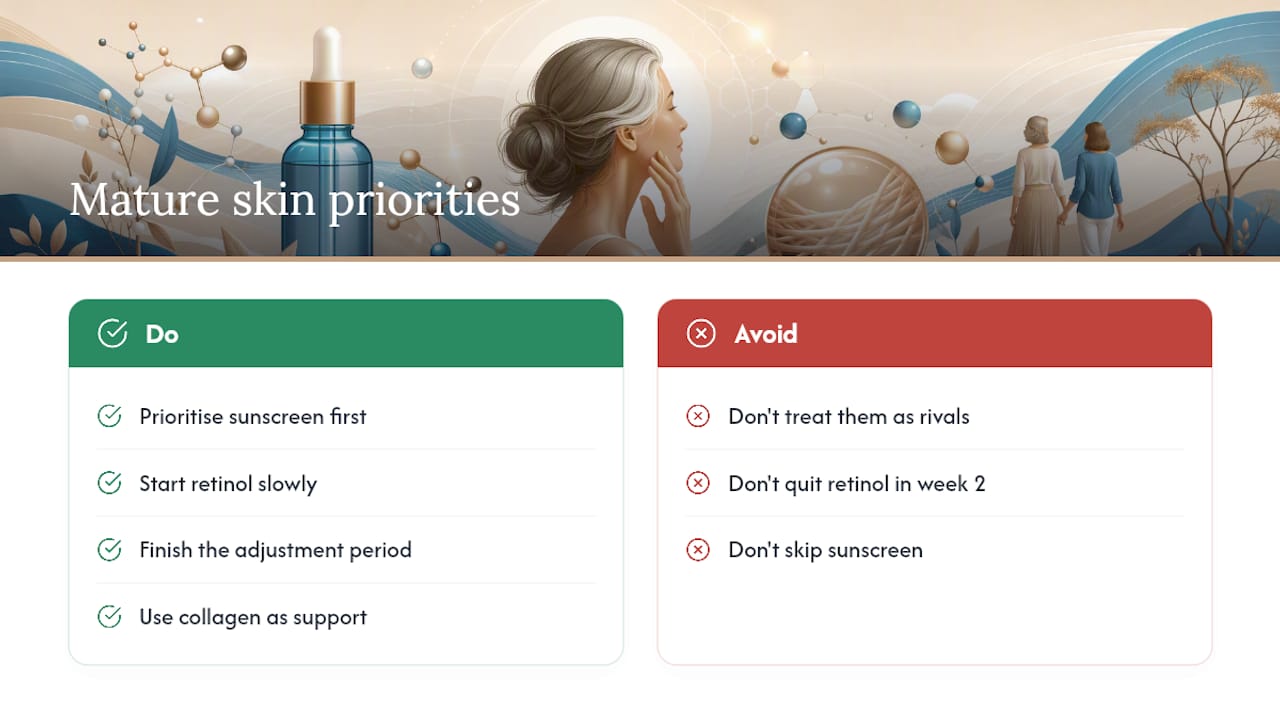
Where conventional advice falls short is the timeline. Most people abandon retinol during the second week, exactly when the skin is adjusting, because nobody warned them the flaking is temporary. That’s a bigger obstacle to results than any ingredient debate.
Prioritise sunscreen first, always. Then commit to retinol slowly enough that you actually finish the adjustment period instead of quitting mid-way. Collagen, in whichever form suits your skin, is the layer that makes that commitment sustainable, not the headline act.
— Krzysztof
Get started with M-shop’s collagen range for mature skin
M-shop gives you a direct, family-run route to Polish-formulated collagen skincare without the inflated pricing that comes with big-name “clinical” ranges promising the same hydration benefits.

If your retinol routine has left your skin needing richer, more consistent hydration, the Celia Collagen + Vitamines 40+ cream is built specifically for that gap. Readers with more general skin concerns beyond wrinkles, including congestion or breakouts alongside ageing skin, may also want to look at the Pharmaceris T Sebostatic day cream as a targeted option. Browse the full mature-skin range and check current stock and pricing today.
Sources
- Topical Retinol Restores Type I Collagen Production in Photoaged Forearm Skin within Four Weeks (MDPI)
- Do retinoids really reduce wrinkles? - Harvard Health
Recommended
- Celia - Collagen + Vitamines 40+ - RICH anti-wrinkle CREAM for dry and – M-Shop.UK
- Collagen skincare for men: what actually works – M-Shop.UK
- Celia - Collagen + Olive 40+ - SEMI-RICH anti-wrinkle CREAM for mature – M-Shop.UK
- Celia - Collagen + Eyebright - Anti-wrinkle MASK for the face, neck, c – M-Shop.UK