



Enzyme cleaner vs bleach: which one actually removes the stain?
Use an enzyme cleaner for organic stains and smells (urine, blood, food, sweat, vomit) on carpets, upholstery, and mattresses. Use bleach when you need fast disinfection or whitening on hard, non-porous surfaces like tiles, sinks, and grout. They solve different problems, and reaching for the wrong one wastes time or wrecks the fabric.
The nuance that trips people up: bleach doesn’t actually remove organic residue from fibres, it just oxidises what’s on the surface, so pet odours often come straight back once the bleach smell fades. Enzymes need patience, not power.
- Never mix the two products, on the same spot or in the same bucket
- Enzymes need dwell time, often a short period of several minutes minimum, sometimes longer for deep-set stains
- Bleach can strip colour and degrade foam, so pre-test first.
Read on for the mechanics, a scenario checklist, safety rules, and step-by-step application before you tackle that stain.
Key Takeaways
Choosing the right cleaner comes down to matching enzymes to organic, porous problems and bleach to fast disinfection on hard surfaces, and never combining the two.
| Point | Details |
|---|---|
| Match product to problem | Use enzyme cleaners for organic stains in porous materials, bleach for disinfecting hard surfaces. |
| Never mix bleach and enzymes | Bleach deactivates enzymes instantly and can produce toxic gas with ammonia or acids. |
| Dwell time matters most | Enzymes need roughly 10 to 15 minutes minimum, sometimes hours, on deep-set stains. |
| Check shelf life regularly | Both products lose potency with heat and age, store cool, dark, and sealed. |
| Pair with gentle skincare | M-shop’s collagen and algae creams suit households prioritising material-safe, natural formulas. |
Table of Contents
- How enzyme cleaners and bleach actually work
- Enzyme cleaner or bleach: which one for your stain?
- What should you never mix with enzymes or bleach?
- How do you use an enzyme cleaner correctly?
- How long do enzyme cleaners and bleach actually last?
- What health risks come with using enzyme cleaners and bleach?
- Frequently asked questions
- Sources
How enzyme cleaners and bleach actually work
Enzymes are biological proteins, not chemical scrubbers. Each one is shaped to target a specific type of organic molecule, and that specificity is the whole point.
- Protease breaks down proteins, found in blood, egg, and bodily fluids
- Lipase dismantles fats and oils, common in grease and some food stains
- Amylase digests starches, useful on food and grass stains
Vinegar and bicarbonate of soda don’t belong in this category at all. They can loosen some residue chemically, but neither contains the biological catalysts that actually digest organic matter, according to The Spruce’s breakdown of enzyme cleaner science.
Bleach works entirely differently. Sodium hypochlorite oxidises molecules on contact, which is why it disinfects fast and bleaches colour out of fabric at the same time. The trade-off is contact time: disinfection claims typically require the surface remain wet with bleach solution for the concentration and time specified on the label. Enzymes, by contrast, are fragile. Heat above roughly 50°C, strong acids or alkalis, and expired formulas can deactivate them before they’ve finished working, a point Enzymecleaners makes clearly when explaining why enzyme products fail.
Enzyme cleaner or bleach: which one for your stain?
Match the product to the problem, not the brand promise on the bottle. Here’s the decision order that actually holds up in practice.
- Organic stain on a porous surface (carpet, upholstery, mattress, grout lines) — go straight to an enzyme cleaner. Bleach can’t reach residue trapped in fibres or padding. Enzymes are built to digest exactly that kind of buried organic matter, a distinction WC Safety draws out clearly when comparing the two categories.
- Pet accidents — enzyme first, always. If a lingering smell persists after the enzyme treatment has fully dried, an oxygen-based laundry booster can finish the job, but never layer it on top of wet enzyme solution.
- Mould on a hard, non-porous surface — bleach handles the visible growth and kills surface spores fast. It won’t sanitise a porous material like drywall or grout backing, where mould roots can survive underneath.
- Whitening or rapid disinfection on tiles, sinks, or toilets — bleach wins on speed. Consumer Reports’ testing found oxidising formulas often outperform enzymes when speed matters more than depth of action, though enzymes still lead once you give them proper dwell time on organic soils.
- Coloured fabric or delicate upholstery — skip chlorine bleach entirely. Oxygen bleach is gentler but can still weaken foam padding underneath fabric, so spot test first regardless of which oxidiser you pick.
- Antique textiles, silk, or anything irreplaceable — neither product is worth the risk. A professional cleaner or a very small, hidden test patch is the safer route.
Enzyme cleaners tend to be biodegradable and gentler on repeated use, which is part of why they’ve become the default for carpets and soft furnishings, but they’re not disinfectants. Don’t ask an enzyme product to sanitise a chopping board, and don’t ask bleach to solve a mattress that smells of old urine.
What should you never mix with enzymes or bleach?
Bleach mixed with ammonia or acidic cleaners (including some bathroom and drain products) produces toxic chloramine or chlorine gas. That reaction is well documented and genuinely dangerous in an enclosed bathroom or laundry, as Cleange’s comparison of stain removal mechanisms notes when warning against combining oxidative and acidic products.
- Never combine bleach with ammonia, vinegar, or any acidic bathroom cleaner
- Never apply bleach and enzyme cleaner to the same stain in the same session, bleach denatures the enzymes instantly
- Chlorine bleach strips colour from fabric and corrodes some metal fittings
- Oxygen bleach is milder but can still break down foam padding over time
- Always test on a hidden patch and open a window before using either product
Pro Tip: If a stain needs both cleaning power and disinfection, treat with the enzyme cleaner first, rinse the area, let it dry completely, then apply the disinfectant separately. Doing it in one messy step usually means the enzymes never get the chance to work.
How do you use an enzyme cleaner correctly?
Most enzyme cleaner failures come down to technique, not the product itself.
- Remove and blot. Scrape off solids and blot excess liquid with a clean cloth. Don’t rub, that just pushes the stain deeper into the fibres.
- Test and choose your temperature. Dab a hidden area first, then use cool or lukewarm water only. Hot water can deactivate the enzymes before they’ve had a chance to work.
- Saturate, wait, then extract. Soak the stain to the same depth the liquid originally penetrated, not just the surface. Follow the label’s dwell time, commonly 10 to 15 minutes for fresh stains and considerably longer for deep-set, dried-in soils, then blot or extract and let it air dry fully before checking the result.
If the odour persists after a full dry cycle, repeat the treatment rather than reaching for something stronger. Enzymes work in layers on deep contamination, and a second application often finishes what the first one started. Only bring in a disinfectant once the area is dry and the enzyme job is genuinely done.
Where M-shop fits into stain-safe fabric care
Getting a stain out without wrecking the surface underneath is really a question about material compatibility, which is exactly what M-shop thinks about with skincare too. As a family-run business bringing Polish cosmetics into the UK, M-shop pays close attention to how gentle formulas interact with skin and delicate materials, the same principle that matters when you’re deciding whether a fabric can handle bleach at all.
- A micellar cleanser lifts residue without harsh oxidisers, useful logic when treating cosmetic stains on fabric
- An enzymatic scrub with papain shows how enzymes work gently on organic residue, the same principle behind enzyme cleaners on carpets
- A gentle micellar liquid cleanser is worth keeping nearby for spot-treating makeup marks before they set
For a deeper look at treating cosmetic marks without damaging fabric, M-shop’s guide to affordable makeup removal routines covers the same stain-safe logic in more detail.
How long do enzyme cleaners and bleach actually last?
Bleach degrades faster than most people assume. Sodium hypochlorite loses potency steadily from the moment it’s manufactured, and an opened bottle stored in a warm cupboard can lose significant disinfecting power over time. If a bleach solution smells weaker than usual or has changed colour, treat it as unreliable rather than risk ineffective cleaning.
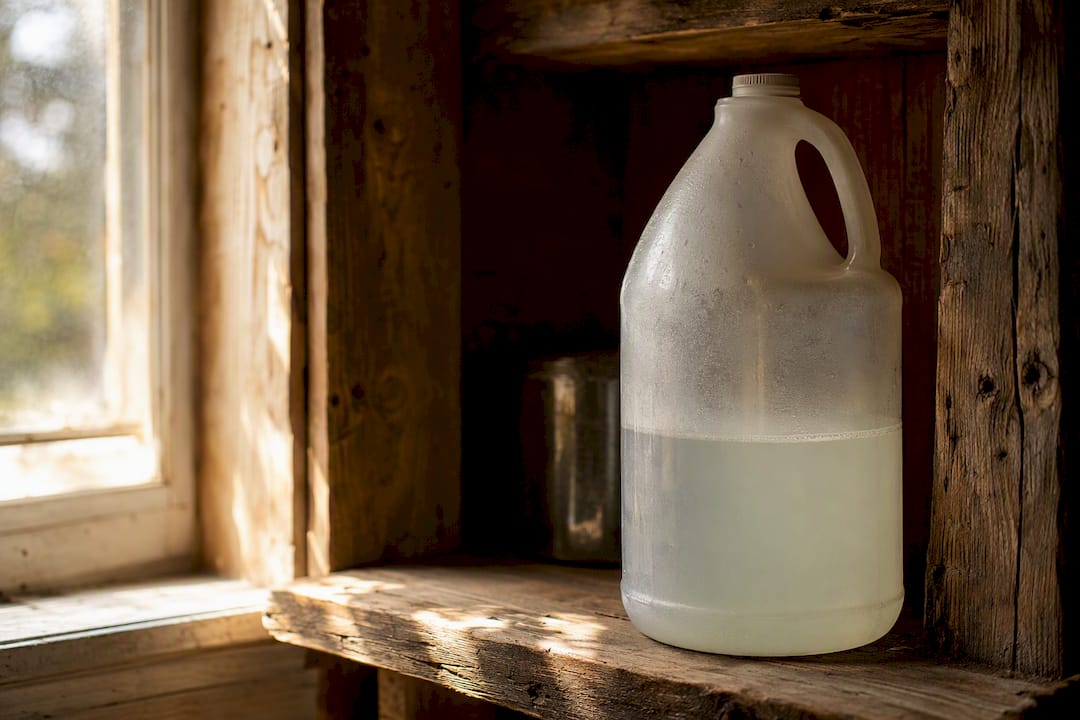
Enzyme cleaners have their own shelf-life problem: the enzymes themselves are living proteins that break down over time, and heat speeds that decline considerably. A bottle left in a hot car boot or on a sunny windowsill can lose much of its effectiveness long before the printed expiry date. EnzymeCleaners.com points to heat and age as two of the most common reasons an enzyme product simply stops working, even when it’s applied correctly.
Store both products in a cool, dark cupboard, away from direct sunlight and away from each other. Keep bleach in its original container, since the label carries the exact dilution ratios you’ll need for disinfection to actually work, and once diluted in water, bleach solution should generally be used within about 24 hours because it loses strength quickly. Enzyme cleaners fare better sealed and undiluted until the moment you use them. If either product has passed its stated shelf life, don’t gamble on a stubborn stain, just buy a fresh bottle.
What health risks come with using enzyme cleaners and bleach?
Bleach fumes are the more immediate concern. Sodium hypochlorite releases chlorine gas when it reacts with ammonia or acidic substances, and even used alone in a small, unventilated bathroom, the fumes can irritate the eyes, throat, and lungs. Anyone with asthma or another respiratory condition should be especially careful, opening a window or running an extractor fan before starting.
Enzyme cleaners carry a different, milder risk profile. They’re generally considered safer for repeated use around the home, but the enzymes themselves can still cause skin or eye irritation in concentrated form, and swallowing either product accidentally is a genuine hazard, particularly with children or pets in the house.
- Wear gloves when using either product for extended periods
- Ventilate the room, don’t clean a small bathroom with the door and window closed
- Keep both products in their original, clearly labelled containers, never decanted into unmarked bottles
- Follow the label’s stated dilution and contact time exactly, stronger isn’t better with bleach, it’s just riskier
- Store both well out of reach of children and pets, and never store bleach near acidic cleaning products on the same shelf
If you experience persistent coughing, dizziness, or skin irritation after using either product, stop, ventilate the area fully, and don’t return to the task until symptoms clear.
Author perspective: practical priorities for households
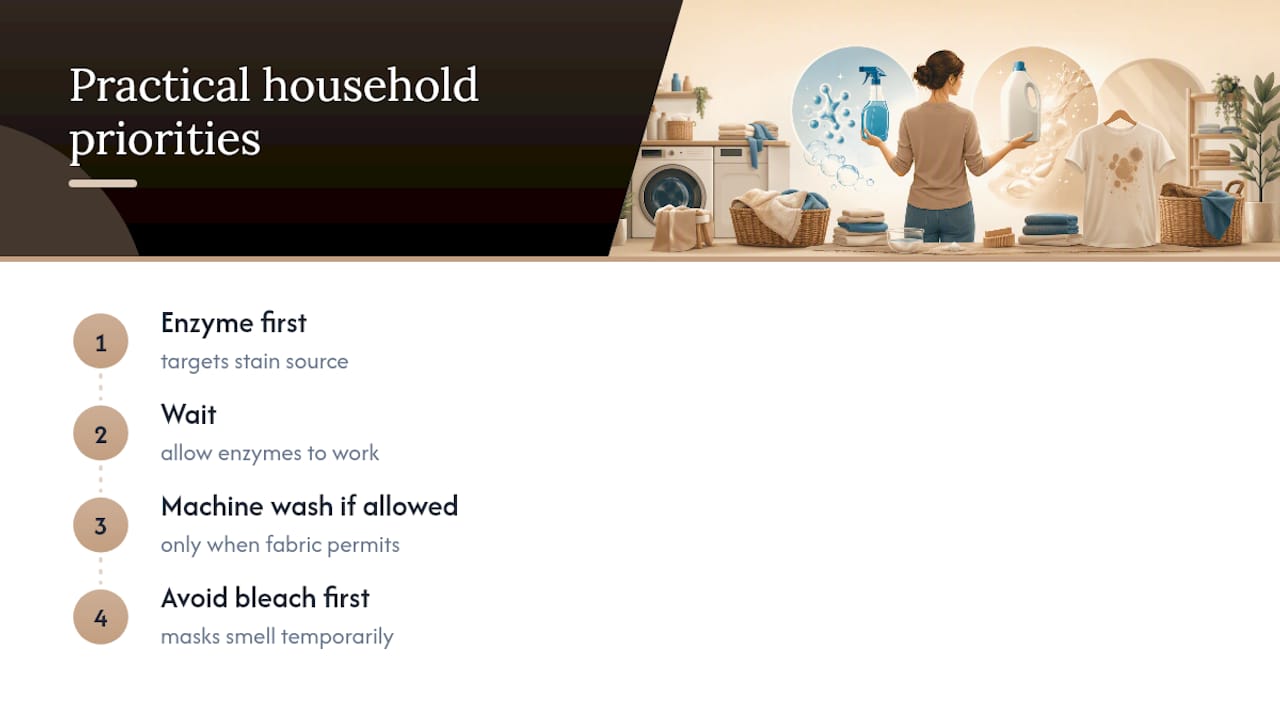
My stance is simple: enzymes remove the source, bleach removes the surface problem. Treat a pet accident on upholstery with a proper enzyme soak, wait it out, then machine wash if the fabric allows. Reaching for bleach first usually just masks the smell temporarily.
Gentle, fabric-safe care starts with the right product
Choosing the right cleaner is really a question of respecting what a material can handle, and that’s the same thinking behind M-shop’s skincare range.

If a stain has left skin nearby feeling stripped or irritated after cleanup, a gentle option like the hypoallergenic chestnut soap is worth having on hand for sensitive areas. For everyday skincare that pairs well with a careful, material-conscious household, browse the collagen and algae moisturising cream range and see what fits your routine.
Frequently asked questions
Is enzyme cleaner safe to use around pets and children? Generally yes, enzyme cleaners are considered gentler than bleach, but concentrated formulas can still irritate skin or eyes, so keep bottles sealed and out of reach.
Does bleach kill odours or just mask them? Bleach disinfects and can neutralise some smells on contact, but it doesn’t digest organic residue trapped in fabric or padding, which is why odours often return once it evaporates.
Can I use vinegar or baking soda instead of an enzyme cleaner? No. Neither contains the biological proteins that break down organic stains, so they work differently and generally less effectively on set-in, organic soils.
How long should I leave enzyme cleaner on a stain? Follow the label, but expect roughly 10 to 15 minutes for fresh marks and considerably longer, sometimes several hours, for deep-set or dried stains.
Is it ever safe to use bleach and enzyme cleaner on the same stain? Only in sequence, never together. Finish the enzyme treatment, rinse, let the area dry fully, then apply bleach or another disinfectant if still needed.
Sources
- Best enzyme cleaners and oxidisers for pet stains and odours (Consumer Reports)
- What Is an Enzyme Cleaner? (The Spruce)
- Ask ACI: Enzymes in cleaners (The Cleaning Institute)
- Enzymecleaners
- Enzymatic vs oxidative vs surfactant stain removal mechanisms (Cleange)
Recommended
- Bielenda Professional 2in1 Enzymatic Fine Grain Scrub with Papain and – M-Shop.UK
- The Blanx Med - ANTI-STAIN toothpaste 75 ml 8017331020272/800632005476 – M-Shop.UK
- Bielenda Professional Micellar Liquid Cleanser 300ml – M-Shop.UK
- Bielenda Professional Antibacterial Gel Make Up Remover with Salicylic – M-Shop.UK