



Repair First, Then Smooth: Keratin or Protein Treatment for UK Hair
Keratin smooths and seals the hair surface; protein rebuilds the shaft from within. Choose keratin when frizz, coarseness and long blow-dry times are the problem. Choose protein when hair snaps, feels gummy when wet, or has been bleached or over-styled into fragility. If it’s badly damaged, repair with protein first and consider keratin smoothing only once strength has recovered.
TL;DR:
- Protein treatments are essential for repairing structurally damaged hair caused by bleaching, heat styling, or chemical relaxers, gradually restoring elasticity and strength.
- Keratin smoothing primarily targets surface roughness and frizz, lasting two to six months, and works best on thick, coarse, or frizz-prone hair.
- Combining treatments requires applying protein first to rebuild internal bonds before sealing with keratin, preventing further damage and ensuring better results.
- Use sulphate-free shampoo and avoid excessive heat styling after treatments to prolong effects and maintain hair health.
- For hair that retains curl, prioritize protein; for frizz and smoothing, keratin works better, and the choice depends on your hair’s specific structural state.
Table of Contents
- Keratin vs protein hair treatment: what keratin actually does
- What does a protein hair treatment do?
- Keratin vs protein: which lasts longer and suits your curl?
- How do I know if my hair needs protein or keratin?
- Is keratin treatment safe, and can you combine it with protein?
- What aftercare keeps keratin and protein results going?
- Where M-shop fits into your keratin and protein routine
- Editorial take: why the “just do both” advice misses the point
- Recommended maintenance products from M-shop
- Sources
- FAQ
Keratin vs protein hair treatment: what keratin actually does
Keratin treatments come in three main forms, and mixing them up is where most people waste money. At-home keratin masks give a light, temporary smoothing effect you can do in the shower. Express salon blow-outs coat the cuticle with a lighter keratin formula and heat, lasting a few weeks. Full chemical keratin smoothing uses stronger bonding agents and heat-sealing, and this is the version people mean when they say “I got keratin done.”
The mechanism is straightforward: keratin coats and seals the hair cuticle, filling in rough, lifted scales so light reflects more evenly and humidity can’t swell the strand into frizz. It doesn’t rebuild anything structural underneath.
- Reduces frizz and cuts blow-dry time noticeably
- Adds visible shine by smoothing the cuticle surface
- Works best on thick, coarse or naturally frizzy hair
- Requires sulphate-free shampoo to protect the seal
Salon chemical smoothing typically lasts two to six months, depending on hair type, wash frequency and how gently it’s treated afterwards. Salon sessions usually run from one to several hours and cost considerably more than at-home masks, which is the trade-off you’re paying for.
What does a protein hair treatment do?
A protein treatment works underneath the cuticle, not on top of it. These formulas use hydrolysed proteins and amino acids, sometimes with keratin as one ingredient among several, to fill gaps in the hair’s internal structure where damage has occurred. Repeated bleaching, heat styling, or chemical relaxing strips protein bonds from the shaft; a protein treatment rebuilds them.
The result is measurable rather than cosmetic: hair regains tensile strength and elasticity, meaning it stretches and springs back instead of snapping. You’ll notice fewer strands in the shower drain and less breakage when detangling.
- Best for chemically damaged, colour-treated or heat-styled hair
- Improves elasticity and reduces snapping and split ends
- Results build gradually over several applications, not one session
- Works from within the strand rather than coating the surface
Protein treatments suit anyone whose hair feels weak, over-processed, or has lost its natural bounce. They do little for straightforward frizz caused by humidity and cuticle roughness. That’s keratin’s job.
Keratin vs protein: which lasts longer and suits your curl?
The core split is surface versus structure. Keratin smooths the outside; protein strengthens the inside. Neither substitutes for the other, which is why so many people end up needing both at different points.
- Main effect: keratin smooths and adds shine; protein strengthens and repairs
- Duration: keratin smoothing lasts two to six months; protein effects fade faster, often needing top-ups every few weeks
- Curl impact: some keratin formulas loosen or relax natural curl pattern; protein treatments generally preserve curl
- Maintenance: keratin needs sulphate-free products to protect the seal; protein needs balancing with moisture to avoid stiffness
- Best suited to: keratin for coarse, frizz-prone hair; protein for brittle, over-processed or fine hair prone to breakage
If you have naturally curly hair you want to keep, protein is usually the safer route. Keratin’s cuticle-sealing effect can loosen curl definition in some formulas, which is exactly what people chasing a sleek blow-dry want, and exactly what curl-pattern lovers want to avoid.
How do I know if my hair needs protein or keratin?
Your hair is already telling you which treatment it needs. You just have to know what to look for.
- Check how it behaves in humidity. If it frizzes and puffs up within minutes of stepping outside, that’s a cuticle problem keratin addresses directly.
- Do a wet-stretch test. Take a strand of wet hair and stretch it gently. Hair with good elasticity stretches slightly and springs back; hair that stretches a long way, feels gummy, or snaps outright has a protein deficit.
- Note your styling time. If blow-drying takes ages and hair still looks rough afterwards, that points to keratin. If styling tools cause visible breakage, that points to protein.
- Watch for high porosity signs, such as hair that soaks up water and product fast but dries out just as quickly. That’s usually a structural issue protein treatments target.
Pro Tip: If you’re not sure and your hair has been coloured or bleached in the last year, default to protein first. Treating already-fragile hair with keratin sealants can lock in weakness rather than fix it.
Is keratin treatment safe, and can you combine it with protein?
Some professional keratin smoothing formulas use heat-sealing alongside chemical agents, including formaldehyde or formaldehyde-releasing compounds, which can irritate the scalp and eyes if the salon isn’t well ventilated. Always ask your stylist what’s in the formula before booking, and choose a salon with proper airflow.
On the hair side, the main risk with protein is overload. Too much protein without enough moisture leaves hair feeling stiff, straw-like and prone to snapping, the opposite of what you wanted. Industry guidance is consistent here: maintain a moisture–protein balance rather than layering protein treatment after protein treatment.
- Patch test any chemical keratin formula 48 hours before a full application
- Space protein treatments out and follow with a deep moisture mask
- Repair damaged hair with protein first, wait a few weeks, then smooth with keratin if wanted
- Consult a qualified stylist before combining both in close succession
Combining them works, provided the order is right. Protein repair before keratin smoothing means you’re sealing strong hair, not sealing damage in place.
What aftercare keeps keratin and protein results going?
Sulphate-free shampoo is non-negotiable after keratin smoothing. Sulphates strip the smoothing agent early, and salt-heavy or clarifying formulas do the same, so save clarifying washes for occasional build-up removal rather than weekly use.
- Wash keratin-treated hair with sulphate-free shampoo a few times a week
- Use a light deep-conditioning or mild protein mask periodically for maintenance, not weekly
- Avoid tight ponytails and clips for the first 48 hours after chemical keratin smoothing
- Rinse chlorine and salt water out promptly, both shorten treatment lifespan fast
- Cut down on daily heat styling, which wears down both keratin seals and protein-rebuilt structure
Pro Tip: Swap your everyday towel for a microfibre one. Rough terry cloth roughs up the cuticle you just paid to smooth.
Where M-shop fits into your keratin and protein routine
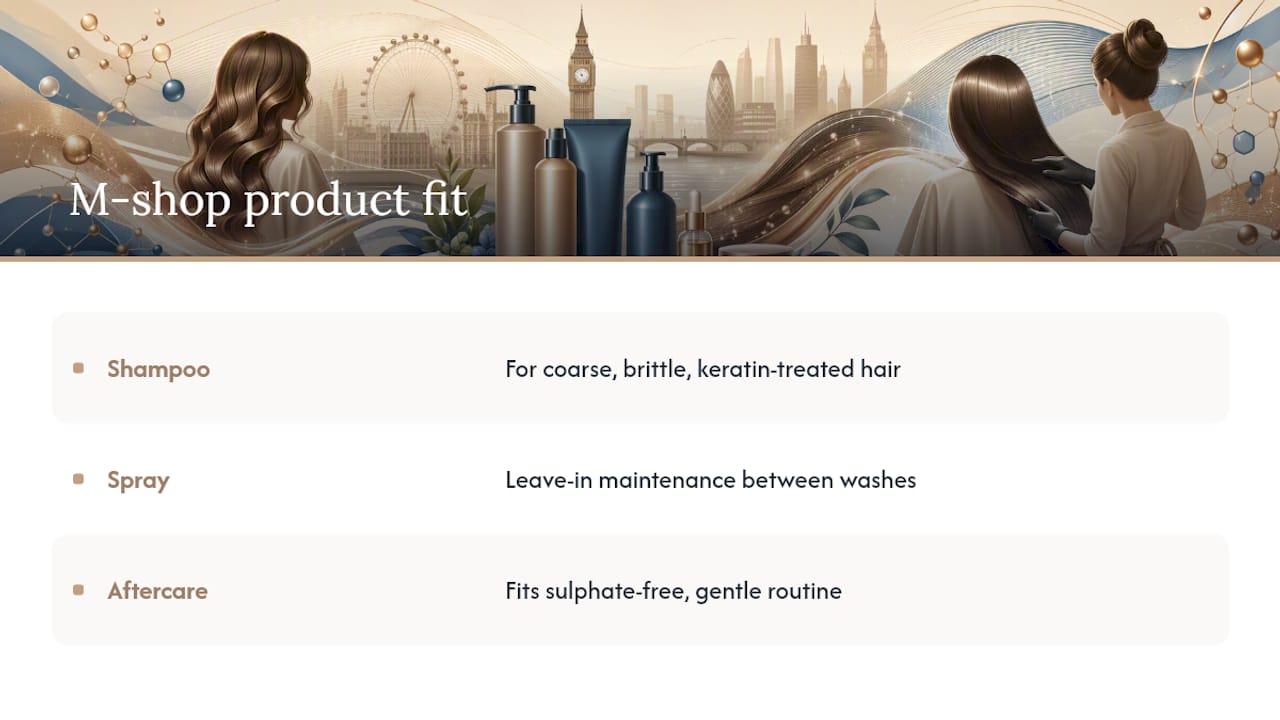
A retailer stocks Polish haircare including the Joanna Keratin Shampoo with keratin for coarse, brittle or keratin-treated hair, and the Joanna Professional Keratin Regenerating Conditioner Spray for leave-in maintenance between washes. Both map directly onto the sulphate-free, gentle aftercare this guide recommends, whichever treatment you’ve had done.
Editorial take: why the “just do both” advice misses the point
Most guides tell you to alternate keratin and protein without ever explaining why order matters. That’s backwards advice dressed up as balance. Sealing frizzy, coarse hair with keratin makes sense on its own terms. Sealing already-weakened, protein-deficient hair with keratin just locks fragility under a shiny surface, and you won’t notice the problem until months later when it starts breaking anyway.
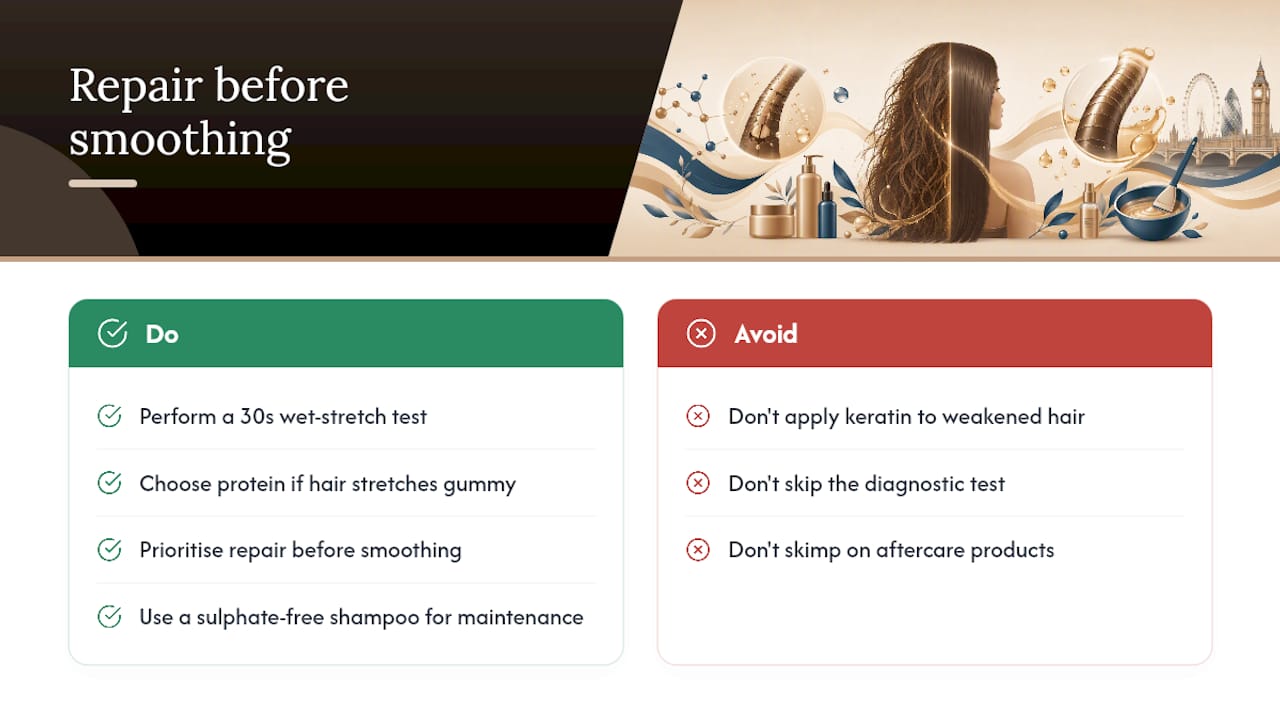
The diagnostic step gets skipped too often. A thirty-second wet-stretch test tells you more about what your hair actually needs than any salon consultation script built to upsell the pricier chemical smoothing service. If your hair stretches a long way and feels gummy, no amount of keratin will fix that. It needs protein, full stop.
What the reader should prioritise first is unglamorous: work out whether the problem is surface texture or structural weakness before spending money on either treatment. Maintenance products matter more than most people assume, too. A £6 sulphate-free shampoo protecting a £150 keratin service is the best return on investment in the whole routine, yet it’s the step people cut first when trying to save money.
— Krzysztof
Recommended maintenance products from M-shop
Once you’ve had keratin smoothing or a protein repair session, the products you use at home decide how long the results actually last. M-shop, a family-run Polish cosmetics retailer, stocks a small, focused range built for exactly this stage.

The Joanna Keratin Shampoo with keratin suits coarse, brittle or keratin-treated hair that needs sulphate-free washing without stripping the smoothing effect. Pair it with the Joanna Keratin Conditioner for matte, damaged strands that need extra slip and softness between washes. For leave-in maintenance, the Joanna Professional Keratin Regenerating Conditioner Spray works well on brittle hair that needs a light, repeated boost rather than a heavy weekly mask. Readers wanting a more moisture-focused option can also look at the Herbal Care flax rebuilding conditioner for dry, brittle hair that’s leaning towards protein overload rather than dryness.
Browse the full haircare range on M-shop’s shop page to build a routine around whichever treatment your hair actually needs.
Sources
- Keratin hair treatments: your ultimate guide | Medical News Today
- Keratin hair treatments: your ultimate guide | Cleveland Clinic
- Keratin hair treatments: your ultimate guide | Treatwell
FAQ
How do I know if my hair needs keratin or protein?
Check how it behaves wet and in humidity. Frizzy, puffy hair that takes ages to blow-dry needs keratin; hair that stretches too far, feels gummy, or snaps when wet needs protein.
Is protein treatment good for frizzy hair?
Protein treatments strengthen the internal hair shaft but don’t smooth the cuticle, so they won’t fix humidity-driven frizz on their own. Keratin is the better match for frizz caused by a rough, lifted cuticle.
What is the downside of keratin treatment?
Some professional smoothing formulas contain formaldehyde or formaldehyde-releasing agents, which can irritate the scalp and eyes without good salon ventilation. Certain formulas can also loosen natural curl pattern, and results fade within two to six months.
What is the healthiest hair straightening method?
There’s no single risk-free option, but choosing a keratin formula without formaldehyde-releasers, ensuring good salon ventilation, and asking your stylist for the exact ingredient list reduces the main health concerns. For hair that’s already weak or over-processed, repairing with a protein treatment before any chemical smoothing is the safer sequence.