



Avoid Silicone Buildup: Clarify Every 2–3 Weeks, Match to Hair Type
Silicone in hair products is not the villain haircare marketing has made it out to be: whether it helps or harms depends entirely on the type and how often you use it. Fine, oily or straight hair generally does best with water-soluble or volatile silicones used sparingly, while coarse, curly or chemically treated hair often benefits from heavier, longer-lasting silicones that tame frizz and cut heat damage. The only real hygiene rule is to alternate products and clarify occasionally so residue never gets the chance to build up.
TL;DR:
- Water-soluble silicones rinse away cleanly and are suitable for daily use on fine or oily hair to prevent buildup.
- Heavy, water-insoluble silicones build up gradually, causing dullness and flatness, but can be removed with clarifying shampoos used periodically.
- Buildup symptoms include reduced lather, coated feeling, and style loss by midday, which can be mitigated through regular alternating with silicone-free products.
- Applying silicones during washing on mid-lengths and ends, combined with gentle clarifying shampoos and routine rotation, minimizes residue and maintains hair health.
- Matching silicone type and usage routine to hair texture and styling needs is more important than avoiding the ingredient altogether.
Table of Contents
- What is silicone in hair products, and how does it work?
- The real benefits of silicone in hair products
- Do silicones cause buildup, and what should you do about it?
- How to spot silicone on an ingredient label
- Which hair types actually need silicone, and which don’t?
- How to use silicone products without buildup
- Why the “silicone suffocates hair” myth won’t die
- Smoothing and keratin picks worth checking against your hair type
- Sources
- FAQ
What is silicone in hair products, and how does it work?
Silicones are siloxane-based polymers, meaning their backbone is built from silicon and oxygen rather than carbon. On the hair shaft, they spread into an extremely thin film that coats each strand and smooths down the cuticle, the overlapping outer layer that determines how rough or glassy hair feels.
That film does several jobs at once. It cuts friction between strands, which is why silicone-treated hair glides through a brush instead of snagging. It also acts as a barrier against moisture, repelling humidity that would otherwise cause frizz, and it bounces light more evenly across the hair surface, which reads to the eye as shine. A comprehensive review of silicone chemistry in haircare found these effects hold even at concentrations below 1%, so a small amount in a formula can still do real work.
Not every silicone behaves the same way, though:
- Volatile silicones (like cyclomethicone) evaporate after application, leaving a light, temporary slip.
- Water-soluble silicones (like dimethicone copolyol) rinse away cleanly with normal washing.
- Water-insoluble silicones (like standard dimethicone) sit on the hair until a stronger surfactant lifts them off.
That third category is where most of the buildup debate starts.
The real benefits of silicone in hair products
The case for silicone rests on measurable, everyday improvements rather than vague “shine and softness” marketing language. Chief among them is frizz control: the film silicones create blocks humidity from swelling the cuticle, which is the actual mechanism behind frizz, not a mysterious “hair mood.”
Silicones also cut mechanical damage. By reducing the friction between strands during brushing and styling, they lower the tension that causes breakage, something particularly relevant for hair that’s already fragile from bleach or chemical treatments. The same film offers a degree of heat protection and helps hold colour molecules in place for longer between salon visits.
Where the benefit is strongest:
- Frizz-prone or humidity-sensitive hair
- Hair regularly exposed to straighteners or curling tongs
- Colour-treated hair losing vibrancy quickly
- Coarse or curly textures that need help with detangling and slip
Pro Tip: If your main complaint is flyaways after washing rather than all-day frizz, a volatile silicone serum applied to damp hair will usually do the job without leaving any lasting residue.
Silicones perform this well at low doses partly because friction reduction and humidity resistance are built into the polymer’s structure itself, not something a formula has to fight to achieve.
Do silicones cause buildup, and what should you do about it?
Buildup is real, but it’s specific to one category: water-insoluble silicones that don’t rinse away with a standard shampoo. Used daily without variation, they accumulate layer on layer, and hair starts to feel heavier, look duller and lose the volume it once had, particularly around the roots.
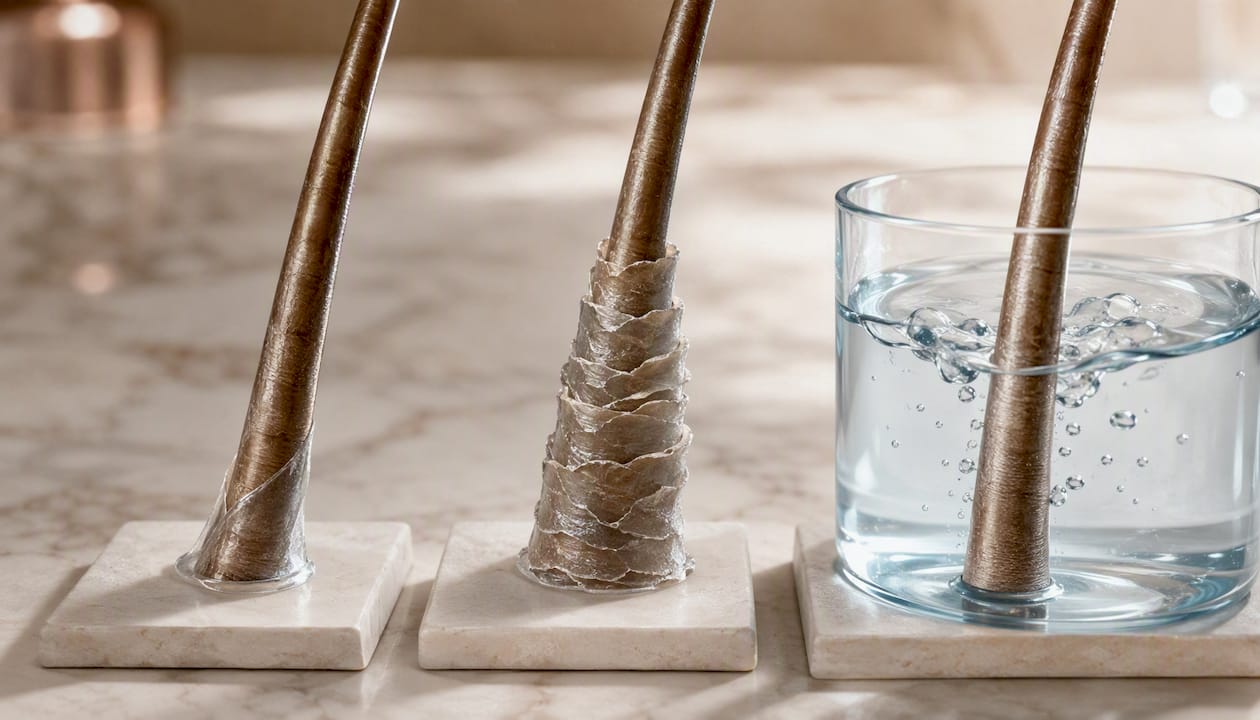
Deposition isn’t infinite, though. Formulation research on silicone deposition shows how much silicone sticks around depends on the surfactants used and wash frequency, and it can be lifted off with the right clarifying shampoo rather than building indefinitely.
Signs to watch for:
- Hair feels coated or waxy rather than soft
- Products stop lathering as well as they used to
- Style falls flat by midday despite fresh washing
Removal comes down to a trade-off between strength and gentleness. A sulphate-heavy clarifying shampoo strips silicone fastest but can leave hair dry if overused; a milder clarifying formula takes a couple of washes but is kinder to colour-treated strands.
On the environmental side, some cyclic silicones (notably certain volatile types) have drawn regulatory attention in cosmetics due to persistence concerns, even though safety reviews for typical cosmetic use concentrations remain reassuring for consumer use on hair and scalp.
How to spot silicone on an ingredient label
Silicones are easy to identify once you know the pattern: their INCI names almost always end in “-cone” or “-siloxane.”
- Look for -cone endings. Dimethicone and cyclomethicone are the two most common examples, appearing in everything from serums to conditioners.
- Check for -siloxane endings. These usually signal volatile silicones designed to evaporate rather than linger.
- Spot the water-soluble variants. Names containing “copolyol,” such as dimethicone copolyol, rinse out far more easily than standard dimethicone.
- Verify “silicone-free” claims yourself. Brands sometimes swap silicones for oils or ester-based emollients that feel similar but behave differently on hair, so scanning the full ingredient list is the only reliable check.
Which hair types actually need silicone, and which don’t?
Matching silicone type to hair texture matters more than deciding whether to use silicone at all. Fine, straight or oily hair tends to look flat and weighed down by heavy, water-insoluble silicones, so a lighter volatile option, or none at all, usually works better. Dry, coarse or curly hair generally handles and even needs more substantial silicones, since the extra film reduces the friction that leads to frizz and split ends. Chemically treated or bleached hair sits somewhere similar: a leave-in silicone can meaningfully cut breakage during brushing because it lowers the mechanical stress on already-weakened strands.
Three practical factors should guide the decision:
- Heat exposure. Frequent straightening or curling justifies a dedicated heat-protectant silicone.
- Wash frequency. Daily washers need lighter, more water-soluble formulas to avoid buildup.
- Desired finish. Volume-seekers should avoid heavy silicones at the roots; sleekness-seekers can apply them more liberally through the mid-lengths and ends.
If in doubt, start light and add weight only if frizz or breakage persist.
How to use silicone products without buildup
- Apply rinse-off conditioners first. Use a silicone-containing conditioner during the wash, focusing on mid-lengths and ends rather than the scalp.
- Save leave-in serums for styling. A small amount of leave-in silicone serum on damp hair, before heat styling, does more work than adding it to already-dry hair.
- Clarify on a schedule, not by feel. A gentle clarifying shampoo every two to three weeks is usually enough to prevent the coated, flat feeling that signals buildup.
- Alternate silicone and silicone-free products. Rotating a silicone-free hair mask into your routine once a week keeps benefits without the residue creeping up.
Pro Tip: If your hair suddenly stops absorbing conditioner the way it used to, that resistance is often the first sign of buildup, not a sign you need more product.
This hybrid approach, described in expert guidance on alternating silicone and clarifying products, is the closest thing to a consensus recommendation across dermatology and styling professionals: use silicone deliberately, then clear it out on a rhythm.
Why the “silicone suffocates hair” myth won’t die
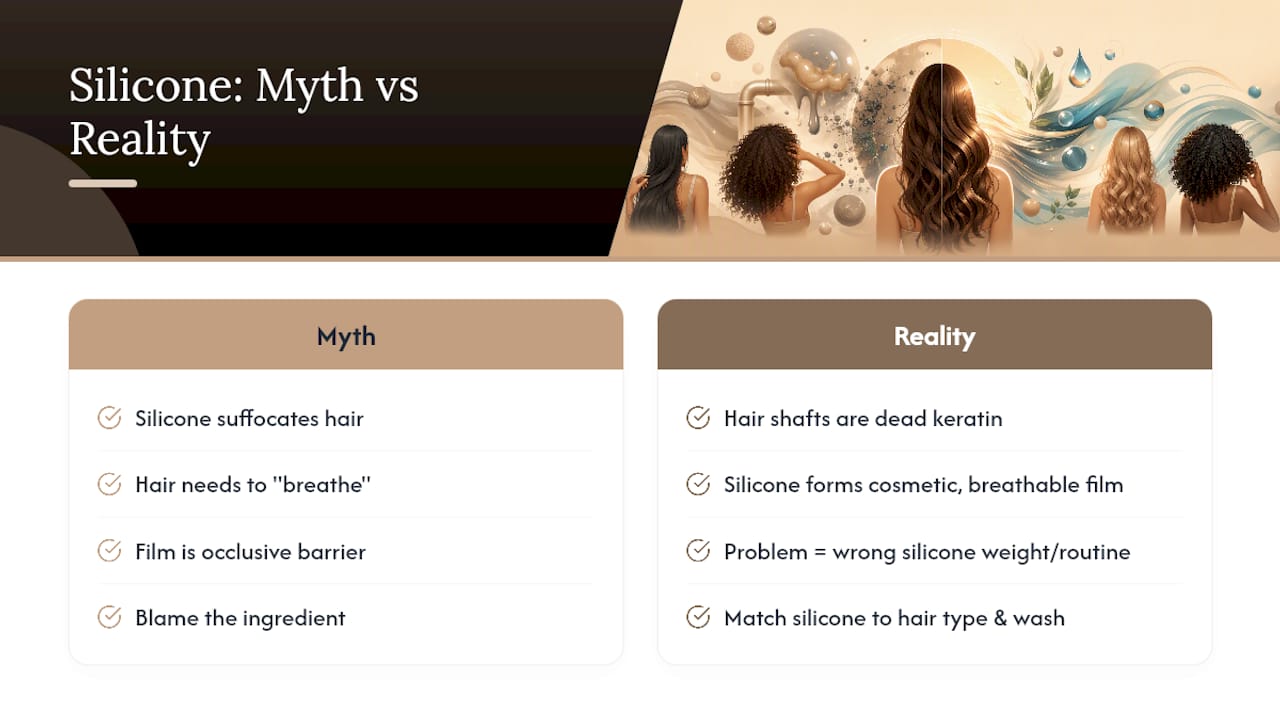
Krzysztof has spent years watching haircare trends swing between two extremes: silicone as miracle ingredient, then silicone as scalp villain. Neither holds up. The idea that silicone “suffocates” hair misunderstands basic biology, since hair shafts are dead keratin with no need to breathe; the film silicones form is a cosmetic barrier, not a biological one, and the research consistently describes it as breathable rather than occlusive.
The more useful conversation isn’t “silicone or no silicone.” It’s whether you’ve matched the silicone type to your hair and your wash routine. Someone with fine hair reaching for the same heavy dimethicone conditioner as someone with tightly coiled, bleached hair is the actual problem, not the ingredient itself. A Joanna range, built around keratin and silk-smoothing formulas, exists precisely because different textures need genuinely different solutions rather than one silicone-heavy formula sold to everyone.
— Krzysztof
Smoothing and keratin picks worth checking against your hair type
If your hair matches the coarse, brittle or frizz-prone profile discussed above, there is a small, focused range built around exactly that need rather than a sprawling catalogue that leaves you guessing.

The Joanna Keratin Shampoo and matching Joanna Keratin Conditioner are a rinse-off pairing designed for coarse, matte or damaged hair that needs the friction reduction described earlier in this guide. For a lighter touch, the Joanna Silk Smoothing Shampoo suits dry, dull hair that wants smoothness without heavy weight, and the Joanna Professional silk smoothing conditioner pairs well as a rinse-off follow-up. If you need a leave-in option for brittle strands between washes, the Joanna Professional keratin regenerating conditioner spray fills that gap. Always check the ingredient list against the hair type guidance above before adding anything to your routine, and browse the full M-shop haircare selection to compare formulas side by side.
Sources
- With or without Silicones? A Comprehensive Review of Their Role in Hair Care
- With or without Silicones? A Comprehensive Review of Their Role in Hair Care (PMC)
- PubMed: expert guidance on alternating products to limit buildup
- The beauty of silicone in hair care application (Dow technical review)
FAQ
Why do people avoid silicone in hair products?
Most avoidance comes from buildup experiences with heavy, water-insoluble silicones rather than any proven safety issue, and some prefer lighter, more natural-feeling formulas.
Are silicone hair products good for your hair?
Yes, for most hair types, when matched correctly. They reduce friction and frizz and offer heat protection, though fine or oily hair should stick to lighter, water-soluble versions.
How can you tell if a hair product contains silicone?
Check the ingredient list for names ending in “-cone” or “-siloxane,” such as dimethicone or cyclomethicone.
Are silicone-free hair products better for hair?
Not universally. They suit fine or oily hair prone to buildup, but they often can’t match silicone’s consistent frizz control and heat protection for coarse or curly textures.