



Budget face oils explained: what actually works for less
Budget face oils can genuinely work for most skin types. The key is matching the oil to your skin’s needs rather than chasing a price point. Start with one of three oil families: squalane for oily or sensitive skin, jojoba for combination skin, or rosehip for dry and mature skin. Buy a small bottle, patch-test before committing, and pick it up from a UK pharmacy, high-street retailer, or M-shop.
Here is what to do right now:
- Pick your oil family based on skin type (see the guide below).
- Patch-test on your inner arm or jaw for 24–48 hours before applying to your full face.
- Buy a trial or value size from a reputable UK source so you are not out of pocket if it does not suit you.
The rest of this article explains why oils work, which ones to avoid, and how to shop safely without wasting money.
Key takeaways
Budget face oils work when matched to your skin type, applied in the right order, and chosen on ingredient quality rather than price or branding.
| Point | Details |
|---|---|
| Match oil to skin type | Squalane and jojoba suit oily or sensitive skin; rosehip suits dry and mature skin. |
| Patch-test every new oil | Apply to your inner arm for 24–48 hours before using on your full face. |
| Apply oil as the final step | Oils seal in moisture from serums and moisturisers; applying them first reduces their benefit. |
| Read the ingredient list | A short list with the active oil listed first is a stronger quality signal than price or claims. |
| M-shop for Polish options | M-shop stocks affordable Polish skincare with natural ingredients and regular UK discounts. |
Table of Contents
- What does a budget face oil actually do?
- Which oil suits your skin type?
- How to choose a budget face oil in the UK
- How to use a face oil in your routine
- Do face oils cause breakouts? Myths and safety rules
- What dermatologists recommend and a quick at-home test
- What to expect at different price points in the UK
- Why affordable oils are worth the experiment
- M-shop: Polish skincare worth trying on a budget
- Sources
What does a budget face oil actually do?
Face oils serve two distinct roles in a skincare routine: they act as emollients, softening the skin and filling gaps between surface cells, and as occlusives, forming a barrier that slows moisture loss. Neither role requires an expensive formula. According to Vogue’s guide to face oils, oils suit all skin types when chosen correctly and work best as the final step in a routine, sealing in the layers applied before them.
The chemistry behind this matters more than the price tag. Every face oil contains a mix of fatty acids, and the ratio of linoleic acid to oleic acid largely determines how it behaves on skin.
| Fatty acid | Effect on skin | Best suited to |
|---|---|---|
| Linoleic acid (omega-6) | Lightweight, absorbs quickly, supports barrier | Oily, acne-prone, combination |
| Oleic acid | Richer, more occlusive, deeply nourishing | Dry, mature, very dehydrated |
| Vitamin E (tocopherol) | Antioxidant, stabilises the oil, supports healing | All types, especially dry |
Oils are not moisturisers and they are not serums. They do not deliver water to the skin; they hold it there. That is why layering order matters: apply your water-based serum or moisturiser first, then the oil on top. Byrdie’s tested review of face oils found that lightweight, fast-absorbing oils are preferable for everyday use, while heavier oils perform better for very dry skin or overnight application.
One persistent myth worth clearing up early: oils are not only for dry skin. A dermatologist-backed insight from Vogue notes that lightweight, non-comedogenic oils can actually help balance sebum production in oily skin types when the right formula is chosen.
Which oil suits your skin type?
Matching the oil to your skin type is the single most important decision you will make. Get this right and a £6 bottle can outperform a £40 one.
Dry and mature skin
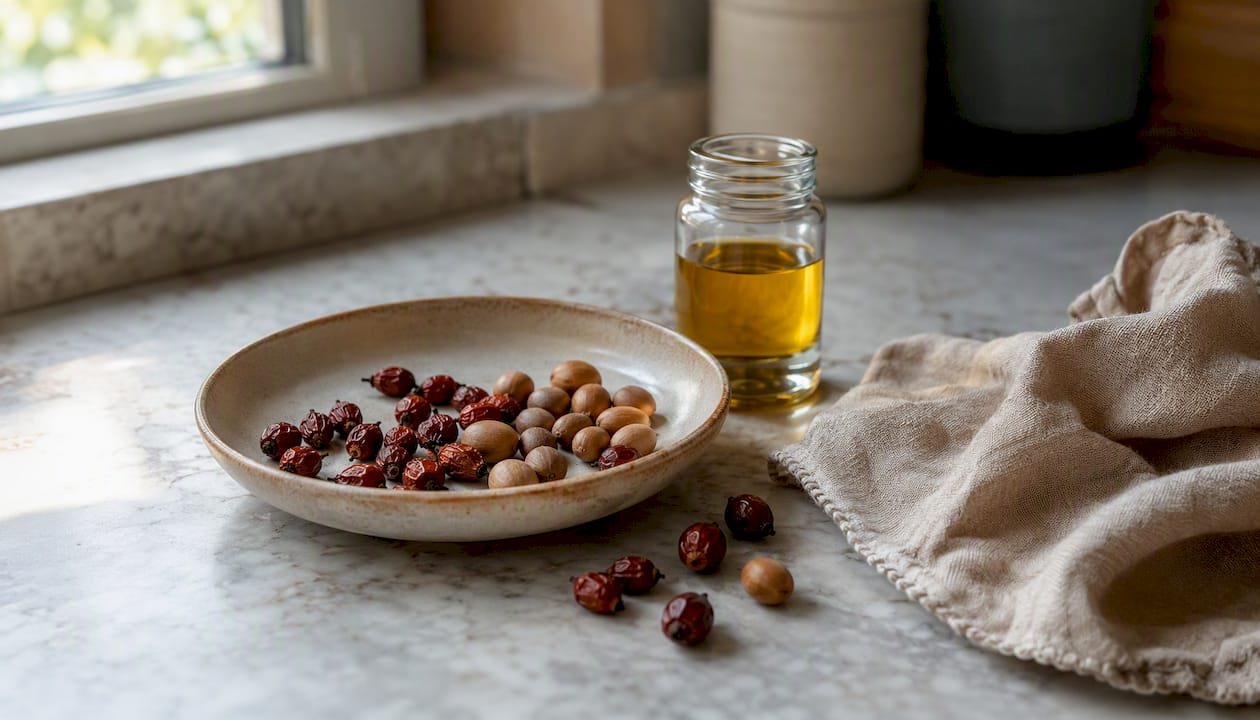
Reach for oils rich in essential fatty acids and vitamin E. Rosehip oil is high in linoleic acid and also contains vitamin A precursors, making it useful for texture and tone. Marula oil is oleic-acid dominant and deeply nourishing. Squalane (derived from sugarcane or olives) is lightweight but still effective at sealing moisture, and it suits almost every skin type.
Oily, combination and acne-prone skin
Favour lightweight, higher-linoleic oils. Jojoba is technically a liquid wax rather than a true oil, which means it mimics sebum without adding excess grease. Squalane is again a strong choice here. Avoid coconut oil for facial use if you are prone to spots: it sits high on the comedogenic scale and can block pores. Vogue’s ingredient guidance flags coconut oil specifically as one to avoid for acne-prone skin.
Sensitive and reactive skin
Keep the ingredient list short. Single-ingredient squalane or refined jojoba are the safest starting points because they carry minimal allergen risk. Avoid blends heavy in essential oils (lavender, citrus, eucalyptus) or synthetic fragrance, both of which are common irritants. A botanical blend review on DermApproved notes that even natural fragrance in carrier oil blends can raise comedogenic and sensitivity risk for reactive skin.
Pro Tip: If you have combination skin, try spot-applying a richer oil only to dry patches (cheeks, around the nose) while skipping the T-zone entirely. Introduce any new oil gradually: every other evening for the first two weeks, then daily if your skin tolerates it.
How to choose a budget face oil in the UK
Cheap does not have to mean poor quality, but the budget end of the market does attract some genuinely poor formulations. Knowing what to look for on the label saves money and skin.
What to look for on the label
- Short ingredient list: a single carrier oil or two to three ingredients is often a sign of quality. Fewer ingredients means less room for cheap fillers.
- Named carrier oil as the first ingredient: “Rosa canina seed oil” (rosehip), “Simmondsia chinensis seed oil” (jojoba), or “Squalane” should appear near the top.
- Cold-pressed notation: for rosehip and similar botanical oils, cold-pressed processing preserves more fatty acids and antioxidants than heat-refined versions.
- PAO symbol: the open-jar symbol with a number (e.g. 6M, 12M) tells you how many months the product is safe after opening. Oils oxidise; this matters.
An analysis of 160+ face oils by Oasis Black found that some manufacturers use coconut oil derivatives or petroleum-based ingredients as cheap fillers, and that a higher price does not reliably indicate better ingredients. Ingredient transparency and short lists are your best guide.
Packaging to look for
Amber or dark glass bottles protect oils from light degradation. Opaque plastic can work but clear plastic is a red flag for anything containing rosehip or vitamin C, both of which degrade quickly in light. A pump or dropper cap limits air exposure and helps you control the dose.
Realistic UK price bands
You do not need to spend much. Single-ingredient oils (pure squalane, pure jojoba) are widely available for under £10 in UK pharmacies and online. Mid-range botanical blends typically sit between £10 and £25. Premium multi-botanical or certified organic formulas run £25–£40. For Polish-made skincare with natural ingredients, M-shop stocks a curated range at accessible prices, including the Vis Plantis Regenerating Oil Serum, which combines oil-serum benefits in one step.
Pro Tip: Watch for sale cycles at UK pharmacies and online retailers. Many budget oils drop significantly in price during seasonal promotions. Buying a slightly larger bottle during a sale usually gives better value per millilitre than repeatedly buying the smallest size at full price.
For more on building a complete routine without overspending, the affordable skincare routine guide on M-shop is a practical companion read.
How to use a face oil in your routine
Application order is where most people go wrong. The rule is simple: thinnest to thickest, water before oil.
Morning routine
- Cleanser
- Toner or essence (if used)
- Serum (water-based)
- Moisturiser
- Sunscreen (last, always)
A note on oils and SPF: InStyle’s tested guide flags that applying an oil before sunscreen in the morning can dilute or interfere with SPF efficacy. If you want to use an oil in the morning, apply it before your moisturiser and allow it to absorb fully, then apply sunscreen on top as the very last step. Many people find it simpler to reserve oils for the evening routine.
Evening routine
- Double cleanse (oil cleanser, then water-based cleanser)
- Toner or essence
- Actives (retinoid, AHA/BHA) — if used
- Serum
- Moisturiser
- Face oil (final step)
Dos and don’ts
- Do use 2–4 drops; more is rarely better and often leaves a greasy residue.
- Do press and pat the oil in rather than rubbing, which helps it absorb without dragging.
- Don’t apply oil directly over a retinoid or AHA without allowing the active to absorb first; layering oil immediately on top can increase irritation.
- Don’t mix oil into your SPF; it alters the formula.
Pro Tip: Start with oil every other evening for the first two weeks. Your skin needs time to adjust, and this slower introduction makes it easier to identify any reaction.
For a full breakdown of layering logic, the skincare routine order guide on M-shop covers every step in detail.
Do face oils cause breakouts? Myths and safety rules
The short answer is: it depends entirely on the oil. Here are the most common misconceptions, addressed plainly.
- Myth: “All oils clog pores.” False. Oils vary widely in comedogenic rating. Squalane and jojoba rate very low; coconut oil rates high. Skin type matters too.
- Myth: “Oily skin should never use face oil.” False. Lightweight, non-comedogenic oils can help regulate sebum when the skin is over-producing oil in response to dehydration.
- Myth: “Natural always means safe.” Not necessarily. Essential oils, citrus extracts, and natural fragrance are among the most common skincare irritants.
- Myth: “More expensive oils are safer.” Price has no bearing on allergen content or comedogenic risk.
How to patch-test properly
- Apply a small amount of the oil to your inner forearm or behind your ear.
- Leave it for 24 hours without washing the area.
- Check for redness, itching, swelling, or small bumps.
- If clear after 24 hours, try a small amount on your jaw or neck for another 24 hours before applying to your full face.
When to stop
Persistent new breakouts in areas where you applied the oil, strong stinging or burning on application, or a spreading rash are all reasons to stop immediately. These reactions are not always allergic; they can indicate the formula is simply wrong for your skin type. If irritation persists after stopping, consult a dermatologist or your GP. For sensitive skin types, a fragrance-free, minimal-ingredient product like the AA Oceanic fragrance-free cleansing gel-cream is a useful companion to a patch-testing routine.
What dermatologists recommend and a quick at-home test
Dermatologist guidance on face oils is consistent across sources: patch-test before committing, choose non-comedogenic options for oily or acne-prone skin, and apply oil as the final step to seal in moisture rather than as a standalone treatment.
A practical three-step at-home test helps you judge a new oil quickly:
- Step 1: Patch-test on your inner arm for 24–48 hours (see above).
- Step 2: Apply 2–3 drops to one side of your face only on the first evening of use. Leave overnight.
- Step 3: Check the next morning: is there any new redness, congestion, or unusual oiliness on the treated side compared with the untreated side?
If the result is clear after three evenings, introduce the oil to your full routine.
Pro Tip: Keep a simple two-week log: date, product, number of drops, and any skin changes. Even a note in your phone works. Two weeks of data tells you far more than a single morning’s check.
What to expect at different price points in the UK
Price bands give a useful starting framework, though ingredient quality varies within each band.
- Under £10: Single-ingredient oils dominate here. Pure squalane and pure jojoba are widely available from UK pharmacies and online. These are often the most reliable budget choices because the formula is transparent. DermApproved’s review of a minimalist two-ingredient oil notes that simple formulas can be highly effective for dry and normal skin, but small bottle sizes can push up the cost per millilitre, so check the volume before buying.
- £10–£25: Multi-botanical blends appear here, often leading with rosehip, marula, or sea buckthorn. These can deliver strong antioxidant and fatty-acid benefits, but check that the active botanical oil appears first in the ingredient list, not buried behind cheaper fillers.
- £25–£40: Certified organic, cold-pressed, or clinically tested formulas. Worth considering if your skin is particularly reactive and you need a guaranteed fragrance-free, minimal-additive product.
Where to buy in the UK
UK pharmacies (Boots, Superdrug) stock a solid range of single-ingredient and mid-range oils. High-street health shops carry organic and cold-pressed options. For a broader look at accessible European brands available in the UK, the affordable European skincare brands guide on M-shop is worth a look.
A note on quality: always prefer the ingredient list over the brand’s marketing claims. A bottle labelled “luxury botanical blend” that lists a cheap filler oil second is not worth more than a plain, single-ingredient bottle that does exactly what it says.
Why affordable oils are worth the experiment
The skincare industry has a habit of making people feel that effective products must be expensive. Face oils are one of the clearest counterexamples to that idea. The active components, fatty acids, antioxidants, and occlusives, are present in budget bottles just as they are in premium ones. What you are often paying for at the higher end is branding, packaging, and fragrance, none of which improve the oil’s function.
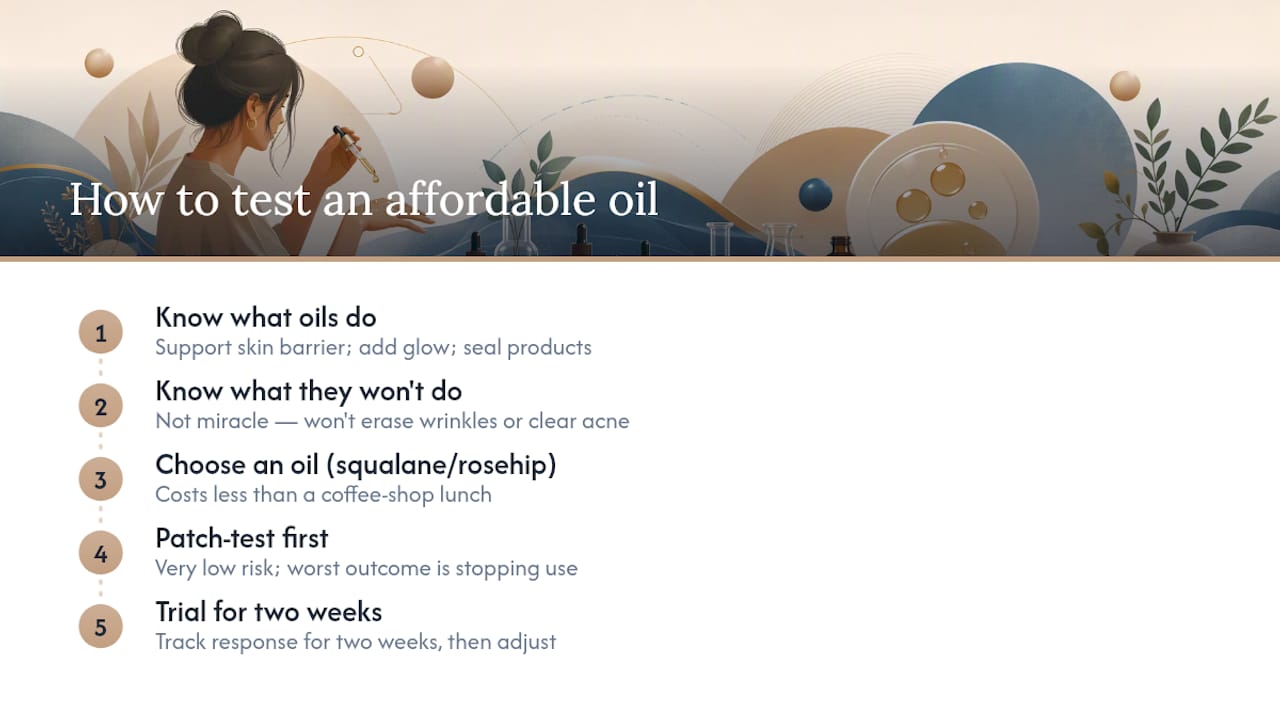
That said, oils are not miracle products. They will not erase wrinkles, clear acne on their own, or replace a moisturiser. What they do reliably, when matched to your skin type and used correctly, is support the skin barrier, add a visible glow, and help your other products work more effectively by sealing them in.
The practical case for trying an affordable oil is straightforward: a small bottle of squalane or rosehip costs less than a coffee shop lunch and carries very little risk if you patch-test first. The worst realistic outcome is that it does not suit your skin and you stop using it. The best is that you find a genuinely useful addition to your routine for a fraction of what you expected to spend.
Try one oil, track your skin’s response for two weeks, and adjust from there.
M-shop: Polish skincare worth trying on a budget
If you are ready to try an affordable face oil or want to layer one over a quality moisturiser, M-shop brings a curated selection of Polish skincare directly to UK buyers. Polish cosmetics have a strong tradition of using natural ingredients, including collagen, algae, and botanical oils, at prices that make regular use genuinely sustainable.

The Vis Plantis Regenerating Oil Serum is a practical starting point: an oil-serum hybrid that suits readers who want the barrier-sealing benefits of an oil without a separate serum step. For those building a fuller routine, the Celia Collagen + Olive moisturiser pairs well as the layer beneath an oil, giving the skin hydration to seal in. Browse the full range at M-shop and pick a trial size to start.
Sources
The following sources informed this article and are worth reading for deeper guidance:
- Best Face Oils: How To Use Them For Dry, Sensitive & Oily Skin | Vogue
- The 16 Best Face Oils for All Skin Types of 2026, Tested and Reviewed
- Best face oils (tested and explained) — InStyle
- Comparing 160+ Face Oils - Ingredients, Price, Claims & Packaging – Oasis Black
For persistent skin concerns, breakouts that do not resolve, or reactions to multiple products, consult a dermatologist or your GP rather than continuing to experiment alone.