



48 Hour Patch Test: Avoid Collagen Cream Side Effects in the UK
Most people who use a topical collagen cream will notice nothing worse than smooth, hydrated skin. Mild irritation, redness, or a small breakout crop up occasionally, and true allergic reactions are rare but documented, mostly with animal-derived collagen. Before applying any new cream to your face, patch test it on your inner arm for 24 to 48 hours, and stop immediately if you see persistent redness, swelling, or itching.
TL;DR:
- Most reactions to collagen creams are minor and temporary, with sensitive individuals experiencing irritation or breakouts within days to weeks.
- Common irritants in collagen formulations include preservatives, fragrances, and emulsifiers, while collagen itself rarely triggers allergic responses.
- People with fish or shellfish allergies need to avoid marine collagen, as cross-reactivity can cause allergic reactions or urticaria.
- Patch testing before full application reduces the risk of irritation, especially when introducing actives like retinoids or acids alongside collagen creams.
- Severe reactions such as swelling, difficulty breathing, or widespread blistering require immediate medical attention, while mild irritation usually subsides within a few days.
Table of Contents
- Common side effects people report with collagen creams
- What causes reactions: is it the collagen or the cream base?
- Who is most at risk and which collagen sources to watch for
- How to reduce your risk: patch testing and safe introduction
- When to stop using the cream and when to seek medical help
- Our evidence and experience: what research and M-shop data show
- What I’ve learnt reading through the complaints and the research
- A safe-choice example from our range: Celia Collagen + Algae 40+
- Sources
Common side effects people report with collagen creams
The reactions worth knowing about fall into a small, predictable list. Most are minor and settle within days.
- Contact irritation: localised redness, itching, or a mild rash where the cream touches skin
- Breakouts and clogged pores: heavier, more occlusive formulas can trigger milia or small comedones, particularly along the jaw and cheeks
- Stinging or tightness: common when a collagen cream is layered with retinoids or exfoliating acids
- Adjustment period breakouts: a temporary flare as skin adapts to a new barrier product
Timing tells you a lot. Irritation from an ingredient you’re sensitive to tends to show up within minutes to 48 hours. Breakouts linked to formula richness usually take one to two weeks to appear, because that’s how long it takes clogged follicles to become visible spots.
Pro Tip: If a sting appears the moment you apply an acid or retinoid under a collagen cream, that’s the actives talking, not the collagen. Space the two products by 15 to 20 minutes, or use them on alternate nights.
Around 3% of people carry a sensitivity to bovine-derived collagen, based on documented case reports of allergic reactions to bovine collagen used in cosmetic and surgical settings. That figure sits at the upper end of what dermatologists consider a rare event, but it’s not zero, which is exactly why a patch test matters more than most people assume.
What causes reactions: is it the collagen or the cream base?
Collagen itself is usually not the troublemaker. In most contact dermatitis cases, the reaction traces back to something else in the formula.
- Preservatives such as certain parabens or formaldehyde-releasers are frequent irritants
- Fragrance, natural or synthetic, remains one of the most common causes of cosmetic contact dermatitis
- Emulsifiers used to blend oil and water phases can sting sensitised skin
- Texture and occlusivity matter too: thicker, waxier creams sit on the skin longer and raise comedogenic risk, especially on acne-prone or oily skin
That said, collagen isn’t entirely off the hook. Documented IgE-mediated allergic reactions to bovine collagen exist, including redness and swelling after topical use near the eye area. These cases are uncommon, but they’re real enough that anyone with a history of animal-protein allergies should read labels carefully rather than assume “natural ingredient” means “risk-free.”
Who is most at risk and which collagen sources to watch for
Not everyone carries the same odds. A few groups have genuine reasons for extra caution.
- Fish or shellfish allergy: marine collagen shares proteins that can cross-react, and a documented case of contact urticaria involved a fish-derived elastin cream
Pro Tip: If you’re allergic to fish or shellfish, check the ingredients list for “marine collagen” or “hydrolysed fish collagen” before buying. Plant-derived peptide alternatives sidestep that risk entirely.
How to reduce your risk: patch testing and safe introduction
A patch test takes two days and tells you almost everything you need to know before committing your whole face to a new product.
- Apply a small amount of the cream to your inner forearm or behind your ear.
- Leave it undisturbed and avoid washing that patch of skin.
- Check at 24 hours, then again at 48 hours, for redness, swelling, itching, or bumps, following the standard skin patch test method.
- If clear, apply to a small area of your face for a few more days before full use.
- If irritation appears at any stage, stop and wash the area with lukewarm water.
Favour fragrance-free, non-comedogenic formulas where possible, and check ingredient lists for known irritant preservatives if you have sensitive skin. If you’re introducing the cream alongside a retinoid or acid exfoliant, bring it in slowly, every other night at first, and keep a daily sunscreen in your routine. Dermatologists are consistent on this point: protecting existing collagen with sunscreen matters more for long-term skin quality than any cream sitting on top of it.
When to stop using the cream and when to seek medical help
Mild irritation, faint redness or a bit of itching that fades within a day or two, usually resolves on its own once you stop use. That’s not an emergency. But facial swelling, difficulty breathing, hives spreading beyond the application site, or widespread blistering are red flags that need same-day medical attention, not a wait-and-see approach.
For anything short of that, give your skin 48 to 72 hours off the product. If irritation persists beyond a week, see your GP or a dermatologist. Clinicians typically start with a short course of topical steroids and may refer you for formal allergy patch testing if a pattern of reactions keeps recurring.

Our evidence and experience: what research and M-shop data show
The clearest picture from the published literature is a modest one. A recent review of collagen in cosmetic products confirms that topical collagen and peptides measurably improve hydration and reduce transepidermal water loss, giving skin a smoother, plumper look. What it doesn’t do is rebuild the collagen network sitting deeper in your dermis. That structural layer responds to sun protection, retinoids and time, not to a cream applied on top.
Customers browsing M-shop’s collagen face cream range typically report visible hydration within days and note firmer-feeling skin somewhere around the eight to twelve week mark, which lines up with how surface-level collagen actually behaves.
Several fragrance-free and sensitive-skin-friendly formulas are curated specifically because irritation so often traces back to the base, not the actives.
What I’ve learnt reading through the complaints and the research
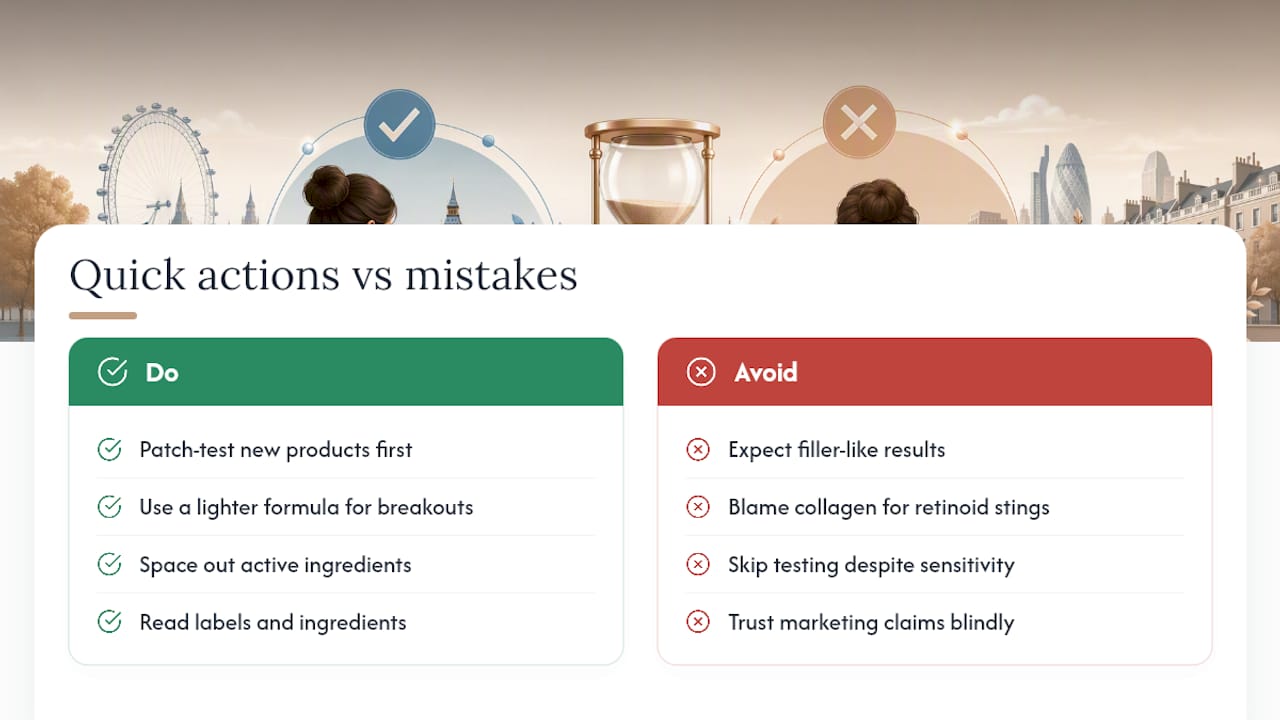
Most of the questions I see about collagen creams boil down to one of two things: a breakout that turns out to be a texture mismatch, or a sting that’s actually the retinoid underneath, not the collagen itself. Swap to a lighter formula, space out your actives, and nine times out of ten the problem disappears within a week.
The bigger issue is expectation. People buy collagen cream hoping for the results of a dermal filler and end up disappointed by hydration and glow instead. That’s not a failure of the product. It’s a mismatch between what topical collagen versus hyaluronic acid can realistically do and what marketing implies it does. Patch test, read labels, and keep your expectations at “smoother and softer,” not “structurally rebuilt.”
— Krzysztof
A safe-choice example from our range: Celia Collagen + Algae 40+
If you want a collagen cream built with sensitivity in mind rather than an afterthought, the Celia Collagen + Algae 40+ Lightweight Moisturising Collagen Cream is worth a look. Its lighter texture avoids the heavy, pore-clogging feel that causes most complaints about collagen creams, and it’s formulated for mature skin where hydration and surface smoothing matter most.

Use it the same way you’d introduce any new active: patch test on your forearm for 48 hours first, apply to a small area of your face for a few days, then move to full use. If you’re pairing it with a retinoid or acid, bring it in gradually and keep sunscreen in your morning routine, since that does more for your skin’s long-term structure than any cream applied at night. For readers managing acne-prone skin alongside dryness, M-shop also stocks Pharmaceris T Sebostatic Day cream as a lighter alternative, and those prone to contact irritation often do better switching their cleansing routine to a hypoallergenic chestnut soap rather than a heavily fragranced wash. The Celia cream is available directly from M-shop, with family-run sourcing from Poland behind every batch.
Sources
- Allergic reactions to oral, surgical and topical bovine collagen: Anaphylactic risk for surgeons
- Use of collagen in cosmetic products
- How to do a skin patch test
This article is general information, not a substitute for advice from a qualified doctor. Consult a qualified healthcare professional about your own circumstances before acting on anything here.