



Hyaluronic acid vs collagen: which one your skin actually needs
Hyaluronic acid gives fast surface hydration and plumping. Collagen supports long-term structural firmness. You need both, but not for the same reason, and not on the same timeline.
Reach for hyaluronic acid when you want your skin to look better tomorrow morning. Reach for collagen, especially the peptide form taken orally, when you’re playing a longer game against sagging and deep lines. One works within hours. The other takes months and depends on consistent use to show up at all.
- Topical HA: visible plumping within a day, fading once you stop applying it.
- Oral collagen peptides: measurable elasticity and wrinkle improvements typically after 8 to 12 weeks of daily use.
- Retinoids, not creams containing collagen or HA, remain the most reliably evidenced topical route to stimulating your own collagen production.
Quick stat: hyaluronic acid can hold up to 1,000 times its own weight in water, which is why it plumps skin almost instantly, while collagen supplementation studies need two to three months of consistent dosing before results become measurable.
Key Takeaways
Hyaluronic acid delivers fast, temporary surface hydration, while oral collagen peptides and topical retinoids build lasting structural firmness over roughly two to three months of consistent use.
| Point | Details |
|---|---|
| Different jobs, different timelines | HA plumps skin within a day; oral collagen needs 8 to 12 weeks of daily use to show elasticity gains. |
| Retinoids drive real stimulation | Topical HA and collagen creams don’t rebuild dermal collagen; retinoids remain the strongest evidenced topical option. |
| Molecular weight matters for HA | Mixed high and low molecular weight formulas combine surface hydration with better skin penetration. |
| Pair oral collagen with vitamin C | Vitamin C is a required cofactor for collagen synthesis, so timing your dose alongside it improves the odds of benefit. |
| M-shop covers both routines | Its Polish-sourced range includes hyaluronic acid creams and collagen-and-vitamin moisturisers, with discounts up to 15% making a full routine affordable. |
This article is general information, not a substitute for advice from a qualified doctor. Consult a qualified healthcare professional about your own circumstances before acting on anything here.
Table of Contents
- Hyaluronic acid vs collagen: what HA actually does in a formula
- Collagen: why the cream in the jar rarely does what the label implies
- Choosing between fast plumping and long-term firmness
- Building an AM and PM routine that actually uses both
- What the clinical evidence actually shows
- Safety, side effects and when to check with a professional
- How M-shop’s product range fits this evidence-based routine
- The gap between what skincare promises and what it delivers
- Where to start building your routine
- Sources
Hyaluronic acid vs collagen: what HA actually does in a formula
Hyaluronic acid is a humectant. It doesn’t moisturise by adding oil or building tissue. It works by grabbing water molecules and holding them against your skin, which is why the effect feels immediate and looks like plumping rather than repair.
That water-binding capacity is the headline fact: HA can bind up to 1,000 times its own weight in water. It’s a naturally occurring molecule in your skin already, concentrated in the dermis, and it depletes with age and UV exposure, which is part of why skin gets thinner and drier as you get older.
Not all hyaluronic acid behaves the same way once it’s in a bottle. Molecular weight changes everything about how it performs on your skin.
- High-molecular-weight HA sits on the skin’s surface, forming a film that locks in moisture but doesn’t penetrate.
- Low-molecular-weight HA, often listed as sodium hyaluronate, is smaller and penetrates more readily into the upper layers of skin.
- Most well-formulated serums combine both sizes to layer surface hydration with slightly deeper delivery.
Formats and what to expect from each:
Topical serums are the most practical entry point, and optimal concentrations sit around 1% to 2% for most skin types. Apply to damp skin, never dry, because HA pulls water from wherever it’s available, including the deeper layers of your skin if the air around you is dry. Follow with a moisturiser to seal it in.
Injectable HA (dermal fillers) is a different category entirely, used by practitioners to add volume and structure directly, with visible results lasting months rather than hours. That’s a procedural intervention, not a skincare step, and it sits outside what any serum can promise.
Oral HA supplements exist, and some smaller trials suggest hydration benefits within a few weeks, but the evidence is thinner and less consistent than what’s behind oral collagen. Treat oral HA as promising rather than proven.
Pro Tip: Check the ingredient list for both “sodium hyaluronate” and “hyaluronic acid” listed together. That combination usually signals a formula using mixed molecular weights, which tends to outperform a single-weight product for all-day plumping.
More isn’t automatically better here.
Collagen: why the cream in the jar rarely does what the label implies
Collagen is a structural protein, the scaffolding that keeps skin firm and elastic. Your body’s natural production declines by roughly 1% a year starting in your mid-20s, which is the slow mechanical reason skin loses bounce over decades rather than months.
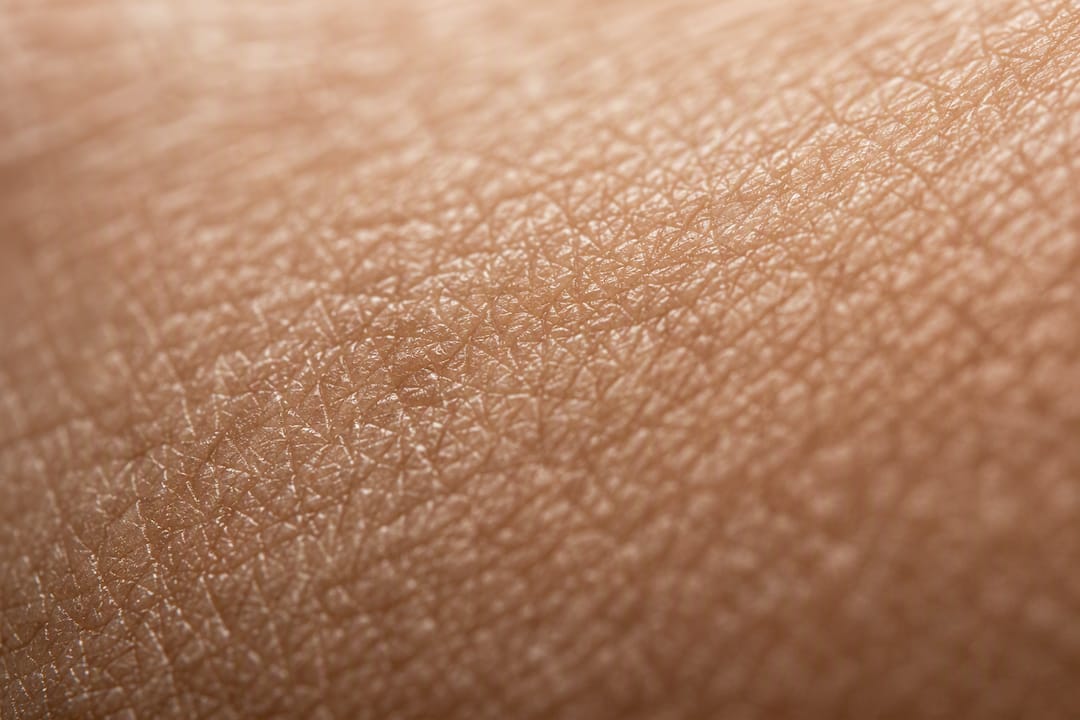
Here’s the part most skincare marketing glosses over: intact collagen molecules are too large to cross the epidermis. A cream containing collagen sits on the surface, offering some surface smoothing and hydration, but it cannot physically reach the dermis where your own collagen is made. If you’ve used topical collagen creams and noticed softness rather than firming, that’s exactly why. The surface benefit is real. The structural rebuild it implies isn’t happening from the jar.
Oral collagen works through an entirely different mechanism, and it’s the one with genuine evidence behind it — as detailed in supplements supporting skin cell repair by Revivify.
How hydrolysed collagen peptides work:
- Collagen is broken down, or hydrolysed, into smaller amino acid chains, including glycine, proline and hydroxyproline, that your gut can actually absorb.
- Clinical trials typically use 2.5 to 15 grams a day, with better bioavailability linked to peptides sized around 3 to 6 kDa.
- Once absorbed, your body redistributes these amino acids where they’re needed, which may include collagen synthesis in skin, but that’s not guaranteed or targeted delivery.
- Measurable improvements in elasticity and wrinkle depth tend to appear after 8 to 12 weeks of consistent daily intake, not days.
That gap between “supplying raw material” and “actively triggering new production” matters more than most product copy admits. Oral peptides hand your body the building blocks. They don’t instruct fibroblasts, the cells that manufacture collagen, to ramp up output. For that, you need a different tool entirely.
Retinoids do that job. They increase fibroblast activity and reduce the enzymes that break down existing collagen, with effects building over months of consistent use. Peptide-based topicals sit somewhere in between: they penetrate better than intact collagen and can signal fibroblasts directly, which is why a good peptide serum earns its place alongside, not instead of, an oral collagen routine.
One nutritional note: vitamin C isn’t optional here. It’s a required cofactor in collagen synthesis, so pairing your supplement with a vitamin C rich diet, or taking it alongside your dose, gives your body what it actually needs to use those amino acids. Look for hydrolysed or “collagen hydrolysate” on the label. That word is your signal the peptides are small enough to absorb.

Choosing between fast plumping and long-term firmness
Pick based on the timeline you’re solving for, not on which ingredient sounds more impressive on packaging.
- Need to look refreshed for something in the next 24 to 48 hours? Topical hyaluronic acid is your answer. It plumps fine lines and adds visible bounce almost immediately, though the effect fades once you stop applying it.
- Want an even faster, more dramatic volume change for a specific event? Injectable HA fillers deliver structural volume that lasts months, administered by a qualified practitioner, not something any skincare routine replicates.
- Building a long-term anti-ageing plan over the next year? Oral collagen peptides and a retinoid are your two evidence-backed tools, working on different timelines of roughly 8 to 12 weeks for measurable elasticity change and longer for full retinoid benefits.
- Want both the immediate look and the long-term structure? Run them together. There’s no conflict between plumping skin today with HA while rebuilding collagen underneath over months with peptides and retinoids.
Realistically, here’s what each route can and cannot deliver:
- A well-formulated HA serum will make fine dehydration lines look less obvious within a day. It will not firm sagging jowls.
- Oral collagen peptides, taken daily for 8 to 12 weeks, can measurably improve skin elasticity. They will not produce dermal filler-level volume.
- A retinoid used consistently for several months is your best shot at genuine structural change from a topical product. No cream, regardless of what’s listed as its “hero ingredient,” rebuilds deep dermal collagen the way a retinoid or injectable procedure can.
- Combining HA with collagen doesn’t create some multiplied effect. It just means you’re covering two separate jobs, hydration now and structure later, with two separate tools.
Building an AM and PM routine that actually uses both
Here’s where the theory turns into something you do every day. The order and pairing matter more than most routines admit, particularly once you introduce a retinoid.
Morning routine:
- Antioxidant serum (vitamin C is the strongest evidenced option) protects against daytime UV and pollution damage, and doubles as the cofactor your collagen synthesis needs.
- Hyaluronic acid serum, applied to slightly damp skin, for the plumping effect that lasts through the day.
- Moisturiser to seal the HA in, preventing it from pulling moisture back out of your skin in dry conditions.
- SPF, non-negotiable, because UV exposure is one of the fastest ways to accelerate collagen breakdown you’re otherwise trying to support.
Evening routine:
- Retinoid or peptide treatment, applied to clean, dry skin. If you’re new to retinoids, start two to three nights a week and build up, buffering with moisturiser first if you notice irritation.
- HA-containing moisturiser to counter the dryness retinoids often cause in the first few weeks.
- Oral collagen supplement, ideally taken in the morning with a vitamin C source, though consistency matters more than exact timing.
Pro Tip: Patch test any new retinoid on your inner arm for 48 hours before applying it to your face, and don’t expect to see collagen-related changes for at least eight weeks. Most people quit around week four, right before results start showing.
What the clinical evidence actually shows
Strip away the marketing and the evidence splits cleanly by delivery method, with real differences in how much confidence each deserves.
- Oral hydrolysed collagen has the most consistent backing: meta-analyses and randomised controlled trials report modest but repeatable improvements in skin elasticity and wrinkle appearance at doses of 2.5 to 15 grams daily, generally after 8 to 12 weeks.
- Topical hyaluronic acid has solid trial support for hydration and fine-line improvement, with 1% to 2% concentrations performing well in most formulations.
- Injectable HA sits in a different evidence category altogether, a procedural intervention with predictable, measurable volume effects rather than a gradual skincare outcome.
- Oral HA has a thinner evidence base: smaller studies suggest hydration benefits, but sample sizes and inconsistent methodology mean it’s promising rather than settled.
- Topical retinoids carry the strongest evidence among topical actives for genuinely stimulating fibroblast activity and new collagen formation.
One honest caveat runs through nearly all of this research: study designs vary a lot in duration, dose, and how they measure “improvement,” and some trials carry industry funding. Setting expectations around a meta-analysis rather than a single small study, and being upfront that evidence quality varies across this category, matters more than most comparison guides admit. Benefits from both HA and collagen also require ongoing use. Stop taking or applying either and the gains fade over subsequent weeks.
Safety, side effects and when to check with a professional
Most reactions to hyaluronic acid and collagen products are mild, but a few are worth flagging before you start layering actives.
- Topical HA: generally well tolerated, though very high concentrations above 2% can occasionally cause paradoxical dryness in certain skin types by pulling moisture from the skin rather than holding it. Reactions are more often to preservatives or fragrance in the formula than to the HA itself.
- Oral collagen: mild digestive upset (bloating, mild nausea) is the most commonly reported issue. Marine-sourced collagen carries a small allergy risk for anyone with shellfish or fish sensitivities, so check the source on the label.
- Sourcing and quality: supplement regulation is looser than pharmaceutical regulation, so look for third-party tested products and named collagen sources rather than vague “collagen blend” labelling.
- Drug interactions: collagen supplements aren’t known to interact dangerously with most medications, but if you take antidepressants or other prescriptions, check with your prescriber before adding any new daily supplement, particularly if you’re combining several actives at once.
- Injectable HA: only ever from a qualified, licensed practitioner. Bruising and swelling are common short-term effects; vascular complications are rare but serious, which is exactly why practitioner training matters here.
- Pregnancy and breastfeeding: evidence on collagen and HA supplementation during pregnancy is limited rather than reassuring, so check with your doctor before starting either.
If you notice a reaction, stop the product, note what else you introduced that week, and keep a simple ingredient diary. It makes cause and effect far easier to untangle than trying to remember three weeks later.
How M-shop’s product range fits this evidence-based routine
M-shop is family-owned and sources directly from Poland, which shapes a product range built around collagen and algae-based actives rather than trend ingredients. That sourcing model means shorter supply chains and closer relationships with the manufacturers behind each formula, something larger, non-specialist retailers rarely offer.
For the routine outlined above, a few product types map directly onto the evidence. A hyaluronic acid concentrated cream suits the morning plumping step, formulated for mature skin needing daily hydration support. For the collagen side, a rich anti-wrinkle cream with vitamins pairs collagen with nutritional cofactors in one formula, useful as the moisturising layer in an evening routine built around a retinoid or peptide treatment.
- Regular discounts of up to 15% make it realistic to build a full routine, rather than compromising on one product to afford another.
- Family ownership means product selection reflects genuine use rather than trend-chasing.
- Every product ships from a specialist retailer that only sells skincare, not a general marketplace.
Pro Tip: If you’re combining a hyaluronic acid cream with a collagen-based night cream, introduce them one at a time over a fortnight. That way, if irritation shows up, you know exactly which product caused it.
The gap between what skincare promises and what it delivers
Most confusion in this category comes from marketing treating hyaluronic acid and collagen as competitors, when they were never solving the same problem. That framing sells more product, but it leaves readers expecting a cream to do a supplement’s job, or a supplement to work overnight.
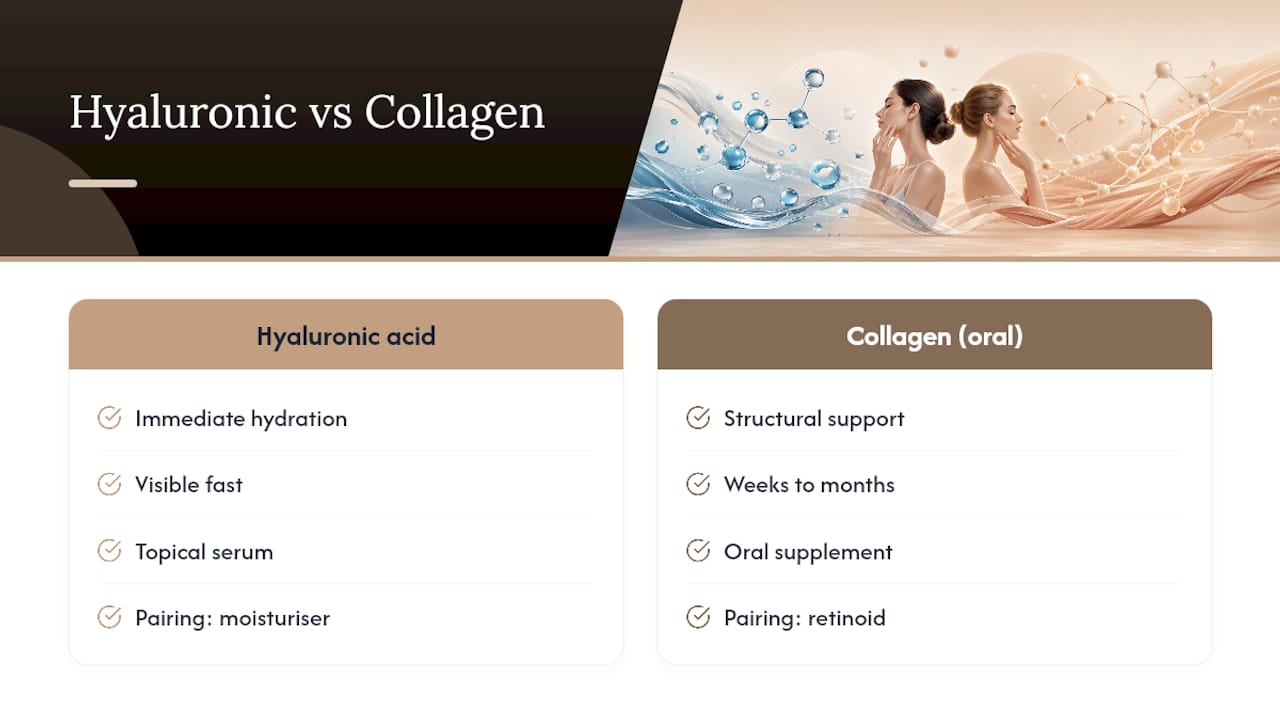
The research supports a plainer conclusion. Hyaluronic acid is the fastest lever you have for visible, immediate hydration, and it’s genuinely effective at that single job. Collagen, taken orally and paired with a retinoid for actual stimulation, is the slower structural project, one measured in months, not applications. Neither replaces the other, and no single product does both.
What conventional advice underplays is patience. Most people abandon collagen supplementation around week four, exactly when the 8 to 12 week window clinical trials use is only halfway through. If there’s one change worth making today, it’s committing to a timeline before you start, not after you’ve already decided a product “isn’t working.”
Prioritise consistency over novelty. A modest HA serum used daily beats an expensive one used sporadically, and the same is true, more emphatically, of oral collagen.
— Krzysztof
Where to start building your routine
You’ve now got the evidence. What you need next is a place to actually build the routine without overpaying for it, and that’s precisely the gap M-shop fills for UK-based readers who want proven Polish-formulated skincare rather than guesswork.

If dryness or sensitivity is part of your skin’s story, the hypoallergenic natural soap with chestnut extract is worth adding to your cleansing step, since a compromised barrier undermines everything you layer on top of it. For anyone dealing with congestion alongside ageing concerns, the SPF-protected anti-acne normalising cream covers sun protection and breakout control in one step.
Start with one product from each category, hyaluronic acid and collagen, browse the current M-shop range, and give your chosen routine the full eight to twelve weeks before judging results.
Sources
- Collagen: What it does, and how to increase production | Cleveland Clinic
- Hyaluronic acid for skin: benefits, how to use it and side effects | Harvard Health
- Retinoids and anti-ageing | American Academy of Dermatology