



Peptides in affordable skincare: what really works
Peptides are short chains of amino acids that act as biological messengers, signalling your skin to produce collagen, retain moisture, and repair itself at a cellular level. The role of peptides in affordable skincare is more significant than most budget-conscious shoppers realise. A 2026 systematic review of 19 RCTs covering 1,341 participants found statistically significant improvements in skin hydration and brightness from peptide use, with a hydration mean difference of 5.80 (p < 0.01). That is meaningful clinical evidence, not marketing copy. The good news is that these benefits are not locked behind luxury price tags.
What does research say about peptide effectiveness in skincare?
Clinical evidence for peptides in skincare is stronger than the industry often admits, and also more nuanced. The 2026 meta-analysis referenced above found that peptides improve hydration and brightness significantly, with a modest but statistically significant effect on wrinkle reduction (mean difference of 0.27, p = 0.04). Modest does not mean negligible. It means you will see a real improvement in skin texture and glow, rather than a dramatic reversal of deep lines.
One finding that surprises many readers is that oral peptides outperformed topical peptides in the same trials. The oral peptide subgroup showed a hydration mean difference of 5.79 and a wrinkle reduction mean difference of 0.35, both statistically significant. This suggests that collagen supplements and oral peptide products deserve a place alongside your topical serum, particularly if you are working with a tight budget and want to maximise results.
Safety is rarely a concern with peptides. The same systematic review reported minimal adverse events across trials, with only mild gastrointestinal discomfort noted for oral peptides. Topical peptides showed no meaningful side effects. For anyone cautious about introducing new actives, this is a reassuring profile.
Treatment durations in the reviewed trials ranged from 4 to 12 weeks, which sets a realistic timeline for you to judge whether a product is working. Do not write off a peptide serum after two weeks. Give it a full month at minimum before reassessing.
Pro Tip: Take a photograph of your skin in consistent lighting at the start of a new peptide product and again at four weeks. Subtle improvements in hydration and brightness are easy to miss day-to-day but become obvious in side-by-side comparisons.
Which peptide types suit different skin concerns?
Not all peptides do the same job. Multiple functional categories exist, each targeting different skin concerns, and matching the right type to your goal is the single most cost-effective decision you can make in affordable peptide skincare.
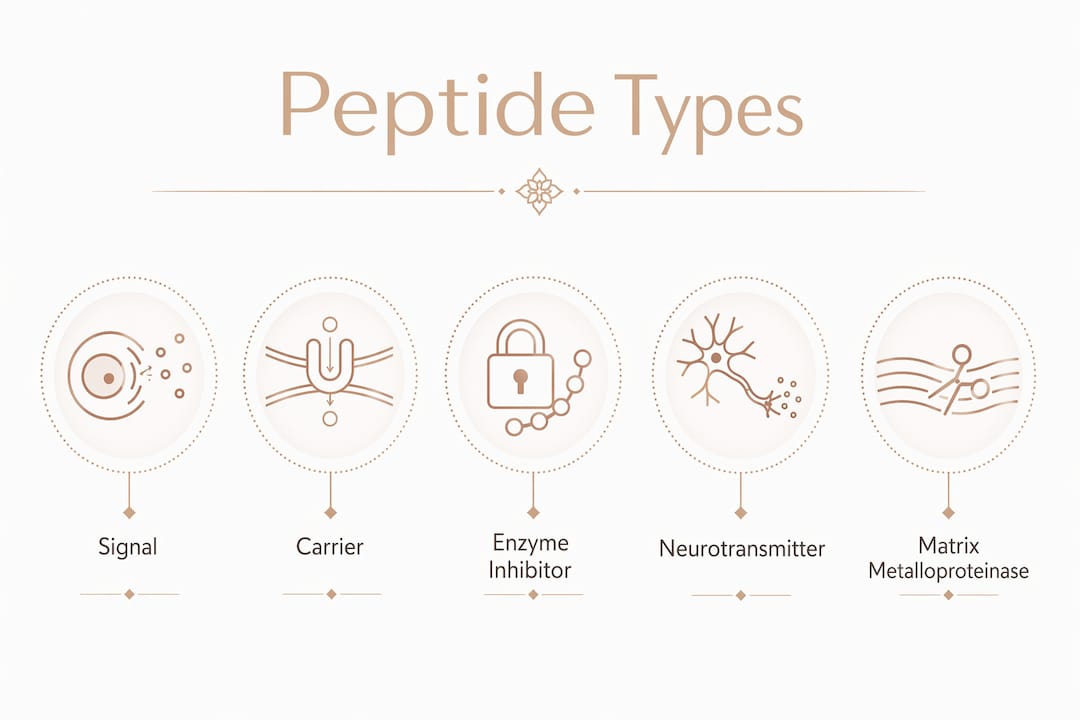
| Peptide type | Primary function | Example ingredient | Best for |
|---|---|---|---|
| Signal peptides | Stimulate collagen and elastin production | Palmitoyl Pentapeptide-4 (Matrixyl) | Firmness, fine lines |
| Carrier peptides | Deliver trace minerals to skin cells | GHK-Cu (copper peptide) | Repair, antioxidant support |
| Neurotransmitter-inhibiting peptides | Relax facial muscles to soften expression lines | Argireline (Acetyl Hexapeptide-3) | Forehead lines, crow’s feet |
| Enzyme-inhibiting peptides | Slow breakdown of collagen fibres | Soy-derived peptides | Preventive anti-ageing |
Signal peptides such as Palmitoyl Pentapeptide-4 are the most widely studied and appear in many affordable serums. Carrier peptides like GHK-Cu (copper peptide) are particularly valued for their repair and antioxidant properties, making them a strong choice for skin recovering from sun damage or environmental stress. Argireline is often marketed as a topical alternative to Botox, which overstates its effect, but it does offer a measurable softening of expression lines with consistent use.
The practical guidance here is straightforward:
- Look for products that name the specific peptide technology on the label, not just “peptide complex.”
- Match the peptide category to your primary concern before comparing prices.
- Avoid products that list peptides last in the ingredient list, as concentration matters for efficacy.
Choosing products with named peptide technologies supported by clinical data is the expert recommendation, and it costs nothing extra to read a label carefully.
How to build an effective affordable peptide routine
Structure matters as much as product selection when it comes to getting results from budget peptide skincare. The simplicity principle is well supported: fewer, well-formulated products outperform a stack of mediocre ones, and they make it easier to identify what is actually working.
Follow this sequence for a practical peptide routine:
- Cleanse with a gentle, pH-balanced cleanser. Avoid stripping the skin barrier before applying actives.
- Apply your peptide serum to clean, slightly damp skin. This improves absorption without diluting the formula.
- Layer a hyaluronic acid moisturiser on top to lock in hydration and support the peptide’s signalling function.
- Add niacinamide if your skin tolerates it. Niacinamide complements peptides by supporting the skin barrier and reducing redness.
- Finish with SPF in the morning. UV damage degrades collagen faster than any peptide can rebuild it, so sun protection is non-negotiable.
Consistency over 4 to 12 weeks is the evidence-backed requirement for visible results. Skipping days or switching products every fortnight resets your progress. For guidance on building a full routine around affordable actives, the affordable skincare routine guide at M-shop is a practical starting point.
Pro Tip: If you are new to peptides, start with a single serum containing Palmitoyl Pentapeptide-4 or GHK-Cu. Use it consistently for eight weeks before adding anything else. This gives you a clean read on what the peptide is actually doing for your skin.
How do affordable peptide products compare with premium options?
The honest answer is that the gap between affordable and premium peptide skincare is smaller than the price difference suggests. Topical peptide effectiveness depends heavily on formulation stability and delivery technology, not on the brand’s marketing budget. A well-formulated affordable serum with a named, stable peptide at an effective concentration will outperform an expensive product with a vague “peptide blend” buried at the bottom of the ingredient list.
Where premium products do have a genuine edge is in delivery systems. Encapsulated peptides, liposomal carriers, and time-release technologies improve skin penetration. These innovations do cost money to develop. However, the clinical evidence shows that modest improvements in hydration and brightness are achievable with standard topical formulations, meaning you do not need cutting-edge delivery to see results.
Consider these practical comparisons when shopping:
- A serum listing Palmitoyl Pentapeptide-4 in the top half of its ingredient list at a budget price point will likely deliver comparable hydration benefits to a premium product with the same peptide at a lower concentration.
- Oral peptide supplements, which showed stronger RCT support for hydration and brightness than topical products, are often significantly cheaper per dose than premium topical serums.
- Polish cosmetics brands, available through M-shop, frequently formulate with collagen and bioactive peptides at concentrations that rival far more expensive Western European counterparts.
For a broader view of what European budget skincare can deliver, the affordable European skincare guide covers the category well. The Celia Collagen + Vitamins 40+ cream is a strong example of an affordable product that delivers on the peptide and collagen promise without the premium price.
For a deeper look at how peptide serums specifically address hydration and barrier function, the peptide serum guide from Body Face Scalp is worth reading alongside your product research.
Key takeaways
Peptides deliver real, measurable skin benefits when matched correctly to your concerns and used consistently for at least four weeks.
| Point | Details |
|---|---|
| Peptides act as messengers | They signal skin to produce collagen, retain moisture, and repair itself at a cellular level. |
| Clinical evidence is solid but modest | A 2026 meta-analysis of 19 RCTs confirmed significant hydration and brightness gains, with modest wrinkle reduction. |
| Peptide type determines outcome | Signal, carrier, and neurotransmitter-inhibiting peptides each target different concerns. Match type to goal. |
| Consistency is non-negotiable | Visible results require 4 to 12 weeks of regular use. Switching products early resets progress. |
| Affordable does not mean ineffective | Formulation quality and named peptide ingredients matter more than price when selecting a product. |
Why I think most people overcomplicate peptide skincare
I have spent years watching people spend more than they need to on skincare, convinced that a higher price tag means better results. With peptides, that logic falls apart quickly. The clinical data is clear: the improvements are real, they are measurable, and they are achievable with well-formulated affordable products. What they are not is dramatic or fast.
The mistake I see most often is impatience combined with over-stacking. Someone buys three different peptide serums, layers them all in the same routine, and then cannot tell which one is working or whether any of them are. When nothing seems to happen in two weeks, they abandon the whole approach. This is exactly backwards from what the evidence supports.
My honest recommendation is to treat peptides the way you would treat any long-term investment. Pick one product with a clearly named, well-studied peptide. Use it every day for eight weeks. Photograph your skin. Then decide. The subtle but genuine improvement in hydration and skin tone that you will see is worth far more than the dramatic claims on most premium packaging.
Sun protection deserves a mention here too. No peptide, at any price, can outpace the collagen damage caused by daily UV exposure without SPF. If you are serious about anti-ageing results from your peptide routine, sunscreen is not optional. It is the foundation everything else sits on.
— Krzysztof
Explore affordable peptide skincare at M-shop
M-shop stocks a carefully selected range of Polish cosmetics that put peptide and collagen science into genuinely affordable formulations. These are not watered-down budget products. They are well-formulated creams and serums from trusted Polish brands, sourced directly and priced to make effective skincare accessible in the UK.

The Celia Collagen + Vitamins 40+ anti-wrinkle cream is one of the best-value peptide-rich options available, particularly for dry and mature skin. For those managing oily or blemish-prone skin alongside anti-ageing concerns, the Pharmaceris SPF day cream offers active ingredient support with sun protection built in. M-shop regularly offers up to 15% off during sales, making it straightforward to build a consistent peptide routine without overspending. Browse the full range at M-shop.uk and find the right product for your skin goals.
FAQ
What do peptides actually do for your skin?
Peptides act as messenger molecules that signal skin cells to produce collagen, elastin, and other structural proteins. The practical result is improved hydration, firmer texture, and brighter skin tone with consistent use.
How long before peptide skincare shows results?
Clinical trials show that treatment durations of 4 to 12 weeks are needed for measurable improvements. Give any peptide product at least four weeks of daily use before judging its effectiveness.
Are oral peptide supplements worth considering?
Yes. A 2026 meta-analysis found that oral peptides outperformed topical formulations for hydration and brightness in RCT subgroup analysis. Oral supplements can be a cost-effective complement to a topical routine.
What should I look for on a peptide product label?
Look for named peptide ingredients such as Palmitoyl Pentapeptide-4, GHK-Cu, or Argireline rather than vague terms like “peptide complex.” Named peptide technologies with clinical backing are the clearest indicator of a well-formulated product.
Are peptides safe for sensitive skin?
Peptides have an excellent safety profile. The 2026 systematic review reported minimal adverse events across all trials, with topical peptides showing no meaningful side effects, making them suitable for most skin types including sensitive skin.