



2–4 Weeks to Measurable Hydration: D Panthenol Benefits and Budget Buys
It works best in leave-on creams and serums rather than rinse-off washes. Most people tolerate it well, though a quick patch test is sensible if your skin reacts easily to new products.
TL;DR:
- Most effective formulations contain between 1% and 5% panthenol, with 5% used in many clinical trials demonstrating hydration and barrier benefits.
- Panthenol’s barrier-supporting effects generally become visible after two to four weeks of consistent use, with subjective comfort improving faster within days.
- It works best in leave-on products like creams and serums rather than rinse-off washes, which wash away the active before it can act.
- The ingredient is safe, rarely causes irritation, and can be used alongside retinol and vitamin C to reduce related dryness.
- For best results, pair panthenol with complementary humectants and avoid applying to broken skin or open wounds.
Table of Contents
- What does D-panthenol do for skin?
- What does the clinical evidence actually show?
- How do you choose and use a panthenol product?
- Simple routines that put panthenol to work
- Is D-panthenol safe, and when should you stop using it?
- Why this ingredient deserves more attention than it gets
- Where to find affordable D-panthenol skincare
- Sources
- FAQ
What does D-panthenol do for skin?
D-panthenol is the stable, skin-friendly form of pro-vitamin B5, and once it penetrates the skin it converts to pantothenic acid, a building block your cells use for repair. It behaves as a humectant, meaning it draws water into the outer skin layer and helps hold it there, which reduces transepidermal water loss (TEWL), the rate at which moisture escapes through the skin’s surface. Less water loss means plumper, less flaky skin within days rather than weeks.
Beyond hydration, panthenol appears to support lipid synthesis and epidermal cell turnover, the two processes that rebuild a damaged skin barrier after dryness, sun exposure, or over-exfoliation. Ingredient reviews describe the evidence for these barrier effects as moderately strong, stronger than the evidence for its effects on pigmentation or deeper inflammation, where results are more mixed and mostly tested in combination formulas.
Certain skin types get more out of it than others:
- Dry or flaky skin that feels tight after cleansing
- Sensitive or reactive skin prone to redness
- Skin recovering from sun exposure, shaving, or minor procedures
- Anyone using retinoids or exfoliating acids who need extra barrier support
Pro Tip: If your skin flakes within an hour of moisturising, that’s a TEWL problem, not a “needs more product” problem. Panthenol addresses the leak itself rather than just topping up the tank.
One trial measuring skin barrier recovery found meaningfully lower TEWL area-under-curve values in panthenol-treated groups compared with controls, a concrete sign the ingredient does more than sit on the surface.
What does the clinical evidence actually show?
The clearest data comes from a trial testing a cream containing panthenol alongside prebiotics and a probiotic lysate on people with sensitive skin. Over 28 days, the treated group showed a greater TEWL reduction compared with the control group, alongside measurable gains in corneometry hydration scores and reduced redness.
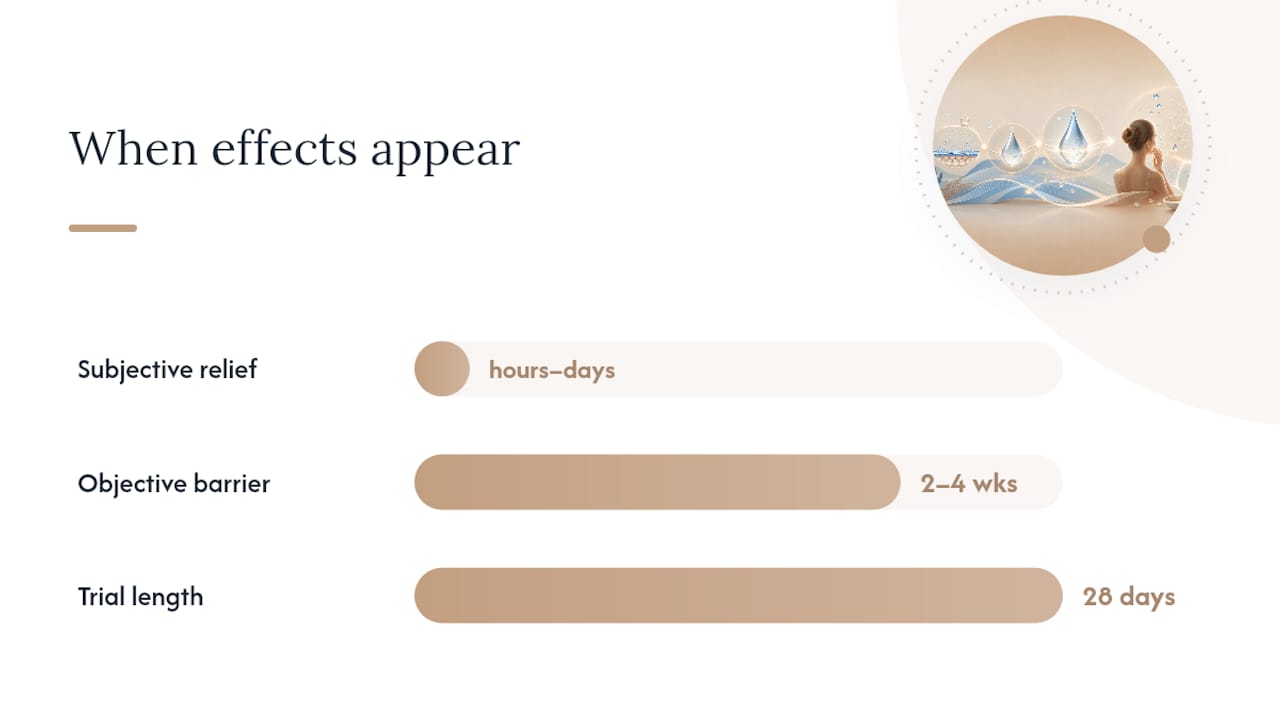
Timing matters if you’re deciding whether a product is working. Subjective comfort, less itching, calmer redness, can show up within days, sometimes within hours of application. Objective barrier improvements, the kind measured by corneometry and TEWL devices, generally take longer to register, often somewhere in the 2 to 4 week range.
A few caveats are worth keeping in mind before you expect miracles from a single ingredient:
- Most trials test panthenol inside combination formulas, not as a standalone ingredient
- Sample sizes and control conditions vary between studies, which limits how confidently results generalise
- Ingredient reviews rate the evidence for hydration and barrier support as moderate, not definitive, while effects on pigmentation and chronic inflammation rest on thinner data
None of that undermines the core finding. It just means panthenol is best understood as a reliable supporting player, not a cure-all, and formulators clearly agree, since standalone panthenol products are far less common than blends.
How do you choose and use a panthenol product?
Start by checking the ingredients list or product description for a stated concentration. Most effective formulations sit between 1% and 5% panthenol, and 5% is the level used in several of the clinical trials behind the hydration and barrier claims.
- Check the label for concentration. If it’s not stated, look for panthenol high up the ingredients list rather than buried near the end.
- Choose a leave-on format where possible. Moisturisers, serums, and overnight masks give the ingredient time to work; rinse-off cleansers wash it away before it can do much.
- Pair it with complementary humectants and lipids. Hyaluronic acid, glycerin, ceramides, and niacinamide all work alongside panthenol without conflict, reinforcing hydration and barrier repair from different angles.
- Layer carefully with actives. Panthenol generally sits comfortably alongside retinol and vitamin C, and many people use it specifically to offset the dryness those actives can cause, though introducing several new products at once makes it harder to spot what’s causing any reaction.
- Patch test new formulas. Apply a small amount to the inner forearm and leave it for 48 hours, watching for delayed redness or itching before applying it to your face.
Pro Tip: Rinse-off products aren’t useless, they just work differently. A panthenol-enriched shower cream can still calm irritated skin in the moment, but don’t expect the same barrier-repair results you’d get from a cream you leave on overnight.
Simple routines that put panthenol to work
A morning routine built around panthenol doesn’t need to be complicated: a panthenol-containing moisturiser after cleansing, followed by sunscreen, covers hydration and protection in two steps. In the evening, the same moisturiser or a richer panthenol serum applied before bed gives the ingredient hours of uninterrupted contact time, which is when most of the barrier-repair work happens.
A few situational uses are worth knowing beyond the daily routine:
- After shaving, to calm razor-related irritation and reduce redness
- After sun exposure, alongside proper aftersun care, to support the skin’s recovery
- Following minor cosmetic procedures or light exfoliation, when the barrier is temporarily compromised
- Across larger body areas like arms and legs, where a panthenol-enriched lotion applied once or twice daily helps with general dryness
The mechanism doesn’t change from face to body. What changes is the format, lighter serums for the face, and richer lotions for larger surface areas that need more product to cover.
Is D-panthenol safe, and when should you stop using it?
Panthenol has a strong safety record for topical use, and irritation from it alone is uncommon. That’s part of why it turns up in everything from nappy creams to post-shave balms and infant skincare.
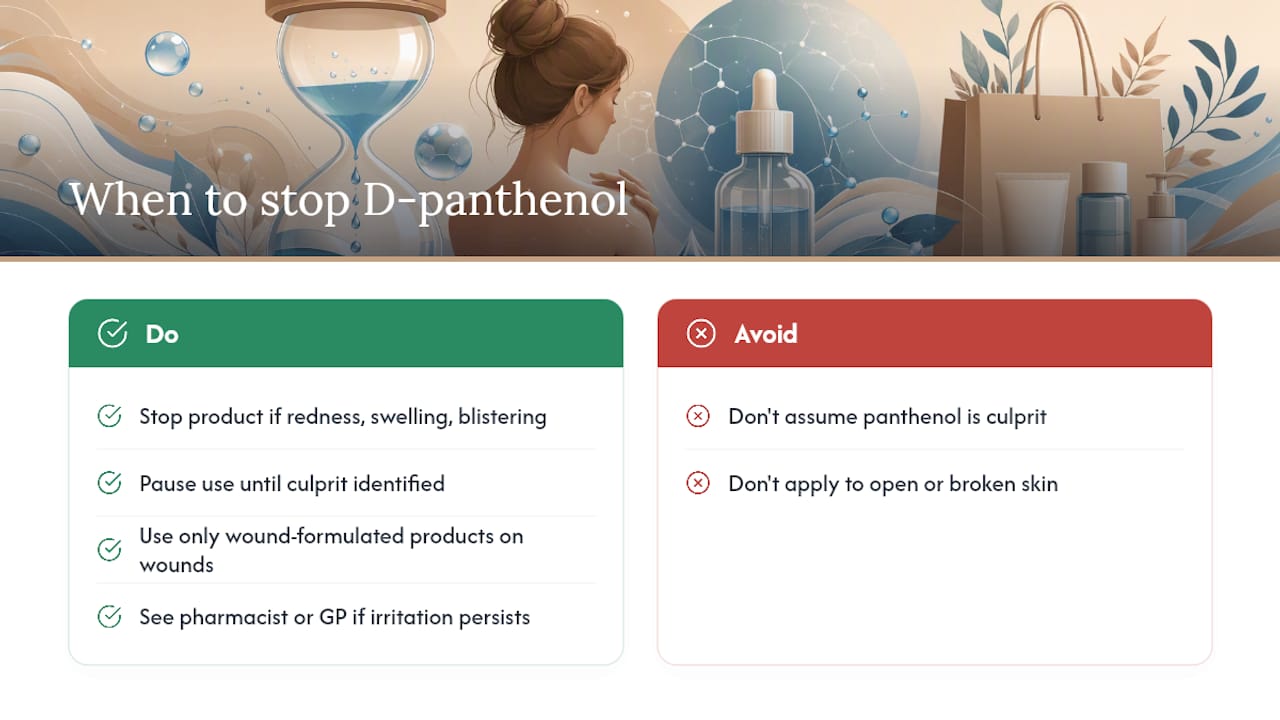
Stop using a product and reassess if you notice worsening redness, swelling, or blistering rather than the mild, temporary tingling some actives cause. Persistent reactions are more often down to another ingredient in the formula, a fragrance, preservative, or acid, than the panthenol itself, but it’s still worth pausing until you know which one is responsible.
Avoid applying general skincare products, panthenol-containing or not, to open wounds or broken skin unless the product is specifically formulated and labelled for wound care. If irritation persists beyond a few days, speak to a pharmacist or GP rather than continuing to experiment.
Why this ingredient deserves more attention than it gets
Panthenol doesn’t get the marketing spotlight that hyaluronic acid or retinol enjoy, and I think that’s mostly down to how quietly it works. It doesn’t exfoliate, brighten, or plump in a way you can photograph after one use. What it does is repair the barrier that makes every other product in your routine actually work properly, which is a less glamorous story but arguably a more useful one for anyone whose skin reacts badly to actives.
Panthenol-containing formulations, including the Bielenda Professional Satin Rose Water with D-Panthenol and barrier-focused options like the Pharmaceris T Sebostatic Day cream, can be sourced directly from Poland as part of family-run operations that prioritise effective, fairly priced skincare over flashy branding.
— Krzysztof
Where to find affordable D-panthenol skincare
There are other ways to get panthenol into your routine, plenty of high-street moisturisers include it in small amounts, but if you want a formulation built around it rather than one that squeezes it in as an afterthought, checking specialized online retailers is worth a look.

The Bielenda Professional Satin Rose Water with D-Panthenol is a practical starting point if you want a lightweight, hydrating formula rather than a heavy cream. Before adding anything to your basket, run through a short checklist: confirm the panthenol concentration on the label, favour leave-on formats over rinse-off ones, and look for supporting ingredients like glycerin or hyaluronic acid that reinforce hydration rather than fight it.
For more skin-specific guidance, including how panthenol pairs with prebiotics for sensitive skin, M-shop’s skincare guides cover related combinations in more depth. Browse the full skincare and face care range to compare panthenol formulations against other hydrating options in stock, and check current sales before checkout.
Sources
- What Is Panthenol? The Hair and Skin Benefits of Vitamin B5 — WebMD
- Efficacy and safety of a cream containing panthenol, prebiotics, and probiotic lysate for improving sensitive skin symptoms — PMC
- Cosmetic
- Panthenol: Benefits & Safety — Medical News Today
FAQ
What is the difference between panthenol and allantoin?
Panthenol is a pro-vitamin B5 derivative that boosts hydration and supports barrier repair, while allantoin is a separate soothing compound often paired with it for its moisturising and skin-calming effects; they’re complementary, not interchangeable.
How long does it take to see results from panthenol?
Comfort and reduced redness can improve within days, but measurable hydration and barrier changes typically take 2 to 4 weeks of consistent use to show up.
What percentage of panthenol should I look for in a product?
Aim for a product formulated with between 1% and 5% panthenol, the range most commonly used in clinical trials and everyday skincare formulations.
Can I use panthenol with retinol or vitamin C?
Yes, panthenol generally layers well with both and is often used specifically to offset the dryness that retinol and vitamin C can cause.
Does M-shop sell panthenol skincare products?
Yes, M-shop stocks panthenol-containing items including the Bielenda Professional Satin Rose Water with D-Panthenol, with current pricing and any active discounts listed on the product page.