



6–12 Hours Hydration: When to Layer Body Butter vs Lotion
Reach for lotion when you want fast, all-over hydration that sinks in before you get dressed. Reach for body butter when a patch of skin (heels, elbows, knees) needs heavier, longer-lasting repair. The logic comes down to water content versus oil content: lotion hydrates with water and humectants, butter seals that moisture in with a thick occlusive layer. Most people get the best results using both, lotion first, butter second, rather than picking one for life.
TL;DR:
- Body butter is most effective on very dry or cracked skin and should be applied once daily, preferably at night, to allow it to work undisturbed.
- Lotion absorbs quickly and is suitable for daily full-body hydration, lasting around two to four hours unless layered with a barrier cream.
- Using a humectant lotion before applying body butter enhances moisture retention and prevents the product from just sitting on dry skin.
- Skin type and climate are critical; oily skin benefits from lighter lotions, whereas dry or eczema-prone skin responds better to richer creams or butters, especially in winter.
- Applying moisturizers to damp skin within a few minutes after washing significantly improves their effectiveness.
Table of Contents
- Body butter vs lotion: a quick side-by-side comparison
- Which should you use for your skin type and climate?
- How to apply body butter or lotion for the best results
- Which ingredients actually matter (and which to avoid)
- What the evidence says about results and risk
- Our take on the body butter vs lotion debate
- Where to start if you’re building a routine
- Sources
- FAQ
Body butter vs lotion: a quick side-by-side comparison
The core difference is formulation. Lotion is a water-in-oil emulsion, so it’s lighter and mostly water. Body butter is largely anhydrous, built from shea, cocoa or similar plant fats with little or no water, which is why texture differences between moisturisers come down chiefly to their water-to-oil ratio.
That ratio drives everything else:
- Absorption: lotion sinks in within a minute or two and leaves almost no residue; butter takes longer to melt in and leaves a visible film.
- Duration: lotion typically holds hydration for around two to four hours, while butter’s heavier occlusive layer can protect skin for six to twelve hours, meaning fewer reapplications.
- Best use: lotion for daily, full-body maintenance; butter for targeted, intensive repair on rough or cracked areas.
- Feel: lotion is fine for hairy areas and large surfaces because it spreads thinly, whereas thicker creams and butters suit smaller, drier patches better than a whole-body application.
None of this makes one format objectively better. It makes them suited to different jobs, which is exactly why the “body cream vs lotion” question rarely has a single winner.
Which should you use for your skin type and climate?
Matching format to skin type is the single biggest factor in getting real results, more than any specific ingredient.
- Oily or acne-prone skin: stick with lotions or gel-creams. A heavy butter on the torso, back or face can sit on top of oil-prone skin and increase the risk of clogged pores.
- Combination skin: use lotion across most of the body, then spot-treat dry patches (shins, elbows) with a richer cream or small amount of butter.
- Normal skin: lotion covers daily needs. Swap to a butter in winter, or whenever skin starts feeling tight after a shower.
- Dry to very dry or eczema-prone skin: richer creams and butters do more work here. Lotions containing ceramides or urea are worth prioritising, since they support the skin’s lipid barrier rather than just sitting on top of it.
- Feet, heels and elbows: these areas have thicker skin and fewer oil glands, so they tolerate (and need) a heavier balm or ointment-style product regardless of what you use elsewhere.
Climate matters as much as skin type. Humid summer air needs less occlusion, so a lighter lotion or gel usually feels more comfortable. Cold, dry months strip moisture faster, which is when a thicker cream or butter earns its place in the routine.
Pro Tip: If you’re not sure which category you fall into, watch your T-zone and shins separately for a week. Oily T-zone and flaky shins is the classic combination-skin pattern, and it usually means two different products, not one compromise formula.
How to apply body butter or lotion for the best results
Timing matters more than most people assume. Applying moisturiser to bone-dry skin wastes most of its benefit, while applying it to damp skin straight after washing traps existing moisture rather than fighting to add new moisture, a principle dermatologists call “soak and seal.”
- Shower or wash, then pat skin towel-dry rather than rubbing it fully dry, leaving it slightly damp.
- Apply within a few minutes, while skin is still receptive to product.
- Use a coin-to-marble-sized amount for a limb, more for the torso, and don’t be shy with genuinely dry skin.
- For stubborn dry patches, layer a humectant lotion (glycerin, hyaluronic acid or urea) first, then seal with a thin layer of body butter on top.
- Use lotion once to three times daily as needed; reserve butter for once daily, often at night, so it has hours to work undisturbed.
Pro Tip: Trying a new butter for the first time? Patch-test on your inner forearm for 24 hours before applying it anywhere larger, especially if you’re prone to breakouts or sensitivities.
Which ingredients actually matter (and which to avoid)
Reading a label tells you more than reading a marketing claim ever will.
- Humectants (glycerin, hyaluronic acid, urea) pull water into the skin’s outer layer. Urea around 5% is particularly effective on rough, scaly patches such as keratosis pilaris.
- Emollients and barrier lipids (shea butter, cocoa butter, ceramides, fatty acids) support the skin’s natural lipid matrix. Shea butter specifically supplies fatty acids shown to improve atopic dermatitis symptoms over several weeks of consistent use.
- Ingredients worth avoiding on acne-prone skin include heavy added fragrance, unnecessary essential oils, and coconut oil, which carries a higher comedogenic score than most other plant oils.
- A common mistake: using an occlusive butter with no humectant underneath. Sealing in the current level of moisture doesn’t add any, so very dry skin often stays dry unless a humectant lotion is applied first.
Plant butters have real limits, too. They deliver fatty acids and some anti-inflammatory compounds, but they lack the balanced ceramide, cholesterol and fatty-acid mix found in specialised barrier-repair formulas, so severe barrier damage may need more than shea butter alone.
What the evidence says about results and risk
Clinical evidence broadly supports what dermatologists have long recommended by instinct. Targeted body butter use can visibly improve dry or eczematous skin within around two weeks, but that same richness works against you if applied indiscriminately across acne-prone areas, where it raises the risk of clogged pores.
Two-week benchmark: trials on emollient use for dry and eczematous skin point to visible improvement within roughly two weeks of consistent nightly application, provided the product is applied to damp skin rather than dry.
One caution applies regardless of which product you prefer: don’t apply lotion, cream or butter to broken or actively infected skin. A plain petrolatum-based ointment is the safer choice until skin has healed, and anything beyond mild irritation is worth flagging to a pharmacist or GP rather than treating with routine moisturiser.
Our take on the body butter vs lotion debate
Most articles treat this as a binary choice, and that’s the wrong frame. The better question isn’t “which is superior” but “which job does this area of skin need done today.” A 22-year-old with oily skin and a stubborn dry patch on one shin doesn’t have one skin type, they have two, and the products should reflect that.
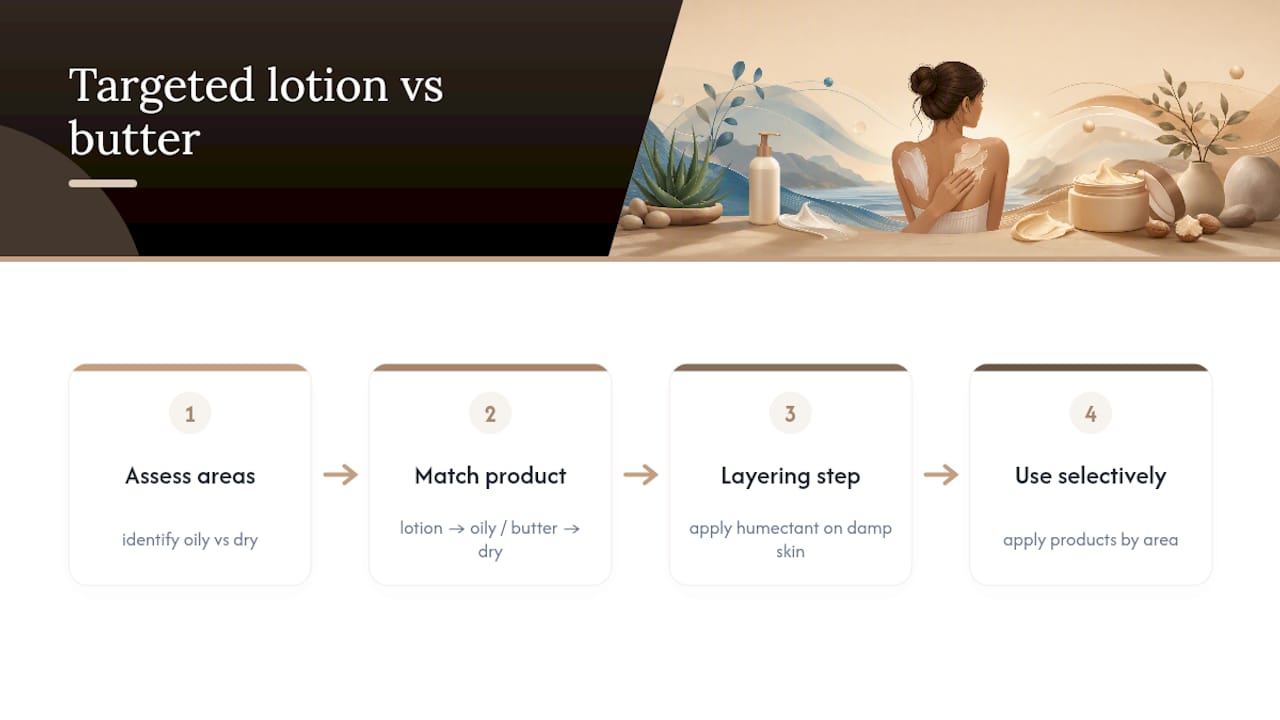
What gets underrated is the layering step. People buy an expensive butter, apply it to dry skin, feel disappointed when it “doesn’t absorb,” and blame the product. The product isn’t the problem. Skipping the humectant step, or skipping the damp-skin application window, undoes most of what a good butter can do. Get the routine right and a mid-range butter will outperform a premium one used incorrectly.
If M-shop’s urea body lotion has taught us anything from customer feedback, it’s that people underestimate how much a single well-chosen humectant ingredient can do before reaching for anything heavier. Start there, then build up to richer textures only where skin genuinely needs it.
— Krzysztof
Where to start if you’re building a routine
If daily hydration is the goal, a lighter cocoa butter body lotion covers most skin types without feeling heavy under clothing. If you’re dealing with rough patches, keratosis pilaris or genuinely dry shins, our guide on why 5% urea works better for UK skin explains the ingredient logic before you buy.

For cracked heels or elbows that need something richer than a daily lotion can offer, a regenerating cream with linseed for cracked heels is built for exactly that kind of targeted repair rather than all-over use. The store sources natural, ingredient-focused formulations directly from Poland, so product pages list full ingredient lists rather than vague marketing claims, and regular promotions make it easier to build a two-step routine without overspending. If you’re also managing breakouts alongside dry patches elsewhere, the Pharmaceris T anti-acne normalising day cream is worth a look for the face specifically. Browse the ingredient lists, pick what matches the skin you actually have this month, and add it to your basket.
Sources
- Body butter vs lotion: What to know
- Topical emollients and barrier-repair strategies (PMC article)
- Cream vs. lotion vs. gel: Everything you need to know (Byrdie)
FAQ
Is body butter better for you than lotion?
Neither is universally better. Body butter suits targeted, intensive repair on very dry areas, while lotion suits daily, all-over hydration, so the right choice depends on the job, not the product itself.
Can I use body butter as lotion?
You can use it all over, but its heavier, largely anhydrous texture absorbs slowly and can feel greasy on oily or acne-prone areas, so most people reserve it for drier patches instead.
Should you use body butter every day?
Daily use is fine on very dry skin or in winter, but if you have normal or oily skin, using it only on rough patches or a few times a week usually gives better results without clogging pores.
Should you use body butter or lotion first?
Apply lotion first to load the skin with water and humectants, then seal with body butter on top; this layering order helps trap moisture rather than just coating the surface.