



Role of urea body lotion: how it moisturises and smooths skin
Urea in body lotion does two things at once: it pulls moisture into the skin and breaks down the rough, dead surface cells that make skin feel scaly or sandpaper-like. That dual action, humectant plus keratolytic, is what separates urea from most standard moisturisers. The concentration you choose determines which effect dominates:
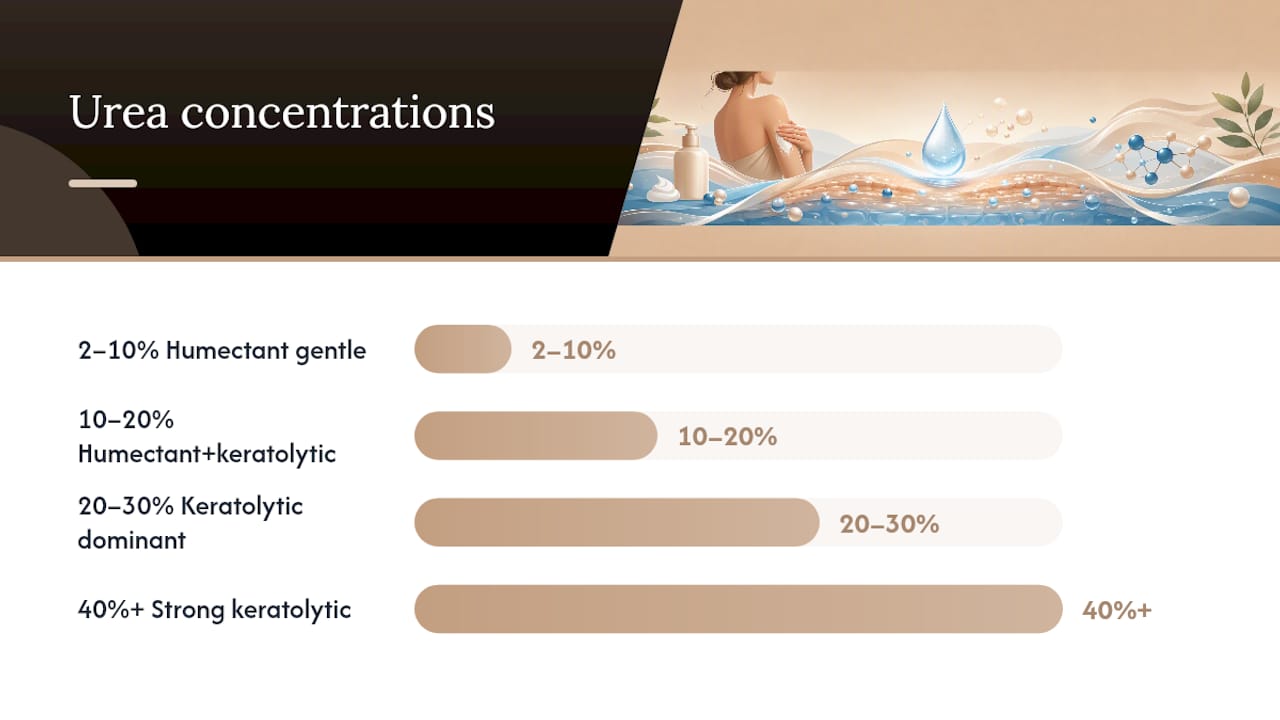
- Under 10%: primarily humectant; draws water into the stratum corneum and softens without significant exfoliation. Suited to everyday dry skin maintenance.
- 10–30%: keratolytic effect becomes noticeable; actively loosens and sheds thickened, rough skin. Useful for keratosis pilaris, calluses, and persistent scaling.
- 30–40% and above: strong keratolytic action; used clinically to debride hyperkeratotic tissue, soften thickened nails, and treat severe conditions. Requires care and, at the highest strengths, professional guidance.
Key takeaways
Urea body lotion is one of the few skincare ingredients with both strong clinical backing and a clear, well-understood mechanism for improving dry and rough skin.
| Point | Details |
|---|---|
| Dual mechanism | Urea acts as a humectant at low concentrations and a keratolytic at 10–30%, addressing both dryness and rough texture. |
| Match concentration to need | Under 10% for daily hydration; 10–20% for keratosis pilaris and calluses; 30–40% for clinical-grade softening of nails and hyperkeratotic skin. |
| Apply to damp skin | Applying immediately after bathing, while skin is still slightly damp, significantly improves the moisturising effect. |
| Safety reminder | Avoid applying to broken, inflamed, or infected skin; stinging is the most common side effect, especially at higher concentrations. |
| M-shop urea range | M-shop stocks Bielenda Professional urea foot creams in mid-strength formulations, selected for quality and concentration accuracy. |
Table of Contents
- What urea actually is in a skincare product
- How urea moisturises and exfoliates: the mechanisms
- What different urea concentrations do for your skin
- Who benefits from urea body lotion?
- How to use urea body lotion for best results
- Safety profile and side effects you should know about
- How urea compares with other moisturisers and exfoliants
- What the clinical evidence says about urea
- How to choose the right urea body lotion
- An honest perspective on urea in a skincare routine
- Polish urea skincare worth trying from M-shop
- Sources
What urea actually is in a skincare product
Urea is not a foreign chemical added to cosmetics for effect. It is a compound your skin already produces as part of its natural moisturising factor (NMF), the collection of water-binding molecules that keep the outermost skin layer supple and intact. Healthy skin contains urea naturally in the stratum corneum; when skin is very dry, damaged, or affected by conditions like eczema or ichthyosis, NMF levels drop and the barrier weakens.
The urea used in skincare products is synthetic, produced through a controlled chemical process rather than derived from animal sources. Manufacturers prefer synthetic urea because it is stable, consistent in purity, and free from the variability of biological sourcing. The ingredient you see listed on a product label as “urea” or “carbamide” is chemically identical to the endogenous compound your skin makes, which is why it integrates so well with the skin’s existing biology. Understanding how emulsifiers work in skincare helps explain why urea needs a well-formulated base to deliver these benefits evenly across the skin.
How urea moisturises and exfoliates: the mechanisms
Urea works through three distinct biological mechanisms, and understanding each one explains why it outperforms many single-action moisturisers for rough or scaly skin.
Humectant action. Urea is hygroscopic, meaning it attracts and holds water molecules. Applied to skin, it draws moisture from the deeper layers of the dermis up into the stratum corneum, and also pulls ambient humidity from the air when conditions allow. Consumer Reports notes that at concentrations of roughly 2–10%, this humectant effect is the dominant mechanism, making low-percentage urea products well suited to everyday hydration.
Keratolytic action. At higher concentrations, urea weakens the bonds between corneocytes, the dead skin cells that form the outer layer. Specifically, it disrupts the hydrogen bonds holding keratin proteins together, which loosens the “glue” between cells and allows them to shed more readily. The result is a smoother surface, reduced scaling, and softer texture. This is the mechanism behind urea’s effectiveness for rough patches on heels, elbows, and knees.
Penetration enhancement. Urea also alters the structure of the stratum corneum in a way that makes it more permeable. Research published in a Wiley dermatology review shows that urea can increase the absorption of other topical agents applied alongside it, which is why it appears in combination products with anti-inflammatories and antifungal actives. For everyday use, this means that a moisturiser applied after a urea product may absorb more effectively.
Key practical implications:
- Humectant action works best when skin is damp, giving water molecules something to bind to.
- Keratolytic effects take days to weeks to become visible; do not expect overnight smoothing.
- Penetration enhancement cuts both ways: beneficial actives absorb better, but so can irritants, so avoid combining high-strength urea with strong retinoids or multiple exfoliating acids at the same time.
What different urea concentrations do for your skin
Matching the concentration to your skin concern is the single most important decision when choosing a urea product. According to Consumer Reports, the shift from humectant to keratolytic behaviour happens progressively as concentration rises, with 10–30% being the range where active exfoliation becomes clinically meaningful.
| Concentration | Primary effect | Typical uses | Sensation |
|---|---|---|---|
| 2–10% | Humectant, barrier support | Daily dry skin, mild eczema, sensitive skin | Gentle, rarely stings |
| 10–20% | Humectant + mild keratolytic | Keratosis pilaris, rough elbows/knees, moderate xerosis | Mild tingling possible |
| 20–30% | Keratolytic dominant | Calluses, thickened heels, ichthyosis, psoriasis plaques | Noticeable tingling on broken skin |
| 40% and above | Strong keratolytic, debridement | Hyperkeratotic nails, severe calluses, clinical debridement | Stinging; professional guidance advised |
At 40%, DailyMed’s clinical product information confirms that urea is used specifically to soften hyperkeratotic skin and nails, and that it functions as a keratolytic emollient for debridement. Products at this strength are not everyday moisturisers. When applying high-concentration urea around nails, protect the surrounding healthy skin with a barrier such as petroleum jelly, because the keratolytic action does not distinguish between thickened target tissue and healthy keratin nearby.
Who benefits from urea body lotion?
Urea is particularly effective for skin conditions where the barrier is compromised and the surface is rough, thickened, or scaly. A 2017 clinical review on moisturisers and topical agents found that urea-containing preparations are among the most consistently supported treatments for xerosis and related dry-skin conditions.
Common indications:
- Xerosis (very dry skin): the most common use; urea restores moisture and reduces tightness and flaking.
- Keratosis pilaris: the rough, bumpy texture on upper arms and thighs responds well to 10–20% urea, which loosens the keratin plugs blocking follicles.
- Ichthyosis: a group of genetic skin conditions causing persistent scaling; urea is a standard part of management.
- Calluses and corns: higher-strength formulations (20–40%) soften thickened skin on feet and palms.
- Psoriasis plaques: urea helps reduce scale build-up and can improve penetration of prescribed treatments.
- Thickened nails (onychomycosis or trauma-related): 40% urea preparations are used to soften nails before treatment or debridement.
Body areas that respond well: feet and heels, elbows, knees, palms, and shins. These are the areas where skin tends to be thicker and more prone to keratinisation.
Areas to treat cautiously: the face, genitals, and any skin that is broken, infected, or actively inflamed. Urea’s penetration-enhancing effect makes it unsuitable for compromised skin barriers where deeper absorption could worsen irritation. If you have severe inflammation, open wounds, or a skin infection, speak to a dermatologist before using urea, particularly at medium or high concentrations.
How to use urea body lotion for best results
Getting the application right matters as much as choosing the right concentration.
- Apply to damp skin. The Cleveland Clinic recommends applying urea products immediately after bathing, while skin is still slightly damp. The residual moisture gives the humectant something to bind to and significantly improves the hydrating effect.
- Use the right amount. A thin, even layer is sufficient for body areas. Thicker application does not accelerate results and wastes product.
- Match frequency to concentration. Low-percentage products (under 10%) can be used once or twice daily. Medium-strength products (10–20%) are typically used once daily, or as directed. High-strength preparations (30–40%) are often used less frequently and under professional guidance.
- Patch test first. Apply a small amount to the inner forearm and wait 24 hours before using on a larger area, especially if your skin is sensitive or reactive.
- Avoid broken or inflamed skin. Do not apply to cuts, open wounds, sunburned skin, or actively infected areas.
- Layer thoughtfully. After a urea lotion, you can seal with a light occlusive such as petroleum jelly or a rich balm to lock in moisture, particularly on very dry heels. Avoid layering with strong retinoids or multiple exfoliating acids on the same area at the same time.
Pro Tip: Apply your urea lotion within two minutes of stepping out of the shower, while your skin is still damp. Then seal the area with a thin layer of petroleum jelly or a rich foot balm. This two-step approach, humectant then occlusive, can make a noticeable difference to heel softness within a week.
Safety profile and side effects you should know about
Urea is generally well tolerated, but it is not entirely without risk, particularly at higher concentrations or on compromised skin.
Healthline reports that the most common side effects are stinging, itching, burning, and localised skin irritation, especially when the product contacts broken or highly sensitive skin. These reactions are usually mild and transient, settling within a few minutes of application.
Risk factors that increase the chance of irritation include:
- Using a concentration higher than your skin can tolerate at that stage.
- Applying to broken, cracked, or inflamed skin.
- Combining urea with other exfoliants (lactic acid, salicylic acid, glycolic acid) on the same area, which can over-exfoliate and compromise the barrier.
- Applying to sensitive facial skin without a patch test.
Allergic contact dermatitis to urea is rare. Consumer Reports notes that reports exist in the literature but are uncommon; most reactions are irritant rather than allergic. If you develop a persistent or worsening rash, stop use and consult a pharmacist or GP.
If irritation occurs, rinse the area with cool water, apply a plain emollient, and avoid the product until skin has recovered. For severe reactions, persistent swelling, or signs of infection, seek medical advice promptly.
How urea compares with other moisturisers and exfoliants
Choosing between urea, petroleum jelly, hyaluronic acid, or exfoliating acids depends on what your skin actually needs.
| Ingredient type | Mechanism | Best for | Limitations |
|---|---|---|---|
| Urea (10–20%) | Humectant + keratolytic | Rough, scaly, or thickened skin needing both hydration and gentle shedding | Can sting on broken skin; not ideal for very sensitive or reactive skin |
| Petroleum jelly (occlusive) | Seals moisture in; no active hydration | Protecting dry skin, sealing after other actives | Does not add moisture; heavy texture |
| Hyaluronic acid (humectant) | Draws water into skin | Dehydrated skin needing lightweight hydration | No exfoliating effect; less effective on thick or scaly skin |
| Lactic acid (AHA) | Chemical exfoliant + mild humectant | Uneven texture, mild hyperpigmentation, general exfoliation | More irritating than urea on sensitive skin; no keratolytic depth |
| Salicylic acid (BHA) | Oil-soluble exfoliant, anti-inflammatory | Acne-prone or congested skin | Not suited to dry or rough body skin as a primary moisturiser |
Urea sits in a unique position: it hydrates and exfoliates simultaneously, which neither a pure occlusive nor a pure humectant can do. Conversely, if your skin is simply dehydrated and smooth, a lighter hyaluronic acid product or a rich emollient may be all you need.
The combination that works particularly well for very dry, rough skin: urea lotion applied to damp skin, followed by a thin occlusive layer to seal it in. This pairs urea’s active hydration and exfoliation with the barrier-sealing function that urea alone does not provide.
What the clinical evidence says about urea
The evidence base for urea in skincare is more solid than for most cosmetic ingredients. A 2017 systematic review published on NCBI PMC found that urea-containing preparations effectively treat xerosis and are a standard recommendation in dermatology for dry-skin conditions, particularly in foot care. The review places urea among the most consistently supported topical agents for this indication.
At the trial level, Medical News Today summarises small studies showing that a 10% urea lotion used over several weeks can improve age-related xerosis and pruritus compared with baseline. These are modest trials rather than large randomised controlled studies, but the direction of evidence is consistent across multiple investigations.
A broader NCBI PMC review on dermatology and emollients also documents urea’s antimicrobial and barrier-repair properties alongside its moisturising and keratolytic roles, suggesting the ingredient does more than simply hydrate the surface.
The clinical picture is clear enough: urea is not a trending ingredient that may or may not deliver. It has decades of use in dermatology, a well-understood mechanism, and consistent trial-level support for its core claims.
How to choose the right urea body lotion
Start with the percentage.
Beyond the percentage, check the supporting ingredients. Look for formulations that include glycerin or propylene glycol alongside urea; these additional humectants reinforce the hydrating effect. For sensitive skin, fragrance-free options reduce the risk of irritation, particularly at medium concentrations where the keratolytic action already increases skin sensitivity slightly.
Format matters too. Lighter lotions spread easily across larger body areas like legs and arms. Thicker creams and ointments are better suited to targeted application on feet, heels, and elbows, where you want the product to stay in place rather than absorb quickly. Manufacturers produce urea in creams, lotions, gels, and nail lacquers precisely because different severities and body areas call for different textures. Tubes give better control for spot treatment; pumps are more practical for full-body application.
A practical starting point: the Bielenda Professional Foot Softening Cream with 20% Urea is a well-formulated mid-strength option for feet and heels, while the Bielenda Happy Feet Cream with Urea suits those who want a gentler daily foot treatment. For a formulation that pairs urea with arginine for added skin repair, the Bielenda Professional Regenerating Foot Cream with Urea and Arginine is worth considering. Always patch test a new urea product on the inner forearm before applying to a larger area.
An honest perspective on urea in a skincare routine
The ingredient that gets overlooked most consistently in skincare conversations is urea. The mechanism is simply different: urea does not just sit on the surface or stimulate cell turnover from below. It physically loosens the bonds holding dead skin cells together while simultaneously drawing water into the tissue. That combination is rare.
What I find underestimated is how well urea works as a foundation ingredient rather than a standalone fix. Apply it to damp skin, seal with an occlusive, and then your other actives, whether a collagen cream or a barrier-repair formula, absorb into skin that is already primed and hydrated. The penetration-enhancing effect is not just a clinical footnote; it changes how the rest of your routine performs. For anyone with persistently rough elbows, heels, or upper arms who has tried and abandoned various lotions, urea is usually the ingredient they have not yet tried at the right concentration.
Polish urea skincare worth trying from M-shop
M-shop stocks a curated range of Polish foot and body care products, including urea formulations from Bielenda Professional, selected specifically for their concentration accuracy and formulation quality. Polish cosmetics brands have a long tradition of producing effective, dermatologist-aligned skincare at accessible prices, and the urea foot creams available at M-shop reflect that.

If rough heels or dry skin are your concern, the foot care range at M-shop is a practical starting point. Products are available in both everyday-strength and mid-strength formulations, so you can match the product to your skin’s needs. As always, check the urea percentage on the label before purchasing, and do not apply high-strength products to broken or cracked skin. Browse the full selection at M-shop and use the patch-test step before committing to a new formulation.
Sources
- Urea skin care ingredient benefits and dosage - Consumer Reports
- Urea in lotion and cream: Benefits, side effects, how to use it
- DailyMed: UREA 40% lotion/cream (drug information)
- Cleveland Clinic: Urea skin cream, gel, lotion, ointment or nail lacquer
- NCBI PMC article (2017 review) on moisturisers and topical agents
- Medical News Today: Urea in skincare — uses, benefits & more
This article is general information, not a substitute for advice from a qualified doctor. Consult a qualified healthcare professional about your own circumstances before acting on anything here.