



Skincare layering explained: how to get the order right
Skincare layering is the practice of applying products in a deliberate sequence so each one can absorb and work properly. Get it wrong and your expensive serum sits on top of a moisturiser doing nothing. Get it right and every product performs as intended.
TL;DR:
- AM: Cleanse → serum (vitamin C) → moisturiser → SPF 30+
- PM: Cleanse → treatment/retinoid → serum → moisturiser → facial oil (optional)
- Core rule: Apply from thinnest to thickest texture
- Wait-time rule: 30–60 seconds between layers is enough for most products
- Cap: More than four leave-on products raises pilling risk
Table of Contents
- Why does the order you apply skincare actually matter?
- How do you judge where a product belongs in your routine?
- Step-by-step AM and PM routines you can follow today
- Which ingredient combinations should you avoid?
- How long should you wait between layers, and how much should you use?
- How do you build a routine that suits your skin type?
- Key takeaways
- The routine most people actually need is simpler than they think
- Polish skincare for your layering routine, delivered to the UK
- Useful sources and further reading
Why does the order you apply skincare actually matter?
The sequence you follow is not a cosmetic preference. Dermatologists confirm that the order of application affects how well active ingredients penetrate and perform, because earlier-applied products alter the skin barrier and change how subsequent layers reach their target depth.
Think of your skin’s outermost layer, the stratum corneum, as a gatekeeper. Whatever you put on first changes its surface chemistry and permeability. Apply a thick occlusive cream before your vitamin C serum and you have effectively sealed the door before the active ingredient can get through. Occlusives work by forming a surface film that reduces water loss, which is exactly what you want as a final step, not a first one.
The practical upshot: first-applied products most affect the stratum corneum, so errors at the start of a routine waste expensive actives or increase irritation risk. Sequence is dermatological physics, not marketing preference.
A lighter, water-based serum applied to clean skin reaches deeper layers with far less resistance. A heavier cream applied afterwards locks in what the serum delivered. Reverse that order and the cream blocks the serum entirely.
How do you judge where a product belongs in your routine?
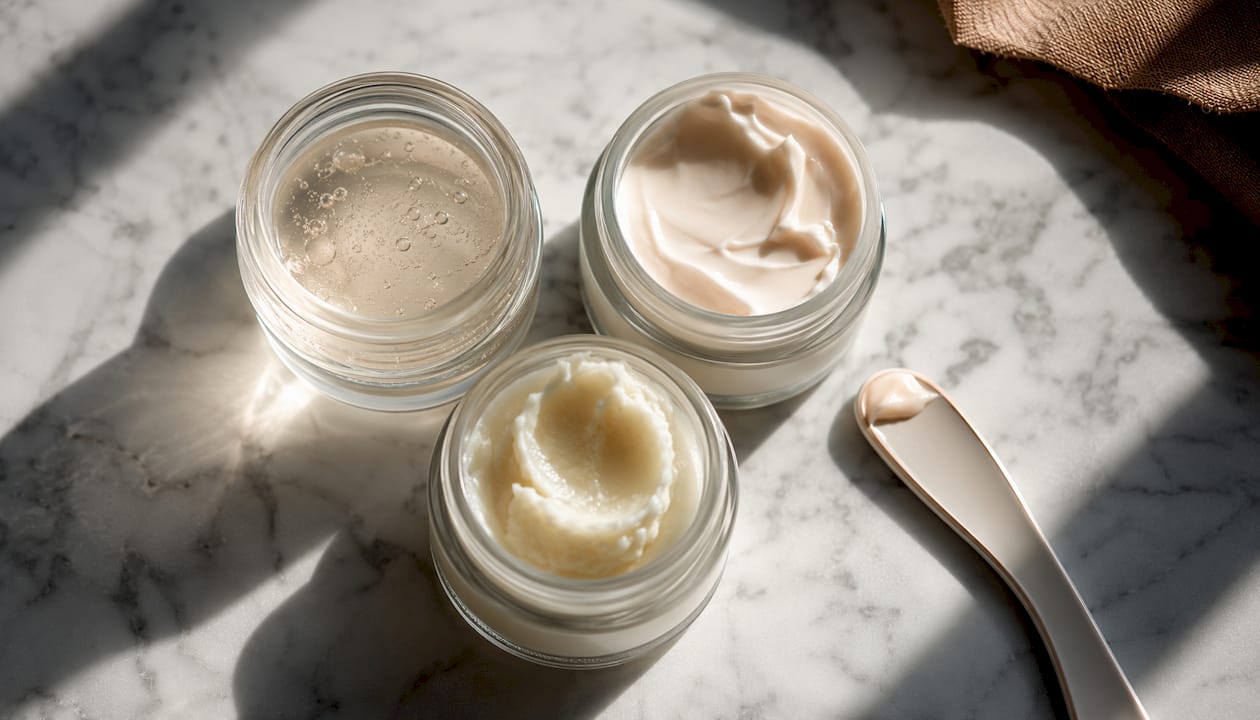
The universal rule is straightforward: water-based products first, then gels, then lotions and creams, then oils and occlusives last. Texture and viscosity determine position, not what the label calls the product.
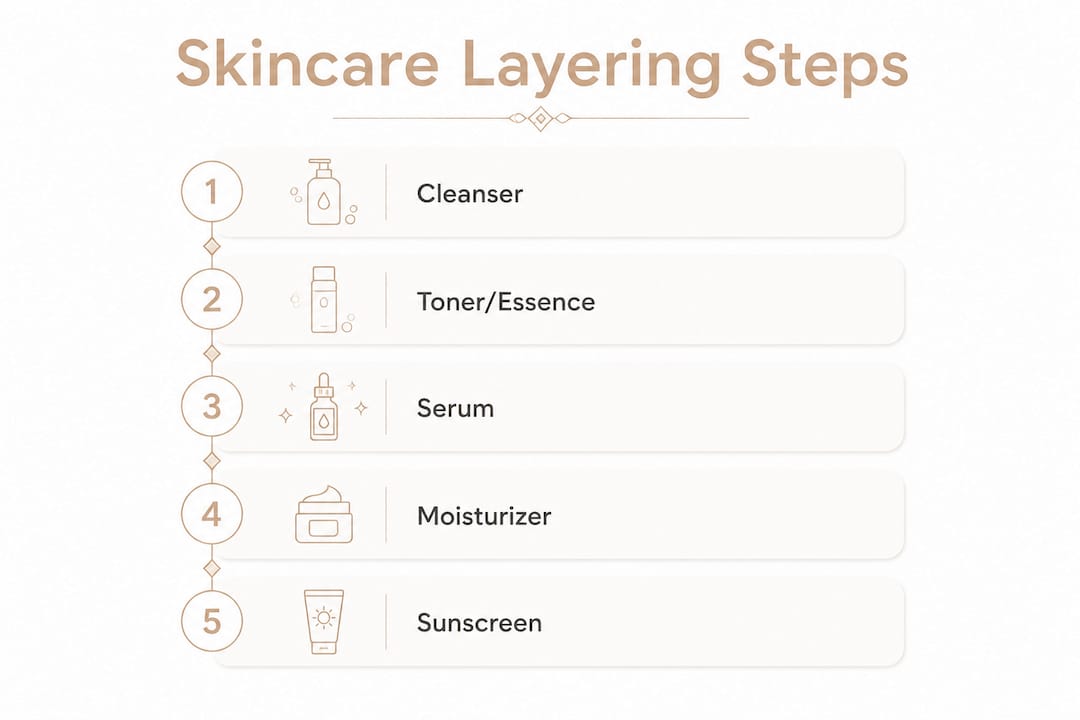
A “face oil” marketed as a serum still behaves like an oil. A lightweight gel moisturiser still belongs before a richer cream. Ignore the branding and assess the product itself.
Two quick checks you can do at home:
- The pour test. Tip the bottle gently. If the product flows like water, it goes early. If it barely moves, it goes late.
- The spread test. Rub a small amount between your fingers. If it disappears in seconds, it is a thin formula. If it leaves a film, it is an occlusive or oil.
Pro Tip: If two products feel similar in weight, apply the one with active ingredients (acids, vitamin C, retinoids) before the one that is purely hydrating or sealing. Actives need direct skin contact to work.
Texture assessment also tells you how much to use. Thin serums spread easily, so a few drops cover the face. Richer creams need a pea-sized amount per area. Using too much of any layer is one of the most common causes of pilling.
Step-by-step AM and PM routines you can follow today
Morning routine
- Cleanser. Remove overnight products and any sebum build-up. A gentle gel or cream cleanser works for most skin types.
- Hydrating toner or essence (optional). Pat onto slightly damp skin to prep the barrier. Skip if your skin is not dry or dehydrated.
- Antioxidant serum. Vitamin C is the morning workhorse. Apply to clean, dry skin before anything else so it contacts the skin directly.
- Eye cream (optional). A fingertip-sized amount, patted gently around the orbital bone, not dragged across the lid.
- Moisturiser. Locks in the serum and provides a hydrated base for SPF.
- SPF 30+ (always last). Sunscreen must be the final morning step because it needs to form an even surface film to protect against UV. Apply makeup after SPF, never before.
Minimalist 3-step AM (under 2 minutes): Cleanser → lightweight moisturiser with SPF built in → done. Effective, consistent, and far better than a 10-step routine you abandon by Wednesday.
Evening routine
- Cleanser (double cleanse if you wore SPF or makeup). A thorough cleanse is the foundation of an effective evening skincare routine.
- Exfoliant (2–3 nights per week, not every night). AHA or BHA applied to clean skin. Do not combine with retinoids on the same evening.
- Retinoid or treatment serum (on non-exfoliant nights). Apply to dry skin. If sensitivity is a concern, apply a thin layer of moisturiser first, then the retinoid, then moisturiser again. This “sandwich” method reduces irritation while preserving efficacy.
- Targeted serum. Niacinamide, hyaluronic acid, or a peptide serum depending on your concern.
- Moisturiser. Richer than your morning formula if your skin is dry.
- Facial oil (optional). The heaviest step and therefore the last. A few drops pressed in, not rubbed.
Eye cream sits between your serum and moisturiser in both routines. Spot treatments go directly onto blemishes after cleansing, before any other product.
Which ingredient combinations should you avoid?
Some pairings cancel each other out or push your skin barrier past its tolerance. Others are genuinely complementary.
Combinations to avoid:
- Retinoids + strong AHAs or BHAs in the same session. Both increase cell turnover and skin sensitivity. Stacking them commonly causes redness, peeling, and barrier damage. Use them on alternate nights.
- Vitamin C + benzoyl peroxide. These deactivate each other. Keep vitamin C in the morning and benzoyl peroxide in the evening.
- Multiple exfoliating acids at once. Glycolic acid plus salicylic acid plus lactic acid in one routine is not triple the benefit. It is triple the irritation risk.
Safe and effective pairings:
- Niacinamide + almost everything. It layers well with most actives, calms inflammation, and does not destabilise pH the way acids do.
- Hyaluronic acid + moisturiser. Apply hyaluronic acid to slightly damp skin and seal it immediately with a moisturiser. Without that seal, it can draw moisture out of the skin in dry conditions.
- Vitamin C + SPF. Vitamin C in the morning followed by SPF is one of the most evidence-supported pairings for protecting against UV-induced oxidative damage.
Introducing new actives gradually: add one new product at a time, use it every third day for two weeks, then increase frequency if your skin tolerates it. Patch test on the inner arm for 24 hours before applying to your face.
How long should you wait between layers, and how much should you use?
Timing and amount are where most routines quietly fail. Too much product, applied too fast, and you get pilling, diluted actives, and wasted money.
| Product type | Recommended amount | Wait time before next layer |
|---|---|---|
| Toner / essence | Cotton pad or 2–3 drops patted in | 10–30 seconds |
| Vitamin C serum | 3–4 drops | 30–60 seconds |
| Hyaluronic acid serum | 3–4 drops on damp skin | 30 seconds |
| Retinoid | Pea-sized amount | 60 seconds or longer |
| Eye cream | One fingertip | 30 seconds |
| Moisturiser | Pea-sized per zone | 60 seconds |
| SPF | Generous layer (last step) | Apply makeup after 60 seconds |
Waiting times vary by product: light toners and serums often absorb in 10–30 seconds, while heavier treatments and moisturisers may take 1–3 minutes. You do not need to wait for full dryness. Thirty to sixty seconds is sufficient for most products.
Troubleshooting pilling:
- Reduce the amount of each product
- Wait longer between layers
- Check whether a silicone-heavy product is sitting under a water-based one (reverse the order)
- Simplify the routine — fewer, well-chosen products almost always perform better than a crowded shelf
How do you build a routine that suits your skin type?
Start with the concern, not the product count. Identify your primary skin concern, pick one treatment ingredient that addresses it, then build the supporting layers around it.
Checklist:
- Identify your skin type and primary concern (oiliness, dryness, sensitivity, ageing, acne)
- Choose one treatment active (retinoid, vitamin C, niacinamide, AHA/BHA)
- Add a complimentary hydrator (hyaluronic acid, glycerin-based serum)
- Choose a moisturiser weight appropriate to your skin type
- Add SPF 30+ as the final morning step
Sample routines by skin type:
- Oily / acne-prone: Gel cleanser → niacinamide serum → lightweight gel moisturiser → SPF (AM); gel cleanser → BHA (2–3 nights/week) or retinoid (other nights) → oil-free moisturiser (PM)
- Dry: Cream cleanser → hyaluronic acid serum on damp skin → rich moisturiser → SPF (AM); cream cleanser → hydrating serum → rich moisturiser → facial oil (PM)
- Combination: Gel cleanser → lightweight serum → gel-cream moisturiser → SPF (AM); gel cleanser → niacinamide serum → medium-weight moisturiser (PM)
- Sensitive: Fragrance-free cream cleanser → calming serum (centella or oat-based) → gentle moisturiser → mineral SPF (AM); same cleanser → barrier-repair moisturiser (PM, no actives initially)
- Mature (40+): Gentle cleanser → vitamin C serum → peptide or collagen-boosting serum → rich moisturiser → SPF (AM); cleanser → low-strength retinoid → rich moisturiser → facial oil (PM)
Introducing a new product: patch test on the inner arm for 24 hours. Then use the new product every third day for two weeks before moving to daily use. If redness, stinging, or peeling occurs, reduce frequency further or discontinue.
A minimalist routine of cleanser, one treatment, moisturiser, and SPF often outperforms a complicated 10-step regimen because it reduces ingredient conflicts and is far easier to maintain consistently.
Key takeaways
Skincare layering works because applying products from thinnest to thickest texture, with adequate wait times between layers, allows each active ingredient to reach the skin at the right depth and do its job.
| Point | Details |
|---|---|
| Thinnest to thickest | Always apply water-based serums before creams, and oils or occlusives last. |
| Wait 30–60 seconds | Allow each layer to absorb before applying the next to prevent pilling and dilution. |
| SPF is always last (AM) | Sunscreen must form an unbroken surface film; apply it after moisturiser, before makeup. |
| Cap leave-on products | More than four leave-on products in one routine raises pilling risk and ingredient conflict. |
| M-shop for Polish actives | M-shop stocks Polish skincare with collagen and algae formulas suited to layering routines for UK skin. |
The routine most people actually need is simpler than they think
There is a persistent idea in skincare that more steps equal better results. It does not. The most consistent mistake people make is building a routine around products rather than around a skin concern. They buy a vitamin C serum because it is trending, add a retinoid because someone recommended it, layer on two different acids, and then wonder why their skin is red and flaky by Friday.
The honest answer is that most people need four products: a cleanser, one active treatment, a moisturiser, and SPF. That is it. Everything else is optional, and optional steps should earn their place by addressing a specific, identified concern, not by filling a shelf.
Seasonal adjustment matters too. A routine that works in July, when humidity is higher, will often feel heavy and pore-clogging by January in a centrally heated flat. Swap your moisturiser weight, not your entire routine. Skin changes; the underlying layering logic does not.
If your skin is persistently reactive, breaking out in new ways, or not responding after six weeks of consistent use, that is the point to consult a dermatologist rather than adding more products. Complexity is rarely the solution.
Polish skincare for your layering routine, delivered to the UK
If you have worked out your routine and want products that actually fit the layering logic above, M-shop is worth a look. As a family-run UK supplier of Polish cosmetics, M-shop brings across formulations built around natural actives like collagen and algae, the kind of ingredients that sit well in a layering routine without competing with your treatments.

For an AM routine, the Pharmaceris T SPF day cream covers your final morning step with built-in sun protection, suited to acne-prone skin. For mature or dry skin, the Celia Collagen + Algae moisturiser works as a rich final layer in an evening routine. Prices are competitive, sales regularly offer up to 15% off, and everything ships within the UK.
One reminder before you buy: introduce any new product one at a time, patch test first, and give your skin two weeks to respond before judging results. Browse the full range at M-shop and build your routine from there.
Useful sources and further reading
On layering order and dermatologist rationale: The American Academy of Dermatology’s guidance on daily skin care and sun protection offers a reliable, clinician-reviewed foundation for any routine. See AAD skin care tips and AAD sunscreen FAQs.
Research and clinical sources used in this guide:
- Cleveland Clinic: Proper skin-care product order
- Good Housekeeping (dermatologist-reviewed): Skincare application order
- GQ: How to layer skincare products
- Insider Beauty: How to layer skincare products right
- Preventive Medicine Daily: Expert-recommended layering order
- iHerb Wellness Hub: Dermatologist’s guide to layering skincare
M-shop further reading:
- Skincare routine order: the complete step-by-step guide
- Why less ingredients are better for your skin
- Build an affordable skincare routine in the UK