



Keratosis pilaris lotion: why 5% urea works better for UK skin
Lotions that pair a mild keratolytic ingredient, urea, lactic acid, or salicylic acid, with a proper humectant base give the most reliable improvement for keratosis pilaris. Apply one daily, ideally straight after a shower on slightly damp skin, and stick with it for several weeks before judging results. Go slowly at first and skip any patch of skin that’s broken, inflamed, or freshly shaved.
TL;DR:
- Using a daily lotion with urea, lactic acid, or salicylic acid alongside calming ingredients offers the best long-term improvement for keratosis pilaris.
- Apply treatment to slightly damp skin after lukewarm showers, avoiding broken or inflamed patches, and gradually increase frequency based on skin tolerance.
- Lower concentrations of actives (around 5%) used consistently outperform higher, irritating concentrations used sporadically or aggressively.
- Physical scrubbing should be avoided as it worsens skin barrier damage; chemical exfoliants are gentler and more effective.
- Patience is essential, with visible improvement often taking two to eight weeks of consistent use, and persistence outweighing strength.
Table of Contents
- Which active ingredients actually smooth keratosis pilaris
- How to use a keratosis pilaris lotion without irritating your skin
- How to choose the right lotion for your skin and sensitivity
- Mistakes that make keratosis pilaris worse
- What to actually expect, and how long it takes
- Why trust this guide, and where M-shop fits the routine
- Lifestyle and environmental factors worth adjusting
- Why the “just use a stronger product” instinct usually backfires
- Building a simple KP starting kit
- Sources
Which active ingredients actually smooth keratosis pilaris
Keratosis pilaris, often called “strawberry legs” or “chicken skin” when it shows up on the thighs and upper arms, happens because dead skin cells clog the openings of hair follicles instead of shedding normally. The fix isn’t one miracle ingredient. It’s a combination that loosens that trapped keratin and keeps the surrounding skin hydrated enough that it doesn’t just build up again.
Urea does two jobs at once. Below around 10%, it acts as a humectant, pulling water into the skin. At the same time it has a mild keratolytic effect, gently breaking down the bonds holding dead skin cells together. Most over-the-counter body lotions sit around 5% urea, which Eucerin’s own clinical guidance positions as a first-line option for rough, bumpy skin. Higher concentrations exist, sometimes 10% to 20% in prescription-strength creams, but those are usually reserved for genuinely resistant patches and worth discussing with a GP or dermatologist first, since they can sting on sensitised skin.
Lactic acid, and its close relative ammonium lactate, belongs to the alpha hydroxy acid (AHA) family. It works by dissolving the “glue” between dead skin cells so they slough off rather than accumulate around the follicle. Lactic acid has one of the longest clinical track records of any KP treatment, and formulations built around it have shown lesion reduction over sustained use measured in months rather than days, according to dermatology-reviewed product analysis. The catch: AHAs can increase photosensitivity, so daytime use calls for sunscreen on any treated area that sees sunlight.
Salicylic acid, a beta hydroxy acid (BHA), takes a slightly different route. It’s oil-soluble, so it can get inside the follicle itself rather than just working on the surface, which makes it useful for KP that has a slightly acne-like or inflamed quality. It tends to suit oilier skin better than very dry skin, and it can be more drying than urea or lactic acid if used too often.
Topical retinoids sit at the more intensive end. They speed up cell turnover and can genuinely improve rough texture, but they’re generally prescription-only for KP specifically, and they carry a real risk of irritation, dryness, and sun sensitivity. Most dermatology guidance treats retinoids as a step up for stubborn cases rather than a starting point.
None of these actives works in isolation. Supportive ingredients like ceramides, colloidal oatmeal, and glycerin rebuild and calm the skin barrier while the actives do their exfoliating work, which is why the best keratosis pilaris lotion formulas almost always combine an active with several of these calming agents rather than relying on the acid alone.
How to use a keratosis pilaris lotion without irritating your skin
Getting the order and timing right matters almost as much as picking the right ingredient. Mayo Clinic’s guidance is clear that medicated exfoliating creams should go on before a plain moisturiser, not after, so the active ingredient can actually reach the skin instead of getting blocked by a layer of occlusive cream sitting on top.
- Shower or bathe with lukewarm water. Hot water strips natural oils and can worsen dryness, which feeds the KP cycle.
- Pat skin until just damp, not fully dry. Applying a urea-based lotion to slightly damp skin boosts its humectant pull, locking in more water than applying to bone-dry skin.
- Apply the treatment lotion first. Massage it into affected areas, giving it a minute or two to absorb before adding anything else.
- Layer a plain, fragrance-free moisturiser on top if your skin still feels tight. This isn’t always necessary if the treatment lotion already has a good humectant base.
- Start with once-daily use. Watch for stinging, redness, or excessive dryness over the first week or two before considering twice-daily application.
- Apply sunscreen to any treated area exposed to sunlight, particularly if you’re using lactic acid or retinoids, both of which increase photosensitivity.
Avoid applying lactic acid formulas within about an hour of shaving. Freshly shaved skin has micro-abrasions you can’t always see, and an AHA on that skin will sting more than it should and may cause unnecessary irritation.
Pro Tip: If a new lotion stings for more than a few seconds after application, that’s your skin telling you to dilute the frequency, not push through it. Try every other day for a week before dropping the product altogether.
How to choose the right lotion for your skin and sensitivity
The “best” keratosis pilaris lotion isn’t the strongest one on the shelf. It’s the one you’ll actually use every day without your skin rebelling. Before buying, run through a short mental checklist:
- How dry is your skin generally? Very dry skin usually does better starting with urea, which hydrates as it exfoliates, rather than a drying BHA.
- How sensitive is your skin? If you flush or sting easily with new products, start with a lower-percentage urea lotion and a fragrance-free base.
- How large is the area you’re treating? Larger areas like thighs or upper arms may need a lightweight lotion you can apply generously, while small patches can tolerate a richer, more concentrated cream.
- Can you tolerate fragrance? Fragranced lotions look and smell nicer on the shelf, but fragrance is one of the most common irritants in KP-prone skin.
- What’s your budget for ongoing use? Since KP management is continuous rather than a one-off fix, an affordable lotion you’ll actually repurchase beats an expensive one you ration.
There’s a genuine trade-off between potency and tolerability, and it’s one people get wrong constantly. A well-tolerated 5% urea lotion used every single day for two months will usually outperform a 20% urea cream that gets abandoned after five irritated attempts. Consistency does more heavy lifting than concentration.
On the label, look for the active percentage where it’s shown, a “fragrance-free” claim rather than “unscented” (which can still contain masking fragrance), and a formula that balances a humectant like glycerin with an occlusive like shea butter or dimethicone to seal moisture in. For a deeper comparison of the two leading actives, it’s worth reading through urea versus lactic acid before deciding which fits your skin type.
Mistakes that make keratosis pilaris worse
Physical scrubs with rough beads or a stiff loofah are the most common mistake people make when trying to treat keratosis pilaris at home. It feels productive to scrub, but dermatology guidance from Cleveland Clinic is direct on this: aggressive physical exfoliation tends to inflame the skin barrier and can actually worsen the bumpy, red appearance rather than smooth it. Chemical exfoliants do the same job far more gently, because they dissolve the bonds between dead cells rather than sanding them off.
A few other patterns worth catching early:
- Believing there’s a permanent cure. Keratosis pilaris tends to be genetic and often improves with age on its own, but there’s no product that switches it off for good. Ongoing, low-effort maintenance is the realistic goal.
- Over-exfoliating in search of faster results. Redness, tightness, flaking, or a burning sensation that lasts more than a few minutes after application are signs to scale back frequency, not push harder.
- Ignoring the shave/exfoliate interaction. Layering an AHA straight onto freshly shaved skin invites irritation that has nothing to do with the ingredient itself.
- Reaching for the strongest product first. Starting with a milder, fragrance-free formula and building up tolerance almost always beats starting aggressive and backing off after a bad reaction.
If irritation persists despite scaling back, that’s the point to speak with a GP or dermatologist rather than keep experimenting.
What to actually expect, and how long it takes
Patience matters more than most people expect going in. Early smoothing, the skin simply feeling less rough to the touch, can show up within days of starting a urea or lactic acid lotion. Visible bump reduction is a slower process, typically somewhere between two and eight weeks of consistent daily use, and that range depends heavily on how dry your baseline skin was and which concentration you’re using.
One product analysis of a 5% urea plus lactic acid formulation found users reporting noticeable smoothing within two to four weeks of consistent twice-daily use, which lines up with what most dermatology sources describe as a realistic timeline for an OTC-strength product.
Three things speed up or slow down progress: how consistently you apply the lotion, how dry your skin was to begin with, and the concentration of active ingredient you’re using. Skipping days resets the clock more than people realise, since KP tends to relapse quickly once the exfoliating routine stops.
If you’ve used an OTC urea or lactic acid lotion consistently for eight weeks with no improvement, or if irritation shows up and doesn’t settle, that’s the signal to escalate. A dermatologist can prescribe higher-strength urea, a topical retinoid, or in some cases a combination approach that isn’t available over the counter.
Why trust this guide, and where M-shop fits the routine
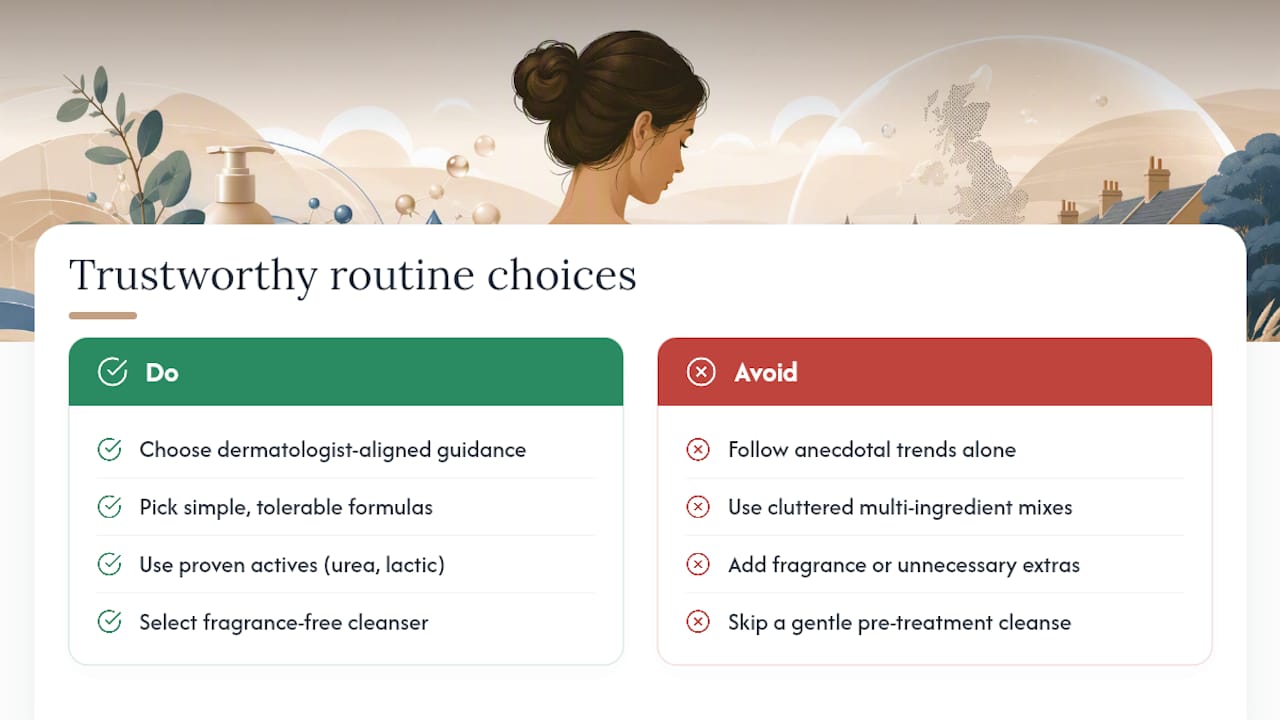
This guide draws on established dermatology guidance, including recommendations published by Mayo Clinic, rather than anecdotal skincare trends, and it’s written by Krzysztof for M-shop, a family-run business bringing Polish skincare to the UK.
M-shop’s catalogue leans heavily on the same principle dermatologists recommend: simple, tolerable formulas built around proven actives rather than complicated ten-step routines. That matters for KP specifically, because the ingredient itself, urea, lactic acid, or a gentle acid, does the work, and a cluttered formula full of fragrance and unnecessary extras just adds irritation risk without adding benefit.
Among the products on M-shop that map onto the routine described above, the Pharmaceris T Sebostatic Day cream illustrates the kind of targeted, normalising formulation the brand stocks for reactive or blemish-prone skin, useful reference if you’re dealing with KP that has an inflamed or oilier quality on the face or upper body. For the cleansing step that comes before any treatment lotion, a fragrance-free option like the Biały Jeleń hypoallergenic chestnut soap avoids stripping the skin or introducing fragrance irritants before the active ingredient goes on.
Buying decisions get easier once you know what to look for on the label, and that’s the real value of pairing dermatology-aligned guidance with a curated, family-selected product range rather than scrolling an overwhelming marketplace.
Lifestyle and environmental factors worth adjusting
Keratosis pilaris tends to flare with dry air, so central heating in winter and air conditioning in summer both make skin drier and KP more visible, even when your routine hasn’t changed. Running a humidifier in the room you sleep in can make a measurable difference over a few weeks.
Hot showers are a quieter culprit. They feel good, but they strip the skin’s natural oils faster than lukewarm water, leaving less moisture for your lotion to lock in afterwards. Shortening showers and lowering the water temperature slightly is a free change that supports everything else in the routine.
Tight, synthetic clothing that rubs against affected areas, particularly thighs and upper arms, can aggravate KP through friction alone. Loose, breathable fabrics reduce that irritation without needing a product at all.
Diet and hydration research specific to KP is thin, so it’s worth being cautious about claims that cutting out a food group will clear it up. What’s better supported is the basic principle: skin that’s well hydrated from the outside, through consistent lotion use, copes better with all of the above than skin left to fend for itself.
Why the “just use a stronger product” instinct usually backfires
The advice people repeat most about keratosis pilaris, find the strongest exfoliant and scrub harder, is largely backwards. The evidence points the other way: consistency at a tolerable strength beats intensity applied inconsistently, every time. A 5% urea lotion used daily for two months does more than a 20% version used in bursts between irritated breaks.
What’s underrated is how much the “boring” supportive ingredients, glycerin, ceramides, colloidal oatmeal, matter compared to the headline active. People fixate on percentages and skip past the barrier-repair ingredients that actually let you tolerate the active long enough to see results.
If there’s one thing to prioritise, it’s this: pick a fragrance-free, moderately dosed lotion you’ll genuinely apply every day, not the one that promises the fastest results on the packaging. Fast and abandoned always loses to slow and consistent with this condition.
— Krzysztof
Building a simple KP starting kit
Getting started doesn’t require ten different products. It requires the right two or three, used in the right order, consistently. M-shop’s family-run approach to sourcing Polish skincare means the catalogue favours proven, fragrance-conscious formulas over trend-driven gimmicks, which fits the ingredient-first approach this guide has laid out from the start.

A practical starting routine looks like this: cleanse first with a gentle, fragrance-free soap like the Biały Jeleń chestnut soap, which won’t strip the skin before treatment. If you’re targeting KP-related redness or an oilier texture on the face, the Pharmaceris T Sebostatic Day cream offers a normalising option worth considering as part of a daily routine. For hands that see a lot of washing and dryness alongside body KP, the Bielenda hand and nail cream with silk proteins rounds out a barrier-supporting routine, and its existing customer reviews reflect the kind of consistent, tolerable use this guide recommends.
Browse the full range on M-shop’s site to match a formula to your skin type, and check current stock and any seasonal discounts before starting your routine.
Sources
This guide draws on clinical and consumer-safety guidance rather than anecdotal advice. For ingredient efficacy and application order, see Mayo Clinic’s keratosis pilaris treatment guidance. For urea-specific recommendations, Eucerin’s clinical overview covers typical concentrations and use cases. For chemical exfoliation versus physical scrubbing, Cleveland Clinic’s guidance on strawberry legs explains the barrier-damage risk. Product-specific timelines draw on independent dermatology-reviewed analysis from DermApproved’s review of urea and lactic acid formulations.
None of this replaces a personal assessment. If your skin doesn’t respond within eight weeks, or irritation persists, a GP or dermatologist can rule out other causes and discuss prescription-strength options.
This article is general information, not a substitute for advice from a qualified doctor. Consult a qualified healthcare professional about your own circumstances before acting on anything here.
- Keratosis pilaris - Diagnosis and treatment - Mayo Clinic
- Amlactin Daily Moisturizing Lotion review — DermApproved
- Strawberry legs: causes, treatment and prevention - Cleveland Clinic