



Stop Ruining Clothes: When to Use Oxygen Bleach vs Chlorine
For everyday laundry, oxygen bleach is the safer default. It lifts stains and brightens colours without eating through fabric. Chlorine bleach still earns its place, but only for specific jobs: restoring dingy white cotton, disinfecting after illness, or killing mould on hard surfaces. The split comes down to one trade-off: chlorine oxidises harder and disinfects better, oxygen bleach is gentler on fibres and dyes.
TL;DR:
- Oxygen bleach is safer for delicate fabrics and dyes, making it suitable for everyday stain removal without risk of fibre damage.
- Chlorine bleach provides fast whitening and disinfecting but can cause harm to wool, silk, spandex, and metal fittings if not used carefully.
- Oxygen bleach is less effective as a disinfectant and requires longer contact time, making it ideal for stain removal rather than sanitizing.
- For white whites or moldy surfaces, chlorine bleach is more efficient but should be used with caution due to strong fumes and toxic by-products.
- Always check fabric care labels, avoid mixing bleach types or combining with acids or ammonia, and use in well-ventilated areas for safe household cleaning.
Table of Contents
- Oxygen bleach vs chlorine: what’s actually in the bottle?
- What is oxygen bleach and how does it work?
- How do oxygen and chlorine bleach compare head-to-head?
- How to choose the right bleach for the job
- Mixing warnings and safety basics
- Getting the best results from each bleach
- A household perspective on choosing the right bleach
- Where to find gentler fabric and home-care essentials
- Sources
- FAQ
Oxygen bleach vs chlorine: what’s actually in the bottle?
Chlorine bleach is sodium hypochlorite, usually sold as a liquid solution. It works by oxidising the chromophores that give stains and discolouration their colour, which is also what makes it such an effective disinfectant against bacteria and viruses on hard surfaces.
That oxidising power cuts both ways. It’s excellent at:
- Whitening plain white cotton and linen back to bright white
- Disinfecting kitchen and bathroom surfaces
- Killing mould and mildew on tiles, grout and plastic
- Stripping tough stains from bleach-safe whites
It’s also aggressive enough to damage silk, wool, spandex and most coloured fabrics, and repeated exposure corrodes metal fittings like zips and snaps. Check the care label before it goes anywhere near a mixed load.
What is oxygen bleach and how does it work?
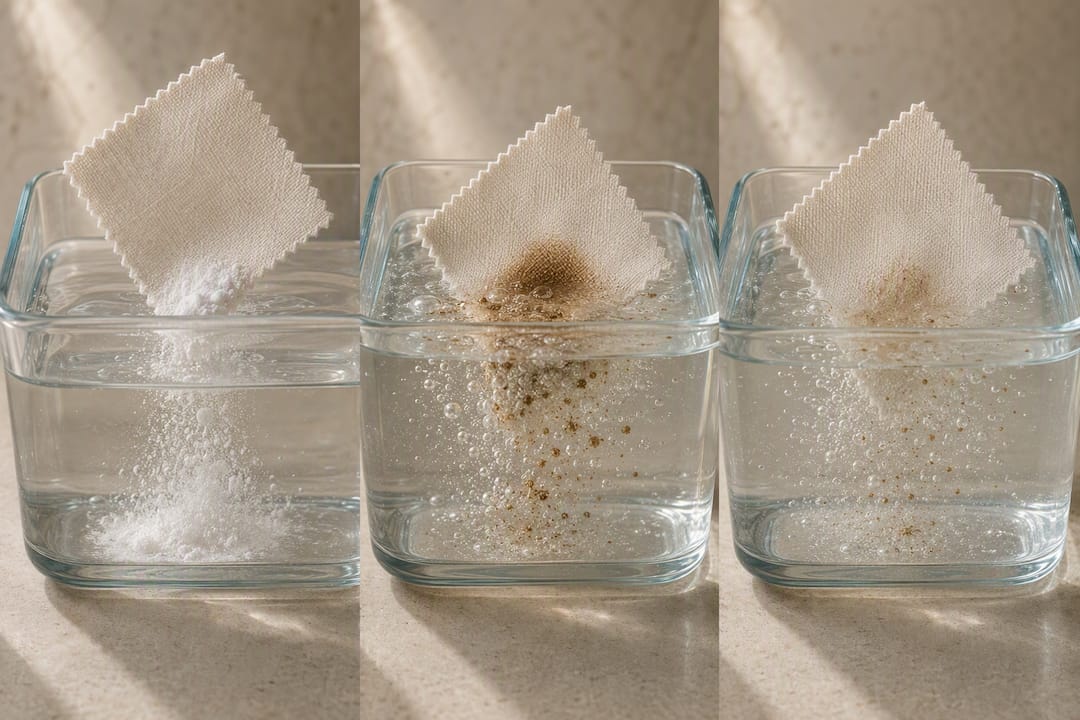
Oxygen bleach usually comes as sodium percarbonate powder, a stable solid that turns into hydrogen peroxide and washing soda once it hits water, or as ready-mixed liquid hydrogen-peroxide products. Either way, it releases oxygen as it dissolves, and that oxygen gradually breaks down organic stains rather than blasting them apart instantly.
That slower mechanism is precisely why it’s the safer everyday choice. Typical uses include:
- Colour-safe stain removal on wine, coffee, grass and sweat marks
- Pre-soaking heavily stained items before a normal wash
- Boosting regular detergent in every load, not just problem ones
- Repeated use on delicates without the fibre damage chlorine causes
The trade-off is speed and strength. Oxygen bleach needs longer contact time and is a weaker disinfectant than chlorine, so don’t reach for it if the goal is sanitising rather than stain removal.
How do oxygen and chlorine bleach compare head-to-head?
Put side by side, the two chemicals aren’t really competing for the same job. One is a specialist whitener and disinfectant; the other is a daily-use stain lifter that happens to work on nearly everything in the wash basket.
| Factor | Chlorine bleach | Oxygen bleach |
|---|---|---|
| Whitening power on plain whites | Very strong, fast | Moderate, needs time |
| Disinfecting/sanitising | Strong | Weaker |
| Colour and fabric safety | Poor on wool, silk, spandex, dyes | Generally safe for most washable fabrics |
| Speed | Minutes | Longer soak or warm-water cycle |
| Odour and ventilation needs | Strong fumes, needs airflow | Mild, low fume risk |
| Breakdown residue | Chlorinated by-products | Oxygen and water |
A few practical mappings help cut through the noise. Red wine, coffee and grass stains respond well to an oxygen bleach soak because the stain is organic and the fabric is usually coloured. Dingy white bedsheets or a genuinely mouldy shower curtain call for chlorine, because the job is restoring brightness or killing spores, not preserving colour. On the environmental side, oxygen bleach breaks down into oxygen and water, while chlorine bleach can generate chlorinated compounds during use and disposal, one reason many councils and water authorities flag it as needing more careful handling than non-chlorine alternatives.
How to choose the right bleach for the job
Run through this before you reach for either bottle:
- Check the fabric. Anything silk, wool, spandex, or a colour you care about should never see chlorine bleach.
- Identify the stain. Organic marks (food, sweat, grass, wine) respond to oxygen bleach’s slow oxidation; dinginess on white cotton responds better to chlorine.
- Decide if disinfection is the actual goal. If you’re washing bedding after a stomach bug or need to sanitise cleaning cloths, chlorine bleach is the stronger tool.
- Check machine compatibility. Some washing machines have a dedicated bleach dispenser designed for one type only, so it’s worth confirming in the appliance manual before adding either product directly to the drum.
- Consider ventilation. If you’re working in a small bathroom with no window, oxygen bleach is the more comfortable option to handle.
For most households, that means oxygen bleach handles the majority of the laundry basket, and chlorine bleach comes out for the occasional heavy-duty job.
Mixing warnings and safety basics
Never combine chlorine bleach with ammonia or acidic cleaners (including some toilet bowl cleaners and vinegar). The reaction produces toxic chloramine or chlorine gas, and this is one of the most common accidental poisoning triggers in home cleaning. Oxygen bleach is far less dangerous but still an oxidiser, so keep it away from strong acids and reducing agents too, and don’t assume “colour-safe” means “skin-safe.”
- Work in a ventilated room with a window or extractor fan on
- Wear gloves and, ideally, eye protection when handling concentrated liquid bleach
- Rinse skin or eyes immediately with water if splashed, and seek medical advice for eye contact
- Always dilute according to the label rather than guessing quantities
- Test a hidden seam or corner for colourfastness before treating a whole garment
Pro Tip: Keep a small note taped inside your cleaning cupboard listing what not to mix with bleach. It sounds excessive until you’re reaching for two bottles at 11pm trying to get a stain out.
Acute chlorine gas exposure is the primary hazard from improper mixing, while oxygen bleach’s main risk is skin and eye irritation from direct contact, not inhalation.
Getting the best results from each bleach
- For oxygen bleach, dissolve the powder in warm to hot water first, then soak stained items for 30 minutes to several hours depending on severity, since warmer water speeds up the oxygen release that does the actual work.
- For chlorine bleach on whites, a short 5 to 15 minute soak is usually enough. Longer exposure risks yellowing rather than whitening.
- Add chlorine bleach to the machine’s dedicated dispenser or dilute it in water before adding it directly, never pour it neat onto fabric.
- If a colour shifts or fades unexpectedly, stop immediately, rinse thoroughly, and switch to oxygen bleach for future loads on that item.
For stubborn oily or waxy marks that neither bleach handles well, a dedicated wax removal method often works better than either product.
A household perspective on choosing the right bleach
Most laundry doesn’t need a disinfectant. It needs a stain gone and the colour intact, which is why oxygen bleach earns a permanent spot on the shelf while chlorine stays in reserve for the handful of jobs that genuinely need it. Treating chlorine as the default is how good clothes get ruined for no real gain.
— Krzysztof
Where to find gentler fabric and home-care essentials
Choosing the right bleach protects your clothes, but the rest of your laundry and bathroom routine matters just as much for keeping fabrics soft and skin comfortable. M-shop stocks home cleaning aids, bath and shower ranges, and fabric-friendly care products imported from Poland, with gentler formulations that work well with a colour-safe, oxygen-bleach laundry routine.

As a family-owned business bringing Polish brands into the UK, M-shop focuses on natural ingredients and honest sourcing rather than harsh, one-size-fits-all formulas. Browse the full range of home and personal care categories to see what fits your routine, and visit the site for current details including any discounts.
Sources
- Persil — Using bleach in the laundry
- OxiClean — Differences in types of bleach
- Clorox — The difference between chlorine and non-chlorine bleach
- Maytag — Oxygen vs chlorine bleach
FAQ
Is oxygen bleach better than chlorine bleach?
Neither is universally “better”, they solve different problems. Oxygen bleach is gentler and safer for colours and most fabrics, while chlorine bleach whitens and disinfects more powerfully but risks damaging delicate or coloured items.
Is oxygen bleach bad for you?
Oxygen bleach is generally considered a low-risk oxidiser, but it can still irritate skin and eyes on direct contact, so gloves are sensible. It carries a lower inhalation risk than chlorine bleach, which is the more common cause of accidental fume exposure.
Does oxygen bleach really work?
Yes, particularly on organic stains like wine, coffee and grass, though it works more gradually than chlorine. Warm to hot water and a longer soak noticeably improve its stain-lifting effectiveness.
Can you mix oxygen bleach and chlorine bleach?
You shouldn’t mix them, and you should never mix chlorine bleach with ammonia or acidic cleaners, since that combination can produce toxic gas. Use one product at a time and rinse thoroughly between different cleaning steps.