



27% Hydration in 15 Minutes, Algae Masks Backed by Trials for UK Skin
Algae face masks hydrate skin fast, deliver measurable antioxidant support against ageing, and calm redness through anti-inflammatory compounds in fucoidans and alginates. Clinical trials back the hydration and smoothing claims specifically. Other benefits depend on formulation and concentration. Patch-test first, especially if you have a seaweed or iodine sensitivity.
TL;DR:
- Algae masks provide quick hydration increases of up to 27% within 15 minutes, especially with alginate sheet formulations.
- They contain antioxidants like carotenoids and polyphenols that support skin aging and calm redness through anti-inflammatory compounds.
- The effectiveness depends heavily on the species, extraction method, and formulation, with standardized ingredients offering more predictable results.
- Mask formats vary: sheet masks for rapid hydration, alginate masks for longer occlusion, and wash-off masks for mild resurfacing.
- People with iodine sensitivity, thyroid issues, or compromised skin should patch-test and consult a dermatologist before use.
Table of Contents
- What algae face masks actually do for your skin
- The science behind algae skincare: fucoidans, alginates and EPS
- Sheet, alginate, wash-off or peel-off: which algae mask format suits you?
- How to use an algae mask without wasting it or irritating your skin
- What clinical trials actually measured, and what that means for you
- Choosing the right algae mask for your skin
- Side effects and contraindications beyond allergies
- Is algae skincare actually sustainable?
- Why we stock algae skincare at M-shop
- Algae-containing products worth adding to your routine
- Sources
What algae face masks actually do for your skin
The plumping effect you feel within minutes comes from film-forming ingredients, mainly alginates and agar, which sit on the skin’s surface and pull moisture into the stratum corneum. That’s the immediate, obvious win. What’s less obvious is everything happening underneath.
Carotenoids and polyphenols in algae extracts act as antioxidants, mopping up the free radicals that break down collagen over time. This is where the “anti-ageing” claim on the packaging earns its keep, though the effect builds with repeated use rather than showing up after one mask.
Redness and reactivity respond well to algae too. Polysaccharide compounds have anti-inflammatory properties that microalgae research links to reduced irritation and faster recovery in experimental skin models. If your skin flushes easily or reacts to new products, this is often the category that behaves itself.
Oil-prone and blemish-prone skin sees a different benefit: certain algae species help regulate sebum and refine the appearance of pores, without the stripping effect of harsher clay-based masks. Recent clinical interest has also turned to the skin microbiome, with sheet-mask trials noting balanced microbial activity alongside hydration gains, though this area is still emerging.
Here’s the shortlist of what a well-formulated algae mask can realistically deliver:
- Rapid, visible plumping from humectant film-formers
- Antioxidant defence against everyday environmental stress
- Calming action on redness and low-grade inflammation
- Mild oil control and refined pore appearance
- Support for a balanced skin microbiome
One trial found a 27% increase in skin hydration just 15 minutes after applying an algae-based sheet mask, with gains still measurable two hours later. That’s a fast, real number, not marketing language, and it’s one reason algae masks have become a staple rather than a fad.
The science behind algae skincare: fucoidans, alginates and EPS
Three ingredient groups do most of the work, and each behaves differently on skin.
Fucoidans are sulphated polysaccharides found in brown algae. They support the skin barrier and carry antioxidant and anti-inflammatory activity that reviews of microalgae compounds associate with reduced oxidative stress and calmer skin overall.
Alginates, drawn largely from brown seaweed, form hydrogels when they meet water. That gel structure locks moisture against the skin and can release calcium ions that support barrier function, which is part of why alginate masks feel so different from a standard cream mask.
Extracellular polysaccharides (EPS), produced by microalgae during growth, function as humectants. Some formulators use them as an alternative to hyaluronic acid, since EPS forms a similar protective, hydrated film on the skin’s surface and resists breakdown by enzymes better than some conventional humectants.
Preclinical work also points to algae-derived antioxidants supporting collagen-related signalling pathways, though this evidence sits mostly in laboratory and animal studies rather than large human trials.
Here’s the catch worth remembering before you buy anything:
- Whole-algae extracts vary batch to batch; standardised active ingredients perform more predictably
- Harvest timing, storage and extraction method all affect final concentration of the bioactive compounds
- A mask labelled “algae” without naming the species or extract type tells you very little about strength
Sheet, alginate, wash-off or peel-off: which algae mask format suits you?
Format changes what you actually experience, not just how the mask feels.
- Sheet masks deliver quick, one-off hydration. The serum-soaked fabric holds algae extract against skin for 15 to 20 minutes, ideal before an event or as a weekly hydration boost.
- Alginate or calcium-activated masks set into a rubbery gel on the face, releasing minerals gradually. These behave closer to a professional treatment, with measured hydration and roughness improvements in clinical testing thanks to longer occlusion time.
- Wash-off algae masks often blend in mild exfoliants, trading some of the intense hydration for gentle resurfacing. Good for texture, less suited to very dry or reactive skin.
- Peel-off algae masks prioritise a satisfying ritual and light tightening, though they generally deliver less sustained hydration than alginate formats.
- Photosynthetic and microalgae-coated masks remain experimental technology, tested in lab and animal models for combined antimicrobial and healing effects. Interesting science, but years from a shop shelf.
How to use an algae mask without wasting it or irritating your skin
Getting the timing and prep right matters more than people assume.
- Cleanse skin thoroughly. Algae masks work on contact, so residual make-up or sunscreen blocks absorption.
- Apply sheet or wash-off masks to dry skin; alginate powders get mixed fresh with water just before application, following the product’s ratio exactly.
- Leave sheet masks on for 15 to 20 minutes, alginate masks for the time stated on the pack (often longer, since they set into a peelable gel).
- Remove gently. Pat in any leftover serum rather than rinsing it away.
- Follow with a moisturiser to seal in the hydration boost while it’s still there.
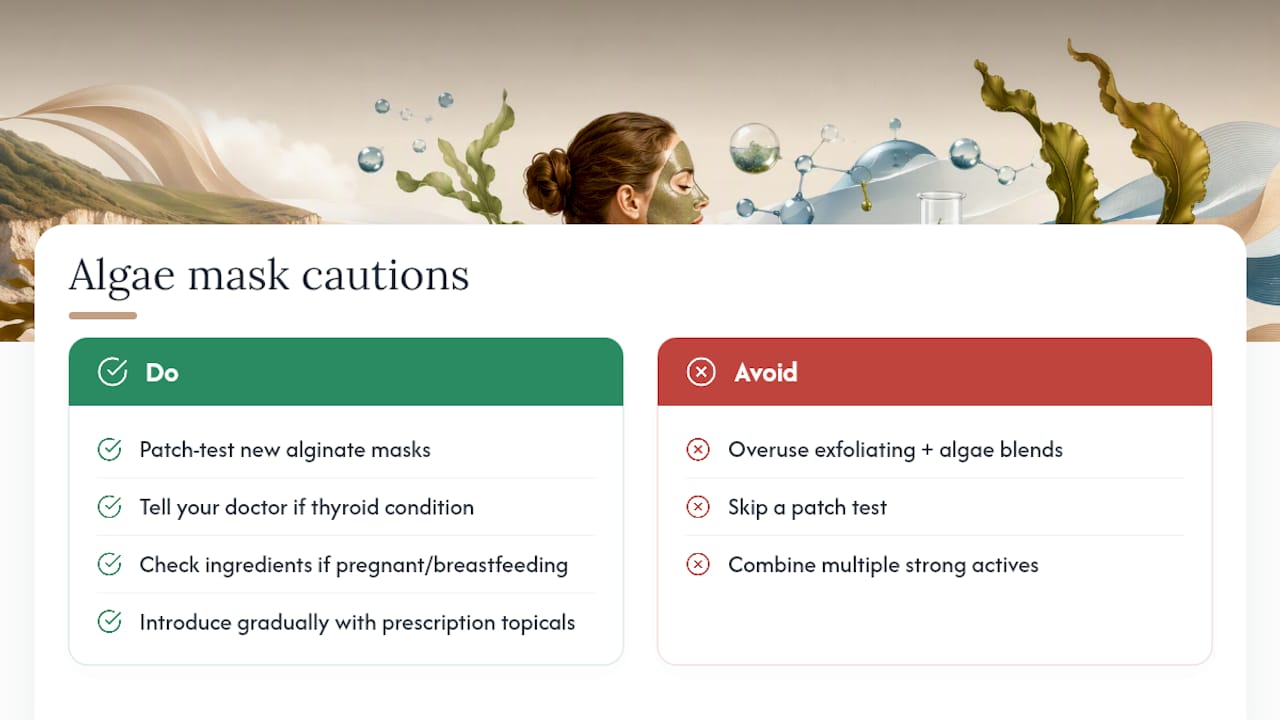
Frequency depends on skin type and formulation strength. Dry or mature skin often tolerates algae masks two to three times a week; oily or combination skin usually does better once or twice. Always patch-test on the inner arm 24 hours before first use, and avoid algae masks on broken skin, active rosacea flares, or if you have a known seaweed or iodine allergy.
Pro Tip: Skip the algae mask on nights you’ve used a strong exfoliating acid or a high-strength retinoid. Layering actives on compromised barrier function is when irritation shows up, not from the algae itself.
What clinical trials actually measured, and what that means for you
The strongest evidence for algae masks isn’t anecdotal. It comes from corneometer readings and skin-roughness mapping in controlled trials.
- Hydration rose by 27% within 15 minutes of applying an alginate sheet mask, with elevated readings persisting at the two-hour mark
- PRIMOS surface-roughness measurements showed rapid smoothing following alginate-calcium mask application, tied to the mineral release from the setting gel
- Broader reviews of macroalgae extracts report consistently good tolerability across human studies, with moisturising and antimelanogenic effects noted repeatedly
A near-30% jump in measured hydration in under 15 minutes is a genuinely fast result for a topical mask. That said, trial outcomes vary depending on where the algae was harvested, how it was processed, and how the final product was formulated, so two “algae masks” on a shelf can perform quite differently. The consistent finding across studies is safety: irritation rates in trial participants were low, which supports algae’s reputation as one of the gentler active categories in skincare.
Choosing the right algae mask for your skin
Match the format to your actual goal rather than the prettiest packaging.
- Dehydrated or mature skin benefits most from alginate or sheet formats with named humectants like EPS or hyaluronic acid alongside the algae
- Redness-prone or reactive skin does better with fragrance-free wash-off formulas that lean on fucoidans for their calming action
- Oily or blemish-prone skin suits lighter wash-off masks with oil-regulating algae species, used less frequently than hydration-focused formats
Before buying, ask yourself three things: what’s my primary concern, how sensitive is my skin generally, and how often will I realistically use this? A mask you use once a month because it’s fiddly to prepare isn’t solving anything. If you have a diagnosed skin condition or a history of allergic reactions to iodine or shellfish, speak to a dermatologist before adding algae extracts to your routine. For more on how oxidative stress affects skin more broadly, this breakdown of antioxidants is worth a read.
Side effects and contraindications beyond allergies
Allergy is the obvious risk, but it isn’t the only one. Algae, particularly kelp and other brown seaweed species, can contain naturally high iodine levels. Repeated topical exposure is unlikely to cause systemic issues for most people, but anyone with a thyroid condition should mention algae-based skincare to their doctor, since iodine sensitivity varies by individual and by product concentration.
Alginate masks that set with calcium chloride can occasionally cause mild tingling or a warming sensation as the gel activates. That’s usually harmless, but it can feel alarming the first time, so test on a small area if you’re using an alginate powder mask for the first time.
Wash-off masks containing exfoliating acids alongside algae extract raise a different concern: combined exfoliation and active ingredients can over-strip the skin barrier if used too often, leading to tightness, flaking, or increased sensitivity to sunlight. This isn’t an algae-specific problem, but it’s common in blended formulas.
Pregnant or breastfeeding readers should check ingredient lists carefully, since some algae-based formulas include additional actives (retinol derivatives, high-strength acids) that carry their own pregnancy guidance separate from the algae content itself. And anyone on prescription topical treatments, particularly for acne or rosacea, should introduce an algae mask gradually rather than adding it into an already active routine.
Is algae skincare actually sustainable?
Algae has a genuine sustainability advantage over many cosmetic ingredients, but it isn’t automatic. Farmed seaweed grows without freshwater irrigation, fertiliser, or arable land, which sets it apart from many plant-derived cosmetic actives. Large-scale seaweed farming can also support coastal ecosystems by absorbing excess nutrients and carbon from surrounding water.

The sustainability picture gets more complicated with wild harvesting. Overharvesting of slow-growing species can disrupt local marine habitats, and demand from the cosmetics industry has increased pressure on some coastal regions. Responsible brands increasingly source from certified aquaculture farms rather than wild stocks, and processing methods matter too. Extraction that relies on harsh solvents carries a different environmental cost than water-based or enzymatic extraction.
For consumers, the practical takeaway is to look for brands that name their algae species and sourcing method rather than relying on vague “ocean-derived” language. It’s a small label detail, but it usually signals a supplier that takes traceability seriously, which tends to correlate with more sustainable harvesting practice further up the supply chain.
Why we stock algae skincare at M-shop
We built our range around ingredients with genuine clinical backing, not trends. Algae and collagen sit at the centre of our Polish skincare selection because they consistently show measurable results in the research, and our family-run approach means every product, including ranges like Celia and Bielenda, gets chosen with that evidence in mind, not just shelf appeal.
— Krzysztof
Algae-containing products worth adding to your routine
If you want to put the research into practice, two ranges stand out in our own catalogue for different reasons. Celia Collagen + Algae 40+ pairs algae extract with collagen in a lightweight formula built for mature skin, targeting exactly the hydration and plumping effects the clinical trials measure, without the heaviness of a dense night cream. It’s a sound daily option if your main concern is dehydration and early fine lines rather than a once-a-week treatment mask.
For a more targeted, professional-style treatment, Bielenda’s professional face masks bring salon-grade formulation into a home routine, useful when you want the intensive hydration and roughness-smoothing effects that alginate-style masks are known for. Both ranges arrive direct from Poland, which is where our family-run sourcing makes a real difference: you’re getting the same formulations sold in Polish pharmacies, often at up to 15% off during sale periods, with straightforward UK shipping and returns handled through our own site. If mature, dehydrated skin is your main concern, the Celia Collagen + Vitamins 40+ cream is worth checking alongside your mask routine for round-the-clock support. Browse the current range and see what’s on offer this week.
Sources
- Exploring the Therapeutic Potential of Algae-Based Sheet Masks in Skincare: A Comprehensive Study of Cosmetological Benefits and Microbiome Balanced Interactions
- Microalgae: revolutionizing skin repair and enhancement - PMC
- Clinical Studies of the Safety and Efficacy of Macroalgae Extracts in Cosmeceuticals - PMC
- Electrostatically self-assembled microalgae facial masks for dual-functional therapy: Anti-infection and healing promotion