



How to spot genuine discount beauty products
Genuine discount beauty products are authentic items sold at fair price reductions through verified retailers, not dangerous imitations dressed up with tempting price tags. The difference matters more than most shoppers realise. 43% of beauty products from third-party sellers on popular e-commerce sites were counterfeit in 2026, meaning nearly half of bargain-hunters buying outside trusted channels are applying unknown substances to their skin. Learning to spot genuine discount beauty products protects both your health and your wallet. Boots, Look Fantastic, Space NK, and Cult Beauty remain the benchmark retailers for finding authentic beauty deals at honest prices.
How to spot genuine discount beauty products: red flags to know first
The most reliable signal of a counterfeit is the price itself. Legitimate retail discounts typically range from 10% to 40%, and anything above 70% on a non-clearance item is a strong counterfeit indicator. Genuine products carry real costs: import duties, quality ingredients, and regulatory compliance all set a floor below which no honest seller can go. When a price sits far below that floor, the product is almost certainly not what it claims to be.
Beyond pricing, packaging is your next line of defence. UK cosmetics legally require a full ingredients list and a UK Responsible Person’s physical address on every product. Fakes routinely skip both. Watch for these warning signs before you buy:
- Misspellings or odd phrasing on the box, tube, or label. Authentic brands invest heavily in copywriting and print quality.
- Missing or incomplete ingredient panels. No INCI list means the product fails UK cosmetics law outright.
- No UK Responsible Person details. This is a legal requirement, not an optional extra.
- Flimsy or poorly aligned packaging. Genuine products have tight seams, consistent fonts, and crisp print.
- Batch codes that are absent, smudged, or clearly printed rather than embossed or stamped.
Seller behaviour is equally telling. Flash sale tactics that create artificial urgency, such as countdown timers and “only 2 left” pressure, are designed to stop you researching the seller before you buy. Anonymous sellers with no physical address, no customer service contact, and no returns policy are operating outside the norms of legitimate retail.
Pro Tip: Before purchasing from any unfamiliar seller, search the brand name alongside “authorised UK stockist” to confirm whether that seller appears on the brand’s official retailer list.

Unverified influencers promoting deals that seem too good to be true are a significant risk factor in 2026. A sponsored post is not a quality guarantee. Treat influencer discount codes from accounts you cannot verify with the same scepticism you would apply to an unknown marketplace seller.
Which retailers reliably offer real beauty product discounts?
Purchasing from brand-owned websites and established high-street retailers is the safest route to finding authentic discounted skincare and cosmetics. Industry advice consistently warns against buying from social media pop-ups or unknown marketplaces that lack a physical presence and verifiable customer service. The distinction between a grey market product and a counterfeit one is also worth understanding clearly.
| Type | Legal status | Safety risk | Example source |
|---|---|---|---|
| Genuine sale stock | Legal and safe | None | Boots, Look Fantastic, Cult Beauty |
| Grey market product | Legal but unofficial | Low to moderate | Parallel importers, some discount sites |
| Counterfeit product | Illegal | High | Unknown marketplaces, social media sellers |
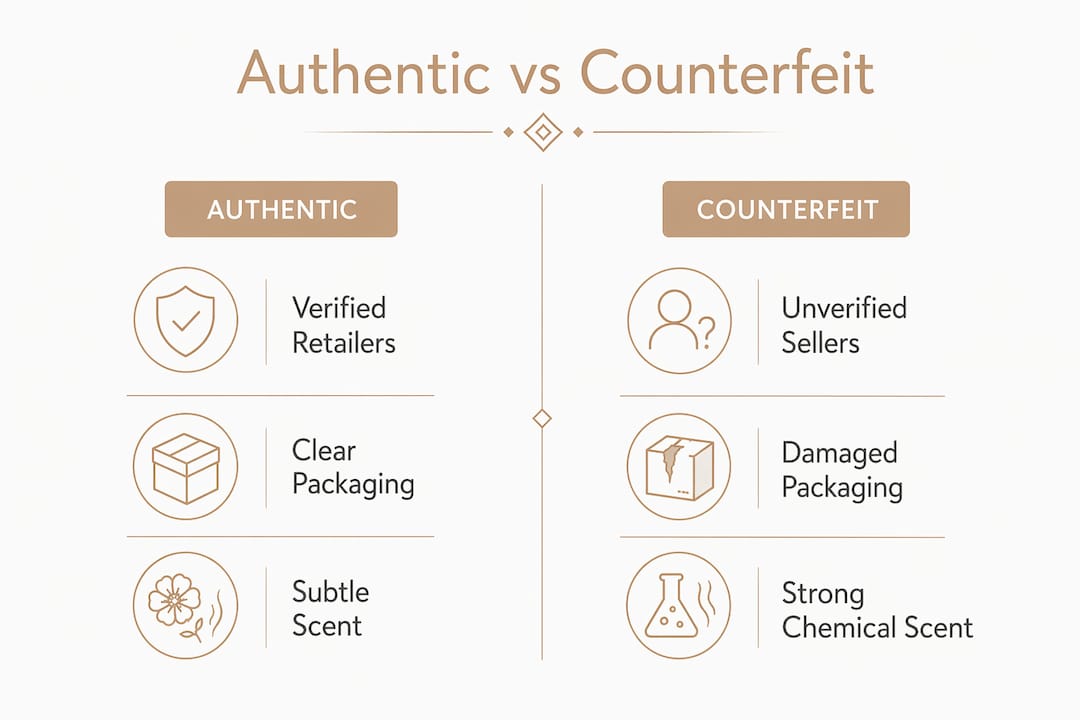
Grey market products are genuine items sold outside the brand’s official distribution network. They are not fake, but they may lack UK-compliant labelling, have different formulations for other markets, or carry no local returns support. Counterfeits are an entirely different matter: illegal imitations that may contain heavy metals, bacteria, or industrial chemicals.
Retailers worth trusting for affordable skincare offers include Boots, Look Fantastic, Space NK, Cult Beauty, and specialist importers of European cosmetics such as M-shop. Each of these maintains verifiable contact details, clear returns policies, and product sourcing you can trace. When shopping online, check that the website displays a physical address, a working phone number or email, and a secure checkout (look for “https” in the URL).
Pro Tip: Sign up to official brand newsletters and loyalty programmes at retailers like Boots or Look Fantastic. Their sale notifications go directly to subscribers before deals are advertised publicly, giving you access to the best beauty sales online without the risk of third-party resellers.
For a practical framework on buying cosmetics safely during seasonal sales, M-shop’s guide covers the specific steps worth taking before you add anything to your basket.
How to check packaging, scent, and texture for authenticity
Physical inspection is your most powerful tool for confirming whether a discounted beauty item is genuine, particularly when buying online and receiving a product for the first time. Authentic premium beauty products have consistent textures and scents, while fakes often smell like harsh detergent or feel oddly sticky or watery. These sensory differences are not subtle once you know what to look for.
Start with the packaging before you open anything:
- Print quality. Genuine products use sharp, consistent typography. Blurred text, uneven spacing, or colour that looks slightly off compared to the brand’s website are all red flags.
- Seals and closures. Authentic products have tight, even seals. Broken, re-glued, or asymmetric closures suggest tampering or poor manufacturing.
- Batch code format. Every legitimate cosmetic carries a batch code, usually embossed or stamped on the base or crimp. Cross-reference it using the brand’s customer service or a batch code checker such as CheckFresh or CheckCosmetic.
- Expiry date formatting. The “Period After Opening” symbol (an open jar with a number and “M”) should be present and clearly printed. Fakes often omit it or render it incorrectly.
Once you open the product, engage your senses deliberately. A genuine product’s fragrance is usually subtle and consistent with what the brand describes. A sudden chemical note, a harsh detergent smell, or an overpowering synthetic scent are hallmarks of counterfeiting. Texture should match the brand’s description: a serum should not feel gritty, a cream should not separate, and a foundation should not apply patchily from the first use.
Pro Tip: If a product arrives and the scent or texture feels wrong, do not continue using it while you investigate. Photograph the packaging, note the batch code, and contact the brand’s official customer service before applying it again.
Where QR codes appear on packaging, scan them. Legitimate brands increasingly use these to direct consumers to product information pages. A code that leads nowhere, or to a generic website, is a warning sign worth acting on. For guidance on building an affordable skincare routine with products you can trust, M-shop’s resource covers which ingredients and formats to prioritise at different price points.
What should you do if you suspect a counterfeit product?
Acting quickly protects both your skin and other consumers. Follow these steps if you believe a product you have purchased may be counterfeit or unsafe.
- Stop using the product immediately. If a product causes skin irritation or performs unexpectedly poorly, discontinue use before any further harm occurs. Do not assume irritation is a normal adjustment period.
- Document everything. Photograph the product, its packaging, the batch code, and any visible defects. Save your order confirmation, payment receipt, and any seller communications.
- Contact the brand directly. Use the official website to find customer service contact details. Brands want to know about counterfeits circulating under their name and can confirm whether your batch code is legitimate.
- Report to Trading Standards. In England, Wales, and Scotland, report via Citizens Advice. In Northern Ireland, contact the Trading Standards Service directly. In the Republic of Ireland, the HPRA handles cosmetics safety complaints.
- Leave a verified review. If the purchase was made through a marketplace, a detailed factual review warns other shoppers and creates a record for the platform’s trust and safety team.
- Request a refund or chargeback. If the seller is unresponsive, contact your bank or card provider. Selling counterfeit goods is fraud, and most card providers will support a chargeback claim with documented evidence.
Consumer safety outweighs any saving. The cost-of-living pressures driving shoppers towards extreme discounts are real, but counterfeit cosmetics have been found to contain lead, arsenic, and faecal bacteria. No discount justifies that risk.
Key takeaways
Spotting genuine discount beauty products requires checking the retailer’s credibility, the product’s packaging compliance, and the price against realistic discount thresholds before you buy.
| Point | Details |
|---|---|
| Price is the first signal | Discounts above 70% on non-clearance beauty items almost always indicate counterfeits. |
| Packaging must meet UK law | Every authentic product needs a full INCI list and a UK Responsible Person’s address. |
| Buy from verified retailers | Boots, Look Fantastic, Cult Beauty, and brand-owned sites are the safest sources for affordable skincare offers. |
| Sensory checks confirm authenticity | Harsh chemical scents or unusual textures on receipt are grounds to stop use and investigate. |
| Report suspected fakes promptly | Contact Trading Standards, Citizens Advice, or the HPRA and document all purchase evidence. |
Why I think most shoppers underestimate the counterfeit problem
I have spent years watching the beauty market shift, and the pattern I keep seeing is this: shoppers who consider themselves savvy are often the most vulnerable. They know to avoid obviously dodgy sites, but they trust social media recommendations and marketplace “verified seller” badges far more than the evidence warrants.
The uncomfortable reality is that fixed costs of quality ingredients and import duties mean genuine discounts have hard limits. When I see a well-known serum at 75% off from an account I have never heard of, I do not feel lucky. I feel suspicious. That instinct has served me well.
What I advocate is cautious optimism. Genuine deals exist. Retailers like M-shop source directly from Polish manufacturers and pass real savings to customers without the inflated markups of department store counters. Seasonal sales at established retailers are legitimate. The key is knowing the difference between a retailer absorbing margin to move stock and a seller who never had genuine stock to begin with.
My advice: build a short list of three or four retailers you trust, learn their typical sale patterns, and buy exclusively through those channels. You will spend less time second-guessing and more time actually enjoying products that work. The ethical beauty perspective is also worth considering here. Buying authentic products from responsible sources supports brands that invest in safe formulations and fair supply chains.
— Krzysztof
Discover authentic discounted beauty products at M-shop
M-shop sources high-quality Polish cosmetics directly from manufacturers, which means every product on the site is authentic, fully labelled to UK standards, and priced honestly. There are no mystery sellers and no grey market stock.
Current offers include up to 15% off on skincare lines featuring collagen and algae formulations, including the Pharmaceris T Sebostatic Day Cream, a dermatologist-developed SPF moisturiser for acne-prone skin. For natural daily care, the Biały Jeleń hypoallergenic soap with chestnut extract offers premium ingredients at a genuinely accessible price. Every order comes with clear customer service contact details, a transparent returns policy, and products you can verify. Browse the full range at M-shop.uk and shop with confidence.
FAQ
What discount percentage signals a fake beauty product?
Discounts above 70% on non-clearance beauty items are a strong counterfeit indicator. Legitimate retailers typically offer between 10% and 40% off, reflecting real cost structures rather than fabricated savings.
How do I verify a beauty product’s batch code?
Enter the batch code on tools such as CheckFresh or CheckCosmetic, or contact the brand’s official customer service directly. A genuine batch code will return a manufacture date and confirm the product’s authenticity.
Are beauty products on social media safe to buy?
Not reliably. Unverified influencers promoting extreme discounts are a recognised risk factor for counterfeit sales. Purchase only from sellers you can verify through the brand’s official authorised stockist list.
What should I do if a beauty product irritates my skin?
Stop using it immediately and document the product details, including the batch code and seller information. Report the issue to Trading Standards via Citizens Advice in England, Wales, and Scotland, or to the HPRA in Ireland.
Is buying from a discount beauty shop the same as buying grey market?
Not necessarily. Reputable discount retailers like M-shop source products through official channels and sell at genuine reductions. Grey market products come through unofficial distribution routes and may lack UK-compliant labelling, though they are not illegal.