



Polish sensitive skin products list: your 2026 guide
A well-structured Polish sensitive skin products list, organised by routine step, is the most reliable way to build a gentle, effective skincare regimen when your skin reacts to almost everything. Polish brands such as Bielenda, Pharmaceris, AA Oceanic, Ziaja, and Eveline have long prioritised barrier-focused formulations, making them strong choices for reactive skin. The challenge is knowing which products to trust and why. Understanding Polish skincare’s distinct approach to ingredient selection gives you a real advantage before you even read a label. This guide organises the best options by routine category so you can build confidently, step by step.
1. Polish sensitive skin products list: cleansers and makeup removers
Choosing the right cleanser is the single most consequential decision in any sensitive skin routine. A poorly formulated cleanser strips the skin barrier daily, making every product that follows less effective.
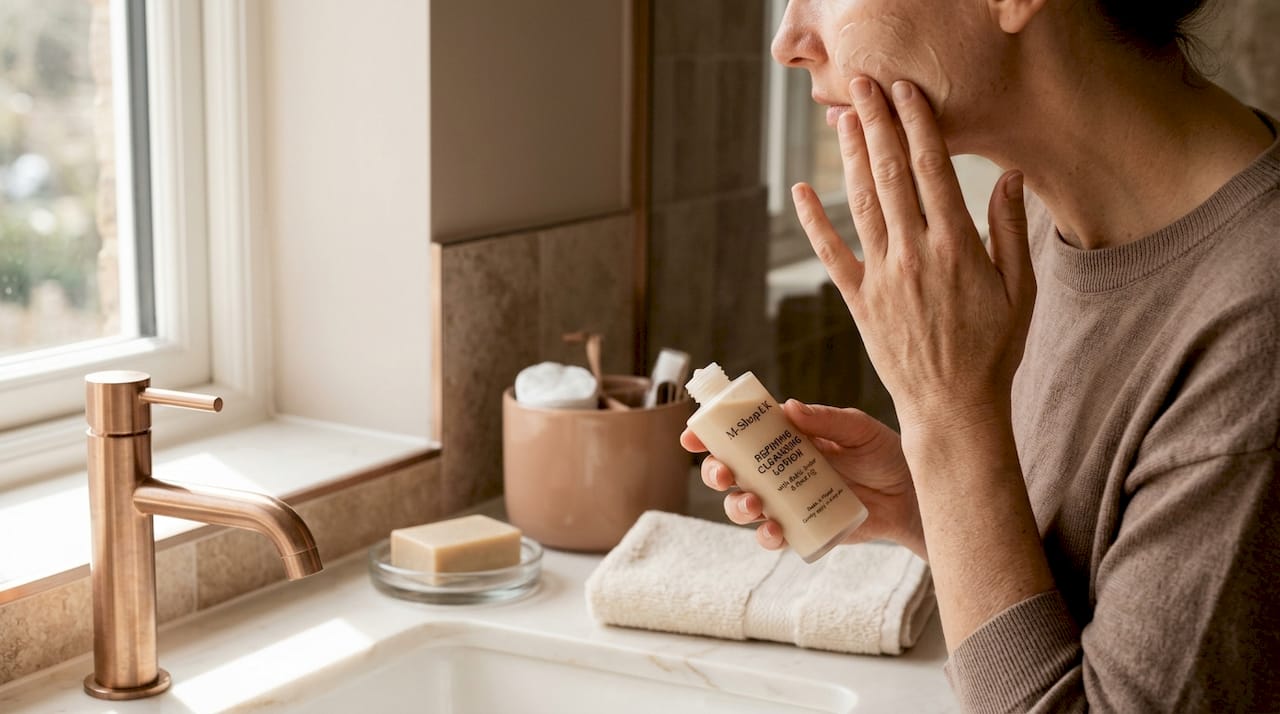
The best Polish cleansers for sensitive skin share three qualities: mild surfactants, a pH close to skin’s natural level (around 5.5), and the absence of fragrance allergens. Ingredients like glycerin and panthenol in a cleanser signal that the formula is designed to clean without dehydrating. Gentle cleansing products from Polish brands favour micellar waters and gentle gels free from sodium lauryl sulfate and high alcohol content.
Two products worth knowing:
- Bielenda Professional Micellar Liquid Cleanser: A well-regarded micellar water that removes makeup and impurities without rubbing or rinsing pressure on reactive skin.
- Pharmaceris T Sebo-Micellar Solution: Formulated specifically for sensitive and combination skin, this micellar solution avoids common irritants while keeping pores clear.
Pro Tip: If your skin is dry as well as sensitive, swap a gel cleanser for a cleansing balm or oil in the evening. These formats dissolve makeup and SPF without any surfactant contact at all, which is the gentlest possible cleanse.
2. Moisturisers and barrier-support creams from Polish brands
The skin barrier is the physical and chemical layer that keeps moisture in and irritants out. When it is compromised, sensitive skin becomes reactive skin. Rebuilding it requires consistent use of the right ingredients.
Barrier-supporting ingredients recommended for sensitive and atopic skin include ceramides, panthenol, allantoin, and humectants like glycerin. These are not marketing terms. They are functional ingredients with documented roles in barrier repair. Polish dermatological guidance recommends applying emollient-rich moisturisers at least twice daily, with the most important application timed immediately after bathing.
The reason timing matters is specific. After bathing, transepidermal water loss is elevated. Applying a moisturiser within a few minutes of patting skin dry captures that hydration window before moisture escapes, maximising barrier repair. This is one of the most underused pieces of practical advice in sensitive skin care.
Recommended Polish moisturisers:
- AA Oceanic Help Atopic Skin Cream: Fragrance-free and formulated for atopic-prone skin, this cream contains soothing actives without unnecessary additives. Available at M-shop as the AA Oceanic gel-cream.
- Eveline Hyaluron Clinic B5 Cream: Combines hyaluronic acid with panthenol for both surface hydration and deeper barrier support.
Pro Tip: Fragrance-free moisturisers with fewer than fifteen ingredients are almost always the safest starting point for sensitive skin. Longer ingredient lists increase the probability of encountering a personal allergen.
3. Polish sunscreens that are gentle on sensitive skin
Sunscreen is non-negotiable for sensitive skin. UV exposure degrades the skin barrier, worsens redness, and triggers post-inflammatory responses that reactive skin struggles to resolve. The problem is that many sunscreens contain alcohol denat, fragrance, and chemical filters that irritate sensitive skin before they protect it.
The safest active filters for reactive skin are zinc oxide and titanium dioxide. These mineral filters sit on top of the skin rather than absorbing into it, which reduces the risk of sensitisation. They are also photostable, meaning they do not degrade and release irritating by-products in sunlight.
Polish sunscreen options for sensitive skin:
- Ziaja Sopot Sun SPF15 Emulsion: The Ziaja Sopot Sun line is formulated without alcohol and fragrance, making it a practical daily option for sensitive facial skin. Variants range from SPF10 to SPF20, covering everyday urban exposure.
- Look for Ziaja and Bielenda sunscreen ranges that specify “for sensitive skin” on the label, as these typically omit the most common chemical irritants.
Texture matters too. A sunscreen that feels heavy or greasy on sensitive skin is less likely to be worn consistently. Lightweight emulsion formats from Polish brands tend to sit comfortably under makeup or alone, which improves daily compliance.
4. How to read Polish skincare labels for sensitive skin safety
Label claims like “hypoallergenic” and “fragrance-free” are not regulated guarantees. They are marketing positions. These claims should be treated as hypotheses, not conclusions. The only reliable way to assess a product’s safety for your skin is to read the full INCI ingredient list.
Here is what to look for and what to avoid:
| Label claim | What it actually means |
|---|---|
| Hypoallergenic | Tested to reduce allergic reactions, but no standard definition exists. Not a guarantee. |
| Fragrance-free | Should mean no added fragrance, but may still contain fragrant botanicals or essential oils. |
| Unscented | Often means a masking fragrance has been added to cover chemical smells. Can be worse than fragrance-free. |
| Dermatologically tested | Tested on humans, but the test parameters and pass criteria are not disclosed. |
| For sensitive skin | A marketing claim. Always verify by reading the INCI list. |
Specific ingredients that correlate with sensitive skin reactions include parfum/fragrance, alcohol denat, limonene, linalool, and citral. When any of these appear high in the INCI list (the first third of ingredients), the concentration is significant enough to cause reactions in many people. For leave-on products like moisturisers and serums, this risk is higher than for rinse-off products.
Ingredient list length is also a practical signal. Shorter lists mean fewer potential allergens. For sensitive skin, a moisturiser with eight to twelve ingredients is preferable to one with thirty, all else being equal.
Pro Tip: When assessing a new Polish product, search the INCI list for “parfum” and “alcohol denat” first. If either appears in the top ten ingredients, set the product aside regardless of what the front label claims.
5. Polish serums, eye creams, and treatment products for sensitive skin
Treatment products are where sensitive skin routines most often go wrong. The temptation to add actives like retinoids, AHAs, or vitamin C is understandable, but reactive skin requires a different approach to these ingredients.
The most reliable treatment actives for sensitive skin are panthenol, niacinamide, and soothing botanicals such as bisabolol and allantoin. Serums containing panthenol and niacinamide calm and repair skin without the irritation risk that comes with exfoliating acids or high-concentration retinoids. Niacinamide at concentrations of two to five per cent strengthens the barrier, reduces redness, and improves uneven tone without sensitising the skin.
Recommended treatment product types for sensitive skin:
- Panthenol serums: Look for Polish pharmacy brands that offer single-ingredient or minimal-formula panthenol serums. These work well as both treatment and barrier repair in one step.
- Niacinamide serums: Widely available from Polish brands including Bielenda and Eveline. Choose formulations without added fragrance or alcohol denat.
- Gentle eye creams: The eye area is thinner and more reactive than the rest of the face. Fragrance-free, low-irritant formulas with caffeine or peptides are the safest choice. Avoid eye creams with retinol unless your skin has already adapted to retinoids elsewhere on the face.
- Calming face masks: Sheet masks or wash-off masks with centella asiatica, aloe vera, or oat extract provide short-term relief for reactive flare-ups. Polish brands including Bielenda offer calming mask formats that work well as weekly additions.
- Facial mists: Thermal water sprays or hydrating mists with minimal ingredients can be used throughout the day to calm reactive skin without disrupting the routine.
If you want to introduce a retinoid or exfoliating acid, start at the lowest available concentration, use it once per week, and only after your barrier is stable. Reactive skin that is already compromised will not tolerate actives well, regardless of how gentle the formulation claims to be.
Key takeaways
A structured, stepwise product list organised by routine category is the most effective way to build a Polish sensitive skin regimen that is both safe and consistent.
| Point | Details |
|---|---|
| Organise by routine step | Categorise products as cleanser, moisturiser, sunscreen, and treatment to avoid gaps and overlaps. |
| Prioritise barrier ingredients | Choose products with ceramides, panthenol, allantoin, and glycerin to repair and protect reactive skin. |
| Time moisturiser application | Apply emollients immediately after bathing to capture the hydration window and maximise barrier repair. |
| Read INCI lists, not front labels | Hypoallergenic and fragrance-free claims are unregulated. Check for parfum, alcohol denat, and fragrance allergens in the ingredient list. |
| Introduce actives cautiously | Start serums and treatment products one at a time, at low concentrations, only when the skin barrier is stable. |
What I have learnt from years of working with Polish sensitive skin products
The most common mistake I see is people overcomplicating their routine at exactly the wrong moment. When skin is reactive and flaring, the instinct is to add more products to solve the problem. In practice, stripping the routine back to three steps (cleanser, moisturiser, SPF) and holding it there for four to six weeks is what actually allows the barrier to recover.
Polish brands have a genuine advantage here because many of their pharmacy-grade lines were developed with dermatological input and are priced to be used consistently, not sparingly. AA Oceanic and Pharmaceris, in particular, are formulated with the kind of restraint that sensitive skin needs. No unnecessary actives, no fragrance, no filler ingredients that look good on a label but serve no function.
Patch testing is not optional. Apply a small amount of any new product to the inner arm for five to seven days before using it on your face. This feels slow, but it is far faster than managing a full-face reaction and waiting for it to resolve.
I also think the label-reading skill is undervalued. Once you can identify parfum, alcohol denat, limonene, and linalool on sight, you stop being misled by front-of-pack claims entirely. That knowledge is more useful than any single product recommendation.
The final point is consistency. Sensitive skin responds to routine more than it responds to any individual product. The same moisturiser applied twice daily for eight weeks will outperform a more sophisticated formula used irregularly.
— Krzysztof
Explore gentle Polish skincare for sensitive skin at M-shop
M-shop stocks a curated selection of Polish skincare products chosen specifically for their suitability for sensitive and reactive skin. From the AA Oceanic fragrance-free gel-cream to the Ziaja Sopot Sun SPF15 emulsion, every product in the sensitive skin range has been selected for its ingredient quality and tolerability.

As a family-run business sourcing directly from Poland, M-shop brings you trusted Polish pharmacy brands at accessible prices, often with up to 15% off during sales. Whether you are building a routine from scratch or replacing a product that has been causing reactions, the M-shop team can help you find the right match. Browse the full sensitive skin range at M-shop.uk and shop with confidence.
FAQ
What makes Polish skincare suitable for sensitive skin?
Many Polish brands are developed with dermatological input and prioritise minimal, functional ingredient lists. Products from brands like Pharmaceris, AA Oceanic, and Bielenda are commonly formulated without fragrance or harsh surfactants, making them well-suited to reactive skin.
Are hypoallergenic Polish products safe for sensitive skin?
Not automatically. Hypoallergenic claims are unregulated and do not guarantee tolerability. Always read the full INCI list and check for parfum, alcohol denat, and fragrance allergens like limonene and linalool before purchasing.
When should I apply moisturiser for sensitive skin?
Apply moisturiser immediately after bathing, within a few minutes of patting skin dry. Polish dermatological guidance recommends at least twice daily application to maximise barrier repair and prevent transepidermal water loss.
Which Polish sunscreen is best for sensitive facial skin?
The Ziaja Sopot Sun range is a reliable option, as it is formulated without alcohol and fragrance. Mineral-filter sunscreens using zinc oxide or titanium dioxide are the gentlest choice for reactive skin as they sit on the skin surface rather than absorbing into it.
How do I introduce treatment serums to a sensitive skin routine?
Start with one serum at a time, choosing formulas with niacinamide or panthenol at low concentrations. Patch test for five to seven days on the inner arm before applying to the face, and only introduce new actives once your skin barrier is stable and not actively reacting.
Recommended
- Why Polish skincare is different: a complete guide – M-Shop.UK
- Biały Jeleń - Hypoallergenic natural liquid SOAP 1l 5900133004348 – M-Shop.UK
- Biały Jeleń - Premium - Hypoallergenic natural SOAP with FLAX for sens – M-Shop.UK
- Biały Jeleń - Premium - Hypoallergenic SOAP with natural BLACK LILAC ( – M-Shop.UK