



12% Cream or 40% Patch: UK Salicylic Acid for Feet
Salicylic acid works well on thick dead skin, stubborn calluses, and many plantar warts, provided you match the strength to the job and apply it correctly. Low-strength creams suit daily maintenance; high-strength medicated removers target specific problem spots. If you have diabetes, poor circulation, or reduced sensation in your feet, skip self-treatment and see a clinician first.
TL;DR:
- Use low-strength salicylic acid products, like 12%, for routine maintenance and prevention of rough skin, applying them consistently and gently.
- Reserve higher-strength medicated patches, up to 40%, for targeted, well-defined calluses or warts, following precise application instructions to avoid irritation.
- Always soften skin before application, carefully protect surrounding tissue, and avoid self-treatment if you have diabetes, poor circulation, or reduced foot sensation.
- Combine topical treatments with proper foot care habits, including regular moisturizing, mechanical smoothing, and wearing well-fitted shoes to prevent recurrence.
- Prioritize correct technique over strength, and seek professional advice if there is no improvement after a full treatment cycle or if conditions worsen.
Table of Contents
- What forms does salicylic acid for feet come in?
- How strong should salicylic acid be for different foot problems?
- How do you use salicylic acid on your feet safely?
- Who shouldn’t self-treat with salicylic acid?
- Salicylic acid or urea: which is right for your feet?
- How do you keep feet smooth after treatment?
- Why technique beats strength every time
- Where M-shop fits into your foot care routine
- Sources
- FAQ
What forms does salicylic acid for feet come in?
Walk down any pharmacy aisle and you’ll find salicylic acid packaged half a dozen different ways, each suited to a different job. Picking the wrong one is the most common reason people give up on treatment before it’s had a chance to work.
Creams and lotions sit at the gentler end. These are designed for regular use across wider areas of rough skin, such as heels or the balls of the feet, and typically get worked into a daily or twice-daily routine. One labelled example on the market contains 12% salicylic acid and instructs twice-daily application specifically for corn and callus removal.
Gels behave similarly but tend to dry faster and grip better on curved or awkward areas like the sides of toes.
Medicated patches or plasters are the targeted option. These are cut to size, stuck directly over a corn or callus, and left in place for a set period rather than rubbed in.
Liquid solutions offer precision. A small brush or dropper lets you paint the acid onto a pinpoint area, which matters when you’re treating a wart close to healthy skin.
Peels are the least common at-home format for feet, more associated with in-clinic professional treatments, though some professional-strength gels are sold for home softening before targeted acid use.
When you’re comparing products on the shelf, three label details matter more than the brand name:
- The percentage concentration, since this tells you whether it’s a maintenance product or a medicated remover
- The stated purpose, whether that’s corns, calluses, or verrucae, because formulations differ even at similar strengths
- The application instructions, including how often to use it and how long to leave it on
Skipping that label check is how people end up using a wart treatment on general dry skin, or a gentle cream on a callus that needed something stronger.
How strong should salicylic acid be for different foot problems?
Concentration is where most people get it wrong, either by under-treating a genuine callus with a daily lotion or by using a medicated remover on skin that just needed regular moisturising.
Low-strength products, generally sitting in the low single-digit to low-teens percentage range depending on the formulation, work as routine exfoliants. They’re meant to be used repeatedly over weeks, gently softening thick skin without singling out one spot for aggressive treatment. The 12% cream mentioned above falls into this maintenance-to-moderate category, positioned for daily corn and callus care rather than one-off intervention.
Statistic Callout: Some medicated callus removers reach salicylic acid concentrations of up to 40%, delivered as adhesive patches worn for 48 hours at a time, with treatment cycles repeated for up to 14 days.
That 40% strength is the ceiling you’ll find in over-the-counter products, and it’s designed for targeted use only, never spread across a wide area. The patch format itself does some of the safety work: because it’s cut and stuck precisely over the callus, it limits contact with surrounding healthy skin in a way a cream or liquid can’t.
Higher strength doesn’t mean faster is always better. Irritation risk climbs with concentration, and skin around a treated area can redden, sting, or peel if the acid strays beyond the intended spot. This is precisely why medicated patches include instructions for cutting them to size rather than applying a standard shape regardless of the callus dimensions. If you’re treating a wart or callus larger than the patch allows, trim the patch down rather than layering on more product.
The practical rule: reach for a low-strength daily product for general roughness and prevention, and save higher-strength medicated removers for a specific, well-defined patch of hard skin or a diagnosed wart.
How do you use salicylic acid on your feet safely?
Technique matters more than strength here. A 40% patch used carelessly will do less good than a 12% cream applied consistently and correctly, because salicylic acid’s usefulness depends heavily on correct application and consistency rather than brute concentration alone.
- Soften first. Soak the affected foot in warm water for around five minutes. This softens the outer dead skin layer and improves how well the acid penetrates once applied.
- Gently reduce the thickest skin. Pat dry, then use a pumice stone or emery board to lightly file down the surface of the callus, never enough to draw blood or cause pain.
- Protect the surrounding skin. If you’re using a liquid or gel near healthy tissue, a thin layer of petroleum jelly around the edges stops the acid spreading where it isn’t wanted.
- Apply precisely. For creams, work a small amount directly into the hard skin. For patches, cut to the size of the callus and press firmly so the edges seal.
- Time it correctly. Creams typically go on once or twice daily per the label; medicated patches are usually left in place for 48 hours before being removed and, if needed, reapplied for up to a 14-day cycle.
- Pare gently between applications. Once skin softens further, remove loosened dead layers gradually rather than picking or cutting.
- Stop and reassess if progress stalls. If a callus or wart shows no improvement after a full treatment cycle, or if it worsens, that’s your cue to see a podiatrist rather than repeat the same routine indefinitely.
Pro Tip: For genuinely stubborn calluses, alternate a softening night, using a urea-based cream or professional softening gel, with a targeted salicylic acid application the following day. The urea loosens the bulk of the hard skin so the acid can focus its work on the toughest, most resistant core rather than fighting through layers of dead tissue first.
Who shouldn’t self-treat with salicylic acid?
Salicylic acid is not a treatment for every foot, and the people it’s wrong for are specific, not vague. Manufacturers and clinical guidance consistently flag diabetes, poor circulation, and reduced skin sensation as reasons to see a clinician before reaching for any acid-based foot product.
The logic is straightforward. Reduced sensation means you might not feel it when the acid starts irritating skin beyond the callus. Poor circulation slows healing, so a small chemical burn that would resolve in days for most people can become a much bigger problem, potentially an ulcer, for someone with vascular disease. Peripheral neuropathy compounds both risks at once.
Watch for these warning signs regardless of your health background, and stop treatment immediately if any appear:
- Pain that increases rather than settles after application
- Redness spreading outward from the treated area
- Pus, discharge, or an unpleasant smell
- Unexpected bleeding or an open sore that won’t close
If you’re pregnant or breastfeeding, the evidence on topical salicylic acid in these circumstances is limited. It’s sensible to check with a midwife, GP, or pharmacist before starting treatment rather than assuming a small topical dose carries no risk.
A few practical habits reduce harm across the board: never share patches or applicators between family members, always wash hands after application, and keep treated feet away from open water like swimming pools until the area has fully healed.
Salicylic acid or urea: which is right for your feet?
These two ingredients get lumped together constantly, yet they work in genuinely different ways. Salicylic acid is keratolytic, meaning it breaks down the bonds between dead skin cells so they shed more easily. Urea works partly the same way but also acts as a humectant, drawing moisture into the skin at the same time it softens it, a dual action that makes it particularly good for very dry, cracked skin rather than isolated thick patches.
That distinction should drive your choice more than habit or whatever’s on the shelf:
- Choose urea for generally dry, fissured heels, flaky soles, or as an ongoing maintenance product between acid treatments.
- Choose salicylic acid for a defined, thickened callus or a diagnosed plantar wart where you need to target one specific area.
- Use both, staged, when a callus sits on generally dry skin: soften the wider area with urea first, then apply salicylic acid directly to the thick core.
- Check skin fragility before deciding. Thinner, more sensitive skin generally tolerates urea better than higher-strength acid.
A urea-based foot cream makes a sensible everyday product precisely because it doesn’t carry the same irritation risk as concentrated acid, which is why podiatry advice often positions urea as the daily habit and salicylic acid as the occasional, targeted intervention.
How do you keep feet smooth after treatment?
Clearing a callus or wart is only half the job. Skip aftercare and the same hard skin tends to rebuild within weeks, especially if the friction or pressure that caused it in the first place hasn’t changed.
Daily moisturising is the foundation, and it doesn’t need to be complicated. A urea or emollient-based foot cream applied every night, ideally after washing and while skin is still slightly damp, keeps newly revealed skin supple rather than letting it thicken straight back up.
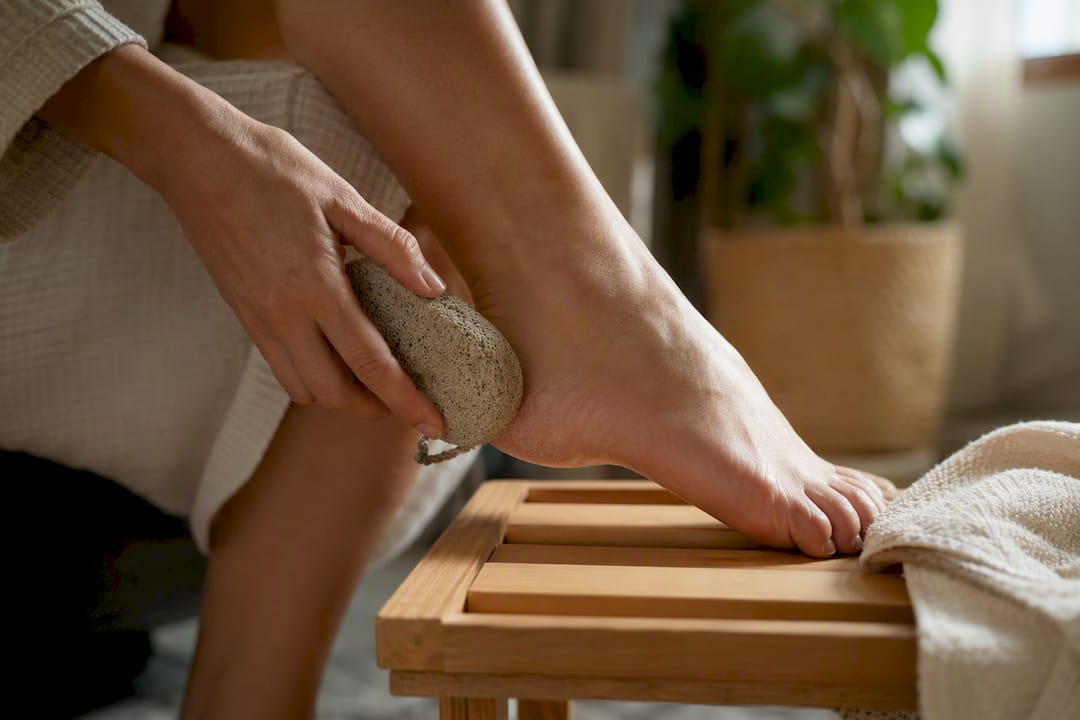
Mechanical maintenance still has a place, just used sparingly. A pumice stone or emery board once or twice a week, after bathing when skin is soft, keeps buildup manageable without the aggressive scraping that can actually trigger more callus formation as skin protects itself against repeated abrasion.
Footwear deserves more attention than it usually gets. Tight toe boxes, worn-down insoles, or shoes that let the foot slide forward all concentrate pressure on the same spots that formed calluses to begin with. Swapping to better-fitted shoes or adding a cushioned insole often does more for prevention than any cream.

If hard skin returns despite consistent aftercare, a repeat salicylic acid cycle is reasonable, but space cycles out rather than running them back to back. Give skin genuine recovery time between treatments, and if you’re reaching for medicated removers more than once every few weeks, that’s a sign to get the underlying cause, whether it’s footwear, gait, or a foot structure issue, properly assessed.
Why technique beats strength every time
Most advice on treating hard skin fixates on percentage strength, as though a 40% patch is automatically better than a 12% cream. It isn’t. The strongest product applied carelessly, without softening the skin first or without giving it a proper 48-hour cycle to work, will underperform a moderate-strength cream used correctly and consistently.
What gets overlooked constantly is the diagnostic step before any of this. Rough, thickened skin on the sole is almost always callus, not keratosis pilaris, because KP needs hair follicles to form and the soles simply don’t have them. People chase the wrong treatment because they’ve misdiagnosed the problem, then wonder why weeks of a KP-style routine haven’t shifted a callus that needed a keratolytic all along.
The other habit worth breaking is treating salicylic acid as a one-off fix rather than part of a rotation. Feet that stay smooth long-term are the ones getting daily moisturising, occasional gentle mechanical care, and targeted acid treatment only when something specific needs it, not the feet getting hit with the strongest product available every time roughness appears.
— Krzysztof
Where M-shop fits into your foot care routine
Once you’ve dealt with the immediate problem, the real work is what happens between treatments.

If dry heels are your main issue rather than an isolated callus, a urea foot softening cream at 20% strength gives you a stronger daily maintenance option than most standard drugstore lotions. For cracked heels specifically, a linseed-based regenerating cream targets the deeper fissures that plain moisturiser struggles to close. And if you want a professional-grade softening gel to use before any targeted acid application, the shop’s callus and corn softening gel is designed for that exact prep step.
Browse the full footcare range to build a routine around your specific skin, always following the instructions on whichever product you choose, and if you’re ready to start, take a look at the current footcare selection on the M-shop site today.
Sources
Always check the instructions on your specific product, and speak to a pharmacist or podiatrist if you’re unsure which strength or format suits your feet.
This article is general information, not a substitute for advice from a qualified doctor. Consult a qualified healthcare professional about your own circumstances before acting on anything here.
FAQ
Is salicylic acid cream good for feet?
Yes, for calluses, corns, and thickened skin, salicylic acid cream is a well-supported option when used at an appropriate strength and applied consistently, such as the 12% formulations labelled for twice-daily corn and callus care.
Which is better for feet, urea or salicylic acid?
Neither is universally better; urea suits very dry, fissured heels and daily maintenance, while salicylic acid works best on defined, thickened calluses or plantar warts that need targeted breakdown.
How do you use salicylic acid on your feet?
Soak the foot for around five minutes to soften skin, gently file the surface, apply the product precisely to the affected area following the label’s timing, whether that’s a daily cream or a 48-hour patch, then moisturise once treatment is complete.
What type of acid is best for removing hard skin on the feet?
Salicylic acid is the most widely recommended keratolytic for hard skin and is considered a first-line option for plantar warts and thickened callus when applied correctly and consistently.
Can everyone use salicylic acid foot treatments safely?
No, people with diabetes, poor circulation, or reduced foot sensation should consult a clinician before self-treating, since these conditions raise the risk of injury or delayed healing from acid-based products.