



3 Label Checks for Polish Cosmetics Under UK Cosmetics Regulations
Yes, buying Polish and other imported cosmetics in the UK is legal and generally safe, provided the product meets a handful of consumer-facing requirements. Before you click “buy”, check three things: a named Responsible Person with a UK or EU address on the packaging, an ingredients list written in English using standard INCI names, and a visible batch number with a use-by or Period-After-Opening symbol. Most products sold through registered UK sellers already carry these details, and 861,686 notifications filed through the UK’s notification system show just how much of the market is already logged and monitored.
TL;DR:
- Most imported cosmetics sold legally in the UK must show a responsible person with a UK or EU address on the packaging, along with clear ingredient lists in English.
- Products with banned substances like mercury, hydroquinone, or high-strength hydrogen peroxide pose serious health risks and are often found in illegal or unregulated products.
- Checking the back label for a traceable Responsible Person and batch information is essential, especially when buying from online marketplaces, which are high risk for counterfeits.
- Buying directly from trusted UK retailers or official brand websites reduces the risk of counterfeit or unsafe cosmetics compared to marketplace platforms.
Table of Contents
- Checklist: what to check on the label and packaging before you buy
- Banned ingredients and the real health risks behind them
- Why the SCPN system and Trading Standards matter to you
- Where to buy safely, and what to do if something feels off
- How M-shop selects and checks Polish cosmetics for UK buyers
- What the evidence actually tells shoppers to prioritise
- Shop verified Polish cosmetics with confidence at M-shop
- Sources
Checklist: what to check on the label and packaging before you buy
Every legitimate cosmetic sold in Great Britain has to carry a specific set of details, whether it’s a £3 soap bar or a £40 collagen cream. This comes straight from Regulation 12 of the Cosmetic Products (Safety) Regulations 2008, and it’s the fastest way to tell a properly imported product from a dodgy one.
Run through this before you buy, especially with a brand you haven’t tried before:
- Ingredients list (INCI names) in English. Even a Polish-made cream must list its ingredients using the internationally recognised INCI terms, translated or presented in English.
- Responsible Person’s name and UK or EU address. This is the party legally accountable if something goes wrong, and it’s your first clue about whether the seller can be traced.
- Batch number. Lets a manufacturer or regulator identify and recall a specific production run if a fault emerges.
- Best-before date or Period-After-Opening (PAO) symbol. The little open-jar icon with “12M” or “6M” inside tells you how long a product stays safe once opened.
- Product function and precautions. A moisturiser should say so; anything with a warning (avoid eye contact, patch test first) needs to state it clearly.
- Country of origin, where the product is imported from outside the UK or EU.
Small containers, like a 15ml lip balm or a travel-size shampoo, sometimes can’t fit all this on the tube itself. In that case, the rules allow the information to sit on an enclosed leaflet or tag instead, so check product photos for a leaflet before assuming the label is incomplete.
Pro Tip: If a listing only shows the front of the packaging, ask the seller to send a photo of the back label before you buy. A trustworthy retailer will do this without hesitation.
Banned ingredients and the real health risks behind them
The riskiest cosmetics sold in the UK tend to cluster around a small list of substances, and knowing their names is worth more than any amount of general caution. Mercury and hydroquinone are the two most persistent offenders, both still turning up in skin-lightening creams despite being banned from UK cosmetics for their toxicity and links to organ damage and severe skin reactions. Potent corticosteroids, sometimes hidden in “brightening” or “anti-inflammatory” creams, thin the skin permanently with prolonged use.
Two more categories sit in restricted rather than fully banned territory, which makes them easy to underestimate:
- High-strength hydrogen peroxide, often found in home teeth-whitening kits well above the legal concentration for consumer use, causing chemical burns to gums and enamel damage.
- HEMA and other acrylates in DIY gel nail systems, a common cause of allergic reactions that can become permanent once sensitisation sets in.
Categories worth extra scepticism include skin-lightening creams, home teeth-whitening kits, DIY UV gel nail systems, and anything marked “professional use only” that’s being sold for home application.
One Trading Standards team in Suffolk found that 88% of the imported cosmetics they tested were unsafe or non-compliant, a figure CTSI cites as typical of the enforcement problem nationally.
Products intended for salon use often carry active ingredient levels far above what’s safe for untrained home application, which is precisely why “professional use only” is a warning label, not a marketing flourish.
Why the SCPN system and Trading Standards matter to you
The UK’s cosmetic notification system, known as SCPN, is the backbone that lets Trading Standards act quickly when something goes wrong. Every cosmetic legally placed on the GB market has to be notified through it, with details of its formulation held on file. As of 28 May 2026, 24,112 Responsible Persons have filed 861,686 notifications since the system launched in December 2020, a scale that shows how deeply embedded notification is across the market.
That figure is reassuring, but it’s a signal, not a guarantee. A product being notified doesn’t mean it’s being watched every day; it means the paperwork trail exists if something goes wrong.
| Safeguard | What it does for you | Where it shows up |
|---|---|---|
| SCPN notification | Creates a traceable ingredient and safety record | Held by OPSS, not visible on packaging |
| UK/EU Responsible Person | Gives you a contactable, accountable party | Printed on the label |
| Trading Standards enforcement | Investigates complaints, pulls unsafe stock, issues alerts | Gov |
Labelling is genuinely the first clue Trading Standards officers look for when assessing a suspect batch. If the Responsible Person’s address is missing, forged, or points to an empty office, that’s usually the first thread they pull.
Where to buy safely, and what to do if something feels off
The safest route is almost always the brand’s own website, an established UK retailer, or a specialist seller who imports directly and lists a genuine UK address. These sellers have a reputation to protect and are far easier to trace if a batch turns out faulty.
Marketplaces are a different story. Which?'s investigation found a high proportion of cosmetics bought through online marketplaces may be counterfeit or unsafe, which makes this one of the highest-risk channels for imported cosmetics generally.
Watch for these warning signs before you add anything to your basket:
- No UK address anywhere on the seller’s profile or the product page.
- Dispatch location listed as “unknown” or routed through a country with no obvious connection to the brand.
- Flash sales with countdown timers pushing you to buy before checking anything properly.
- Product photos that look stretched, mismatched, or copied from another listing.
- Social media adverts linking to a checkout page with no returns policy or contact details.
If you’ve already bought something and it looks wrong, or you’ve had a reaction, work through this quickly:
- Stop using the product immediately.
- Keep the packaging, including any leaflet or box, as evidence.
- Contact the seller directly and ask for the Responsible Person’s details if they aren’t on the label.
- See your GP if you’ve had a skin reaction, burn, or other adverse effect.
- Report the product to Trading Standards or the Office for Product Safety and Standards.
How M-shop selects and checks Polish cosmetics for UK buyers
M-shop is a family-run business bringing Polish skincare, haircare, and body care to UK shoppers, many of them Polish expats who grew up with these brands. Every product listed has to carry English-language ingredients, a traceable Responsible Person, and the batch and use-by information UK rules require, the same checklist covered above rather than a separate standard invented for the shop.
That approach comes from years of sourcing directly from Polish manufacturers rather than intermediaries, which is also why the shop can speak confidently about authentic Polish cosmetics and the difference between a properly imported product and one that’s slipped through the gaps.
What the evidence actually tells shoppers to prioritise
The conventional advice on this topic tends to fixate on brand names, as if some Polish labels are inherently trustworthy and others aren’t. That misses the point. The label itself, not the brand’s reputation, is where risk actually shows up, and a well-known name printed on a package with no Responsible Person address is worth exactly the same scepticism as an unknown one.
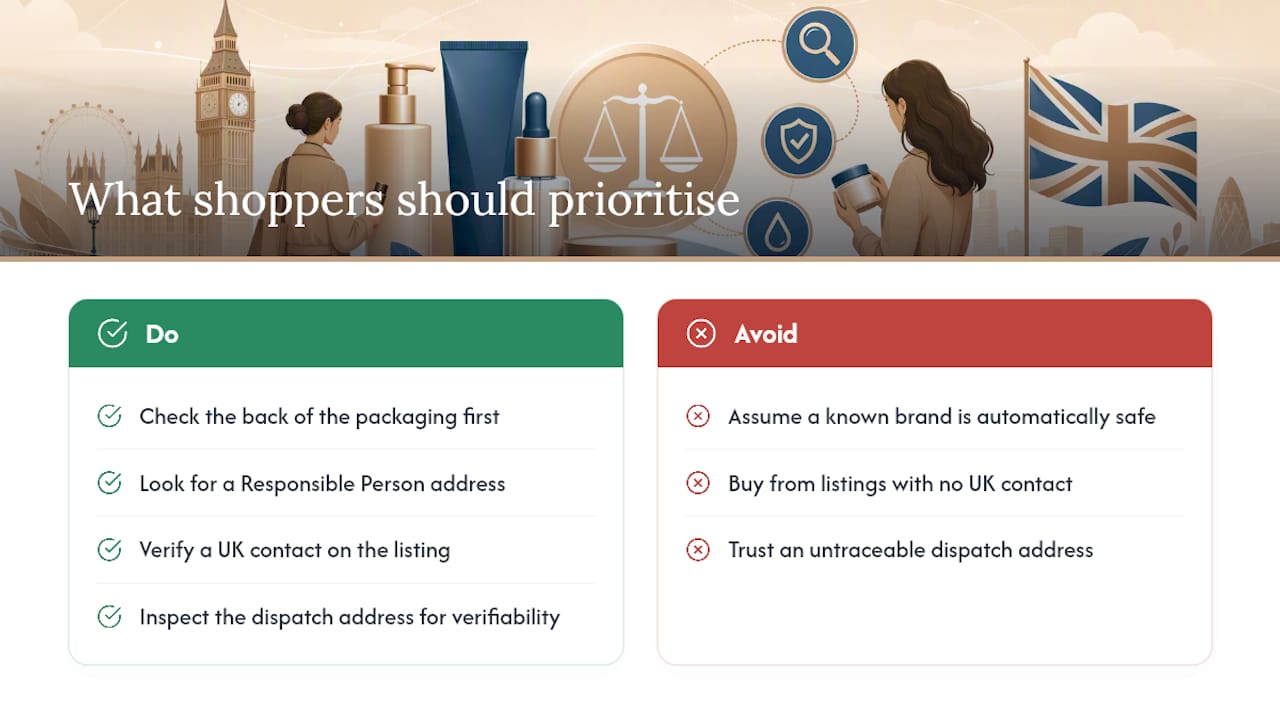
What the notification data really tells you is that oversight scales with the size of the legitimate market, not with any single seller’s honesty. Over 24,000 Responsible Persons have skin in the game precisely because the system makes them accountable. That accountability disappears the moment you buy from a listing with no UK contact and a dispatch address nobody can verify.
If there’s one habit worth building, it’s this: check the back of the packaging before you check the price. Cheap isn’t the risk. Untraceable is.
— Krzysztof
Shop verified Polish cosmetics with confidence at M-shop
M-shop exists precisely because sourcing genuine Polish skincare shouldn’t mean gambling on a marketplace listing with no UK address. Every product on the site, from anti-ageing creams to natural soaps, carries the labelling checks covered above: English ingredients, a traceable Responsible Person, and clear batch information.
Even with a trusted seller, it’s worth running your own quick check on arrival, comparing the label against what’s listed on the product page. Two examples worth a look: the Pharmaceris T Sebostatic Day anti-acne cream for oilier, blemish-prone skin, and the Celia Collagen + Algae 40+ moisturising cream for a lightweight anti-ageing option. Both are stocked with full UK-facing labelling and regularly discounted, in keeping with a family-run approach of affordable, well-sourced Polish skincare. Browse the current range and place an order directly through M-shop to get started.
Sources
For the full rules on labelling and Responsible Persons, see GOV.UK’s guidance on cosmetics for Great Britain and the SCPN notification data release. To report an unsafe product, contact the Citizens Advice consumer helpline (England and Wales), Consumer Advice Scotland, or Consumerline in Northern Ireland, all of which feed reports through to Trading Standards and OPSS.
- New data on UK cosmetic product safety notifications
- CTSI issues illegal cosmetics warning
- Which? investigation into cosmetics from online marketplaces