



Glycerin vs urea hand cream: which one your hands actually need
Glycerin is the better everyday choice for dry, sensitive hands, whilst urea is the stronger therapeutic option for rough patches, calluses or thickened skin, provided you use the right concentration. Urea’s benefits scale with strength and can sting at higher percentages, whilst glycerin depends heavily on being paired with occlusives to lock moisture in. The sections below cover exactly how to tell which one you need, and how to use it properly.
TL;DR:
- Urea at 10% effectively treats rough patches and calluses, while concentrations above 30% are reserved for thickened skin and should be used cautiously.
- Glycerin provides quick hydration mainly suitable for sensitive or normal skin but requires pairing with occlusives for lasting moisture.
- Sensitive skin areas or active inflammation increase the risk of stinging with urea, especially at higher percentages, requiring careful patch testing.
- Applying creams immediately after washing, combined with occlusive layers overnight, enhances hydration retention for both ingredients.
- Starting with lower urea concentrations and gradual introduction improves tolerance, while choosing glycerin-based formulations is best for everyday dryness.
Table of Contents
- Glycerin vs urea hand cream: how each ingredient actually works
- What percentage of urea or glycerin should you look for?
- Is urea or glycerin more likely to irritate your skin?
- How do you choose between glycerin and urea for your hands?
- How M-shop.uk chooses and labels its hand and foot formulations
- Are the benefits of glycerin or urea lasting, or just temporary?
- Why the “just pick the strongest one” advice misses the point
- Find the right glycerin or urea hand cream on M-shop.uk
- Sources
Glycerin vs urea hand cream: how each ingredient actually works
Glycerin is a humectant. It pulls water from the air and from deeper skin layers into the surface, plumping and softening skin within minutes of application. Its performance depends heavily on humidity: in a damp bathroom it works brilliantly, but in a heated office or a dry winter room, glycerin can pull moisture from your own skin if there’s nothing to seal it in. That’s why the American Academy of Dermatology recommends pairing humectants with occlusive ingredients or ceramides for lasting hydration rather than a fleeting hit of softness.
Urea does something glycerin can’t. At low concentrations it behaves like glycerin, drawing water into the skin. Push the percentage higher, though, and it turns keratolytic, meaning it actively breaks down the bonds holding dead, thickened skin cells together. That’s the mechanism behind why urea creams feel almost exfoliating on rough heels or calloused palms, whilst a glycerin cream just sits on the surface. Medical News Today notes synthetic urea appears across ordinary moisturisers and specialist keratolytic treatments precisely because concentration changes what it does.
In practice, this translates to different sensations and different jobs. Glycerin feels instantly soothing and slightly tacky before it absorbs. Urea, particularly above 10%, can feel like it’s working on the skin rather than just sitting there, sometimes with mild tingling on very dry or cracked patches.
- Mechanism: glycerin draws moisture only; urea draws moisture and, at higher strengths, dissolves dead skin cell bonds.
- Best for: glycerin suits surface dryness and sensitive skin; urea suits thickened, rough or callused patches.
- Sensation on application: glycerin feels light and quick-absorbing; urea can feel more active, occasionally with mild tingling.
- Formula dependency: glycerin needs an occlusive partner for lasting effect; urea works more independently but still benefits from added emollients.
What percentage of urea or glycerin should you look for?
Concentration decides almost everything with urea, and it matters more than most shoppers realise.
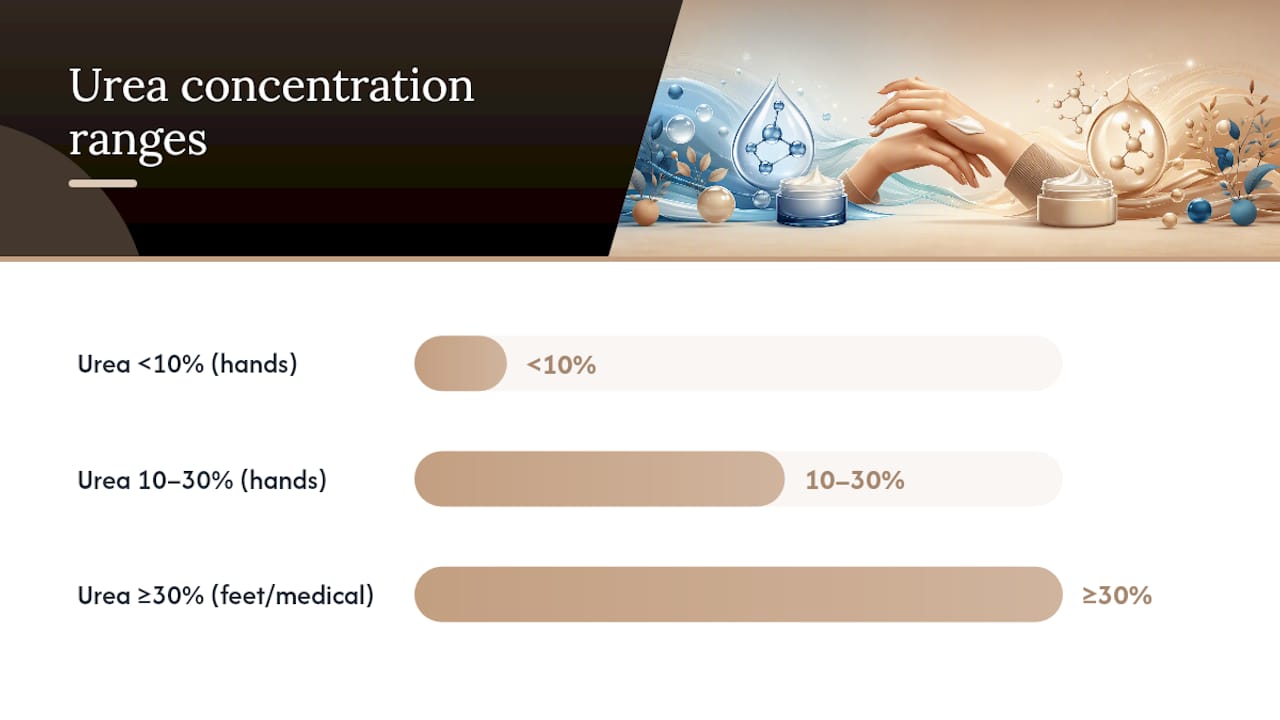
- Below 10% urea acts mainly as a humectant, similar to glycerin, and suits daily use on normal to dry hands.
- Between 10% and 30% urea becomes properly keratolytic, ideal for rough patches, mild calluses or persistent dryness that daily moisturising hasn’t fixed, a range Consumer Reports identifies as the practical sweet spot for texture problems.
- 30% and above delivers strong keratolytic action, generally reserved for thick calluses, cracked heels or conditions a pharmacist or dermatologist has flagged, rather than routine hand care.
Glycerin doesn’t carry the same neat banding because it doesn’t change function with concentration, only intensity.
Worth noting: foot creams routinely carry far higher urea percentages than hand creams, because heels tolerate more aggressive exfoliation than the thinner skin on your hands. Don’t assume a foot cream’s strength is safe to apply to your hands just because it’s from the same range. Start low, at around 10%, and only move upward if your skin tolerates it and the roughness persists.
Is urea or glycerin more likely to irritate your skin?
Here’s the number that should shape how you introduce either ingredient: a double-blind randomised study comparing the two in atopic dermatitis patients found that 24% reported moderate or severe stinging with a urea-saline cream, against just 10% for a 20% glycerin cream, even though both reduced dryness by a similar amount over the trial. That’s not a reason to avoid urea. It’s a reason to introduce it carefully, especially if your skin is already sensitised.
Certain situations call for extra caution:
- Broken, cracked or actively inflamed skin, where either ingredient can sting, but urea more so at higher strengths.
- Concurrent use of retinoids or strong chemical exfoliants, which can compound irritation when layered with keratolytic urea.
- Diabetic skin on hands or feet, where any product that alters skin barrier function warrants a chat with a healthcare professional first.
Patch-test any new cream on your inner forearm for 48 hours before applying it to your hands. Start with the lowest available urea percentage, use it two to three times a week rather than daily, and stop immediately if you notice burning that doesn’t settle within a minute or two. Persistent redness, cracking that worsens, or any sign of infection needs a clinician’s attention, not more cream.
How do you choose between glycerin and urea for your hands?
Match the ingredient to the actual problem, not to whichever product happens to be on the shelf in front of you.
- If your hands feel tight, dry or slightly flaky after washing, but the skin texture is otherwise smooth, a glycerin-based cream is the sensible starting point.
- If you’ve got persistent rough patches, hardened skin around the knuckles, or genuine calluses that don’t shift with ordinary moisturising, consider a low-percentage urea cream and build up gradually.
- If your skin reacts easily to new products, lean toward glycerin first and only introduce urea once you’ve confirmed you tolerate it via a patch test.
When reading labels, check for a clearly stated urea percentage rather than a vague “contains urea” claim, since a formulation where urea sits near the bottom of the ingredients list is likely present in trace amounts only, doing little more than window dressing. Look also for ceramides, shea butter or petrolatum alongside the humectant, low fragrance if your skin is reactive, and an absence of denatured alcohol or strong essential oils if you’re prone to sensitivity. A guide on reading ingredient percentages covers similar label-reading principles that apply just as well to hand creams as to facial serums.
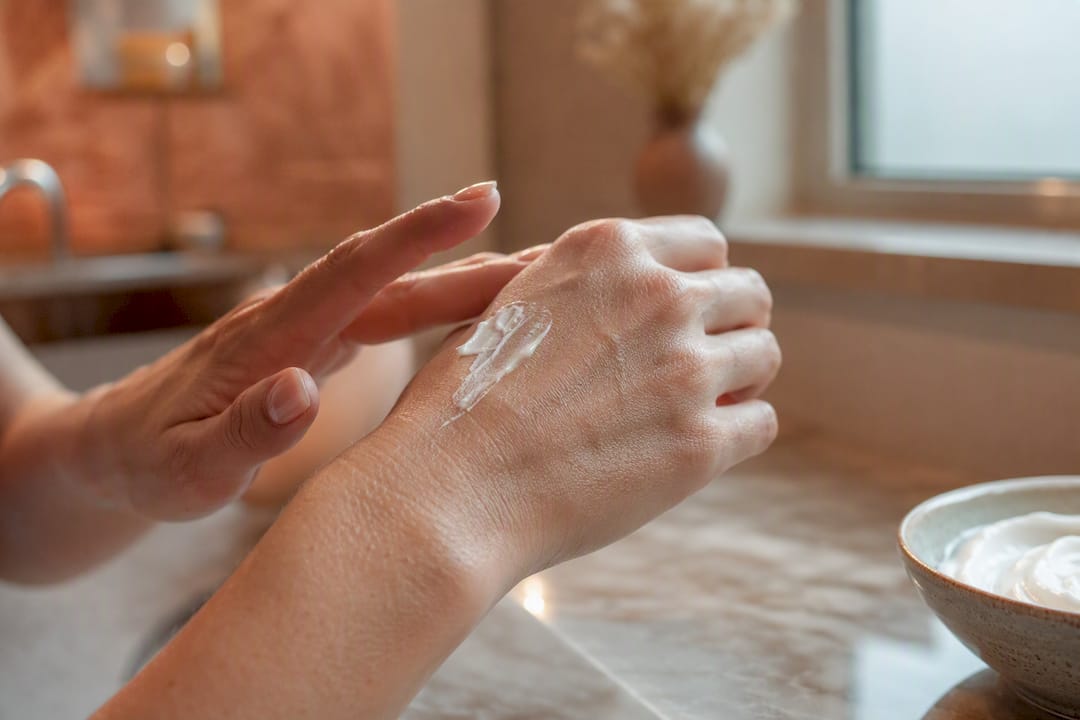
Apply your chosen cream straight after washing, while skin is still slightly damp, since humectants work better when there’s moisture nearby to draw in. At night, follow with a thicker, more occlusive layer, or use gloves over the cream to boost absorption while you sleep.
Pro Tip: Pairing a humectant with an occlusive overnight, glycerin cream first, then a heavier balm or petroleum-based layer on top, keeps hands hydrated for longer than either ingredient manages alone.
How M-shop.uk chooses and labels its hand and foot formulations
As a family-owned importer of Polish cosmetics, M-shop pays close attention to how brands balance humectants and occlusives, and to whether urea percentages are actually stated on pack rather than buried in vague marketing copy. That transparency matters more than most shoppers realise, given how easily a “urea-enriched” label can mean almost nothing if the percentage sits too low to do anything.
A few of the formulations M-shop stocks illustrate the concentration principles covered above:
- Products positioned for everyday hand hydration typically lean on glycerin alongside emollients, aimed at comfort rather than exfoliation.
- Products aimed at rougher skin, such as foot creams containing 20% urea, state their percentage clearly, reflecting the keratolytic banding Consumer Reports describes.
Readers exploring formulation choices in more depth can see how Polish hand creams are typically built, including how brands layer humectants against occlusive bases for lasting effect.
Are the benefits of glycerin or urea lasting, or just temporary?
Neither ingredient offers a permanent fix, but they age differently over months of regular use. Glycerin’s benefit resets daily. It hydrates on application and needs reapplying as the day’s washing, drying and environmental exposure strip it away again. Used consistently alongside an occlusive, though, it can meaningfully improve baseline skin comfort over weeks, particularly through winter when indoor heating dries the air.

Urea’s long-term picture is more interesting. Used at a keratolytic strength consistently, it doesn’t just mask rough skin, it gradually reduces the build-up of thickened tissue itself, so hands that once needed daily intervention may need less frequent treatment over time. That’s a genuine advantage over glycerin for anyone dealing with calluses or chronic roughness.
The limitation cuts the other way. Urea’s exfoliating action, if overused or left at too high a strength for too long, can thin skin that didn’t need thinning, or trigger the irritation patterns seen in the stinging comparison study above. Glycerin’s limitation is simpler: on its own, in a dry climate, it can underperform no matter how often you apply it, because there’s nothing holding the moisture it draws in place. The practical takeaway is that glycerin rewards consistency and good pairing, whilst urea rewards patience and the right concentration, and neither ingredient substitutes for addressing why your hands are dry or rough in the first place, whether that’s washing frequency, weather, or an underlying skin condition worth mentioning to a pharmacist.
Why the “just pick the strongest one” advice misses the point
Most advice on glycerin versus urea treats it as a strength contest, as though more keratolytic power always wins. That’s backwards for most people. The stinging data from the atopic dermatitis trial tells you something the marketing rarely admits: nearly a quarter of people using urea-saline cream reported real discomfort, whilst glycerin barely registered a complaint at 10%. If your hands are simply dry rather than genuinely thickened or callused, reaching for a high-percentage urea product is solving a problem you don’t have, at a cost you didn’t need to pay.
The bigger gap in most guidance is formulation, not ingredient choice. Glycerin gets dismissed as “basic” when the real issue is almost always a cheap formulation that skips the occlusive partner it needs. Urea gets treated as universally superior for texture when the honest answer depends entirely on percentage and how gradually you introduce it. Readers would do better starting with what their hands actually need this week, dryness or roughness, rather than which ingredient sounds more advanced on the label.
— Krzysztof
Find the right glycerin or urea hand cream on M-shop.uk
M-shop.uk gives you something most UK skincare shelves don’t: Polish-made formulations with clearly labelled urea percentages, sourced directly through a family-owned business rather than through several layers of distribution.

For everyday dryness, look toward glycerin-forward creams designed for comfort and quick absorption. For rougher patches or early calluses, the Bielenda Happy Feet Cream with Urea offers a moderate, therapeutic-strength option worth introducing gradually, following the patch-test guidance covered earlier. If your hands are sensitive rather than rough, a hypoallergenic option like the Biały Jeleń chestnut soap pairs well as a gentle cleansing step before either cream. Full formulation details, including stated concentrations, sit on each product page, and M-shop’s customer support can point you toward the right strength if you’re unsure where to start. Browse the current range and check today’s prices, including seasonal discounts of up to 15%, directly on M-shop.
This article is general information, not a substitute for advice from a qualified doctor. Consult a qualified healthcare professional about your own circumstances before acting on anything here.
Sources
- A double-blind study comparing the effect of glycerin and urea on dry, eczematous skin in atopic patients
- Urea skin care ingredient benefits and dosage - Consumer Reports
- Urea in skincare: Uses, benefits, risks, and more - Medical News Today
- American Academy of Dermatology — pick a moisturiser