



How to test new cheap beauty brands in the UK
Affordable beauty product testing is the practice of evaluating low-cost cosmetics against defined performance criteria before committing to a full purchase. UK beauty enthusiasts who test new cheap beauty brands systematically spend less on disappointing products and more on formulas that genuinely deliver. The gap between budget and luxury beauty has narrowed considerably in 2026, with drugstore foundations now delivering 75–80% of luxury performance at a fraction of the price. That shift means a structured testing approach is no longer optional. It is the difference between a great find and a wasted purchase.
What do you need to start testing affordable beauty brands?
The right setup makes every evaluation more reliable. Before you open a single product, gather a neutral primer, your usual base foundation, and a set of clean applicators. These form your control layer. Any new product you test goes on top of a consistent base, which means your results reflect the product’s actual performance rather than variations in your skin prep.
Lighting matters more than most people realise. Natural daylight near a window is the gold standard for assessing finish, coverage, and colour accuracy. Bathroom lighting, which tends to be warm and flattering, will make almost any product look better than it does in the real world. Test in daylight and then check again under office or indoor lighting to understand how the product performs across different environments.
Sampling multiple product types in one session gives you a fuller picture of a brand’s quality consistency. Test a lip product, a face product, and a blush or highlighter from the same brand at the same time. Inconsistency across a range is a red flag. A brand that nails its lip formula but delivers a patchy blush has quality control issues worth noting.
- Neutral primer and your regular foundation as a base layer
- Clean brushes, sponges, and fingertips for application comparison
- Natural daylight and indoor lighting for finish assessment
- A simple notebook or phone note to record wear time, transfer, and texture
- Micellar water or a gentle remover to reset between tests
Pro Tip: Keep your skin consistently moisturised during a testing period. Dry or dehydrated skin distorts how products apply and wear, which skews your results. A lightweight, fragrance-free moisturiser applied 10 minutes before testing gives you a neutral canvas every time.
How do you compare cheap beauty products against luxury ones fairly?
The most reliable comparison method focuses on four criteria: finish upon application, wear time over six to eight hours, formula texture and tackiness, and applicator design. Assess each criterion separately and score them before forming an overall judgement. This prevents packaging or price from unconsciously influencing your verdict.
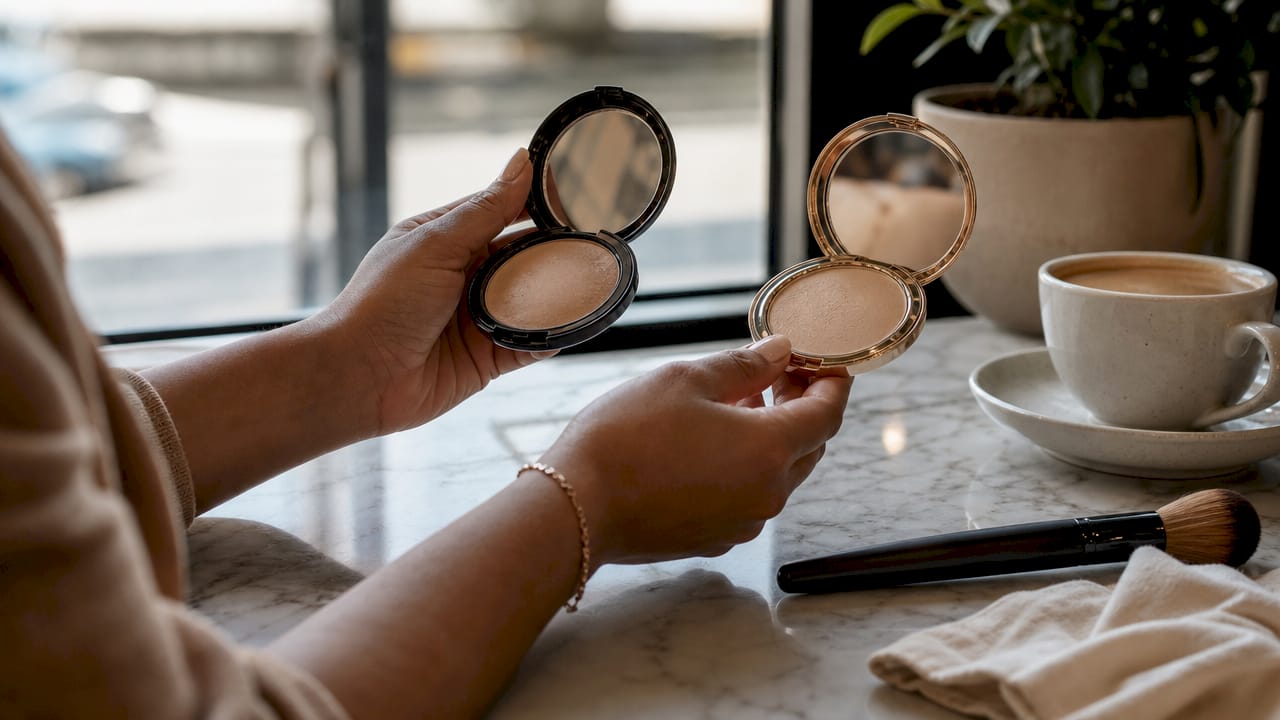
Affordable brands within large conglomerates often share R&D infrastructure with their luxury counterparts. That means their formulas are frequently more sophisticated than the price suggests. The key difference tends to appear not at application but hours later. Drugstore brands replicate the aesthetic finish of luxury products but often lack proprietary long-wear technology. This explains why a budget foundation can look identical to a luxury one at 9AM but begin to separate by 3PM.
Applicator quality is a faster quality signal than almost anything else. Poorly designed applicators and sticky formulas signal cheaper quality far more reliably than price alone. A flimsy doe-foot applicator or a brush that sheds bristles tells you the brand cut corners on components, which often reflects the formula quality too.
- Apply both products to opposite sides of your face or forearm under identical conditions.
- Photograph immediately after application in natural light.
- Assess texture, blendability, and initial finish side by side.
- Check wear at the two-hour, four-hour, and eight-hour marks.
- Note transfer onto clothing or hands as a measure of formula integrity.
- Score each criterion from one to five before comparing totals.
Pro Tip: When testing liquid face products, apply them over your existing foundation and watch for lifting or patchiness. A well-formulated product blends without disturbing the base layer. Any product that drags, pills, or causes patchiness has a formula compatibility problem.
| Feature category | Affordable products | Luxury products |
|---|---|---|
| Initial finish | Comparable in most cases | Comparable in most cases |
| Wear longevity | Moderate, up to six hours | High, eight hours or more |
| Shade range | Limited in budget lines | Wider, with more undertones |
| Applicator quality | Variable, check carefully | Consistently higher standard |
| Formula innovation | Shared R&D in conglomerates | Proprietary long-wear technology |
What mistakes should you avoid when buying new cheap beauty brands?
The single most common mistake is buying a budget product based on packaging alone. Packaging similarities between budget and luxury products mislead buyers regularly. A sleek tube or a frosted glass bottle costs almost nothing to produce at scale. It tells you nothing about what is inside.
Ignoring shade range is a costly error, particularly for foundations and concealers. A brand that offers only eight foundation shades cannot serve the full spectrum of UK skin tones. If your shade sits at either end of a limited range, the formula is unlikely to be developed with your undertone in mind. Always check the full shade range before purchasing, not just the one shade that looks closest to you on a screen.
- Buying without checking the brand’s official website or verifiable retail presence. Ultra-cheap products lacking official websites or consistent distribution are often white-labelled and of uncertain quality.
- Skipping wear-time testing and relying only on how a product looks at application.
- Assuming a higher price within the budget tier means better quality. Price within the affordable range is a weak quality signal.
- Ignoring formula compatibility with your existing skincare or base products.
- Buying a full-size product before testing a sample, tester, or smaller size where available.
Check the M-shop guide on spotting genuine products for a practical checklist on verifying brand legitimacy before you buy.
Are supermarkets and drugstores good places to test budget beauty in the UK?
Supermarket and drugstore beauty aisles are the best physical testing environments available to UK shoppers in 2026. They offer immediate tactile access to products, which no online listing can replicate. You can feel the applicator, assess the packaging quality, and sometimes swatch directly on your wrist before committing.
Affordable beauty products at supermarkets perform well for full-day office to evening wear even without specialised setting formulas. The UK climate adds a useful real-world stress test. Humidity, rain, and central heating all challenge a product’s wear in ways that a controlled indoor test cannot fully simulate. A product that survives a British autumn commute has passed a meaningful durability test.
Use price point and packaging as a first filter, not a final verdict. Products priced at the very bottom of the budget tier warrant extra scrutiny on applicator quality and ingredient lists. Mid-range budget products, typically priced between £5 and £15, tend to offer the best balance of formula quality and accessibility. The affordable European skincare brands entering UK supermarkets in 2026 are particularly worth watching in this price bracket.
Pro Tip: Use the budget cosmetics haul checklist before your next supermarket beauty run. A structured list stops impulse purchases and keeps your testing focused on the categories you actually need to evaluate.
For a broader view of what the natural skincare segment offers at accessible prices, the 2026 guide to skincare alternatives covers emerging options worth adding to your testing shortlist.
Key takeaways
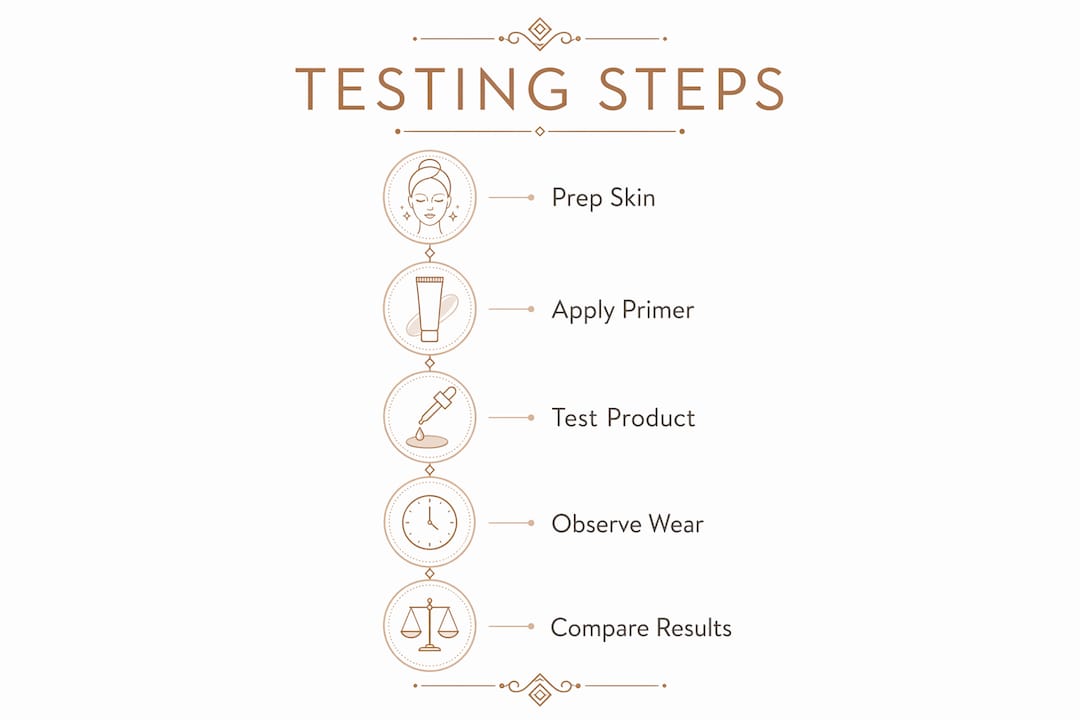
Testing new cheap beauty brands effectively requires a structured method that separates genuine quality signals from packaging, price, and marketing.
| Point | Details |
|---|---|
| Use a consistent base layer | Apply new products over a neutral primer and your usual foundation for reliable results. |
| Focus on wear time, not just finish | Budget products often match luxury at application but diverge after four to six hours. |
| Check applicator quality first | Poorly made applicators reliably signal weaker formula quality across the range. |
| Verify brand legitimacy | Always confirm an official website and consistent retail presence before buying. |
| Test in natural daylight | Daylight reveals true colour, finish, and coverage that indoor lighting conceals. |
What I have learned from years of testing budget beauty
The most useful shift I made was stopping the habit of judging a product in the first five minutes. Early impressions are almost always misleading. A foundation that looks slightly flat at application can settle beautifully after 20 minutes. A product that feels tacky on first touch may dry down to a perfectly comfortable finish. Patience is the skill that separates a reliable tester from someone who returns half their purchases.
The ‘cheap versus quality’ framing is genuinely outdated. Many affordable brands benefit from the same R&D as luxury lines under large conglomerates. The real question is not whether a product is cheap, but whether it was formulated with care. You find that answer in the applicator, the formula texture, and the wear time. Not in the price tag.
I have also learned to be sceptical of products with no verifiable brand presence. A product with no official website, no consistent stockist, and no ingredient transparency is a risk regardless of how appealing the packaging looks. The Polish cosmetics available through M-shop represent the opposite of that risk. They come from established manufacturers with transparent formulations and a clear supply chain. That traceability matters when you are putting something on your skin.
The final lesson is this: test more, buy less. A disciplined testing routine means you accumulate fewer products you never use and more products you genuinely reach for every day.
— Krzysztof
Affordable Polish skincare worth adding to your testing list
M-shop curates a selection of Polish cosmetics that sit firmly in the affordable luxury category. These are products formulated with natural ingredients such as collagen and algae, sourced directly from Poland and available in the UK with up to 15% off during sales.
If you are building a testing routine and want a reliable starting point, the Pharmaceris T Sebostatic Day cream with SPF is a strong first choice. It addresses anti-acne normalisation and daily sun protection in one formula, at a price point well below equivalent pharmacy brands. M-shop’s family-owned approach means every product in the range has been personally selected for quality and value. Browse the full catalogue at M-shop.uk to find your next testing candidate.
FAQ
How do I test new cheap beauty brands without wasting money?
Buy the smallest available size or use in-store testers before committing to a full product. Apply over a consistent base layer and assess finish, texture, and wear time across at least six hours.
What is the biggest quality difference between budget and luxury beauty?
Luxury products hold their edge mainly in long-wear technology and shade range complexity, not in initial finish. Budget products frequently match luxury at application but begin to separate after four to six hours.
How do I know if a cheap beauty brand is legitimate?
Check for an official brand website, verifiable retail stockists, and a full ingredient list on the packaging. Products without these are often white-labelled and carry quality risks.
Which beauty products offer the best value in the budget tier?
Lip care products offer some of the strongest value. Budget lip products can deliver comparable hydration and volume to luxury equivalents at a significantly lower price, making them a low-risk starting point for testing new brands.
Are affordable European skincare brands worth trying in the UK?
Polish and Eastern European skincare brands in particular offer formulas built on natural ingredients such as collagen, algae, and plant extracts. Many are produced by established manufacturers with transparent supply chains, making them a reliable choice for UK shoppers seeking quality at accessible prices.