



What does an emulsifier do in skincare?
Emulsifiers are the reason your moisturiser doesn’t separate into a greasy puddle by the time it reaches your bathroom shelf. They are amphiphilic molecules with a water-loving head and an oil-loving tail, and that split personality is precisely what makes them indispensable. Without them, oil and water phases in a cream or lotion would separate within hours of manufacture. Every cream, lotion, and serum you own exists in its current smooth, spreadable form because emulsifiers sit at the interface between oil droplets and water, holding the two phases together.
The core functions of an emulsifier in skincare are:
- Stabilising the formula so oil and water phases don’t separate on the shelf or on skin
- Enabling even delivery of both oil-soluble and water-soluble active ingredients across the skin surface
- Determining texture, from a featherweight gel to a rich barrier cream
- Improving spreadability and skin feel without adding greasiness
- Helping solubilise fragrances, essential oils, and lipophilic actives into water-based formulas
- Acting as secondary emollients when fatty-alcohol-based emulsifiers such as cetearyl alcohol are used
What types of emulsifiers are used in skincare formulations?
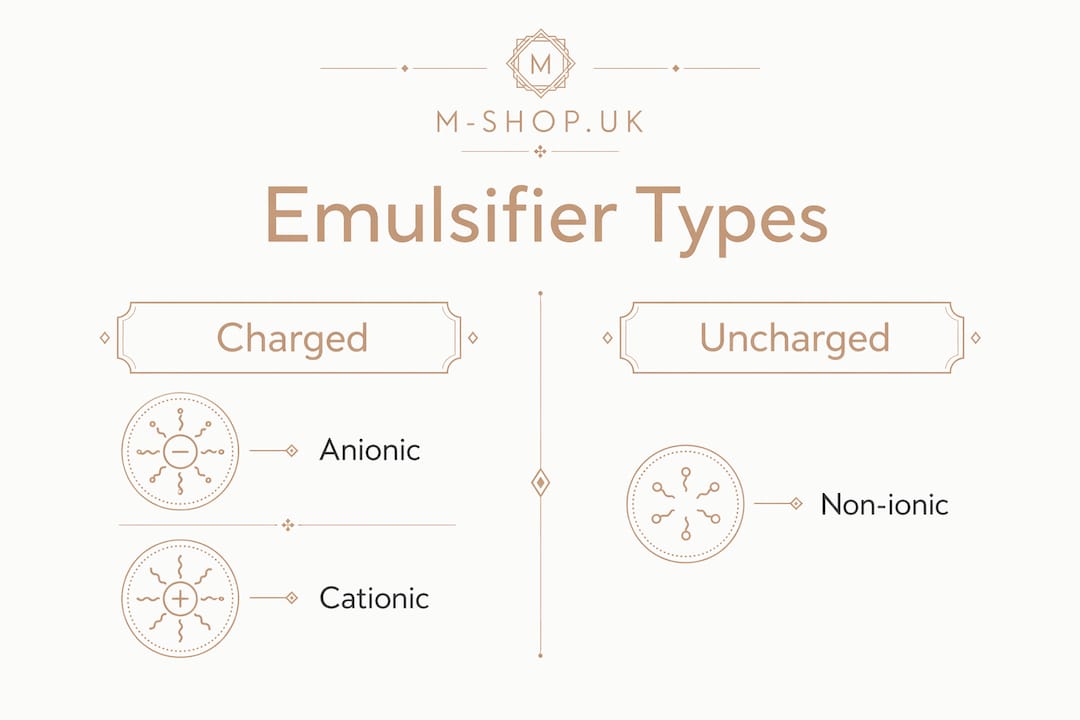
Emulsifiers fall into three main classes based on their electrical charge, and that charge affects everything from how stable the finished product is to how it feels on your skin.
Anionic emulsifiers
These carry a negative charge. They are among the most widely used in rinse-off products and some leave-on formulas, producing stable, creamy textures. Common examples include sodium stearoyl lactylate and certain fatty acid soaps. They tend to be effective at low concentrations but can be more irritating for sensitive skin at higher levels.
Cationic emulsifiers
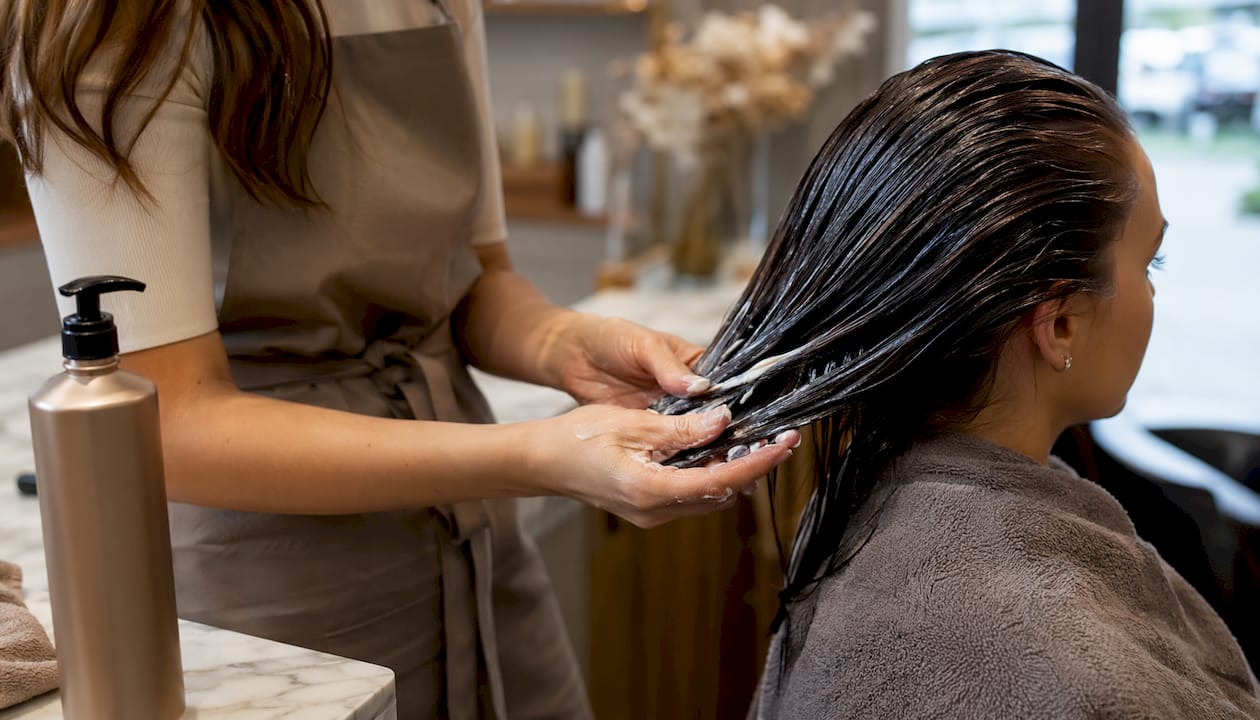
Cationic emulsifiers carry a positive charge, which makes them particularly useful in hair conditioners and masks. BTMS-50 (behentrimonium methosulfate) is the classic example: its positive charge helps it adhere to the negatively charged surface of hair strands, delivering conditioning benefits. In facial skincare they appear less often, though they do turn up in some leave-on treatments.
Non-ionic emulsifiers
Non-ionic emulsifiers carry no charge at all, and that neutrality makes them the gentlest and most versatile class. Glyceryl stearate, cetearyl alcohol, polysorbate 20, polysorbate 80, and the Olivem 1000 system (cetearyl olivate and sorbitan olivate) all fall here. They are the dominant choice in leave-on moisturisers, particularly those formulated for sensitive or reactive skin.
The HLB system (Hydrophilic-Lipophilic Balance) sits underneath all three classes. High HLB values (8–18) favour oil-in-water emulsions, the lightweight lotions and serums where small oil droplets float in a water matrix. Low HLB values (3–6) favour water-in-oil emulsions, richer and more occlusive, better suited to dry or mature skin. Most real formulations blend high and low HLB emulsifiers to dial in both stability and the precise skin feel the formulator wants.
- Oil-in-water (O/W) emulsions: lighter textures, suited to normal or oily skin, dominant in moisturisers and sunscreens
- Water-in-oil (W/O) emulsions: richer, more occlusive, better for dry or sensitive skin
Pro Tip: When reading an INCI list, look for emulsifiers roughly in positions 5–15, after the main water and humectant phases. Common entries include Glyceryl Stearate, Cetearyl Alcohol, Ceteareth-20, Polysorbate 20, Polysorbate 80, and Cetearyl Glucoside.
How do emulsifiers differ from surfactants in skincare?

The confusion between emulsifiers and surfactants is understandable because they share the same fundamental chemistry. Both are surface-active agents: both have a hydrophilic head and a lipophilic tail, and both reduce the surface tension between oil and water. The distinction is functional, not structural.
Emulsifiers are used to combine the oil and water phases of a cream or lotion. Their job is to create and maintain a stable, homogeneous mixture that stays that way for months. Surfactants, when used in cleansing products, are called tensides. Their job is the opposite: to lift oils, dirt, and debris from the skin surface so they can be rinsed away.
- Emulsifiers: stabilise oil-water mixtures in leave-on formulas; keep active ingredients evenly distributed; determine product texture
- Surfactants (tensides): remove oils and dirt from skin in rinse-off cleansers; produce foam; are designed to be washed off
- Overlap: some ingredients, such as polysorbate 20, function as both an emulsifier in a leave-on cream and a solubiliser in a toner or micellar water
The practical upshot is that the same molecule can wear different hats depending on the product type and its concentration. A high concentration of a surfactant in a foaming cleanser strips the skin; the same molecule at a low concentration in a leave-on lotion stabilises the formula without cleansing anything.
Are emulsifiers and surfactants bad for the skin?
The short answer is: it depends entirely on the type, the concentration, and whether the product is rinsed off or left on. Blanket claims that all emulsifiers harm the skin conflate very different chemistries.
The concern most often raised is the wash-out effect. Emulsifiers do not lose their emulsifying properties once they penetrate the skin. When the skin subsequently contacts water, residual emulsifier can bind to the skin’s own protective lipids and carry them out, potentially increasing transepidermal water loss and leaving skin feeling dry. This effect is most pronounced with rinse-off products and specific emulsifier types, particularly PEG-ether systems at higher concentrations. A 2020 study using confocal Raman spectroscopy found that PEG-20 glycerol monostearate measurably extracted and disordered stratum corneum lipids, while polysorbate 80 produced no measurable disruption at all.
For people with barrier disorders such as atopic dermatitis or psoriasis, conventional emulsifier-containing creams can aggravate inflammation, presenting as localised redness, heat, or itching. The Cosmetic Ingredient Review (CIR) Expert Panel has assessed individual emulsifiers including glyceryl monoesters and found them safe at present concentrations of use. Well-characterised leave-on emulsifiers such as glyceryl stearate and cetearyl alcohol have strong tolerability records across decades of use.
Common questions on emulsifier safety:
- Do all emulsifiers irritate skin? No. Irritation potential varies widely by type. Glyceryl stearate and cetearyl alcohol are among the mildest; certain PEG ethers and alkyl glucosides carry a higher sensitisation risk, particularly for atopic individuals.
- Should people with sensitive skin avoid emulsifiers entirely? Not necessarily. Choosing products built on gentle, non-ionic emulsifier systems reduces risk considerably. Emulsifier-free DMS (derma membrane structure) creams are an option for those with severe barrier disorders.
- Are surfactants in cleansers always damaging? Mild, soap-free washing emulsions cause only modest, water-comparable changes to barrier function. The damage associated with harsh cleansers comes from high concentrations of aggressive surfactants, not from surfactants as a category.
- What about sensitive skin products? Industry guidance consistently recommends mild emulsifiers with proven tolerability for reactive or allergy-prone skin.
Emulsifiers in UK skincare: M-shop’s perspective
The UK skincare market in 2026 reflects a clear shift toward transparency in formulation. Shoppers read INCI lists more carefully than they did five years ago, and brands that can explain their ingredient choices plainly are earning trust. Emulsifiers sit at the centre of that conversation because they appear in virtually every cream and lotion, yet most consumers have never heard of them.
M-shop sources Polish cosmetics that tend to favour mild, well-characterised emulsifier systems. The emphasis on natural ingredients, including collagen and algae, means the emulsifying systems in these products are chosen to complement rather than compete with active ingredients. Gentle emulsifiers such as glyceryl stearate and cetearyl alcohol are common in the range, and they carry a long tolerability record that suits the UK market’s growing preference for fewer, better-chosen ingredients.
Modern emulsifiers also do more than simply hold a formula together. They affect spreadability, absorption rate, and the sensory experience of a product, which is why premium formulations treat emulsifier selection as a deliberate decision rather than an afterthought. The Celia Collagen + Algae range, for example, uses a lightweight emulsifier system that keeps the formula non-greasy while still delivering collagen and algae actives evenly across the skin. That balance between texture and efficacy is precisely what well-formulated emulsions achieve.
Practical tips for reading emulsifiers on ingredient labels:
- Look for emulsifiers in positions 5–15 on the INCI list
- Glyceryl Stearate, Cetearyl Alcohol, and Cetearyl Olivate are among the gentlest choices for sensitive skin
- PEG-prefixed ingredients (PEG-20, PEG-100) are more common in rinse-off products; their presence in leave-on formulas warrants attention if your skin is reactive
- Fragrance-free formulas for sensitive skin typically favour glucoside-based or olivate-based emulsifier systems
- A shorter emulsifier list often signals a more considered formulation, consistent with the principle that fewer ingredients can mean less risk of irritation
Pro Tip: If you have reactive or eczema-prone skin, look for products that list glyceryl stearate or cetearyl olivate (and) sorbitan olivate near the top of the emulsifier section. These systems have the strongest tolerability data for compromised skin barriers.
The broader context matters too. K-beauty formulations, which have influenced UK skincare trends significantly, often use lightweight emulsion systems that prioritise a non-greasy finish, and that approach has pushed European formulators to reconsider heavier PEG-based systems in favour of olivate and glucoside alternatives.
Discover M-shop’s Polish skincare range
M-shop brings carefully selected Polish cosmetics to the UK, with formulations built on mild, effective emulsifier systems suited to a range of skin concerns. Whether you are managing oily, acne-prone skin or looking for a gentle anti-ageing cream, the range covers both.
The Pharmaceris T Sebostatic Day cream uses an emulsifier system designed specifically for acne-prone and oily skin, keeping the formula lightweight and non-comedogenic while delivering SPF protection. For dry or mature skin, the Celia Collagen + Algae cream pairs a gentle emulsifier base with collagen and algae actives for visible hydration without heaviness.
Browse the full range at M-shop and use the ingredient information on each product page to find the emulsifier system that suits your skin best.
Key takeaways
Emulsifiers are the structural backbone of every cream and lotion, and choosing the right type matters as much as any active ingredient.
| Point | Details |
|---|---|
| Core function | Emulsifiers stabilise oil-water mixtures, preventing separation and enabling even delivery of actives. |
| Emulsifier types | Non-ionic emulsifiers (glyceryl stearate, cetearyl alcohol) are the gentlest; PEG ethers carry higher barrier-disruption risk. |
| Wash-out effect | Residual emulsifier can remove skin lipids on contact with water; this is most pronounced with PEG-ether systems in rinse-off products. |
| Emulsifiers vs surfactants | Both are surface-active agents, but emulsifiers stabilise leave-on formulas while surfactants cleanse and are rinsed away. |
| Label reading | Look for emulsifiers in INCI positions 5–15; glyceryl stearate, cetearyl alcohol, and olivate systems signal gentler formulations. |