



Why use Polish moisturiser: benefits and results
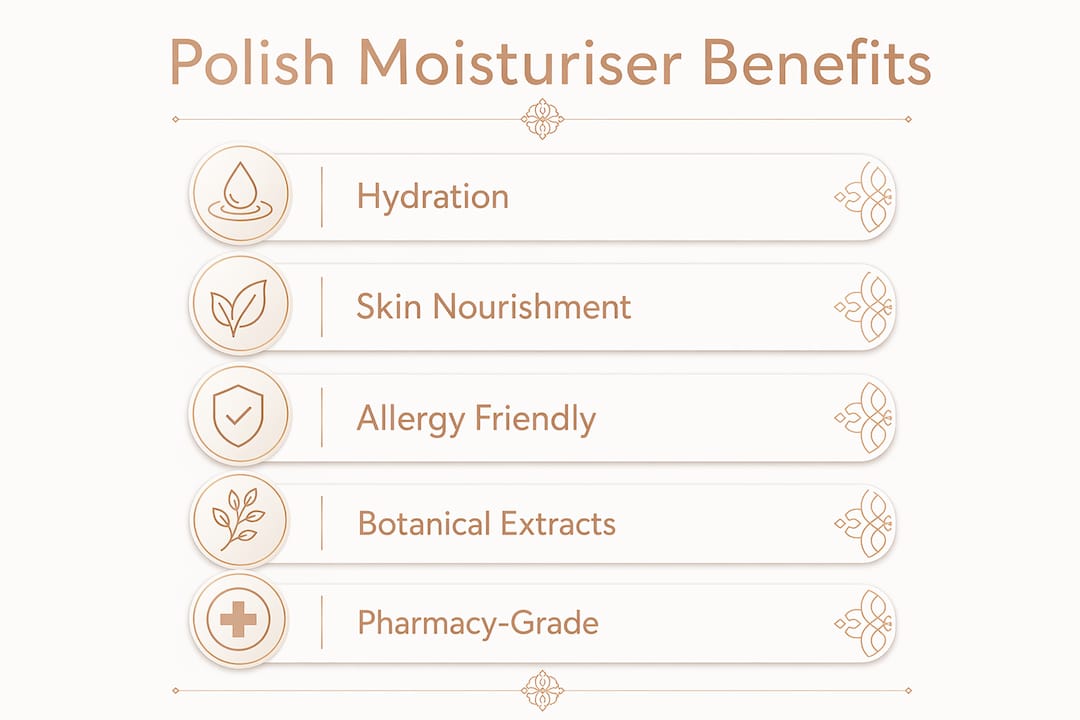
Polish moisturisers are defined by their pharmacy-grade formulations, EU-regulated ingredients, and a long tradition of combining botanical extracts with clinical science. If you want reliable skin hydration and nourishment without guesswork, Polish skincare products deliver consistent, predictable results. Brands such as Celia and Pharmaceris have built strong reputations across Europe precisely because their formulations meet the strict requirements of EU regulation 1223/2009, which sets some of the toughest safety and efficacy standards in the world. The Polish beauty industry is increasingly prominent in 2026, with export growth driven by consumer trust in these very standards. Understanding why use Polish moisturiser starts with knowing what goes into them.
Why use Polish moisturiser: ingredients and formulation standards
Polish moisturisers stand apart because of how they are formulated, not just what they contain. The three core ingredient categories in any effective moisturiser are emollients, humectants, and occlusives. Emollients such as shea butter and ceramides smooth the skin surface. Humectants like glycerin and hyaluronic acid draw water into the skin. Occlusives such as petrolatum and beeswax seal that moisture in. Polish formulations typically use all three categories in balanced combinations, which is what makes them effective for barrier repair.
What separates Polish products from many global alternatives is the pharmacy-grade standard applied during manufacturing. Pharmacy-grade Polish moisturisers use standardised ingredients, which means the concentration and purity of each active compound is controlled and consistent across batches. You get the same result from the same product every time. That predictability is rare in mass-market skincare.

Polish cosmetics also lack parabens and are mostly hypoallergenic, following clean beauty principles reinforced by EU regulation. This is not a marketing claim. It reflects a genuine formulation philosophy that prioritises skin tolerance over fragrance or shelf-life extension. The result is a product range that works for a broader range of skin types, including those prone to sensitivity.
Polish moisturisers also combine traditional botanical extracts with clinically tested actives. Ingredients like chamomile, calendula, and rose water appear alongside retinol, collagen peptides, and algae extracts. This blend of tradition and science is not accidental. It reflects decades of Polish cosmetic research that takes both heritage and evidence seriously.
Pro Tip: When reading a Polish moisturiser label, look for the INCI (International Nomenclature of Cosmetic Ingredients) list. The shorter and more recognisable the list, the closer the product is to pharmacy-grade quality.
How do Polish moisturisers benefit different skin types?
Matching a moisturiser to your skin type is the single most important factor in getting results. Polish moisturisers cover the full spectrum of skin needs, and the formulation variety available makes it straightforward to find the right fit.
-
Dry skin benefits most from rich creams and ointments. These deliver high concentrations of occlusives and emollients, which repair the skin barrier and prevent transepidermal water loss. Celia’s collagen and vitamin-enriched creams are a strong example, designed specifically for dry and mature skin that needs intense nourishment.
-
Sensitive skin requires fragrance-free, hypoallergenic formulations. Hypoallergenic Polish moisturisers reduce irritation and allergic reactions by avoiding common triggers such as synthetic fragrance, parabens, and alcohol. Brands like Pharmaceris and AA Oceanic produce dedicated sensitive skin lines that meet this standard.
-
Oily and acne-prone skin needs water-based lotions and gel creams. These are non-comedogenic, meaning they do not block pores or worsen breakouts. Water-based lotion formulations minimise follicular occlusion risk, which is the primary concern for anyone managing oily or acne-prone skin.
-
Mature skin benefits from anti-ageing actives combined with deep hydration. Collagen peptides, algae extracts, and vitamins A, C, and E appear frequently in Polish formulations targeting skin aged 40 and above. Celia’s collagen and algae range is a well-known example, offering lightweight hydration with visible anti-wrinkle results.
Choosing the right texture matters as much as choosing the right ingredients. Ointments suit very dry or cracked skin. Creams work for normal to dry skin. Lotions and gels suit oily or combination skin. Polish moisturisers are available in all these textures, which gives you genuine flexibility.
Pro Tip: Apply your Polish moisturiser within three minutes of washing your face. Skin absorbs active ingredients most effectively when it is still slightly damp, which maximises hydration.
Polish moisturisers versus other European skincare products
Polish moisturisers hold their own against other well-regulated European skincare products, and in several areas they have a clear edge. The comparison below highlights the key differences.
| Feature | Polish moisturisers | Other European moisturisers |
|---|---|---|
| Regulatory standard | EU regulation 1223/2009, pharmacy-grade compliance | EU regulation 1223/2009, varies by brand tier |
| Ingredient transparency | High, INCI-listed, minimal additives | Variable, often more complex formulations |
| Paraben-free | Consistently paraben-free across major brands | Increasingly paraben-free but not universal |
| Botanical ingredient use | Strong tradition of botanical actives | Present but less central to brand identity |
| Price point | Affordable, accessible luxury | Wide range, often higher for comparable quality |
| Clinical evidence | Heterogeneous but growing body of product data | More established clinical trial history |
The clinical evidence picture is worth addressing honestly. Polish moisturisers have documented benefits for skin hydration and barrier repair, with multiple product lines showing symptom relief in dry and inflammatory skin conditions. The evidence base is heterogeneous, meaning results vary across products and individuals. That is true of European skincare broadly, not just Polish products.
Where Polish moisturisers genuinely lead is ingredient transparency and value. You get pharmacy-grade formulations at prices that do not reflect a premium brand markup. For skincare enthusiasts who want clinical quality without paying luxury prices, that is a meaningful advantage. The growth of Polish cosmetics exports in 2026 reflects exactly this consumer recognition.
The one area where other European brands sometimes have an advantage is the depth of published clinical trial data. Established French or German dermocosmetic brands have longer histories of formal clinical testing. Polish brands are closing this gap, but it is fair to acknowledge it exists.
How to use Polish moisturisers effectively
Getting the most from a Polish moisturiser depends on how and when you apply it, not just which product you choose.
- Apply to clean skin. Moisturiser applied over dirt, sunscreen residue, or makeup cannot penetrate properly. Always cleanse first.
- Use the right amount. A pea-sized amount is sufficient for the face. Using more does not increase hydration and can cause congestion on oily skin.
- Layer correctly. Apply thinner, water-based products first (serums, toners), then your moisturiser, then any oil-based products or SPF on top. This follows the standard thin-to-thick layering rule.
- Adjust for the season. Oil-based creams are favoured in winter for their occlusive qualities, while lighter lotions and gel formulations suit summer use. Polish moisturisers are available in both textures, so switching between them seasonally is straightforward.
- Be consistent. Moisturiser works through cumulative daily use. Applying it twice daily, morning and evening, produces measurably better results than occasional use.
- Do not skip SPF in the morning. A moisturiser alone does not protect against UV damage. Apply a separate SPF over your Polish moisturiser during the day, or choose a product that combines both, such as Pharmaceris T SEBOSTATIC with SPF.
The most common mistake is choosing a moisturiser based on scent or texture alone. Polish moisturisers are formulated for function first. A fragrance-free cream that feels unremarkable may outperform a beautifully scented product when it comes to actual skin hydration and barrier support. Let the ingredient list guide your choice, not the packaging.
Key takeaways
Polish moisturisers deliver reliable skin hydration and nourishment through pharmacy-grade, EU-regulated formulations that combine botanical tradition with clinical science.
| Point | Details |
|---|---|
| Pharmacy-grade formulation | Polish moisturisers use standardised, EU-compliant ingredients for consistent, predictable results. |
| Skin type matching | Choose ointments for dry skin, lotions for oily skin, and fragrance-free creams for sensitive skin. |
| Paraben-free and hypoallergenic | Most Polish brands avoid parabens and synthetic fragrance, reducing irritation risk significantly. |
| Seasonal adjustment | Switch to richer, oil-based creams in winter and lighter gels or lotions in summer. |
| Value versus quality | Polish moisturisers offer pharmacy-grade efficacy at accessible price points, without luxury brand markups. |
Polish skincare: what I have observed after years of recommending it
I have been recommending Polish moisturisers to people with genuinely difficult skin for several years now, and the pattern I keep seeing is this: the results are quiet but consistent. There is no dramatic overnight transformation. What you get instead is skin that gradually stops reacting, stops flaking, and starts holding moisture properly. That is exactly what a good moisturiser should do.
What strikes me most about Polish skincare is the formulation discipline. The blend of traditional botanical ingredients with modern pharmaceutical standards produces products that feel considered rather than trend-driven. When a Polish brand includes chamomile or calendula, it is because those ingredients have a documented function in that formulation, not because they photograph well on Instagram.
The feedback I hear most often from people who switch to Polish moisturisers is surprise at how well fragrance-free products work. Many people assume that a product without scent must be clinical or unpleasant to use. Polish brands have largely solved this. The textures are elegant, the absorption is clean, and the results speak for themselves.
My honest view is that Polish moisturisers are underrated in the UK market. The Polish sensitive skin product range alone covers more skin conditions more thoughtfully than most mainstream British pharmacy shelves. If you have not tried them, you are likely paying more for less.
— Krzysztof
Polish moisturisers at M-shop: where to start
M-shop brings a carefully selected range of Polish moisturisers directly to UK customers, sourced from trusted Polish manufacturers and chosen for ingredient quality and proven results.
The Pharmaceris T SEBOSTATIC face cream is one of the strongest starting points for anyone with oily or acne-prone skin. It combines sebum-regulating actives with SPF protection in a lightweight, non-comedogenic formula. For mature or dry skin, the Celia Collagen and Algae cream delivers lightweight anti-ageing hydration with a clean, fragrance-free formula. M-shop operates as a family-run business, which means every product on the site has been personally vetted. Sales regularly offer up to 15% off, making pharmacy-grade Polish skincare genuinely accessible.
FAQ
What makes Polish moisturisers different from other brands?
Polish moisturisers are formulated to pharmacy-grade standards and comply with EU regulation 1223/2009, which controls ingredient safety and concentration. They consistently avoid parabens and synthetic fragrance, making them suitable for a wider range of skin types.
Does Polish moisturiser actually hydrate skin effectively?
Yes. Polish moisturisers use a combination of emollients, humectants, and occlusives that address hydration at multiple skin layers. Clinical evidence supports their effectiveness in improving skin hydration and supporting barrier repair, particularly in dry and sensitive skin conditions.
Are Polish moisturisers suitable for sensitive skin?
Polish moisturisers are among the best options for sensitive skin. Most major Polish brands produce hypoallergenic, fragrance-free formulations specifically designed to minimise irritation and allergic reactions.
How often should I apply a Polish moisturiser?
Apply twice daily, morning and evening, for best results. Consistent daily use produces measurably better hydration outcomes than occasional application.
Where can I buy Polish moisturisers in the UK?
M-shop stocks a curated range of Polish moisturisers sourced directly from Poland, including brands such as Celia and Pharmaceris, available for delivery across the UK.