



Polish face cream explained: ingredients and benefits
Polish face cream is a skincare product formulated with natural actives such as collagen peptides and marine algae to improve skin hydration, strengthen the barrier, and support firmness. The term “Polish face cream” refers to moisturisers and treatments produced by Polish cosmetic brands, a category better known in the industry as polska kosmetyka. These products have earned a strong reputation across Europe for combining evidence-backed ingredients with affordable pricing. M-shop stocks a curated range sourced directly from Poland, making them accessible to UK shoppers who want results without overpaying.
What natural ingredients are used in Polish face creams?
Polish face creams are distinguished by their use of biomimetic collagen peptides and marine algae extracts, both of which have measurable effects on skin health. These are not decorative label claims. Clinical data links them to specific, quantifiable improvements in hydration and barrier function.
Collagen peptides and their effect on skin
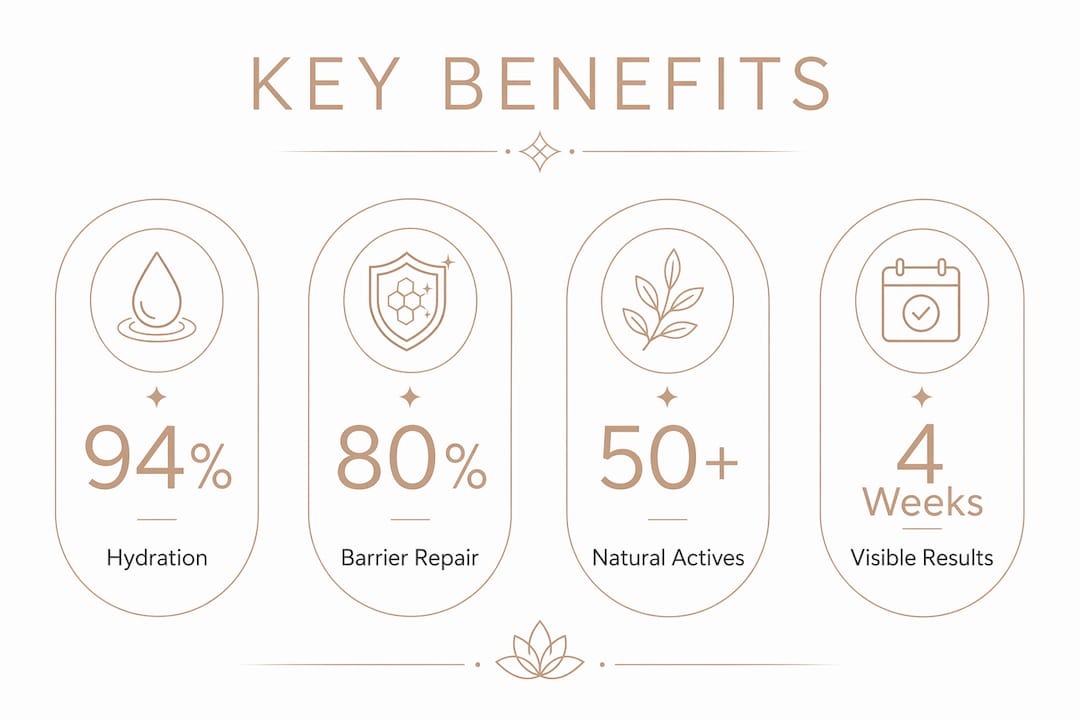
Biomimetic collagen tripeptides work by mimicking the skin’s own structural proteins, signalling cells to produce more collagen and reinforcing the moisture barrier from within. A clinical study found that a formulation containing 0.1% collagen tripeptide improved dryness by 74.6% immediately after application and by 93.7% after four weeks, with hydration levels rising by up to 72.5%. That is not a marginal improvement. It means a well-formulated collagen cream can meaningfully change how skin feels and behaves within a single month of consistent use. Hydrolysed collagen is also a permitted ingredient under EU Cosmetic Regulation, with recognised moisturising and smoothing functions confirmed by the SCCS, which matters for UK consumers buying Polish products post-Brexit.
Marine algae and the hydration circuit
Red algae extracts are among the most clinically interesting ingredients in modern Polish skincare. Sarcothalia C, a New Zealand red seaweed extract, increased Aquaporin-3 expression to 138% and ProCollagen I to 124%, delivering rapid hydration improvements of 52% at two hours and 58% at 24 hours, with firmness benefits lasting up to 14 days. Aquaporin-3 is the protein channel that moves water through skin cells. Raising its expression means the skin becomes genuinely better at hydrating itself, not just coated with moisture temporarily. Marine glycans in red algae also provide immediate surface moisturisation alongside longer-term biomarker-level benefits, which is why consistent use matters more than a single application.
| Ingredient | Primary benefit | Key mechanism |
|---|---|---|
| Biomimetic collagen tripeptide | Hydration, barrier repair | Signals collagen synthesis, reduces TEWL |
| Marine algae (Sarcothalia C) | Firmness, sustained hydration | Upregulates AQP3, boosts ProCollagen I |
| Hydrolysed collagen | Smoothing, moisturising | Surface film formation, humectant action |
Pro Tip: When reading a Polish face cream label, look for “collagen tripeptide” or “hydrolysed collagen” rather than just “collagen.” The molecular size determines whether the ingredient can interact with skin cells or simply sit on the surface.
How do Polish face creams support the skin barrier?
Skin barrier health is the foundation of effective moisturisation, and Polish face cream formulations are built around this principle. A healthy barrier reduces transepidermal water loss (TEWL), the process by which water evaporates through the skin’s outer layers. When TEWL is high, skin feels tight, dry, and reactive regardless of how much moisturiser you apply.
The role of barrier lipids
Ceramides, cholesterol, and free fatty acids are the three intercellular lipids that form the lamellar bilayer structure of the skin barrier. An imbalance in any of these leads to increased TEWL and impaired hydration retention. Polish creams that include these lipids alongside collagen and algae are addressing the barrier at a structural level, not just adding surface moisture. The cornified envelope’s structural completeness directly correlates with barrier resilience, meaning that defects in its protein scaffold increase water loss and reduce the skin’s ability to respond to topical actives.
Why humectants alone are not enough
Humectants attract water but require an occlusive layer to prevent net water loss. Without a sealing agent, a humectant-only cream can actually draw moisture out of deeper skin layers and release it into dry air, worsening dryness over time. This is a formulation principle that well-made Polish creams get right. They typically combine humectants such as glycerin or hyaluronic acid with emollients and occlusives in oil-in-water emulsion formats, creating a layered effect that hydrates and seals simultaneously.
- Humectants: glycerin, hyaluronic acid, collagen peptides (attract water)
- Emollients: plant oils, fatty alcohols (smooth and soften)
- Occlusives: beeswax, shea butter, petrolatum (seal moisture in)
- Barrier lipids: ceramides, cholesterol, free fatty acids (structural repair)
Pro Tip: If your skin feels tight or reactive after applying a collagen or algae cream, this signals inadequate occlusion. Try applying a thin layer of a richer cream or facial oil over the top to seal the active ingredients in place.
What are the types of Polish face creams?
Types of Polish face creams range from lightweight aqueous serums to rich ointment-style treatments, and choosing the right one depends on your skin type, age, and the season. Understanding the differences prevents the common mistake of using a product that works against your skin’s current condition.
Lightweight vs. rich formulations
Lightweight aqueous formulations, often labelled as serums or gel-creams, suit oily, combination, or acne-prone skin. They deliver active ingredients without adding excess lipid content. Rich cream formulations with higher concentrations of emollients and occlusives are better suited to dry, mature, or barrier-compromised skin, particularly in winter. Lightweight aqueous collagen serums appeal in humid climates, while richer formulations are preferred in dry, cold seasons. The UK’s variable climate means many people benefit from switching between a lighter cream in summer and a richer one from October through March.
Specialist formats: eye creams and masks
Polish eye cream products are a distinct subcategory, formulated with lower concentrations of actives and finer textures to suit the delicate periorbital area. Polish eye cream application technique matters here: use your ring finger to tap (not rub) a small amount along the orbital bone, avoiding direct contact with the lash line. Polish face mask types explained simply are leave-on treatments that deliver a concentrated dose of actives over 10 to 20 minutes, making them useful for weekly barrier repair or intensive hydration sessions.
| Skin type | Recommended formulation | Seasonal note |
|---|---|---|
| Oily or combination | Lightweight gel-cream or serum | Use year-round |
| Normal | Medium-weight cream | Switch to richer formula in winter |
| Dry or mature | Rich cream or ointment | Prioritise in autumn and winter |
| Sensitive | Fragrance-free, ceramide-rich cream | Avoid heavy occlusives if reactive |
Polish anti-ageing creams, including types of Polish anti-ageing creams such as collagen-rich day creams and firming night treatments, are among the most popular categories at M-shop. The Celia range, for example, offers collagen with marine actives in a lightweight format and a rich anti-wrinkle version for dry and mature skin, giving you a direct comparison of formulation weights within the same product family.
How to use Polish face creams in your skincare routine
A Polish skincare routine follows a clear logic: cleanse, treat, hydrate, seal. This sequence maximises the absorption of active ingredients and prevents moisture loss at each stage. The skincare routine order matters because applying a rich cream before a serum blocks the serum’s actives from reaching the skin.
- Cleanse with a gentle, pH-balanced cleanser to remove impurities without stripping barrier lipids.
- Tone or mist with a hydrating toner to prime skin and increase surface moisture before actives.
- Apply serum (if using one) containing collagen peptides or algae extracts. Allow 60 seconds to absorb.
- Apply eye cream using the ring finger tap technique along the orbital bone.
- Apply face cream in upward motions, covering the face, neck, and décolleté.
- Seal with SPF in the morning, or a facial oil at night if skin is very dry.
Pro Tip: Apply your Polish collagen cream to slightly damp skin, not dry skin. The residual moisture gives humectants something to bind to, improving absorption and reducing the chance of the cream sitting on the surface rather than penetrating.
Exfoliation once or twice a week removes the dead cell layer that can block actives from reaching live skin. After exfoliating, the skin barrier is temporarily more permeable, making it an ideal moment to apply a richer Polish cream or a collagen-based mask. For a full guide to building an affordable routine with Polish products, M-shop’s blog covers product layering in practical detail.
Key takeaways
Polish face creams deliver measurable hydration and barrier benefits when formulated with collagen tripeptides, marine algae, and barrier lipids working together rather than in isolation.
| Point | Details |
|---|---|
| Collagen peptides work clinically | A 0.1% collagen tripeptide formulation improved dryness by 93.7% after four weeks in clinical testing. |
| Algae actives have lasting effects | Marine algae like Sarcothalia C deliver hydration gains that persist for up to 14 days after application. |
| Barrier lipids are non-negotiable | Ceramides, cholesterol, and free fatty acids must be present to prevent TEWL and retain moisture. |
| Formulation type must match skin type | Lightweight serums suit oily skin; rich creams suit dry or mature skin, especially in winter. |
| Routine order determines efficacy | Applying cream before serum blocks active absorption; always layer thinnest to thickest. |
Why I think most people underestimate Polish skincare
I have spent years sourcing and recommending Polish cosmetics to UK customers, and the pattern I see most often is this: people try a collagen cream, feel underwhelmed after a week, and conclude that topical collagen does not work. The problem is almost never the ingredient. It is the formulation around it and the way it is being used.
The clinical evidence for collagen tripeptides is genuinely strong. A 93.7% improvement in dryness after four weeks is not a marketing claim. It is a measured outcome from a controlled study. But that result depends on the full formulation doing its job, including the occlusives and barrier lipids that seal the collagen’s effects in place. A collagen cream without adequate barrier support is like filling a bucket with a hole in it.
What I find most interesting about the best Polish anti-ageing creams is that they were built around this principle long before it became fashionable in Western skincare marketing. Polish cosmetic culture has always prioritised practical results over minimalist aesthetics. The Celia range is a good example: it combines collagen with complementary actives rather than relying on a single hero ingredient. That is the right approach, and the clinical data on algae biomarkers like AQP3 upregulation confirms why it works.
My honest advice: judge a Polish face cream on its full ingredient list, not its headline claim. If it contains collagen peptides, a marine active, and a proper occlusive, you have a formulation worth trying consistently for at least four weeks.
— Krzysztof
Discover authentic Polish face creams at M-shop
M-shop is a family-run UK retailer that sources Polish cosmetics directly from Poland, which means you get genuine formulations at prices that reflect the brand’s commitment to accessible skincare.

The Celia Collagen + Algae 40+ cream combines marine actives with collagen peptides in a lightweight formula suited to daily use from your forties onwards. For drier or more mature skin, the Celia Collagen + Vitamines 40+ delivers a richer texture with the same evidence-backed actives. M-shop also stocks the Celia Collagen + Olive semi-rich cream for those who want a mid-weight option. Explore the full range of Polish skincare products at M-shop, where selected lines carry up to 15% off during sale periods.
FAQ
What is Polish face cream?
Polish face cream is a moisturiser produced by Polish cosmetic brands, typically formulated with natural actives such as collagen peptides, marine algae, and barrier lipids. These products are known for combining clinical efficacy with affordable pricing.
Does topical collagen in face cream actually work?
Yes, when formulated correctly. A clinical study showed that 0.1% biomimetic collagen tripeptide improved skin hydration by up to 72.5% and reduced dryness by 93.7% after four weeks, with no adverse effects reported.
What types of Polish face creams are available?
Types of Polish face creams include lightweight gel-creams and serums for oily skin, medium-weight day creams for normal skin, rich anti-ageing creams for dry or mature skin, specialist eye creams, and leave-on masks for intensive treatment.
How do I apply Polish eye cream correctly?
Polish eye cream application technique involves using your ring finger to gently tap a small amount along the orbital bone. Avoid rubbing or applying directly to the lash line, as the periorbital skin is thinner and more reactive than the rest of the face.
Are Polish face creams safe for sensitive skin?
Most Polish face creams use ingredients permitted under EU Cosmetic Regulation, including hydrolysed collagen, which has no safety concerns flagged by the SCCS. For sensitive skin, choose fragrance-free formulations with ceramides and avoid products with high concentrations of exfoliating acids.