



Bronzer before or after foundation: rules and routines
Powder bronzer goes after foundation and setting powder. Cream or liquid bronzer goes before setting powder, either directly over primed skin or as underpainting beneath a thin layer of foundation. That single rule, based on bronzer formula, covers most situations you will encounter.
- Powder bronzer: apply after foundation, concealer, and a light dusting of setting powder
- Cream or liquid bronzer: apply before setting powder; use as underpainting (under foundation) for a lit-from-within finish, or over foundation before you set
- Underpainting exception: cream bronzer placed before foundation gives a seamless, skin-like warmth that powder cannot replicate
- Key technique note: tap or stipple product onto skin rather than swiping; swiping lifts foundation regardless of formula
The rest of this guide breaks each sequence down step by step, covers placement, fixes common mistakes, and gives three timed routines you can copy tonight.
Key takeaways
Powder bronzer belongs after foundation and setting powder; cream and liquid bronzers go before setting powder, either as underpainting or blended over bare skin.
| Point | Details |
|---|---|
| Powder bronzer order | Apply after foundation, concealer, and a light setting powder for best grip and finish. |
| Cream or liquid order | Apply before setting powder; use underpainting under a sheer foundation for a seamless glow. |
| Technique matters | Tap or stipple product onto skin; swiping lifts foundation regardless of bronzer formula. |
| Placement rule | Apply bronzer to high points where sun naturally hits; keep hollows for contour only. |
| M-shop skin prep | Celia collagen moisturisers from M-shop create a smooth, compatible base for any bronzer formula. |
Table of Contents
- Should you apply bronzer before or after foundation?
- How to apply bronzer without disturbing your foundation
- Where should bronzer go on your face?
- Common bronzer mistakes and how to fix them
- Three quick routines you can copy
- Which tools and products work best for bronzing?
- The rules are simpler than they look
- Polish skincare that preps your skin for bronzing
- Sources
Should you apply bronzer before or after foundation?
The answer depends entirely on your bronzer formula. Powder products need a smooth, set surface to grip; cream and liquid formulas blend most naturally into bare or lightly primed skin. Applying a powder bronzer directly onto fresh liquid foundation drags the base and creates patchiness. Applying a cream bronzer over a fully set powder face can look chalky and sit on top rather than melt in.
Step-by-step order for powder bronzer
- Cleanse and moisturise
- Apply primer (optional but recommended for oily skin)
- Apply foundation
- Apply concealer where needed
- Dust a light setting powder over the face
- Apply powder bronzer to the high points
- Add blush, then highlight
- Finish with a setting spray if desired
Step-by-step order for cream or liquid bronzer
- Cleanse and moisturise
- Apply primer if using
- Warm cream bronzer on the back of your hand, then stipple onto the face
- Apply a thin, sheer layer of foundation or tinted moisturiser over the top (for underpainting) OR blend bronzer over bare skin and apply foundation around it
- Apply concealer
- Set with a light powder only where needed (T-zone, under eyes)
- Add blush and highlight
- Finish with setting spray
Underpainting is the technique of placing cream bronzer strategically before foundation. Pros use it for a natural, lit-from-within glow because the foundation sheers out the warmth rather than sitting on top of it. It works best with a light-coverage or sheer foundation applied with a damp sponge.
| Powder bronzer | Cream or liquid bronzer | |
|---|---|---|
| When to apply | After foundation and setting powder | Before setting powder; under or over foundation |
| Best finish | Matte to satin, buildable | Dewy, skin-like, seamless |
| Tools to use | Fluffy angled brush | Fingers, damp sponge, stippling brush |
| Common pitfall | Applying before setting powder (slides off) | Swiping over foundation (lifts base) |
Pro Tip: Warm cream and liquid bronzers on the back of your hand before applying to your face. This softens the product, makes it easier to blend, and prevents patchy application.
How to apply bronzer without disturbing your foundation
The most common reason foundation lifts during bronzer application is a swiping motion. Stippling or tapping preserves the base because you are pressing product in rather than dragging it across the surface.
- Let foundation dry fully before layering anything over it; 2–3 minutes is usually enough for liquid formulas
- Knock excess product off your brush before touching your face; too much product on the brush is the fastest route to over-application
- Build in light layers rather than loading colour in one pass
- Use the right tool for the formula: a fluffy angled brush for powder bronzer, a damp sponge or fingers for cream and liquid
Pro Tip: Match your product bases. A silicone-based bronzer over a water-based foundation tends to separate and look patchy. Check the first few ingredients on both products; if one lists dimethicone and the other lists water as the primary base, expect friction.
For readers who want to understand how skincare layering affects the surface your makeup sits on, the principle is the same: compatible formulas bond; incompatible ones slide.
Where should bronzer go on your face?
Bronzer’s job is to mimic where the sun naturally catches your skin: the forehead hairline, the bridge of the nose, the tops of the cheekbones, and the chin. Placing bronzer in the hollows of the cheeks is one of the most common errors; that is where contour belongs, and bronzer’s warm tone in that area reads as muddy rather than sculpted.
Bronzer vs contour vs highlight at a glance:
- Bronzer: high points (forehead, nose bridge, cheekbone tops, chin) for warmth
- Contour: hollows beneath cheekbones, sides of nose, jawline for shadow
- Highlight: brow bone, cupid’s bow, inner corners of eyes, highest point of cheekbone for light
Face-shape placement notes
- Round face: concentrate bronzer at the temples and hairline; keep the centre of the face lighter to add length
- Oval face: standard high-point placement works well; no major adjustments needed
- Square face: soften the jaw corners with bronzer blended down the neck
- Long face: apply bronzer across the forehead and chin to add width rather than length
Always blend bronzer into the hairline, along the jaw, and down onto the neck. A visible line where your face colour ends and your neck begins is the giveaway of rushed application.
Bronzer dos and don’ts:
- Do use a shade no more than two tones deeper than your natural skin tone
- Do blend edges thoroughly with circular motions
- Don’t apply bronzer under the cheekbones where contour sits
- Don’t skip the neck; blending down prevents a mask-like contrast
Pro Tip: A light dusting of bronzer across the eyelids and the tip of the nose ties the whole face together and makes the warmth look genuinely sun-kissed rather than applied.
Common bronzer mistakes and how to fix them
Mistakes to watch for:
- Wrong shade: too orange usually means the undertone is too warm for your skin; too ashy means the shade is too cool or grey
- Bronzer in the hollows: adds muddy warmth where shadow should be; move it up to the high points
- Over-application: a heavy hand deposits too much colour in one pass; powder bronzer is particularly hard to subtract once it is on
- Swiping motion: drags and lifts foundation; switch to tapping
- Texture mismatch: silicone over water (or vice versa) causes separation and patchiness
Quick fixes:
- Remove excess powder bronzer with a clean fluffy brush using light circular motions
- Dust translucent setting powder over an over-applied area to diffuse intensity
- Blend a cream bronzer that has gone patchy with a damp sponge using gentle pressing motions
- Correct an orange tone by layering a cooler contour powder lightly over the top
- If foundation has lifted significantly, the cleanest fix is a light re-application of foundation over the affected area rather than trying to blend over disturbed product
Beginner mistakes most often come down to shade selection and placement. Getting those two things right removes most of the troubleshooting.
Three quick routines you can copy
1. Everyday natural (5–7 minutes)
- Apply a lightweight foundation or tinted moisturiser with a damp sponge
- Conceal where needed
- Dust a light setting powder over the T-zone
- Apply powder bronzer to the high points with a fluffy angled brush
- Add a sheer blush and a light highlight to the cheekbone
Tools: damp sponge, fluffy bronzer brush
2. Evening glam (12–20 minutes)
- Prime, then apply full-coverage foundation
- Conceal thoroughly; bake under the eyes if desired
- Set the whole face with setting powder
- Apply powder bronzer with a precise angled brush; build the colour in two passes
- Add contour to the hollows, blush, and a high-impact highlight
- Dust bronzer lightly across the eyelids to tie the look together
Tools: foundation brush, damp sponge, angled bronzer brush, fan brush for highlight
3. Underpainting for a lit-from-within finish (10–15 minutes)
- Moisturise and prime
- Warm cream bronzer on the back of your hand, then stipple it onto the high points of the face
- Apply a sheer or light-coverage foundation over the top with a damp sponge; the bronzer shows through as depth
- Conceal only where necessary
- Set lightly with translucent powder at the T-zone only
- Add blush and a subtle highlight
Tools: fingers or stippling brush for bronzer, damp sponge for foundation
Pro Tip: For the underpainting routine, mix a drop of liquid bronzer into your moisturiser before applying. It creates an all-over warmth that makes the whole technique look more cohesive.
Which tools and products work best for bronzing?
Brush types and what they do
- Fluffy angled brush: the standard for powder bronzer; picks up product and deposits it precisely on high points
- Dense buffing brush: good for blending powder bronzer into the hairline and jaw
- Stippling brush: ideal for cream and liquid bronzers over foundation; the split fibres press product in without dragging
- Flat brush: useful for precise underpainting placement before foundation
- Damp sponge: the most forgiving tool for blending cream bronzers; softens edges and prevents streaks
Choosing by skin type and finish
- Oily or combination skin: powder bronzers last longer and do not add slip to an already-active surface
- Dry skin: cream and liquid formulas blend into the skin rather than sitting on top; they also add a natural-looking dewiness
- Dewy finish goal: cream or liquid bronzer, applied under or over a sheer foundation
- Matte finish goal: powder bronzer over a set base, finished with a light setting spray
For UK shoppers, multi-use products (bronzer that doubles as eyeshadow or contour) are worth considering for travel and everyday use. If you have sensitive skin, check ingredient lists for fragrance and alcohol, which can irritate reactive complexions. A skincare routine order that prioritises barrier repair before makeup application makes every formula perform better.
M-shop stocks the Paese bronzing powder with coconut oil, a pressed powder that works well over a set base, and the Paese Long Cover Foundation for dry and normal skin, which pairs naturally with cream bronzer techniques.
For readers interested in chemical-free skincare routines as a base before makeup, natural-ingredient preparations tend to be compatible with both water-based and cream bronzer formulas.
The rules are simpler than they look
Most people overthink the bronzer question. Once you know your formula, the sequence almost decides itself: powder sits on top of a set face, cream melts into bare or lightly covered skin. The underpainting technique sounds advanced, but it is genuinely forgiving once you try it with a sheer foundation and a damp sponge. The bigger gains come from placement and motion, not from finding a perfect product. Tap rather than swipe, keep bronzer on the high points, and blend into the neck. Those three habits fix the majority of bronzer problems before they start.
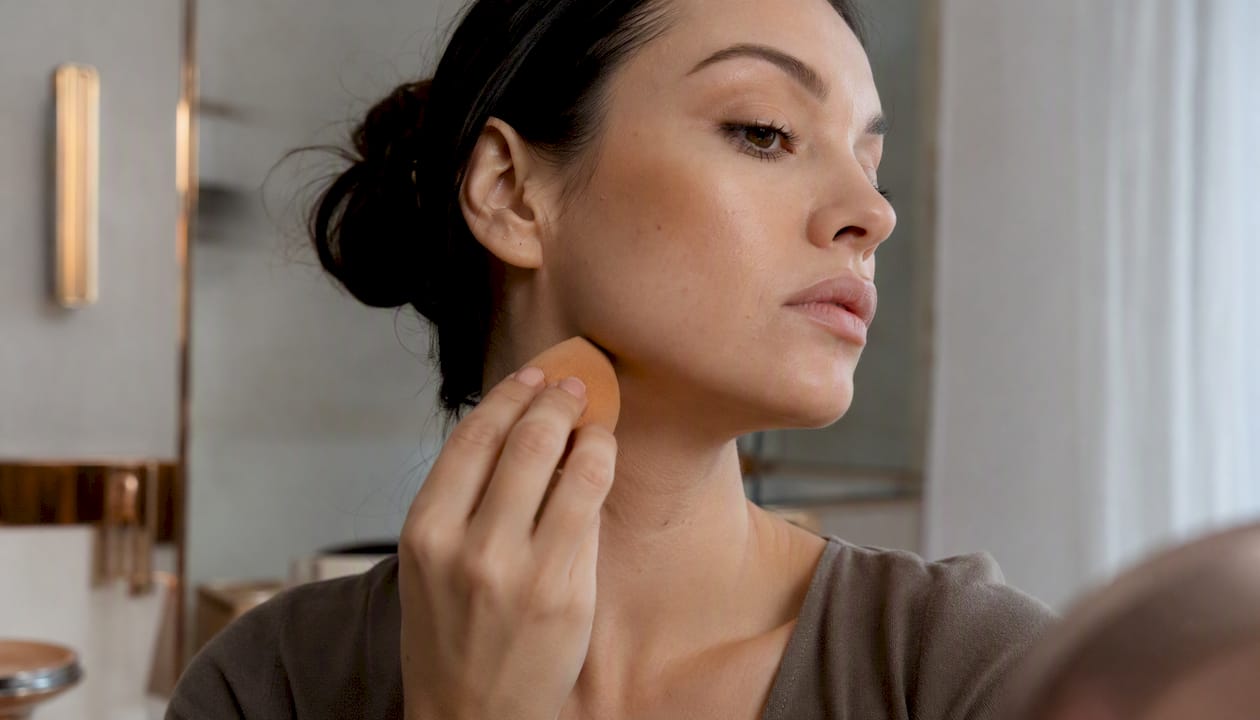
Polish skincare that preps your skin for bronzing
A well-moisturised base makes every bronzer formula perform better. Dry patches catch powder bronzer and make it look uneven; dehydrated skin breaks up cream formulas before you can blend them.

M-shop stocks the Celia Collagen + Algae Lightweight Moisturising Cream, a Polish-made skin-prep moisturiser that absorbs quickly and leaves skin smooth without a greasy residue. It works as a standalone base before primer and foundation, giving cream bronzers a surface they can actually melt into. For drier skin types, the Celia Collagen + Olive Semi-Rich Cream provides more nourishment without compromising the finish. Browse the full range at M-shop and use the current sale pricing to stock up on skin-prep essentials before your next bronzing routine.
Sources
- How to Use Bronzer for a Natural Glow, According to Pros
- Makeup
- How To Apply Bronzer: A Pro MUA Guide 2026
- How to apply bronzer like a pro and the secret to faux a facelift
- Where to apply bronzer