



Cold cream still relevant: why this classic cleanser endures
Cold cream is still relevant, full stop. It works as a gentle, oil-based first cleanse that dissolves makeup and sebum without stripping the skin, and it doubles as a moisturiser, mask and shaving balm. Dermatologists still reach for it, and formulation science backs up why.
- Dissolves oil-based grime: heavy makeup, sunscreen and sebum lift away without harsh surfactants.
- Protects the barrier: its occlusive finish locks in moisture rather than washing it out.
- Does more than one job: cleanser, overnight mask, and hand or lip balm, all from one jar.
Dermatologists such as Dr Joshua Zeichner have recommended cold cream for countering dryness and shielding the skin barrier from harsh environmental stress, framing it as a genuine modern skincare staple rather than a relic.
Key Takeaways
Cold cream remains relevant because its water-in-oil structure cleanses, moisturises and soothes in a single step that modern formulas still struggle to replicate cheaply.
| Point | Details |
|---|---|
| Still a valid first cleanse | Its lipophilic base dissolves makeup, SPF and sebum without stripping the skin. |
| Multi-purpose by design | Works as a cleanser, overnight mask, and hand or lip balm from one product. |
| Check comedogenicity | Acne-prone skin should look for non-comedogenic, fragrance-free formulas specifically. |
| Pairs well with actives | Gentler removal supports skin using retinoids or acids without added irritation. |
| M-shop offers a modern fit | Celia’s Collagen semi-rich creams give dry or mature skin a similar occlusive, barrier-supporting finish. |
Table of Contents
- What is cold cream and why is it called that?
- Why cold cream still fits modern skincare routines
- The ingredients and chemistry behind how cold cream works
- How cold cream compares with cleansing balms and other oil cleansers
- How to use cold cream in your routine
- Pros, cons and safety considerations
- How to choose the right cold cream
- Where to find a modern cold-cream style cream at M-shop
- Sources
What is cold cream and why is it called that?
Cold cream is a water-in-oil emulsion: oil forms the outer phase, with water suspended inside it in tiny droplets. That structure is the whole point. Oil-based cleansers dissolve oil-based grime, and the water phase gives the product a lighter, coolant-like feel on application.
The name comes from sensation, not temperature. As the water phase evaporates off the skin, it pulls heat with it, producing that distinctive cooling snap the moment you smooth it on. Formulation reviews note this cooling effect is actually a sensory marker of a properly built emulsion.
- Traditional base: oils, beeswax and water, largely unchanged in principle for nearly 2,000 years.
- Galenic origins: the formula is credited to the Greek physician Galen, making it one of skincare’s oldest continuously used recipes.
- Modern versions keep the same water-in-oil logic, just with updated oils and emulsifiers.
Why cold cream still fits modern skincare routines
The mechanism explains the relevance. Cold cream is lipophilic, meaning it’s drawn to and dissolves other oils on contact, which is exactly how it lifts off waterproof mascara, SPF and the day’s accumulated sebum before a single drop of water touches your face. That’s the same “like dissolves like” logic behind every oil cleanser and cleansing balm on the market today, cold cream just got there first.
- First step in a double cleanse, breaking down makeup and sunscreen so a second, water-based cleanser can finish the job.
- Overnight hydrating mask, applied to slightly damp skin for deeper oil-phase penetration.
- Soothing balm for dry patches, cuticles or wind-chapped cheeks.
- Gentle shaving aid that softens hair and cuts friction without foaming agents.
“Cold cream is like a big hug for your skin,” one dermatologist commentary put it, describing its rare ability to cleanse and moisturise in a single step, according to Town & Country.
Pro Tip: If you’re using retinoids or a concentrated acid, cleanse with cold cream first. Its occlusive, low-friction texture protects the barrier during cleansing, which can meaningfully cut the stinging and flaking that come with harsher foaming washes.
The ingredients and chemistry behind how cold cream works
Every jar of cold cream is built from four working parts, and knowing what each one does helps you read a label properly instead of guessing.
- Oils and emollients (mineral oil, almond oil, jojoba): sit on the skin’s surface, sealing in moisture and softening texture.
- Waxes (traditionally beeswax): hold the water-in-oil emulsion together and give the product its characteristic thick, scoopable texture.
- Humectants (glycerin): pull water into the upper skin layers, adding hydration rather than just sealing existing moisture in.
- Preservatives and stabilisers: keep the water phase from spoiling, with plant oils and squalane increasingly used as gentler alternatives to older mineral-oil-heavy bases.
The water-in-oil structure is what separates cold cream from a standard oil-in-water lotion. Because oil is the outer phase, the product sits on skin longer before it fully absorbs, which is why formulation researchers link W/O emulsions to a non-greasy finish after removal despite the rich feel on application.
Mineral oil formulas tend to be more shelf-stable, while plant oil versions bring a more nutritive fatty acid profile, a trade-off worth knowing before you commit to a jar.
How cold cream compares with cleansing balms and other oil cleansers
Cold cream, cleansing balms and lighter facial oils all work on the same oil-dissolves-oil principle, but they land very differently on skin.
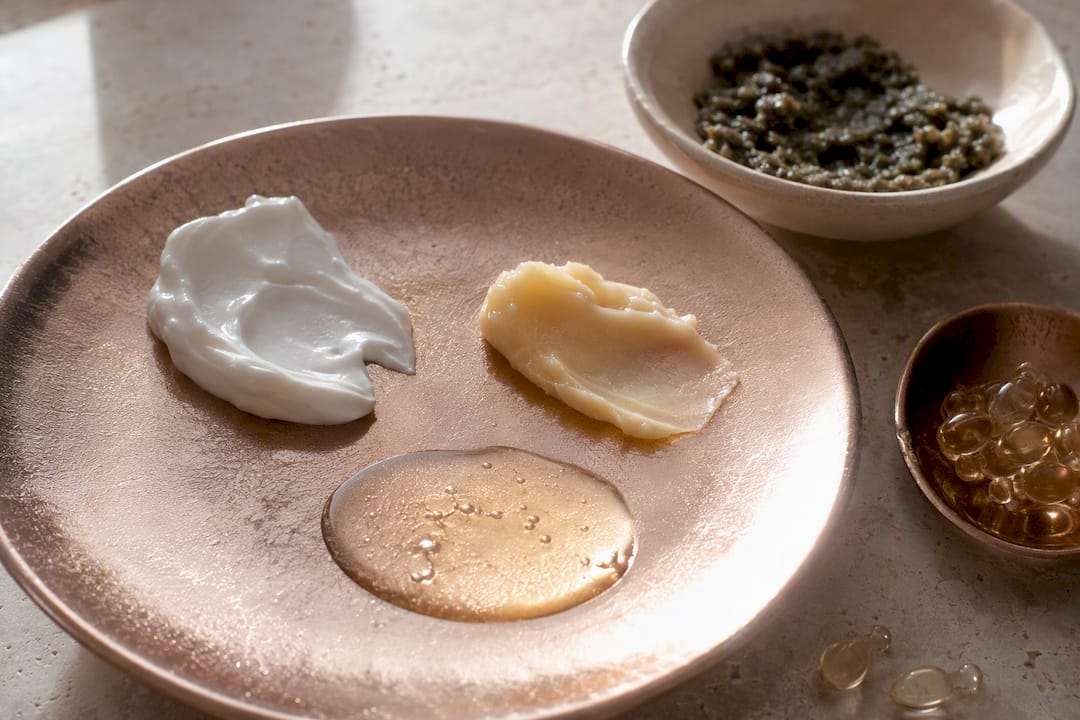
Cold cream sits at the richer, more occlusive end: best for dry, mature or weather-stressed skin, with a thick, W/O texture that leaves a slight residual film unless properly emulsified with water on removal. Cleansing balms, often oil-in-wax or oil-in-silicone rather than true W/O, tend to rinse cleaner and suit combination skin that wants makeup removal without the lingering richness. Straight facial oils remove makeup fastest but offer the least standalone moisturising benefit once rinsed. Comedogenic risk depends far more on the specific oil used than the format itself, so a cold cream with heavier plant butters can clog pores just as readily as a poorly formulated balm.
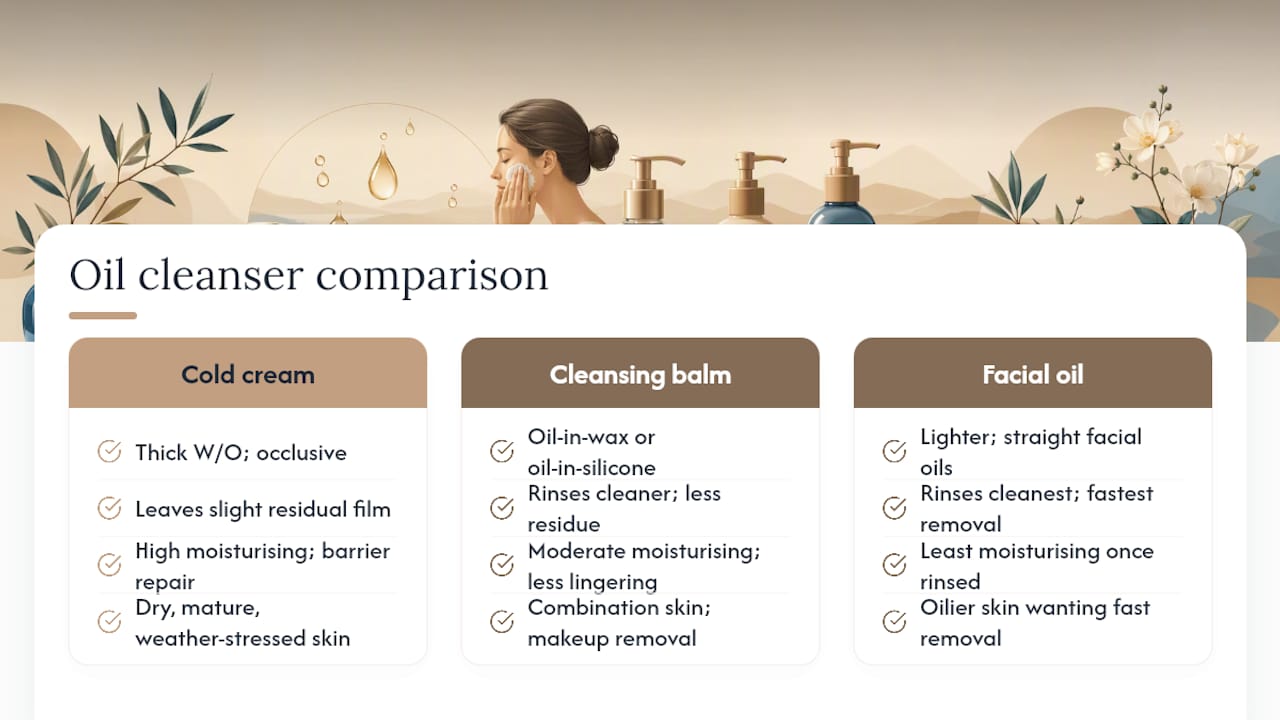
Choose cold cream when your priority is barrier repair alongside cleansing. Choose a lighter balm or oil when you want fast makeup removal with minimal residue, something balm cleansers tend to handle well for oilier skin types.
How to use cold cream in your routine
- First cleanse: massage a coin-sized amount over dry skin for 30 to 60 seconds, working into makeup and sunscreen before adding any water.
- Double-cleanse pairing: remove with a warm, damp muslin cloth, then follow with a gentle water-based or micellar cleanser to lift any remaining residue.
- Overnight mask: apply a thin layer to slightly damp, clean skin before bed for deeper hydration by morning.
- Spot treatment: dab onto cuticles, elbows, lips or wind-chapped cheeks as needed throughout the day.
Pro Tip: Pair cold cream cleansing with retinoid or acid nights specifically. Its gentle removal method reduces the irritation that harsher foaming cleansers can cause when your barrier is already compromised by actives.
Patch-test any new formula on your inner arm first, keep it away from the eye area if it contains fragrance, and check the label for non-comedogenic claims if you’re acne-prone.

Pros, cons and safety considerations
Pros:
- Strong barrier protection and moisture retention.
- Effective at removing heavy, oil-based makeup and SPF.
- Genuinely multi-purpose: cleanser, mask, balm, shaving aid.
- Well suited to dry, sensitive or mature skin.
Cons:
- Heavier oils in some formulas can clog pores, particularly on acne-prone skin.
- Fragrance and certain plant extracts carry allergen risk for sensitive users.
- The rich finish can feel too heavy for oily or combination skin without careful removal.
Selecting a formula with a stable, well-tested pH and spreadability profile matters more than brand history. Formulation reviews of herbal and plant-based cold creams have found they can meet the pH and stability benchmarks needed for safe daily use, provided they’re properly preserved.
How to choose the right cold cream
Not every jar labelled “cold cream” is built the same way, so a quick label check saves you a disappointing purchase.
- Check for non-comedogenic labelling if you’re prone to breakouts.
- Favour fragrance-free formulas if you have reactive or sensitised skin.
- Note the oil source: plant oils like jojoba and squalane offer more nutritive value, while mineral oil offers more stability.
- Look at the preservative system: it should be robust enough to protect the water phase without relying on heavy synthetic fragrance.
- Consider packaging: glass jars and recyclable tubs reduce plastic waste over time.
Many modern brands have moved back towards plant oils and updated emulsifiers, reworking the traditional recipe to fit clean-beauty expectations without losing the occlusive benefits that made it useful in the first place. For a semi-rich option built along similar lines, a collagen-enriched cream for dry, mature skin is worth comparing against a classic cold cream jar.
A publisher’s note on why we still stock this
At M-shop, we pay close attention to formulation, not just marketing claims. That’s part of why our Polish skincare range leans on ingredients like collagen and algae rather than filler oils. Our family-run selection, including the Celia Collagen range, reflects the same principle that made cold cream last two millennia: simple, well-chosen ingredients that actually do the job.
Where to find a modern cold-cream style cream at M-shop
If the appeal of cold cream is a rich, barrier-supporting formula that works overtime, that’s precisely the gap a good semi-rich moisturiser fills once your cleanse is done. Dry, mature or weather-stressed skin responds well to a cream built around collagen and nourishing oils rather than mineral filler.

The Celia Collagen + Olive 40+ semi-rich anti-wrinkle cream follows that same logic: a heavier, occlusive texture designed to lock in moisture after cleansing, much like a cold cream’s finish, but formulated specifically for mature skin that needs more than a light lotion. For fragrance-sensitive skin, the Celia Collagen + Goat Milk 40+ version drops the fragrance while keeping the same semi-rich base. Browse either product page, check the ingredient list against your own skin’s needs, and add it to your evening routine tonight.
Sources
- Cold Cream benefits and popularity | Town & Country
- Cold cream | Wikipedia
- Formulation and evaluation of cold cream | IJPS journal