



Why Polish cream textures feel richer: the science explained
Polish cream textures are richer because they combine a precise balance of oils, emulsifiers, opacifying agents, and polymers that deliver sustained hydration and a genuinely indulgent feel on the skin. This is not simply a matter of adding more oil. The richness comes from a formulation architecture that controls how a cream spreads, absorbs, and behaves on the skin over time. Understanding why Polish cream textures richer than many alternatives means looking at the science behind each layer of that architecture. M-shop sources these carefully engineered formulations directly from Poland, bringing that expertise to skincare enthusiasts across the UK.
Why do Polish cream textures feel richer than other creams?
The richness of a Polish cream is defined by the interplay of its oil phase, water phase, and the ingredients that hold them together. Emollients, humectants, and occlusives work in concert to create a texture that feels dense, spreads smoothly, and leaves skin comfortable rather than tight.
The oil-to-water ratio is the starting point. A higher proportion of oils and waxes produces a thicker, more protective cream. Fat type and melting profile strongly affect thickness and spreadability, with fats that have higher melting points creating firmer, less spreadable textures that feel richer at room temperature. This is why a Polish night cream feels noticeably denser than a daytime gel moisturiser.
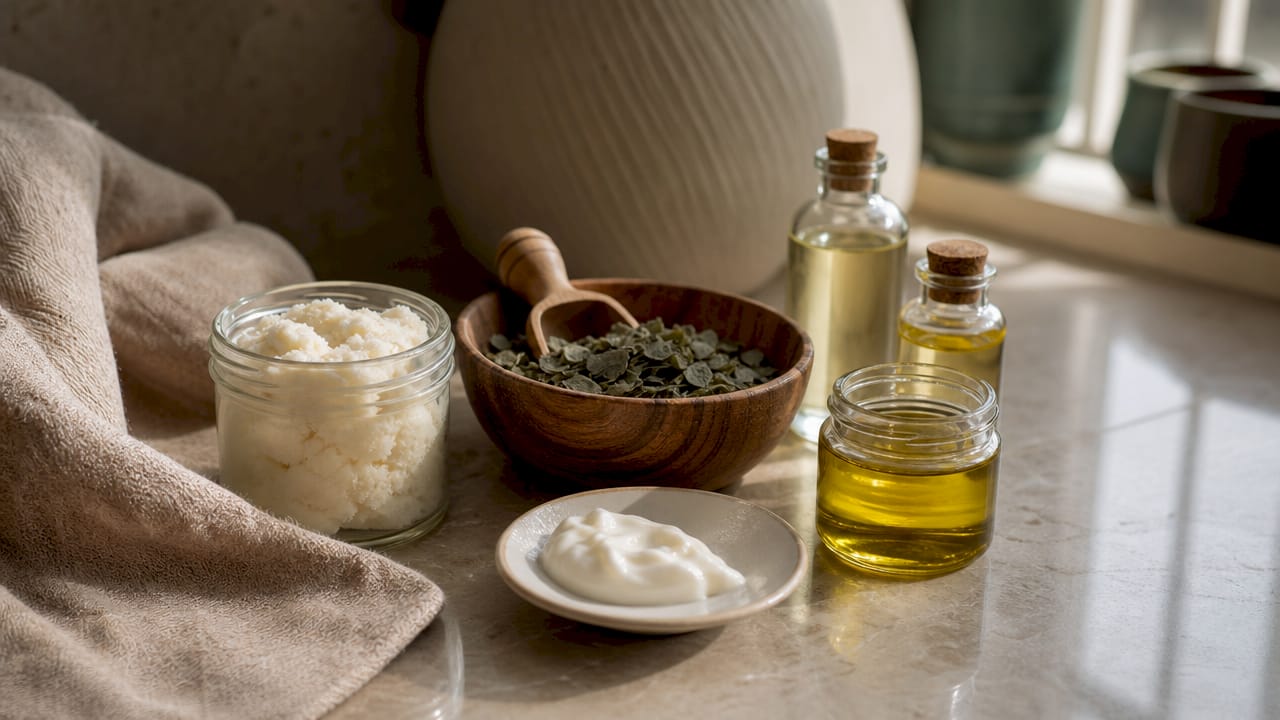
Emulsifiers are equally critical. They determine how oil and water phases bind together, and their Hydrophilic-Lipophilic Balance (HLB) value controls the stability and feel of the final product. Incorrect emulsifier dosing leads to graininess or phase separation, both of which destroy the perception of richness. Getting HLB right is what separates a cream that feels luxurious from one that feels gritty or thin.
Here is what each key ingredient category contributes to rich cream formulations:
- Emollients (such as plant oils, esters, and silicones) fill the gaps between skin cells, creating a smooth, velvety surface feel.
- Occlusives (such as beeswax and shea butter) form a physical barrier on the skin that slows water loss and gives the cream its protective weight.
- Humectants (such as glycerin and hyaluronic acid) draw moisture from the environment and deeper skin layers to the surface, sustaining hydration over hours.
- Thickeners and polymers (such as carbomers and hydrocolloids) control viscosity and spreadability, giving the cream its characteristic body without making it heavy.
- Opacifying agents (such as titanium dioxide and zinc oxide) scatter light within the formula, creating a creamy, pearlescent appearance that signals richness before the cream even touches the skin.
Pro Tip: When reading a cream’s ingredient list, look for shea butter, glycerin, and carbomer in the first ten ingredients. Their presence together is a reliable signal of a genuinely rich formulation rather than a watered-down one.
Manufacturing technique also matters. Industrial-scale production magnifies minor formulation imbalances, making emulsifier balance and processing temperature critical to consistent texture. Polish cosmetic manufacturers have refined these processes over decades, which is part of why their creams deliver such reliable results batch after batch.
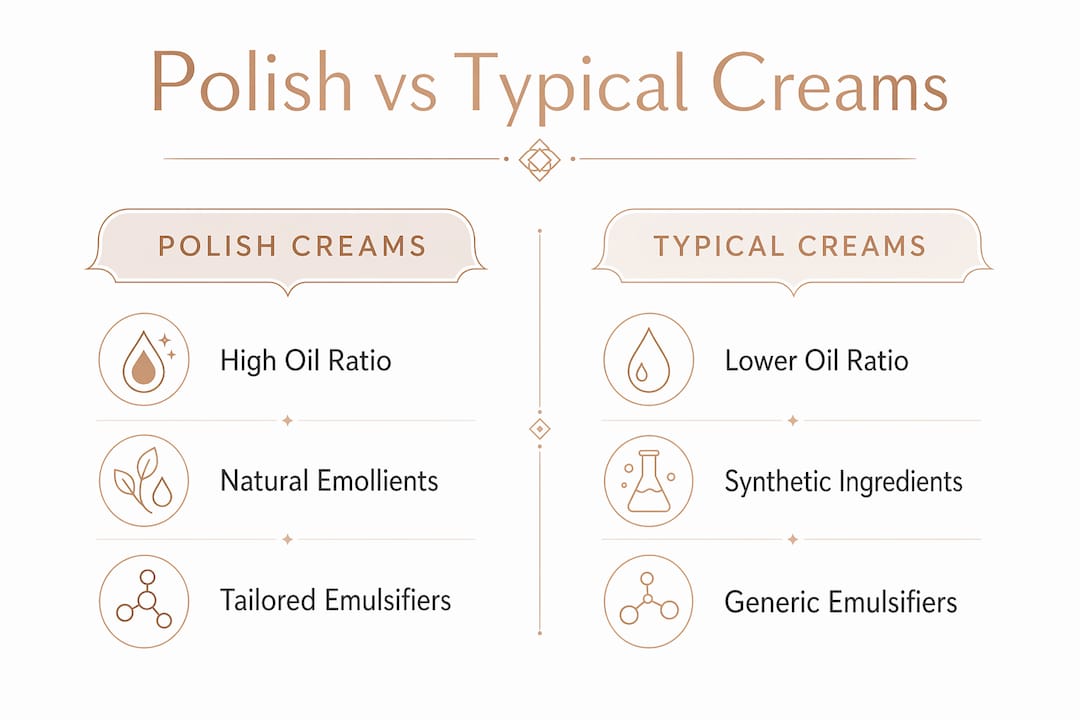
How does sensory perception shape the feeling of richness?
Richness is not just about what is in a cream. It is about what you feel when you apply it. Consumer perception of cream richness is multidimensional, involving viscosity, lubrication, thermal effects, and visual cues that go well beyond simple thickness or oil content.
The sensory dimensions that define a rich cream include:
- Glide: how smoothly the cream moves across the skin without dragging or balling up.
- Cushion: the feeling of slight resistance that signals the cream is forming a protective layer.
- Thermal stimulation: a slight warming or cooling sensation as the cream absorbs, which signals active ingredients at work.
- Stickiness: the brief tack that tells you the cream is adhering before it absorbs fully.
Visual cues play a surprisingly large role. Opacifying ingredients alter light scattering and provide a soft-focus effect that influences perceived cushioning and creaminess. A cream that looks pearlescent in the jar reads as more nourishing to the eye before it is even applied. Formulators engineer this deliberately because the visual signal reinforces the tactile experience.
A common misconception is that a heavier cream is automatically more hydrating. A well-formulated lightweight cream can outperform a thick one if its humectant and emollient balance is superior. Richness is about sustained skin comfort, not weight alone.
Texture also affects whether people actually use a product consistently. A cream that feels unpleasant, too greasy, or too sticky gets abandoned. Choosing a cream suited to your skin type means the texture becomes something you look forward to rather than tolerate.
Why do richer cream textures benefit certain skin types?
Richer creams are not for everyone, but for dry, mature, or barrier-compromised skin they are often the most effective option available. Denser cream textures offer lasting moisturisation where lightweight formulations fail to maintain skin barrier support, particularly in cold or dry climates.
The skin benefits of richer formulations follow a clear logic:
- Occlusive protection: Heavier waxes and butters form a film on the skin surface that physically reduces transepidermal water loss (TEWL). This is the mechanism that keeps dry skin from becoming drier throughout the day.
- Emollient repair: Oils and esters fill the spaces between damaged or depleted skin cells, restoring smoothness and reducing the sensation of tightness or flaking.
- Humectant retention: Glycerin and similar ingredients pull moisture into the skin, but they need an occlusive layer above them to prevent that moisture from evaporating. Rich creams provide exactly that.
- Barrier recovery: For skin compromised by conditions such as eczema or rosacea, the combined action of occlusives and emollients supports the skin’s natural repair process over time.
Mature skin loses lipids and collagen with age, which makes the skin barrier progressively thinner and less effective. A rich anti-wrinkle cream formulated with collagen and vitamins addresses both the structural and hydration needs of skin over 40.
Climate is a practical consideration too. In the UK’s cold, damp winters, a richer cream prevents the wind and low humidity from stripping moisture away. In warmer months, a semi-rich or lightweight option may feel more comfortable. Understanding skin health improvement steps helps you match texture to season as well as skin type.
Pro Tip: Apply a richer cream to slightly damp skin immediately after cleansing. The residual moisture gives humectants something to bind to, and the occlusive layer locks it in far more effectively than applying to dry skin.
How do Polish cream formulations compare with other skincare creams?
Polish creams occupy a distinct position in the global skincare market. Their formulation philosophy prioritises sustained hydration and sensory comfort in equal measure, rather than sacrificing one for the other.
| Feature | Polish cream formulations | Typical lightweight creams |
|---|---|---|
| Oil-to-water ratio | Higher oil phase for lasting protection | Lower oil phase, faster absorption |
| Emulsifier system | Tailored HLB for stability and rich feel | Standard emulsifiers, thinner texture |
| Opacifying agents | Titanium dioxide and zinc oxide for creamy appearance | Often absent or minimal |
| Humectant depth | Glycerin, collagen, and algae extracts | Glycerin as primary humectant |
| Absorption profile | Gradual, with lasting skin comfort | Rapid, with lighter residual feel |
| Best suited for | Dry, mature, or compromised skin | Normal to oily skin, warm climates |
Polish cream formulations uniquely balance richness with elegant absorption by tailoring emulsifier systems, oil blends, and polymers to sustain hydration without a greasy residual feel. This is the formulation advantage that sets them apart from entry-level creams that rely on a single thickener and a basic oil blend.
The use of natural ingredients such as collagen, algae, and plant-derived oils is a consistent feature of Polish cosmetic tradition. These ingredients are not marketing additions. They contribute measurably to the cream’s emollient and film-forming properties. Emollients and silicones in Polish creams are selected to produce velvety, soft textures that spread evenly and support skin barrier recovery. The result is a cream that feels rich on application but does not leave the skin feeling suffocated or congested.
Key takeaways
Polish cream textures feel richer because their formulation combines high-quality oils, precisely balanced emulsifiers, opacifying agents, and humectants to deliver sustained hydration and a genuinely indulgent sensory experience.
| Point | Details |
|---|---|
| Formulation drives richness | Oil ratio, emulsifier HLB, and thickeners together create the dense, stable texture that defines a rich cream. |
| Sensory perception is multidimensional | Viscosity, glide, thermal feel, and visual opacity all shape how rich a cream feels, not just its thickness. |
| Richer textures suit specific skin needs | Dry, mature, and barrier-compromised skin benefit most from occlusive and emollient-rich formulations. |
| Polish creams balance richness with absorption | Tailored emulsifier systems allow Polish creams to feel indulgent without leaving a greasy residue. |
| Climate and skin type guide texture choice | Match cream richness to your skin condition and the season for the best hydration results. |
Why texture is the most underrated decision in skincare
I have spent years looking closely at how people choose skincare products, and the same pattern appears repeatedly. People read ingredient lists, check for collagen or hyaluronic acid, and then buy. Texture is treated as a secondary consideration, almost cosmetic in the trivial sense. That is a mistake.
The texture of a cream determines whether you will actually use it every day. A formula that feels too heavy in July gets pushed to the back of the shelf. One that feels too thin in January leaves skin tight by mid-morning. Neither delivers results because neither gets used consistently. Richness, when it is properly formulated, is not about indulgence for its own sake. It is about creating a product that your skin accepts and that you return to without thinking.
What I find genuinely interesting about Polish formulations is that they have historically been designed for practical daily use rather than for shelf appeal. The richness in a well-made Polish cream is functional. The collagen, the algae, the carefully chosen oil blends are there because they work on skin that faces cold winters and central heating, not because they photograph well. That pragmatism shows in the results.
My honest advice is to stop treating texture as a preference and start treating it as a clinical decision. If your skin is dry or mature, a lightweight cream is not a virtuous choice. It is an insufficient one. Choose the texture your skin actually needs, and the results will follow.
— Krzysztof
Rich Polish creams worth trying from M-shop
M-shop brings a carefully selected range of Polish creams to the UK, chosen for their formulation quality and real-world performance on dry and mature skin.
The Celia Collagen + Vitamines 40+ Rich Cream is the standout option for anyone with dry or mature skin needing intensive hydration and barrier support. It exemplifies the Polish formulation approach: a high oil phase, collagen for structural support, and a texture that absorbs gradually rather than sitting on the surface. For those who want a lighter option without sacrificing nourishment, the Celia Collagen + Algae Lightweight Moisturising Cream delivers the same ingredient quality with a faster absorption profile. M-shop offers these with up to 15% off during sales, sourced directly from Poland.
FAQ
What makes a cream texture feel rich?
Richness in a cream comes from a combination of a higher oil phase, occlusive and emollient ingredients, and opacifying agents that create a dense, smooth texture. Viscosity, glide, and visual opacity all contribute to the overall perception of richness.
Are richer creams better for all skin types?
Richer creams are most beneficial for dry, mature, or barrier-compromised skin. Normal or oily skin types often perform better with lighter formulations that absorb quickly without adding excess oil.
Why do Polish creams feel different from standard moisturisers?
Polish cream formulations use tailored emulsifier systems, natural ingredients such as collagen and algae, and carefully selected oil blends that create a richer, more sustained hydration profile than standard moisturisers with basic formulations.
Can a rich cream cause breakouts?
A well-formulated rich cream uses non-comedogenic oils and emollients that support the skin barrier without blocking pores. The risk of breakouts is higher with poorly formulated products that use heavy, pore-blocking waxes rather than skin-compatible emollients.
When should I switch to a richer cream texture?
Switch to a richer texture when your skin feels persistently tight, flaky, or uncomfortable after cleansing, or when cold weather strips moisture faster than your current product can replace it.