



Why Polish lip balm ingredients matter for healthy lips
Polish lip balm ingredients are defined by their ability to hydrate, repair, and protect the lips while remaining safe for daily ingestion. The lips’ stratum corneum is only 3–5 cells thick, causing transepidermal water loss (TEWL) up to ten times higher than facial skin. That physiological fact makes ingredient selection in lip balm far more consequential than most people realise. Pharmaceutical-grade occlusives, bio-compatible emollients, and antioxidant stabilisers each play a distinct role. Understanding why Polish lip balm ingredients matter is the first step to choosing a product that genuinely works.
What key ingredients do Polish lip balms contain?
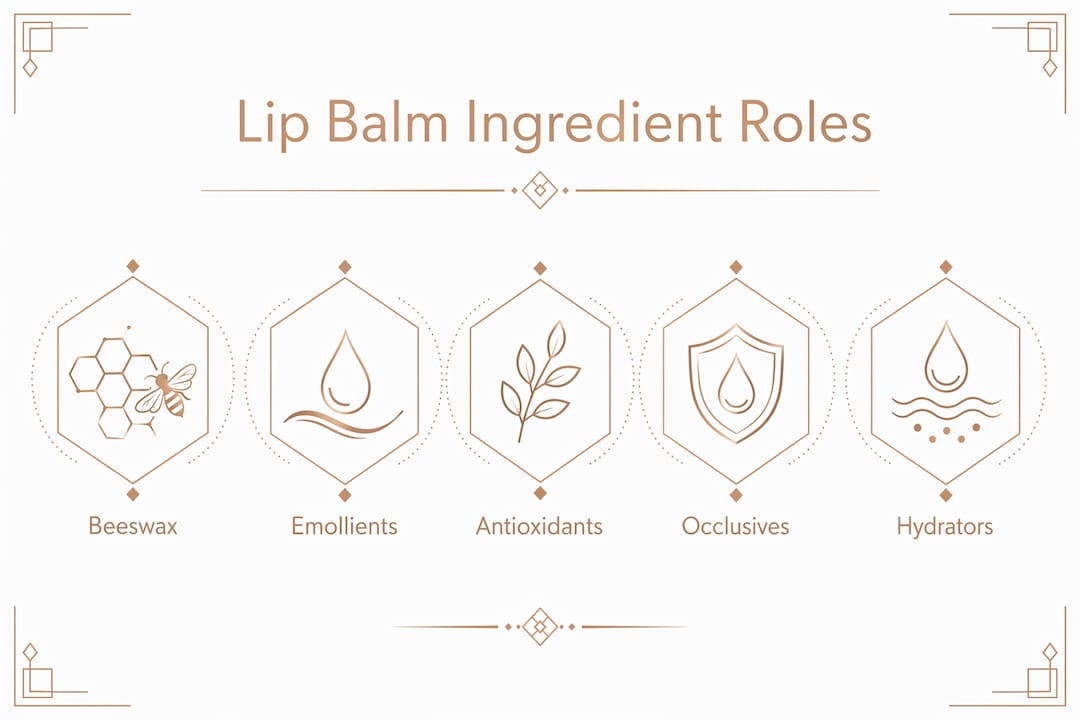
Effective lip balm formulations rely on three functional categories: occlusives, emollients, and antioxidants. Each category addresses a different aspect of lip health, and the best Polish formulations use all three in combination.
Occlusives form a physical barrier on the lip surface to prevent moisture escaping. Beeswax and petrolatum are the most studied examples. Occlusives like beeswax can block up to 99% of transepidermal water loss, making them the most powerful hydration-retention tools available in lip care. Without an occlusive layer, even the most nourishing emollient will evaporate quickly.
Emollients go deeper. Shea butter and jojoba oil fill the microscopic gaps between skin cells, smoothing the lip surface and supporting lipid barrier repair. Jojoba oil mimics human sebum by 97%, which means it integrates with the lip’s cellular structure rather than simply sitting on top. Effective formulas often contain stearic and oleic acids at meaningful concentrations for deep hydration and barrier restoration.
Antioxidants such as Vitamin E serve two purposes simultaneously. They protect the skin from oxidative damage caused by UV exposure and environmental pollutants, and they also stabilise the product itself, extending shelf life without synthetic preservatives. Antioxidants like Vitamin E protect both the skin and the formulation’s longevity, which is why you will find them in quality Polish lip care products.
- Beeswax: primary occlusive, creates a breathable yet protective film
- Petrolatum (pharmaceutical grade): superior moisture lock, minimises TEWL
- Shea butter: rich emollient, softens and repairs the lipid barrier
- Jojoba oil: bio-compatible, integrates with skin structure for lasting benefit
- Vitamin E: antioxidant protection and formulation stabiliser
Pro Tip: When reading a Polish lip balm label, look for beeswax or shea butter in the first three ingredients. Position on an INCI list reflects concentration, so top-listed occlusives and emollients signal a genuinely functional formula.
Why does ingredient safety matter more in lip balms than in other cosmetics?
Lip balm is the one cosmetic product you ingest every day. Lip balms applied multiple times per day contribute meaningfully to hormone disruptor exposure in the body. That makes the importance of lip balm ingredients a systemic health issue, not just a skin concern.
The most significant risk comes from poorly refined petroleum derivatives. Insufficiently refined petrolatum may contain Mineral Oil Aromatic Hydrocarbons (MOAH), which are potential carcinogens and endocrine disruptors. These compounds can accumulate in organs including the liver and lymph nodes over time. Pharmaceutical-grade or USP-grade petrolatum undergoes additional refining to minimise MOAH contamination, which is why grade matters enormously.
“Frequent application of lip products elevates exposure to endocrine-disrupting chemicals. The lips’ direct contact with saliva and food means that ingredients are absorbed both topically and systemically, making clean formulation a genuine health priority rather than a marketing claim.”
Beyond petrolatum quality, several common additives cause chronic problems:
- Menthol and phenol: create a cooling sensation but strip moisture from the lip mucosa, causing the dryness they claim to treat
- Synthetic fragrances: common irritants that trigger contact dermatitis on sensitive lip skin
- Excessive ingredient counts: longer formulas increase the probability of sensitising agents
Consumers are advised to prefer formulas with fewer than six ingredients, prioritising beeswax, plant-based oils, or tallow. Simplicity in a lip balm formula is a feature, not a limitation.
Pro Tip: Check the label for “USP grade” or “pharmaceutical grade” next to any petrolatum listing. If the grade is not specified, the product is not publicly listing it, which is itself a useful signal about formulation standards.
How do Polish lip balm formulations balance performance and safety?
Polish cosmetics have built a reputation for clean formulation, and lip balms from Polish manufacturers reflect that tradition. The Polish cosmetics industry frequently avoids parabens and prioritises hypoallergenic, non-toxic ingredient profiles. That approach aligns well with the systemic safety demands of a product applied to the lips repeatedly throughout the day.
The functional architecture of a well-made Polish lip balm typically layers ingredients by role. Beeswax provides the structural backbone, giving the product its solid form and its primary occlusive function. Shea butter and plant oils sit within that matrix as emollients, delivering lipid replenishment to the barrier. Vitamin E is added last as a stabiliser and antioxidant. Each layer serves a distinct purpose, and removing any one of them weakens the overall formula.
| Ingredient | Role | Benefit |
|---|---|---|
| Beeswax | Occlusive and structure | Blocks moisture loss, gives balm its solid form |
| Shea butter | Emollient | Repairs lipid barrier, softens lip texture |
| Jojoba oil | Bio-compatible emollient | Integrates with skin cells for sustained hydration |
| Vitamin E | Antioxidant | Protects skin and extends product freshness |
| Pharmaceutical-grade petrolatum | Occlusive | Maximum moisture retention without MOAH risk |
The cost difference between quality and filler ingredients is real. Beeswax costs approximately £0.24 per gram versus a fraction of that for cheap oils like canola or soybean. Manufacturers who substitute beeswax with low-cost fillers compromise barrier support even if the product feels pleasant on first application. Polish formulations that maintain beeswax as a primary ingredient reflect a commitment to efficacy over margin.
Naturopathic and dermatological experts agree that optimal lip care requires a triad of occlusives, emollients, and antioxidants working together. A product that delivers only one of these three categories will underperform. Polish lip balms that combine all three, without synthetic preservatives or endocrine-disrupting additives, represent the standard worth seeking out.
For consumers interested in complementary lip treatments, LED lip mask technology offers a non-topical approach to lip rejuvenation that pairs well with a clean balm routine.
How to choose a safe, high-quality Polish lip balm
Reading a lip balm label is a skill that takes about two minutes to learn and pays dividends for years. The INCI (International Nomenclature of Cosmetic Ingredients) list on any EU-compliant product lists ingredients from highest to lowest concentration. Polish lip balms sold in the UK follow EU cosmetic regulations, so the label is a reliable source of truth.
-
Check the first three ingredients. Beeswax (Cera Alba), shea butter (Butyrospermum Parkii Butter), or pharmaceutical-grade petrolatum should appear near the top. If a cheap filler oil like Canola Oil (Brassica Napus Seed Oil) leads the list, the formula is built on cost rather than efficacy.
-
Look for grade specifications on petrolatum. If the label lists Petrolatum without a grade qualifier, the purity level is not publicly stated. Opt for products that specify USP or pharmaceutical grade.
-
Avoid menthol, phenol, and synthetic fragrance. These three ingredients cause chronic dryness by irritating the lip mucosa and stripping natural moisture. The cooling sensation they create masks the damage they cause.
-
Favour Vitamin E (Tocopherol) and jojoba oil (Simmondsia Chinensis Seed Oil). Both are well-tolerated, bio-compatible, and supported by research for barrier repair and antioxidant protection.
-
Count the ingredients. Formulas with fewer than six ingredients carry a lower risk of sensitisation. Each additional ingredient is an additional variable for potential irritation.
Pro Tip: Patch test any new lip balm on the inside of your wrist for 24 hours before applying it to your lips. The lip mucosa is more permeable than wrist skin, so a reaction at the wrist is a reliable early warning.
Signs of ingredient intolerance include persistent tingling after application, increased dryness within 48 hours of starting a new product, or visible redness at the lip border. Any of these signals warrants switching to a simpler formula. The Regenerum Regenerating Lip Serum from M-shop is one example of a Polish formulation designed for sensitive lips, using non-petroleum emollients and occlusives suited to reactive skin.
Key takeaways
Polish lip balm ingredients determine hydration, barrier repair, and systemic safety because the lips are uniquely thin-skinned and every application is partially ingested.
| Point | Details |
|---|---|
| Lips lose moisture fast | The lip stratum corneum is 3–5 cells thick, causing TEWL up to ten times higher than facial skin. |
| Occlusives are non-negotiable | Beeswax and pharmaceutical-grade petrolatum block up to 99% of moisture loss from the lip surface. |
| Ingestion makes safety critical | Lip balm is ingested daily, so MOAH-contaminated petrolatum and endocrine disruptors pose systemic risks. |
| Fewer ingredients means lower risk | Formulas with fewer than six ingredients reduce sensitisation risk and signal cleaner formulation. |
| Polish standards favour clean formulas | Polish cosmetics frequently avoid parabens and synthetic preservatives, aligning with safe lip care principles. |
Why I think most people underestimate what goes into a lip balm
I have spent years looking at Polish cosmetic formulations, and the ingredient conversation around lip balms is consistently undervalued. People scrutinise face serums and eye creams with real attention, then pick up a lip balm based on packaging alone. That gap in attention is a mistake, and the physiology explains why.
The lips are the most permeable area of the face. You apply a balm several times a day, and a meaningful portion of it ends up inside you via saliva and eating. That is not a reason for alarm. It is a reason to be selective. A lip balm with pharmaceutical-grade petrolatum, beeswax, and jojoba oil is not a luxury choice. It is the baseline standard for a product that contacts your mouth repeatedly.
What I find genuinely encouraging about Polish formulations is the industry’s default position on clean ingredients. The absence of parabens and synthetic preservatives is not a marketing angle in Polish cosmetics. It reflects manufacturing standards that have been consistent for decades. When you buy a Polish lip balm from a trusted source, you are benefiting from that tradition without having to decode it yourself.
My recommendation is straightforward. Read the first three ingredients on the label. If you recognise them as functional occlusives or emollients, you have a good product. If you see a long list of synthetic additives before you reach anything resembling a natural lipid, put it back. Your lips will tell you the difference within a week.
— Krzysztof
Polish lip care from M-shop: ingredient quality you can trust
M-shop brings authentic Polish skincare to customers across the UK, with a product selection built around ingredient transparency and clean formulation. Every lip care product in the M-shop range reflects the Polish cosmetic industry’s commitment to hypoallergenic, paraben-free formulas that prioritise beeswax, shea butter, and Vitamin E over cheap fillers.
M-shop is a family-run business that sources directly from Poland, which means you get the same formulation standards trusted by Polish consumers for decades. The range includes options suited to sensitive lips, reactive skin, and those seeking pharmaceutical-grade ingredient purity. For skincare that goes beyond lip care, the Pharmaceris T Sebostatic Day Cream is one example of the high-grade Polish formulations available through M-shop. Browse the full selection at M-shop and find products that match the ingredient standards this article describes.
FAQ
What makes Polish lip balm ingredients different from standard balms?
Polish lip balms frequently avoid parabens, synthetic preservatives, and cheap filler oils, prioritising beeswax, shea butter, and pharmaceutical-grade petrolatum. That clean formulation standard reflects decades of Polish cosmetic manufacturing practice.
Are lip balm ingredients absorbed into the body?
Yes. Lip balms are ingested daily in small amounts through saliva and eating, making systemic safety a genuine concern alongside topical performance.
What ingredients should I avoid in a lip balm?
Avoid menthol, phenol, and synthetic fragrances. These ingredients cause chronic dryness by stripping moisture from the lip mucosa and can trigger irritation with repeated use.
Is pharmaceutical-grade petrolatum safe in lip balms?
Pharmaceutical-grade or USP-grade petrolatum is safe because it undergoes additional refining to remove MOAH contaminants. Poorly refined petrolatum may contain carcinogenic aromatic hydrocarbons, so grade specification on the label matters.
How many ingredients should a good lip balm have?
Fewer than six ingredients is the recommended benchmark. Simpler formulas reduce sensitisation risk and typically indicate that each ingredient has been chosen for function rather than cost reduction.