



How traditional Polish soap is made: a complete guide
Traditional Polish soap is made by combining plant-based oils with sodium hydroxide (lye) through the cold process method, producing a natural bar rich in glycerin. The chemistry is called saponification: oils and lye react to form soap and glycerin, with no heat applied after mixing. Properly cured cold process soap, after curing, reaches a skin-safe pH suitable for daily use. The most culturally significant example is szare mydło, traditional Polish grey soap, a plant-based bar free from artificial dyes, fragrances, and animal fats that has been a household staple for generations.
Key facts at a glance:
- Method: cold process saponification (oils + sodium hydroxide)
- Core oils: olive, coconut, palm, castor, shea butter
- Curing time: 4–6 weeks for safe, hardened bars
- pH after curing: 7–10 (skin-safe range)
- Cultural icon: szare mydło, Poland’s hypoallergenic grey soap
What goes into traditional Polish soap?
The quality of a Polish soap bar starts entirely with its ingredients. Get these right and the chemistry follows; get them wrong and no amount of careful mixing will save the batch.
- Olive oil contributes a conditioning, moisturising lather and is a base oil in most traditional recipes. Pomace-grade olive oil is commonly used by artisan producers such as Jurajska Manufaktura.
- Coconut oil adds hardness and a rich, cleansing foam. It typically makes up a significant portion of a recipe.
- Palm oil (refined or unrefined) provides firmness and a creamy lather. Unrefined palm oil also lends a deep yellow colour, used deliberately in orange-scented varieties.
- Castor oil boosts lather and helps bind the bar. It appears in small quantities, usually under 10%.
- Shea butter softens the finished bar and adds skin-nourishing properties.
- Sodium hydroxide (NaOH): the chemical agent that drives saponification. Every oil has its own saponification value, dictating the precise amount of lye required. Weighing by mass, not volume, is non-negotiable.
- Water or milk: distilled water is standard; goat’s milk is a traditional alternative that adds creaminess and mild lactic acid.
- Essential oils: lavender, thyme, rose, jasmine, and orange are all used by Polish artisan makers. Because of allergy potential, essential oils are added at under 1% of total batch weight.
- Natural colourants: titanium dioxide for white bars, powdered paprika macerated in olive oil for pink and red tones, brilliant blue for lavender shades. Paprika oil is prepared by soaking dried paprika powder in olive oil for three days before straining.
Pro Tip: Use an online lye calculator such as SoapmakingFriend.com to calculate exact NaOH quantities for your specific oil blend. Even small errors in lye proportion produce bars that are either harsh or greasy.
How to make traditional Polish soap step by step
The cold process is the method Polish artisans have used for generations. It requires care, accurate measurement, and respect for the chemistry involved.
Safety first
Lye is corrosive. Always add sodium hydroxide to water, never the reverse. The solution can reach around 60°C during mixing and releases fumes, so work in a well-ventilated space, away from children and pets. Wear rubber gloves, safety goggles, and long-sleeved clothing you would not mind ruining.
Equipment you need
Jeweller’s or kitchen scales accurate to 1g, a thermometer, a stick blender, stainless steel or glass mixing bowls, silicone moulds, and litmus paper for pH testing after curing.
The process
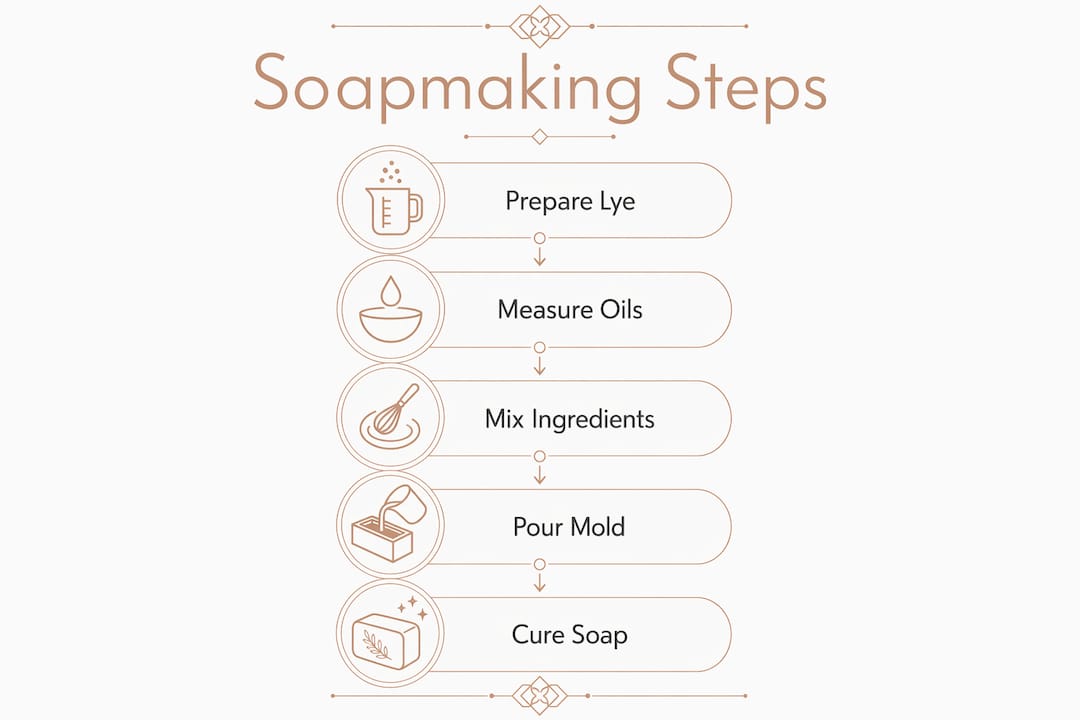
- Weigh everything. Measure all oils and lye by mass. Precision here directly affects soap quality and safety.
- Dissolve the lye. Slowly pour NaOH into cold distilled water (or frozen milk), stirring until fully dissolved. Set aside to cool.
- Melt and cool the oils. Gently melt hard fats such as coconut oil and shea butter, then combine with liquid oils. Allow both the lye solution and the oil blend to cool to approximately 35–45°C.
- Combine. Slowly pour the lye solution into the oils, not the other way around. Begin mixing with a stick blender in short pulses.
- Reach trace. Continue mixing until the batter thickens to a pudding-like consistency. Testing trace by drizzling a little batter across the surface and watching it hold its shape is the classic check. This stage typically takes 15–30 minutes.
- Add extras. At trace, stir in essential oils, colourants, or botanical additives quickly and thoroughly.
- Pour into moulds. Work fast; the batter continues to thicken. Fill prepared silicone moulds and smooth the surface.
- Rest. Leave in moulds for 48 hours. Some makers wrap the moulds in towels to retain warmth and encourage saponification. The soap is still caustic at this stage.
- Unmould and slice. After 48 hours, remove from moulds and cut into bars of roughly 8×5×2.5cm if needed.
- Cure. Place bars on paper towels in an airy spot for 4–6 weeks. During this time, excess water evaporates, the pH drops to the safe 7–10 range, and the bars harden. Store uncovered; soap needs to breathe.
Pro Tip: If your batter reaches trace faster than expected, your oils may be too warm or your essential oil is accelerating the reaction. Keep both the lye solution and oils at the lower end of the 35–45°C range, and choose lavender oil for your first batch — it is one of the most forgiving.
Why szare mydło matters: the cultural history of Polish grey soap
Szare mydło has a straightforward origin story. Before synthetic detergents arrived in Polish homes mid-20th century, a simple potassium-hydroxide soap made from plant oils was the everyday cleansing staple. It contained no artificial dyes, no synthetic fragrance, and no animal fats. Its colour was a pale honey or grey, its scent faintly herbal. That simplicity was not a limitation; it was the point.
The soap became part of Poland’s skincare heritage precisely because it worked for everyone, including those with sensitive or reactive skin. Dermatologists recognised its hypoallergenic credentials long before “clean beauty” became a marketing phrase. Jurajska Manufaktura, one of Poland’s best-known artisan soap producers, continues to make potassium-based grey soap using the same plant-oil formula, curing it until the pH reaches approximately 8 before packaging.
Today, szare mydło also functions as a liquid soap. Dissolved in water at a ratio of roughly 1:30 and decanted into a pump bottle, it becomes a gentle hand wash. That versatility, combined with its biodegradable formula, keeps it relevant for environmentally conscious households across Europe.
How regional Polish soap recipes vary
Poland’s geography shaped its soap traditions in practical ways. Regions with abundant beekeeping, particularly in the Mazury lake district and the Carpathian foothills, developed recipes incorporating honey as a humectant and mild antibacterial agent. A typical honey soap uses olive, coconut, and castor oils as the base, with honey added at trace at roughly 2–3% of total oil weight.
Coastal and northern regions historically had easier access to Baltic amber, and amber-infused soaps remain a regional speciality, valued for their antioxidant properties. In the south, mountain herb traditions influenced soap recipes, with thyme and pine essential oils appearing frequently. Jurajska Manufaktura’s grey soap uses natural thyme essential oil as its sole fragrance, a direct nod to this southern Polish herbal tradition.
Cabbage juice is another regional ingredient with a long history. Handmade cold process bars using fresh cabbage juice alongside aloe vera and oatmeal draw on cabbage’s traditional anti-inflammatory reputation, a recipe still produced by specialist makers today.
How modern makers adapt traditional Polish soap methods
The cold process chemistry has not changed, but the surrounding craft has evolved considerably. Modern Polish artisan soapmakers use digital scales accurate to 0.1g, infrared thermometers, and online lye calculators to achieve consistency that cottage producers of the 1950s could only approximate.
Ingredient sourcing has also shifted. Where older recipes relied on whatever plant fats were locally available, contemporary makers select oils for specific skin benefits, pairing high-oleic sunflower oil for conditioning with coconut oil for cleansing power. Some producers now incorporate natural body butter formulations alongside traditional bar soap, extending the plant-based philosophy into complementary skincare products.
Sustainability has become a deliberate design choice rather than a default. Plastic-free packaging, palm oil sourced from certified sustainable suppliers, and zero-waste production runs are now standard practice among premium Polish soap brands. The Polish skincare philosophy has always leaned towards minimal, effective formulations; modern makers simply have better tools to execute it.
What traditional Polish soap is actually good for
Traditional Polish soap cleans effectively without stripping the skin’s natural oils. Because the cold process retains glycerin in the finished bar, every wash leaves a light moisturising film rather than the tight, dry feeling common after commercial detergent bars.
- Sensitive skin: szare mydło’s hypoallergenic formula, free from synthetic fragrance and artificial colour, suits people prone to eczema, contact dermatitis, or general skin reactivity.
- Daily hand and body washing: the gentle lather is mild enough for frequent use without disrupting the skin barrier.
- Household cleaning: diluted grey soap works as a surface cleaner, fabric pre-treatment, and even a mild plant pesticide, a traditional Polish household use still practised today.
- Hair washing: some users apply traditional grey soap as a shampoo bar, particularly those avoiding sulphates.
If you want to experience authentic Polish soap without making your own, M-shop stocks the Biały Jeleń hypoallergenic natural soap, a premium chestnut-infused bar that follows the traditional plant-based formula. For those with particularly reactive skin, pairing it with a fragrance-free cleanser such as the AA Oceanic atopic skin gel-cream covers both cleansing and barrier support.

Key takeaways
Traditional Polish soap made by the cold process method produces a glycerin-rich, skin-safe bar with a pH of 7–10 after a curing period of 4–6 weeks.
| Point | Details |
|---|---|
| Core method | Cold process saponification combines plant oils with sodium hydroxide to produce soap and glycerin. |
| Curing is non-negotiable | Bars need 4–6 weeks to reach a skin-safe pH of 7–10 and harden properly. |
| Lye safety rule | Always add sodium hydroxide to water; reversing this risks violent splashing and injury. |
| Cultural icon | Szare mydło, Poland’s grey soap, uses only plant oils with no artificial dyes or animal fats. |
| Precision matters | Each oil has a unique saponification value; weigh every ingredient by mass and use a lye calculator. |