



Linseed oil polish in skincare: benefits and uses
Linseed oil polish is a structurally active botanical ingredient that improves skin hydration and repairs the skin barrier through its exceptionally high alpha-linolenic acid (ALA) content and antioxidant lignans. The role of linseed oil polish in skincare goes well beyond simple moisturisation. Unlike occlusive oils that sit on the skin’s surface, linseed oil integrates directly into the epidermal lipid matrix, making it one of the most effective plant oils for barrier repair. Clinical studies confirm measurable reductions in transepidermal water loss (TEWL) and significant hydration gains within weeks of consistent use. For anyone building a natural oil skincare routine, linseed oil deserves serious attention.
How does linseed oil’s biochemical composition benefit skin?
Linseed oil’s ALA content exceeds 50% of its total fatty acid profile. That figure sets it apart from most plant oils, which typically contain far lower concentrations of this omega-3 fatty acid. ALA integrates into the skin’s lipid matrix at a molecular level, actively reinforcing the barrier rather than simply coating it.
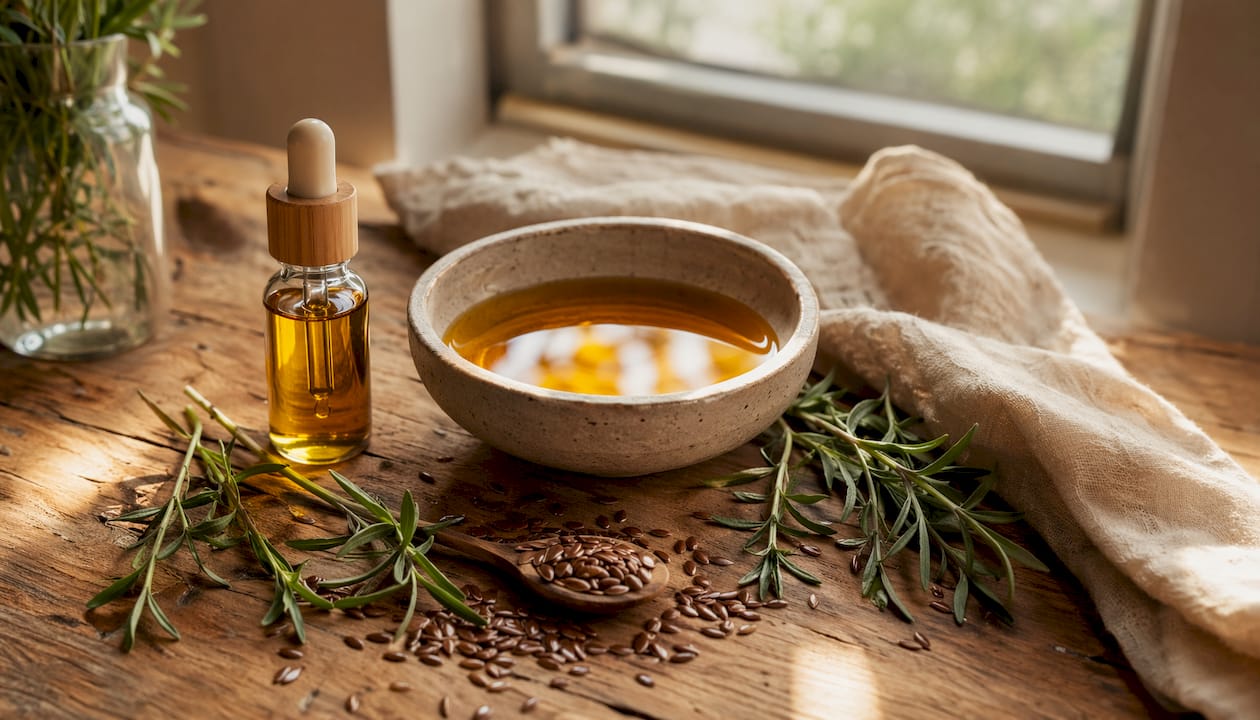
Alongside ALA, linseed oil contains lignans, which are potent antioxidants and phytoestrogens. Lignans neutralise free radicals generated by UV exposure and environmental pollution. This antioxidant activity directly reduces photoageing and helps maintain an even skin tone over time.
The oil’s anti-inflammatory properties are equally significant. ALA converts into prostaglandins and other signalling molecules that calm redness and irritation at the cellular level. For skin prone to sensitivity or reactive conditions, this mechanism provides genuine relief rather than surface-level soothing.
Key biochemical benefits of linseed oil for skin include:
- Barrier reinforcement: ALA integrates into epidermal lipids, reducing TEWL and strengthening the skin’s protective layer.
- Antioxidant protection: Lignans combat oxidative stress, slowing visible signs of ageing.
- Anti-inflammatory action: Omega-3 derived signalling molecules reduce redness, scaling, and irritation.
- Hydration retention: By repairing the lipid matrix, the oil locks moisture inside the skin rather than drawing it from the environment.
- Phytoestrogenic activity: Lignans support skin elasticity, particularly relevant for mature skin types.
Daily supplementation with flaxseed oil decreases TEWL by approximately 10% after six weeks and boosts hydration measurably after twelve weeks. That is a clinically significant result for a single botanical ingredient used consistently.
What are effective ways to use linseed oil in your skincare routine?
Linseed oil works best when applied to slightly damp skin. Applying it immediately after cleansing, while the skin still holds a little moisture, helps the oil seal hydration in rather than drawing water out. This technique is especially effective for those with dry or sensitive skin.
Combining linseed oil with calming botanicals significantly enhances its effects. Formulations pairing linseed oil with witch hazel, oat, or calendula deliver stronger anti-inflammatory and soothing results than linseed oil used alone. These botanicals complement the oil’s fatty acid activity and improve the overall texture of the finished product on skin.
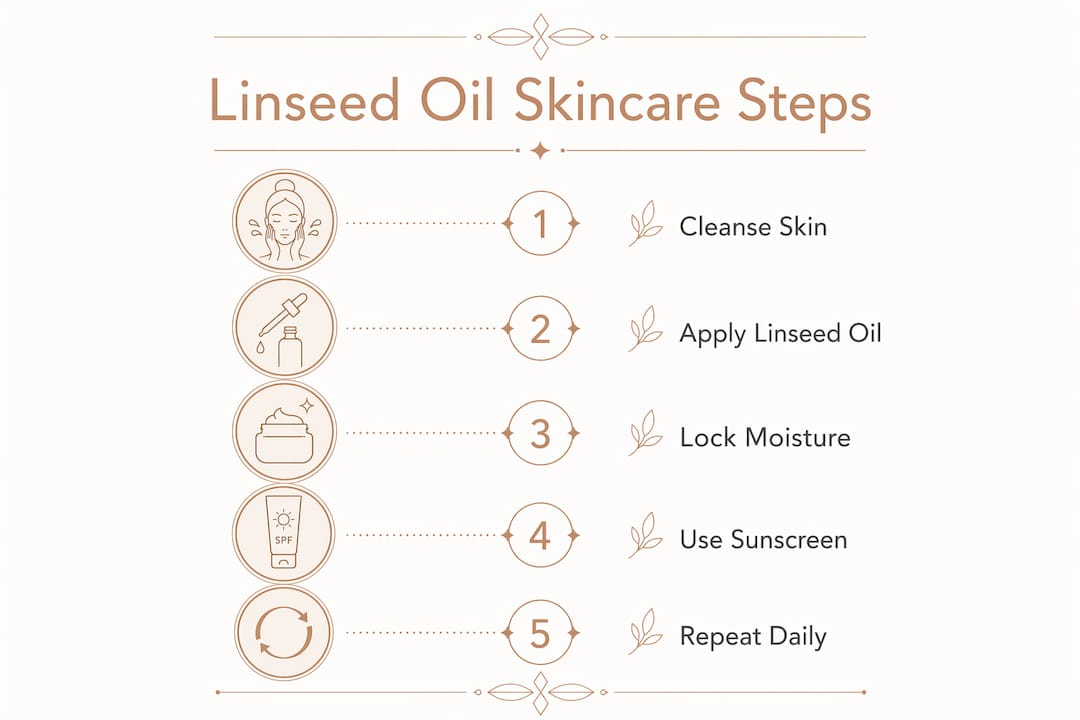
A practical routine for incorporating linseed oil looks like this:
- Cleanse with a gentle, fragrance-free cleanser suited to your skin type.
- Apply linseed oil to damp skin while it is still slightly wet, using two to three drops warmed between your palms.
- Layer a moisturiser over the oil to seal it in. Linseed oil acts as a structurally active oil that performs best under a richer cream rather than on its own.
- Use at night when the skin’s repair processes are most active and the oil faces less UV-driven oxidation.
- Patch test first if you have acne-prone skin, applying a small amount to the inner arm for 24–48 hours before full facial use.
Pro Tip: Apply linseed oil as the first step after cleansing, not the last. Oils applied over heavy creams cannot penetrate effectively. Thin to thick is the rule.
Linseed oil has a potential comedogenic effect if overused, particularly on acne-prone skin. Conservative application, roughly two to three drops per session, reduces this risk significantly. Pairing it with a lightweight, non-comedogenic moisturiser keeps the routine balanced.
How do modern linseed oil skincare formulations improve its performance?
Raw linseed oil presents real formulation challenges. It does not mix easily with water, and its high polyunsaturated fat content makes it prone to oxidation. Oxidised oil produces free radicals that can damage skin rather than protect it. These challenges explain why quality formulation matters enormously when choosing skincare with linseed oil.
Emulgel technology addresses both problems. By blending linseed oil with complementary plant oils and stabilising emulsifiers, formulators create products that deliver the oil’s benefits without the instability of raw application. Linseed oil emulgels with optimised plant oil blends have demonstrated up to 85% antimicrobial inhibition and SPF values ranging from 14.5 to 19.9. That combination of skin protection and microbial safety is difficult to achieve with unformulated oil alone.
| Formulation factor | Why it matters |
|---|---|
| Cold-pressed, non-refined oil | Preserves ALA content and antioxidant lignans |
| Opaque, airtight packaging | Prevents light and oxygen from triggering oxidation |
| Emulgel base | Improves water compatibility and skin delivery |
| Botanical oil blends | Enhance SPF and antimicrobial activity |
| Patch-tested for irritation | Confirms safety across skin types before launch |
Pro Tip: When buying a linseed oil product, check for cold-pressed on the label and opaque packaging. Clear bottles expose the oil to light and accelerate rancidity, which undermines every benefit.
Synergistic ingredients amplify linseed oil’s effects in finished formulations. Vitamin E, for example, acts as a natural preservative that extends the oil’s shelf life while adding its own antioxidant benefit. Calendula extract pairs well with linseed oil’s anti-inflammatory ALA to calm reactive skin. Choosing a regenerating oil serum that combines these actives gives you more measurable results than a single-ingredient product.
What does the science say about long-term linseed oil skincare benefits?
The clinical evidence for linseed oil’s skincare benefits is specific and consistent. A twelve-week randomised controlled trial found that daily flaxseed oil use produced measurable reductions in skin redness, roughness, and scaling, alongside improved smoothness and hydration. These are objective, measured outcomes, not subjective impressions.
Dietary supplementation with 1–4 grams of ALA daily from flaxseed oil produces visible skin hydration benefits and reduces low-grade systemic inflammation within four to twelve weeks. The systemic route complements topical application by addressing inflammation from within, which topical products cannot fully replicate.
Linseed oil’s lignan content provides antioxidant protection that directly counters photoageing. Regular use reduces the cumulative oxidative damage that leads to fine lines, uneven pigmentation, and loss of skin elasticity over time.
The distinction between topical and dietary use matters. Topical linseed oil targets the epidermal barrier directly, delivering ALA to the lipid matrix where it reinforces structure. Dietary linseed oil works systemically, reducing inflammation and supporting skin cell renewal from within. The two approaches are complementary, not interchangeable.
Key findings from clinical research on linseed oil for skin:
- TEWL decreases by approximately 10% after six weeks of consistent use.
- Skin hydration improves significantly after twelve weeks.
- Redness, roughness, and scaling all show measurable reduction in randomised trials.
- Anti-inflammatory effects become visible within four to twelve weeks of daily ALA intake.
- Lignan antioxidants reduce photoageing markers with regular application.
One important clarification: ALA’s conversion to marine omega-3 fatty acids (EPA and DHA) is limited, running at roughly 5–15% in men and somewhat higher in women. Linseed oil is a strong supportive source of omega-3s for skin health, but it does not replace marine-derived sources for higher anti-inflammatory therapeutic needs. Understanding this distinction helps you set realistic expectations and build a well-rounded routine. For guidance on pairing linseed oil with other active skincare ingredients, a broader ingredient reference is worth consulting.
Key takeaways
Linseed oil is one of the most clinically supported plant oils for skin barrier repair, hydration, and anti-inflammatory protection, provided it is used in quality formulations and applied consistently.
| Point | Details |
|---|---|
| ALA content drives barrier repair | Linseed oil’s ALA exceeds 50%, enabling direct integration into the epidermal lipid matrix. |
| Apply to damp skin and layer | Use two to three drops on damp skin, then seal with a moisturiser for best hydration results. |
| Formulation quality is critical | Choose cold-pressed oil in opaque packaging or clinically tested emulgel formulations. |
| Clinical results take weeks | Measurable TEWL reduction appears after six weeks; hydration gains peak at twelve weeks. |
| Patch test for acne-prone skin | Linseed oil can be comedogenic in excess; conservative use and patch testing prevent breakouts. |
Why I think linseed oil is underrated in natural skincare
Most people reach for rosehip or argan oil without considering linseed oil. That is a missed opportunity. In my experience, linseed oil’s molecular action on the skin barrier is genuinely distinct. It does not just sit on the surface. It works its way into the lipid structure and changes how the skin holds moisture over time.
The sourcing question is where most people go wrong. I have seen products labelled as containing linseed oil that use refined, heat-processed versions with negligible ALA content. Cold-pressed, non-refined oil stored correctly is a different ingredient entirely. When you use the right quality, the results are consistent with what the clinical trials show.
Layering is the other thing worth getting right. Linseed oil performs best under a richer cream, not over it. Applying it last in a routine, after heavier products, blocks its absorption entirely. Thin layers first, then seal. That single change makes a noticeable difference within a few weeks.
Linseed oil also pairs exceptionally well with calming botanicals. A linseed and calendula formulation addresses both barrier repair and active inflammation at the same time. That combination is more effective than either ingredient used separately, and it suits sensitive skin well. For anyone serious about natural skincare, linseed oil is worth the learning curve.
— Krzysztof
Natural skincare with linseed oil at M-shop
M-shop sources high-quality Polish cosmetics that put natural ingredients at the centre of every formulation. The range includes products built around linseed oil and complementary botanicals, selected for their clinical backing and skin compatibility.

For skin that needs barrier support alongside acne management, the Pharmaceris T Sebostatic Day cream combines SPF protection with a formulation approach aligned with modern emulgel research. M-shop also carries the Vis Plantis Secret Garden Oil Serum, a regenerating blend that pairs plant oils for face and hair conditioning. Every product in the M-shop range is selected directly from trusted Polish manufacturers, with a focus on visible results and ingredient transparency.
FAQ
What is the role of linseed oil polish in skincare?
Linseed oil polish acts as a structurally active ingredient that integrates into the skin’s epidermal lipid matrix, reducing transepidermal water loss and repairing the skin barrier. Its high ALA content and antioxidant lignans make it effective for hydration, anti-inflammatory protection, and slowing photoageing.
How long does linseed oil take to improve skin?
Clinical trials show TEWL reduction after six weeks of consistent use and significant hydration improvement after twelve weeks. Anti-inflammatory effects from dietary ALA intake become visible within four to twelve weeks.
Can linseed oil cause breakouts?
Linseed oil has potential comedogenic effects when overused, particularly on acne-prone skin. Applying two to three drops and patch testing for 24–48 hours before full use reduces the risk of blocked pores.
Is topical or dietary linseed oil better for skin?
Both routes offer distinct benefits. Topical application targets the epidermal barrier directly, while dietary intake reduces systemic inflammation and supports skin cell renewal. Using both together produces the most comprehensive results.
What ingredients work well with linseed oil in skincare?
Witch hazel, oat, and calendula all enhance linseed oil’s anti-inflammatory and soothing effects when combined in formulations. Vitamin E acts as a natural preservative that also extends the oil’s antioxidant activity in finished products.