



A budget niacinamide serum can still do the heavy lifting
A budget niacinamide serum is a high-utility, low-risk step that reliably strengthens the skin barrier, calms oiliness and evens tone when you use it consistently. The evidence for this comes from proper clinical research, not marketing copy: a PMC review of niacinamide’s biological properties documents its antioxidant and anti-inflammatory actions, while the Cleveland Clinic’s guidance on niacinamide confirms it works at concentrations most £8 bottles already contain.
Here’s what actually matters when you’re shopping on a budget:
- Barrier support and oil control show up fastest, often within two to four weeks of daily use.
- Tone and texture improvements take longer, typically 8 to 12 weeks of consistent application.
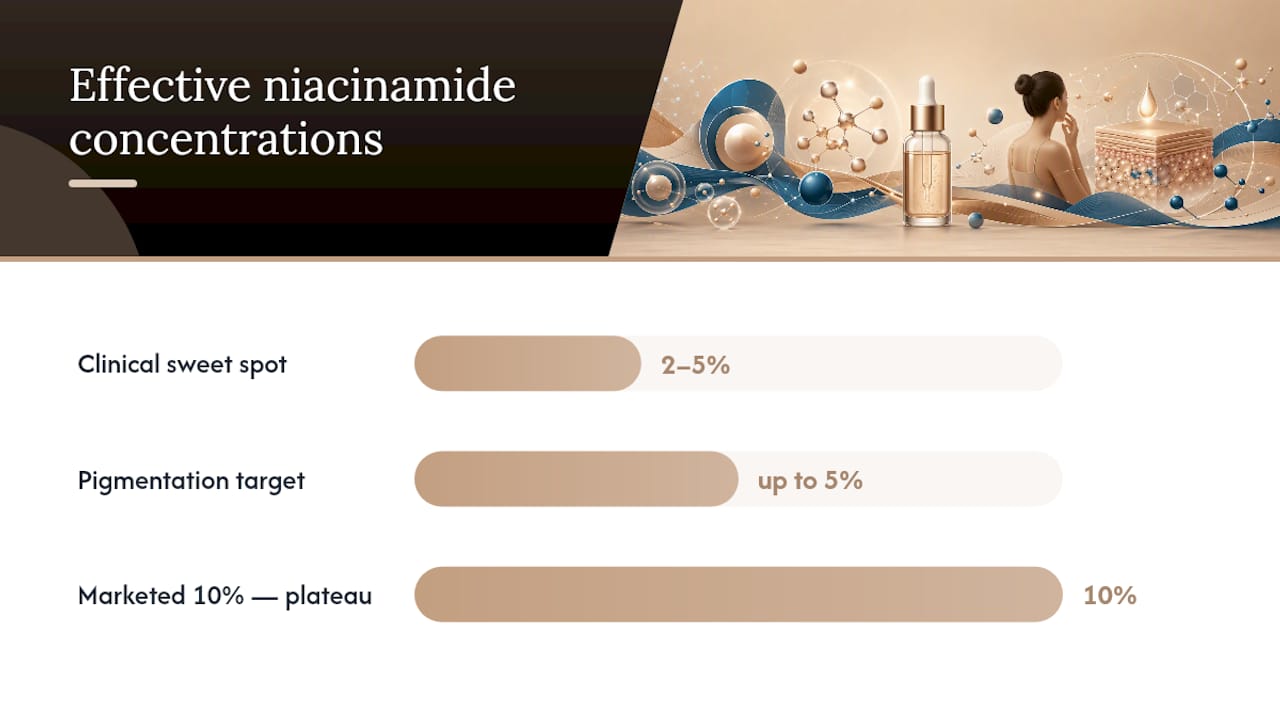
- Look for 2–5% concentration on the label. That’s where the clinical evidence is strongest, not at the higher percentages some brands advertise.
- Patch-test first, especially if you’re layering it with other actives already in your routine.
Key Takeaways
| Point | Details |
|---|---|
| Concentration matters most | Choose a moderate concentration of niacinamide within the recommended range for effective results; higher percentages rarely add proportional benefit. |
| Timeline varies by benefit | Expect oil control within 2–4 weeks and pigmentation changes closer to 8–12 weeks. |
| Short ingredient lists win | Fewer additives make it easier to judge what’s actually working on your skin. |
| Patch-test before layering | Especially important if niacinamide already appears in your moisturiser or SPF. |
| M-shop offers labelled, value-driven options | M-shop’s Polish skincare range includes products built on the same clear-labelling, natural-ingredient principles this guide recommends. |
Table of Contents
- What role does niacinamide play in budget serums?
- Why niacinamide suits low-cost serums so well
- How do you choose a good budget niacinamide serum?
- When and how should you use a niacinamide serum?
- What do budget niacinamide serums typically look like?
- Find the right niacinamide serum on M-shop
- Frequently asked questions
- Sources
What role does niacinamide play in budget serums?
Niacinamide earns its place in cheap serums because it does several jobs at once, and clinical trials back up each one. It isn’t a single-trick ingredient propped up by clever marketing. It works on the skin barrier, on inflammation, on oil production and on pigment, all through distinct biochemical routes that don’t require an expensive delivery system to function.
A narrative review published via PMC lays out the mechanisms clearly: niacinamide supports ceramide synthesis in the skin barrier, reduces inflammatory signalling that drives redness and breakouts, and interferes with melanosome transfer, the process that causes dark spots to form. None of that requires a fancy encapsulation technology or a fifteen-step formulation.
Here’s how the mechanisms translate into what you actually see in the mirror:
- Barrier support → better hydration retention and less tightness or flaking.
- Anti-inflammatory action → calmer skin, fewer flare-ups, reduced redness around blemishes.
- Melanosome transfer inhibition → gradual fading of dark spots and more even tone.
- Mitochondrial and NAD+ support → subtle improvements in skin resilience and ageing signs over time.
Concentration matters more than most labels let on. The clinically supported sweet spot sits at 2–5%, with some formulas going up to 5% specifically for pigmentation concerns. Many budget serums list 10%, and while that’s not harmful for most people, permeation research from Springer suggests the benefits plateau well before you hit double digits. You’re often paying for a bigger number, not a bigger result.
Why niacinamide suits low-cost serums so well
Niacinamide is cheap to source, dissolves easily into water-based formulas and rarely irritates skin, which is exactly why it turns up in nearly every budget serum on the shelf. Unlike retinoids or vitamin C, it doesn’t need stabilisers, dark packaging or nitrogen-flushed bottles to stay effective. That keeps manufacturing costs down without cutting corners on the active ingredient itself.
What you gain:
- Low cost per milligram of active ingredient
- Minimal irritation risk compared with acids or retinoids
- Straightforward formulation means fewer places for a brand to skimp
What you might lose:
- Fewer supporting actives (no fancy peptide blends or ceramide complexes)
- Simpler, sometimes thinner textures
- Basic packaging, occasionally clear bottles that offer less light protection
Pro Tip: If your moisturiser or SPF already contains niacinamide, check the serum’s percentage before adding it on top. Stacking three niacinamide products rarely causes harm, but it’s an easy way to overspend on the same ingredient three times over.
How do you choose a good budget niacinamide serum?
Look for a clearly listed percentage, a short ingredient list and a water-based formula with at least one humectant, and you’ve covered most of what separates an effective bottle from a mediocre one. You don’t need twenty ingredients to get results. You need the right one, at the right strength, in a stable base.
Run through this checklist on any product page before buying:
- Is the percentage listed? If a brand won’t state it, treat that as a red flag rather than a mystery worth solving.
- Does it include a humectant? Glycerin or hyaluronic acid alongside niacinamide helps offset any dryness some people experience with higher concentrations.
- Are there obvious irritants? Added fragrance or high alcohol content can undercut niacinamide’s calming effects, particularly on reactive skin.
- Is the price per ml reasonable? A 30ml bottle at £6 with a 5% concentration often beats a 15ml bottle at £12 with an unlisted percentage.
Front-of-bottle claims deserve some translation. “Brightening” usually means the pigment-modulating effect kicking in slowly, not an overnight glow. “Pore-refining” typically points to oil regulation reducing the appearance of enlarged pores, not a magic pore-shrinking trick. “Balancing” is marketing shorthand for oil control paired with barrier support, which is a fair description if the concentration sits in that 2–5% band. If a bottle promises instant results or pairs niacinamide with a dozen unnecessary extras, that’s often padding the price rather than the performance. For more on why fewer ingredients tend to serve skin better, see this piece on why less ingredients are better for your skin.
When and how should you use a niacinamide serum?
Niacinamide fits right after cleansing and before moisturiser, and it works safely in both your morning and evening routine. It plays well with almost everything else in a skincare cabinet, which is part of why it’s such a forgiving ingredient for beginners.
Morning routine:
- Cleanse
- Apply niacinamide serum
- Moisturise
- Apply SPF
Evening routine:
- Cleanse
- Apply niacinamide serum (or alternate with other actives)
- Moisturise
Mixing rules are simpler than most skincare forums make them sound:
- Vitamin C: Fine to layer, despite years of debate. Wait a few minutes between the two if you notice any flushing, but there’s no need to separate them into different routines entirely.
- Retinol: Niacinamide can actually buffer retinol’s irritation, so applying it first often helps sensitive skin tolerate retinol better.
- Acids (AHA/BHA): Generally safe together, though if you’re new to actives, alternate nights rather than stacking everything at once.
- Don’t layer three or four niacinamide-containing products expecting compounded results. The skin absorbs a finite amount regardless of how many bottles you pile on.
On timelines, oil control and calming effects often show up within two to four weeks, while pigmentation and texture changes take longer, generally 8 to 12 weeks of daily use, according to consumer health guidance from Healthline. If you notice pilling (that frustrating rolling texture under makeup), it usually means you’re applying too many product layers too quickly rather than a fault with the niacinamide itself — understanding proper layering and product textures can help, as explained in this Korean Collagen PDRN Capsule Cream guide. Letting each layer absorb for 60 seconds before the next usually fixes it. For a deeper look at getting the order right, this guide on skincare layering covers the mechanics in more detail.
What do budget niacinamide serums typically look like?
Most affordable formulas fall into a handful of recognisable types, and knowing which one you’re looking at saves you from buying the wrong bottle for your skin.
- Single-active, high-concentration water serum: Just niacinamide and water-based carriers. Best for oily or acne-prone skin wanting straightforward oil control. Watch for slight tackiness on drier skin types.
- Niacinamide plus zinc: Aimed at oil regulation and blemish-prone skin. Best for congested or breakout-prone complexions; can feel drying if overused.
- Niacinamide plus hyaluronic acid: Built for dry or sensitive skin needing hydration alongside barrier support. Gentle enough for daily use.
- Niacinamide blended with pigment-targeting agents (like alpha arbutin or tranexamic acid): Aimed at dark spots and uneven tone. Best for post-blemish marks; results take patience.
Evidence snapshot: what the science actually supports
The strongest clinical evidence backs niacinamide for barrier repair, oil regulation and modest pigmentation or texture improvements, all at concentrations between 2% and 5%. Beyond that range, most people see diminishing returns rather than dramatically better results.
This lines up with the PMC narrative review, the 2024 Springer permeation review, and practical guidance from the Cleveland Clinic. Krzysztof and the M-shop editorial team draw on this same body of research when covering affordable skincare routines across the site, treating evidence-backed concentration ranges as the benchmark rather than marketing percentages.
A shopper’s honest take
I’ve always preferred a short ingredient list and a calculator over a glossy label. Do the maths: divide the price by the millilitres, then check the percentage actually matches what the research supports.

Quick tip: when two bottles list the same concentration, buy the larger one. A longer-lasting serum with a short ingredient list is rarely the wrong call.
Find the right niacinamide serum on M-shop
M-shop stocks skincare built around exactly the label literacy this article has walked through: clear percentages, short ingredient lists and formulas that don’t ask you to pay extra for filler. As a family-run business bringing Polish cosmetics into the UK, M-shop focuses on natural ingredients like collagen and algae, sharing the same value-first thinking that makes niacinamide such a smart budget pick.

When you’re browsing M-shop’s product pages, run through the same checklist covered above: confirm the active percentage, scan for humectants like glycerin, and check whether the formula pairs well with what’s already in your routine. If you’re building out a full routine rather than a single serum, M-shop’s Pharmaceris sebostatic day cream with SPF is worth checking for anyone whose skin runs oily or acne-prone, since it pairs sensibly with a niacinamide serum underneath. Have a look at the current niacinamide-friendly range and see what fits your skin and your budget.
Frequently asked questions
Is niacinamide effective in cheap serums, or do you need to spend more? Cost differences usually come from packaging, added actives or marketing rather than the niacinamide itself.
What’s the ideal niacinamide serum for acne-prone skin on a budget? Look for a formula pairing niacinamide with zinc, which targets oil regulation and inflammation together.
How long before you see results from a budget niacinamide serum? Oil control and calming effects often appear within two to four weeks. Pigmentation and texture improvements take longer, usually 8 to 12 weeks of consistent daily use.
Can you use niacinamide serum every day? Yes, niacinamide is well tolerated for daily morning and evening use by most skin types. Introduce it gradually if you have very reactive skin, and patch-test any new product first.
Does a higher niacinamide percentage always work better? Not necessarily.
Sources
- Niacinamide: Biological properties and therapeutic applications — PMC review
- Topical niacinamide: permeation and clinical evidence — Springer (2024)
- Niacinamide — Cleveland Clinic (2026-02-06)
- Niacinamide — Healthline (2018)