



The role of beeswax polish in cosmetics explained
Beeswax polish is defined as a natural occlusive agent that seals moisture into the skin, stabilises cosmetic formulations, and delivers the firm yet pliable texture found in lip balms, hand creams, and protective balms. Its role in cosmetics goes well beyond simple thickening. Beeswax carries an EWG safety score of 1 and a low comedogenicity rating of 2/5, making it one of the safest wax ingredients available to formulators today. For anyone drawn to natural beauty products, understanding what beeswax actually does inside a formula is the clearest path to choosing products that genuinely perform.
What is the role of beeswax polish in cosmetics formulation?
Beeswax earns its place in cosmetic formulas through one standout property: a 99.9% oil-binding capacity that prevents syneresis. Syneresis is the unwanted separation of oils from a solid or emulsified product over time. When beeswax binds those oils in place, the formula stays uniform from the first use to the last.
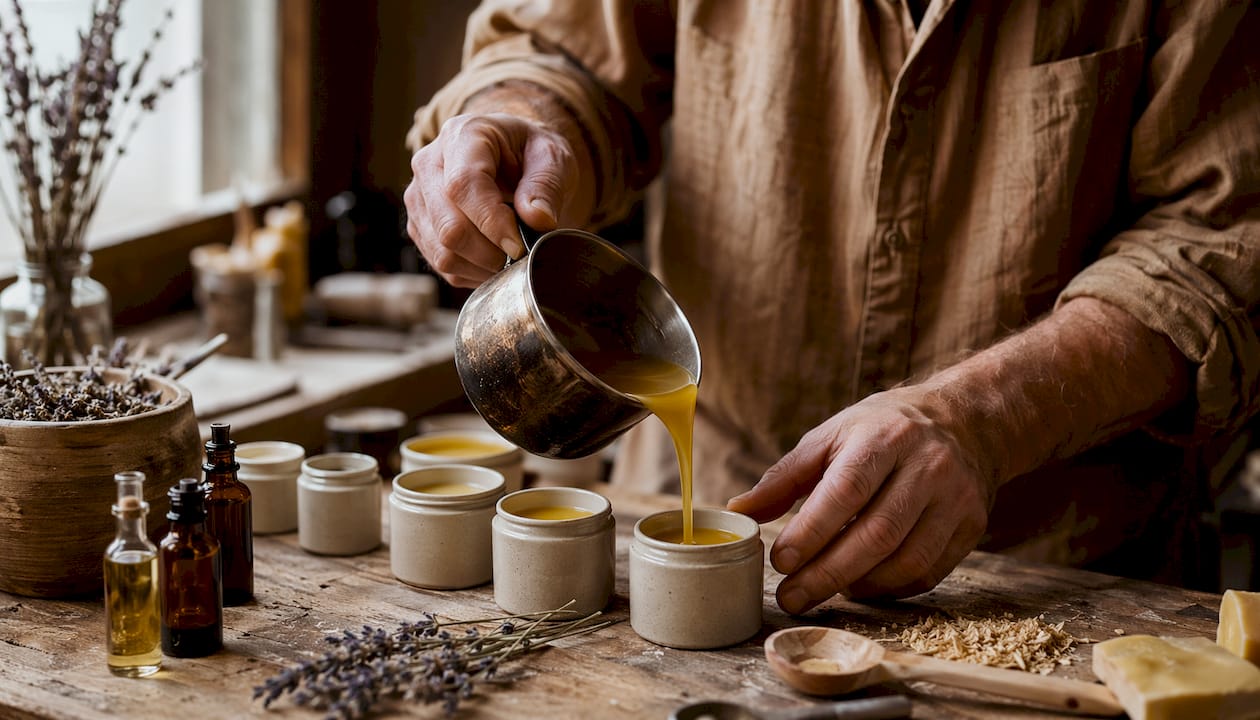
The melting point of beeswax sits between 62°C and 65°C, and that range matters enormously for thermal stability. A lip balm sitting in a warm car or a hand cream stored in a bathroom cabinet must hold its shape without turning greasy or crumbling. Beeswax achieves this where softer waxes fail.
Texture is the third contribution. Beeswax gives balms and lipsticks a smooth, slightly waxy glide that feels intentional rather than heavy. That tactile quality directly influences whether a person reaches for a product again the next morning.
Formulators rarely use beeswax alone. Wax blending is a calculated process that balances melting points and crystal structures across multiple wax types to achieve the exact durability and sensory experience a product requires. Beeswax typically anchors the blend, with softer plant waxes such as candelilla or rice bran wax adjusting the final feel.
- Oil binding: Prevents oil bleeding and keeps solid products structurally sound.
- Thermal stability: The 62–65°C melting point resists heat distortion during storage and transport.
- Texture control: Delivers the smooth, non-greasy glide associated with quality balms and lipsticks.
- Blend compatibility: Works alongside plant waxes to fine-tune hardness, spreadability, and finish.
Pro Tip: When reading a product ingredient list, beeswax appears as “Cera Alba” for the white refined grade or “Cera Flava” for the yellow unrefined grade. Both perform similarly, but Cera Flava retains more of the natural honey scent.
What are the skincare benefits of beeswax in cosmetics?
Beeswax forms a breathable film on the skin surface that reduces transepidermal water loss, known as TEWL, without blocking the skin’s ability to breathe. This is the defining difference between an occlusive and a true sealant. Petroleum-based occlusives create a heavier barrier; beeswax sits lighter and allows normal skin function to continue underneath.
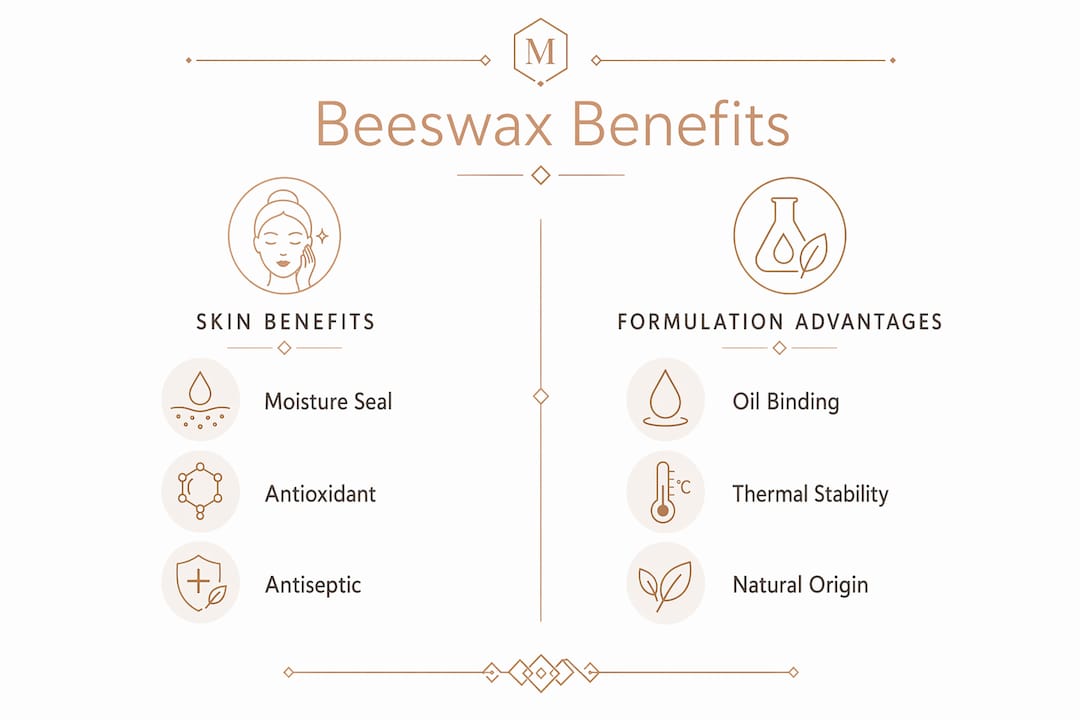
The practical benefit is most visible on dry, chapped areas. Lips and hands lose moisture faster than other body parts because the skin there is thinner and exposed to more friction and weather. Beeswax locks in whatever hydration is already present, which is why it appears in nearly every quality lip balm and intensive hand cream on the market.
Beeswax also carries antioxidant and mild antiseptic properties. These qualities help protect minor skin abrasions and reduce the risk of irritation in products applied to compromised skin. For people with sensitive or reactive skin, this matters as much as the moisture-sealing effect.
A 2026 study on beeswax-based lip balms confirmed 100% dermatological safety with no irritation recorded across 98 volunteers. The same study verified a stable pH of 5.3 over 30 days, which matches the skin’s natural acid mantle and reduces the risk of disrupting the skin barrier.
Here are the key skincare benefits in order of practical importance:
- TEWL reduction: Beeswax seals existing moisture in place, preventing the dryness that follows exposure to cold air, wind, or central heating.
- Skin barrier support: The breathable film reinforces the skin’s own protective layer without clogging pores.
- Antioxidant protection: Natural antioxidants in beeswax help neutralise free radicals from environmental exposure.
- Antiseptic action: Mild antimicrobial properties make beeswax suitable for products applied to chapped or cracked skin.
- Sensitivity compatibility: A comedogenicity rating of 2/5 and an EWG score of 1 confirm beeswax is appropriate even for reactive skin types.
Pro Tip: Apply a beeswax lip balm or hand cream immediately after washing, while the skin is still slightly damp. Beeswax seals in that surface moisture rather than drawing it from deeper layers.
For a closer look at how Polish formulators use beeswax alongside other natural actives, the M-shop guide on Polish lip balm ingredients is worth reading before your next purchase.
How does beeswax compare to synthetic waxes and plant alternatives?
Beeswax holds a clear advantage over synthetic waxes in two areas: oil-binding capacity and natural origin. Synthetic waxes such as paraffin and microcrystalline wax can match or exceed beeswax in hardness, but they are petroleum derivatives. They are not biodegradable, and they carry no inherent skin-beneficial properties beyond physical occlusion.
Plant-based alternatives occupy a different position. Carnauba wax melts at a higher temperature than beeswax, making it useful for very firm products, but it feels harder and less comfortable on skin. Candelilla wax, derived from a Mexican shrub, is the most common vegan substitute for beeswax in lip products. It performs well but typically requires a lower usage level because it is harder by weight.
| Wax type | Origin | Melting point | Skin feel | Biodegradable |
|---|---|---|---|---|
| Beeswax | Animal (honeybee) | 62–65°C | Smooth, slightly waxy | Yes |
| Carnauba | Plant (palm leaf) | 82–86°C | Harder, less pliable | Yes |
| Candelilla | Plant (shrub) | 68–73°C | Firm, slightly tacky | Yes |
| Paraffin | Petroleum | 46–68°C | Smooth but heavy | No |
Consumer preference has shifted noticeably toward natural ingredients. Shoppers reading labels now recognise paraffin as a petroleum product and actively avoid it. Beeswax benefits from both its natural origin and its long history of safe use, which builds the kind of trust that synthetic alternatives cannot replicate through marketing alone.
Ethical sourcing is a genuine consideration. Responsibly harvested beeswax supports bee colony health and apiculture communities. For those who avoid all animal-derived ingredients, candelilla wax is the most technically comparable plant option, though the final product texture will differ slightly from a beeswax formula.
The broader context of why natural ingredients matter in skincare is covered well in this natural skincare guide, which puts the beeswax versus synthetic debate into a useful consumer framework.
How to choose and use cosmetics with beeswax polish
Selecting a beeswax cosmetic starts with the ingredient label. Beeswax appears as “Cera Alba” or “Cera Flava” in the INCI (International Nomenclature of Cosmetic Ingredients) list. Its position in the list indicates concentration. Ingredients listed in the first five positions are present in the highest amounts. A lip balm with Cera Alba in position two or three delivers a meaningfully protective formula.
Texture and compliance are directly linked. People use products they enjoy applying. A beeswax formula that glides smoothly and leaves no greasy residue gets used consistently, and consistent use is what produces visible results.
- Match the product to the skin need. Beeswax excels on dry, chapped, or exposed skin areas. Lip balms, hand creams, heel balms, and cuticle treatments are the strongest use cases.
- Layer correctly. Apply a beeswax product as the final step in a routine, after any water-based serums or moisturisers. Beeswax seals what is underneath it.
- Check for bee product allergies. Anyone with a known sensitivity to honey, propolis, or royal jelly should patch-test a beeswax product on the inner arm before applying it to the face or lips.
- Store products away from direct heat. Even with a melting point above 62°C, prolonged exposure to sunlight or car interiors can soften the formula and alter its texture.
- Look for complementary actives. Beeswax pairs well with shea butter, vitamin E, and plant oils. These ingredients hydrate while beeswax seals, creating a more complete moisturising effect.
The M-shop guide on Polish cream textures explains how beeswax influences spreadability and the richer feel associated with Polish cosmetic formulations specifically.
Key takeaways
Beeswax is the most effective natural wax for cosmetic formulation because it combines a 99.9% oil-binding capacity, a skin-safe EWG score of 1, and a breathable occlusive film that no synthetic alternative fully replicates.
| Point | Details |
|---|---|
| Formulation stability | Beeswax’s 99.9% oil-binding capacity prevents syneresis and extends product shelf life. |
| Thermal resilience | A melting point of 62–65°C keeps balms and lipsticks stable in warm storage conditions. |
| Skin barrier support | Beeswax reduces TEWL by forming a breathable film without blocking normal skin function. |
| Safety profile | An EWG score of 1 and 100% dermatological safety in clinical testing confirm beeswax suits sensitive skin. |
| Natural advantage | Beeswax is biodegradable and carries antioxidant properties that synthetic waxes cannot match. |
Why I think beeswax is still the gold standard in natural cosmetics
Working with Polish cosmetics for years has given me a clear view of which ingredients earn their reputation and which simply ride a trend. Beeswax is firmly in the first category.
What strikes me most is how beeswax ages on the skin. Synthetic films feel uniform at first application but tend to sit on top of the skin rather than working with it. Beeswax behaves differently. It redistributes slightly with body heat and movement, which is why a well-formulated beeswax lip balm still feels comfortable hours after application rather than requiring constant reapplication.
The formulation nuance is also underappreciated. Blending beeswax correctly with complementary waxes and oils is genuinely skilled work. A poorly blended formula feels draggy or leaves a white cast. A well-blended one disappears into the skin and simply works. Polish cosmetic manufacturers have refined this craft over decades, and it shows in the texture of their balms and creams.
My honest view is that the consumer shift toward natural ingredients has actually benefited beeswax more than any marketing campaign could. When people start reading labels and asking what is actually in their products, beeswax answers every question well. It is natural, it is safe, it is effective, and it has centuries of use behind it. That combination is genuinely difficult to argue against.
— Krzysztof
Natural beeswax cosmetics from M-shop
M-shop brings carefully selected Polish cosmetics to the UK, with a focus on formulations that use natural actives rather than synthetic substitutes. The range includes products where beeswax and complementary ingredients work together to protect and nourish skin.
For skin that needs both protection and active care, the Pharmaceris T Sebostatic Day Cream SPF is a strong starting point. It combines normalising actives with a protective formulation suited to daily use. M-shop’s family-run operation means every product in the range has been selected with the same care you would expect from a trusted local chemist, not a faceless warehouse. Browse the full collection at M-shop.uk and use the current sale pricing to try natural Polish formulations at up to 15% off.
FAQ
What does beeswax do in a lip balm?
Beeswax forms a breathable occlusive film on the lips that seals in moisture and protects against wind and cold. A 2026 clinical study confirmed beeswax lip balms maintain a stable pH of 5.3 and 100% dermatological safety across 98 volunteers.
Is beeswax safe for sensitive skin?
Beeswax carries an EWG safety score of 1 and a comedogenicity rating of 2/5, making it one of the safest cosmetic wax ingredients available. People with known sensitivities to bee products such as propolis or honey should patch-test before use.
How is beeswax different from paraffin wax in cosmetics?
Beeswax is a natural, biodegradable ingredient with antioxidant properties and a 99.9% oil-binding capacity. Paraffin is a petroleum derivative that provides physical occlusion but lacks biodegradability and carries no inherent skin benefits.
What is the INCI name for beeswax on a cosmetic label?
Beeswax appears as “Cera Alba” for the white refined grade or “Cera Flava” for the yellow unrefined grade in the INCI ingredient list. Both grades perform similarly as occlusives and stabilisers in cosmetic formulations.
Can beeswax replace synthetic waxes in all cosmetic products?
Beeswax replaces synthetic waxes effectively in balms, lipsticks, hand creams, and protective treatments. For very high-melting-point applications, carnauba wax or a beeswax and carnauba blend may be needed to achieve the required firmness.